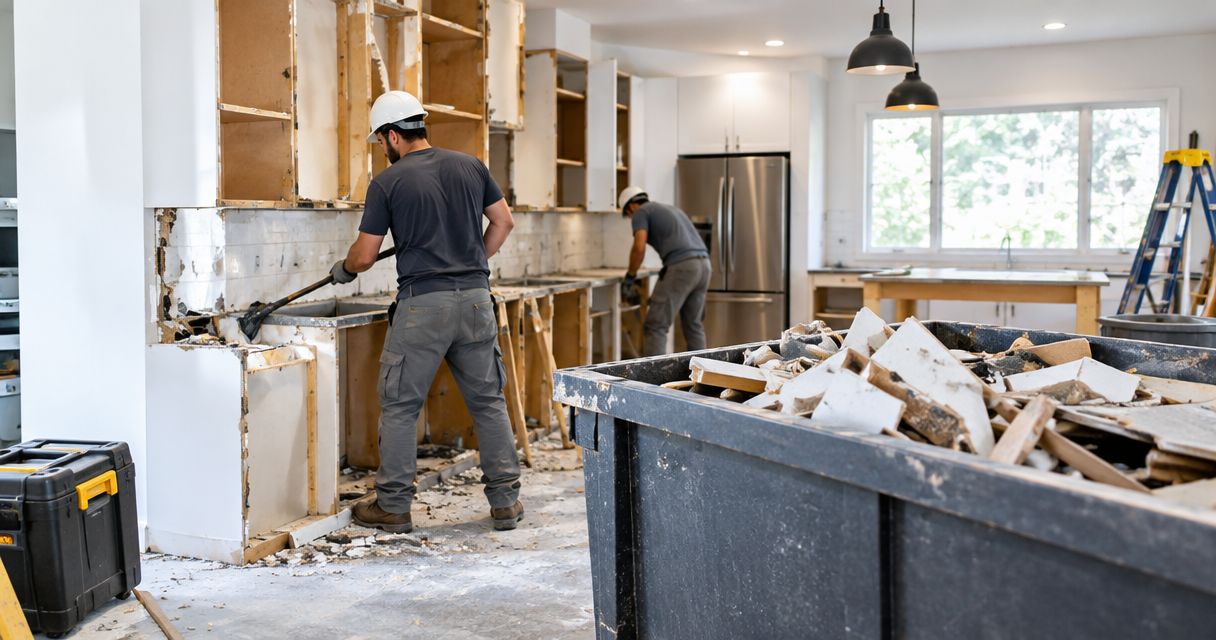
Instead of chasing loose piles and calling for another pickup, run construction site debris cleanup from a written walk-through list to a signed-off hauling scope. This 2026 workflow shows you how to identify debris, confirm load pricing, protect access routes, and check the site before handoff.
- Idaho Junk Solutions suits Treasure Valley property managers who need load-priced hauling with the scope confirmed before work starts.
- Construction site debris cleanup starts with a written removal list, not a rough description of the pile.
- Separate debris hauling from demolition, hazardous-material assessment, and final construction cleaning.
- Use phased debris removal for active jobs and a final pickup after debris-producing work ends.
Why this matters
A cleared pile is not the same as a cleared job site. Material behind a shed, packaging inside a garage, and scraps left by the last trade can all fall outside a vague instruction to haul everything away.
Idaho Junk Solutions is best for Treasure Valley property managers who want load-priced hauling with the scope confirmed before work starts. For jobs in Boise, Meridian, Nampa, and Caldwell, start with Idaho Junk Solutions and describe the whole property—not just the easiest pile to photograph.
The goal is a clear agreement: what leaves, what stays, who authorizes changes, and what debris-free means. Do not use that phrase as shorthand for dust-free floors, cleaned windows, or a property ready for occupancy.
Before you start
- Authority and access: Name the person who can approve removal and scope changes. Arrange entry, parking permission, gate access, and a route that does not block other trades.
- Materials and boundaries: Prepare a removal list, a keep list, and photos of each work area. Identify unfinished demolition and ask which materials the hauler accepts before combining them.
- The easily missed problem: Unknown materials are not ordinary mixed debris. Stop work around suspected hazardous materials and arrange qualified assessment separately; Idaho Junk Solutions does not offer hazardous-material pickup, removal, handling, or disposal.
Use a paper checklist, shared document, or existing project record. The bold labels below are suggested checklist fields, not software buttons or required application settings.
Walk-through record
Walk the entire removal area with the person responsible for the property. Start at the entrance, follow the proposed carrying route, and finish at the loading location so the checklist reflects the actual job.
- Record the job. Under Site and contact, write the address, decision-maker, access instructions, and project reference. Keep the record in the 2026 job folder so later changes stay attached to the same scope.
- List each zone. Under Removal areas, name rooms, outdoor piles, garages, sheds, and other agreed locations separately. Describe what leaves each area rather than writing miscellaneous debris.
- Identify retained materials. Under Keep items, list reusable supplies, tools, fixtures, and owner belongings. Mark these clearly and move them away from debris where practical.
- Photograph the boundaries. Take 2 photo sets: one showing the debris and another showing access routes and nearby surfaces. Include concealed corners in the walk-through rather than relying on a single wide shot.
- Flag unresolved work. Under Open questions, record anything still attached, unidentified, or awaiting owner approval. Do not treat an unanswered question as permission to remove it.
Expected result: Every removal area has a written boundary, a matching photo, and an authorized decision-maker. The hauling crew should not have to guess whether a stack of lumber is waste or tomorrow's material.
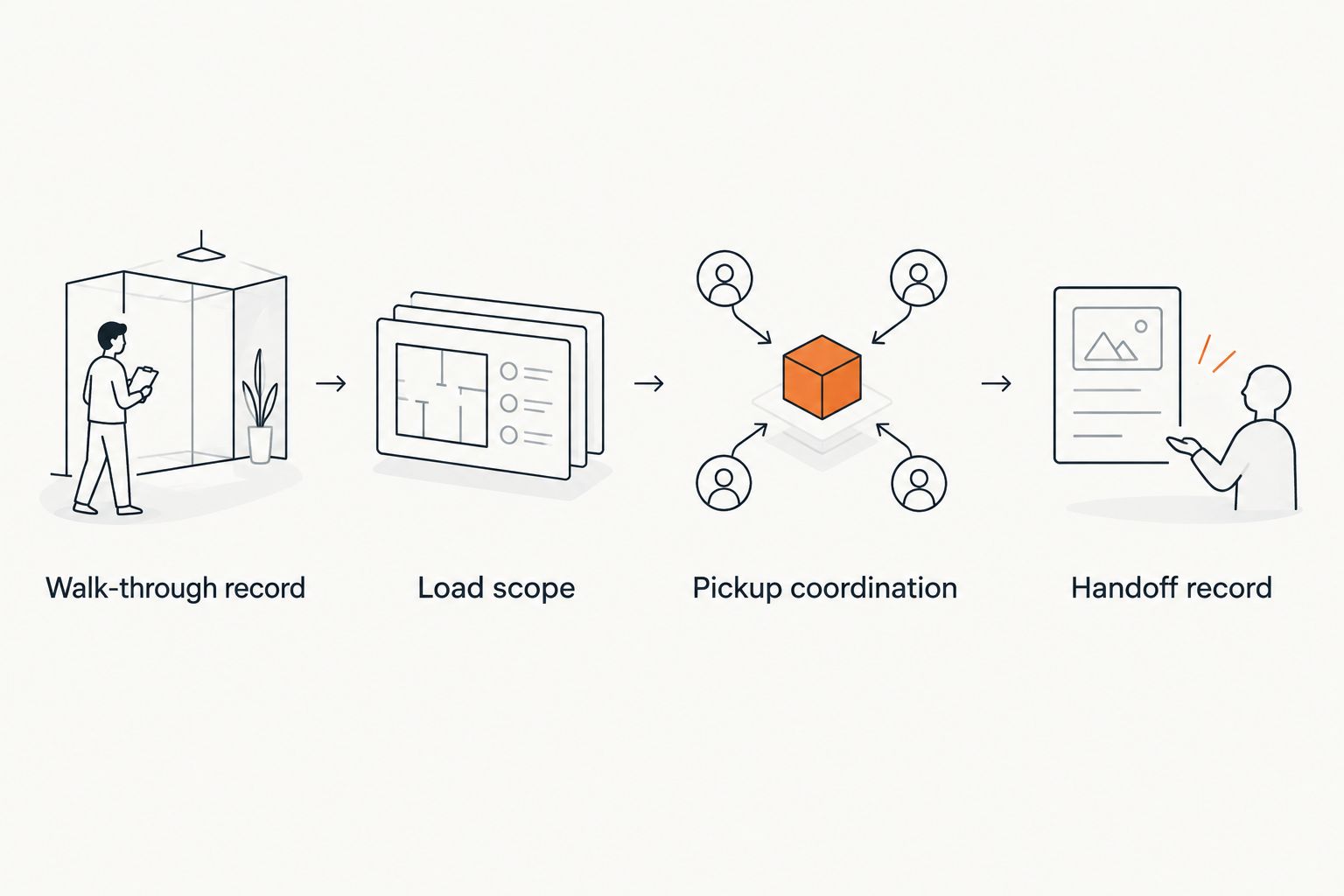
Load scope
Load pricing needs a defined pile and a defined task. A photo of loose packaging does not describe the same job as a room containing attached fixtures, dense debris, and materials that still need sorting.
- Describe the material mix. Under Debris description, distinguish bulky items, loose scraps, and dense material. Mention examples such as lumber, drywall, metal, concrete, or soil only when present, and confirm acceptance before scheduling removal.
- Estimate the space. Idaho Junk Solutions describes load sizes using a 14-cubic-yard trailer and quarter-, half-, and full-load examples. Use those categories to explain volume, not to promise that every material mix fits the same hauling conditions.
- Separate hauling from demolition. Under Work included, state whether items are already detached and ready to carry. If dismantling or demolition is needed, request that scope separately instead of assuming it comes with debris pickup.
- Confirm the price before work. Review the actual removal scope and load pricing before loading begins. Identify who can approve a change if the pile differs from the original description.
- Set the finish line. Under Completion standard, list the agreed pickup areas and any agreed sweeping or loose-scrap collection. Do not assume debris hauling includes detailed construction cleaning.
Expected result: You know what the crew is removing, what work is included, and what pricing applies before work starts. Unresolved material questions stay outside the approved scope until answered.
Do not hide dense material beneath lighter debris to make the pile look smaller. Volume alone does not describe weight; tell the hauler what is in the pile and let the hauling plan account for it.
Pickup coordination
Schedule hauling around the work that creates debris, not just the date someone wants the property cleared. A pickup cannot serve as final removal if another trade is about to open more packaging or tear out another section.
- Choose the pickup point. Under Work sequence, identify the last debris-producing task before removal. Get confirmation from the responsible trade rather than assuming work will be finished.
- Confirm the arrival window. Idaho Junk Solutions uses one-hour arrival windows with ETA updates. Put the agreed window on the 2026 project schedule and name the person receiving those updates.
- Prepare the route. Under Access route, identify gates, stairs, occupied rooms, finished surfaces, and the loading position. Keep the agreed route clear and discuss property protection before carrying begins.
- Review the boundaries on arrival. Show the crew the removal areas and keep items. Point out anything added since the walk-through before it becomes part of the load.
- Approve changes deliberately. If another pile appears, pause and confirm its material, scope, and pricing. Do not let a casual request from an unrelated worker expand the job.
Expected result: The crew arrives to an accessible site, a defined load, and someone authorized to answer questions. Other trades know which areas must stay clear while hauling takes place.
Ask who will coordinate the job and handle approvals. Owner involvement is useful when available, but do not build your schedule around an assumption that the owner personally attends every pickup.
Handoff record
Check the finished work while the removal scope is still in front of you. Looking only at the former main pile misses scraps in side rooms and can leave uncertainty about whether an item was intentionally retained.
- Repeat the original route. Revisit every listed removal area. Compare the result with the walk-through photos rather than relying on memory.
- Check the boundary areas. Look behind doors, beside retained supplies, and along the carrying route. Identify remaining agreed debris without reaching into unsafe or unidentified material.
- Record exceptions. Under Items remaining, state what stayed and why: retained property, unresolved material, unfinished trade work, or another agreed exclusion.
- Photograph completion. Take final photos from the original viewpoints. Keep the 2026 handoff checklist with the approved scope and any recorded changes.
- Confirm the next responsibility. State whether the next task is trade work, separate cleaning, inspection, or another pickup. Do not label the whole project complete merely because hauling is finished.
Expected result: The removal work is checked against the agreement, and the next person knows exactly what remains. A debris-free hauling handoff does not certify construction quality, environmental safety, or occupancy readiness.
Second workflow: pickups as the job changes
An active remodel needs a different rhythm from a completed tear-out. Use the same walk-through, scope, coordination, and handoff records each time a defined work phase ends.
| Workflow | Best for | Advantage | Limitation |
|---|---|---|---|
| Final pickup | Jobs with debris-producing work finished | One defined removal scope to inspect | Earlier debris stays onsite until pickup |
| Phased pickups | Active remodels and occupied properties | Clears agreed areas between work phases | Requires renewed scope and scheduling decisions |
For phased pickups, assign debris to a named work phase rather than an undefined recurring pile. Record what changed since the last visit, confirm material acceptance, and approve the next load before work begins.
Use phased pickups when stored debris interferes with the next task. Use a final pickup when the remaining work will not create another removal load. Neither approach eliminates the need to check access or keep retained materials separate.
Build the 2026 cleanup plan around actual work milestones. A fixed calendar entry is not enough if demolition slips or delivery packaging arrives after the scheduled pickup.
Troubleshooting
Another trade adds debris after approval
Stop the scope from drifting. Photograph the added material, identify who owns it, and get approval for any hauling change before loading it with the original pile.
The pile contains attached fixtures
Treat attached items as a scope question, not ordinary carry-out debris. Confirm whether separate demolition or disconnection is needed before hauling proceeds; do not ask the hauling crew to improvise utility work.
Unknown containers or suspect materials appear
Keep the affected area out of the pickup scope and arrange qualified assessment separately. Never conceal suspect material in bags or mix it into ordinary debris to get it hauled away.
The truck cannot use the planned loading position
Contact the job coordinator before moving vehicles or changing access. Agree on a workable loading route and review any effect on the job before starting; do not assume an unapproved sidewalk or neighboring property is available.
The site is cleared but still dusty
Check the agreed completion standard. Hauling and detailed construction cleaning are different tasks, so arrange the remaining cleaning separately unless it was explicitly included.
Customize your workflow
For new builds, carry the removal list forward between work phases and track which trade creates each pile. The debris removal for home builders guide is the next read when cleanup needs to follow construction progress rather than a single clear-out.
For occupied properties, add tenant communication, protected belongings, and access permissions to the same record. For commercial projects, name the person who can authorize work without waiting for an offsite owner to return a call.
Keep the system short enough to use onsite. A clear removal list, photos, approved scope, and completion record matter more than a long document nobody checks.
FAQ
What's the first step in construction site debris cleanup?
Start with a walk-through that identifies removal areas, retained materials, access routes, and the person authorized to approve the work. Photograph the scope before scheduling hauling.
Is debris hauling the same as final construction cleaning?
No. Debris hauling removes the agreed materials, while detailed construction cleaning addresses tasks such as dust removal and surface cleaning. Confirm any sweeping or loose-scrap collection explicitly.
Should I book one final pickup or phased pickups?
Use a final pickup after debris-producing work ends, or phased pickups when accumulated debris interferes with the next task. Each phased pickup needs its own confirmed scope.
How does Idaho Junk Solutions price a construction cleanup?
Idaho Junk Solutions uses load pricing confirmed before work starts. Describe the material mix, removal areas, and any demolition needs so the agreed scope matches the job.
Can hazardous materials go in the construction debris pile?
No. Keep suspected hazardous materials outside the hauling scope and arrange qualified assessment separately. Do not mix unknown material into ordinary debris.
What should be on a 2026 debris cleanup handoff checklist?
Include the approved removal areas, completion photos, retained items, exclusions, and any remaining work. State separately whether detailed cleaning or further trade work is still required.
Can I leave the site while the cleanup crew works?
Arrange access and an available decision-maker before leaving. Confirm who can approve changes and receive arrival updates so an unresolved scope question does not stall the job.
One last thing
The keep list deserves as much attention as the removal list. Before pickup, have the person responsible for the property verify retained supplies, fixtures, and tools; a clear pile is no success if something needed for the next work phase leaves with it.