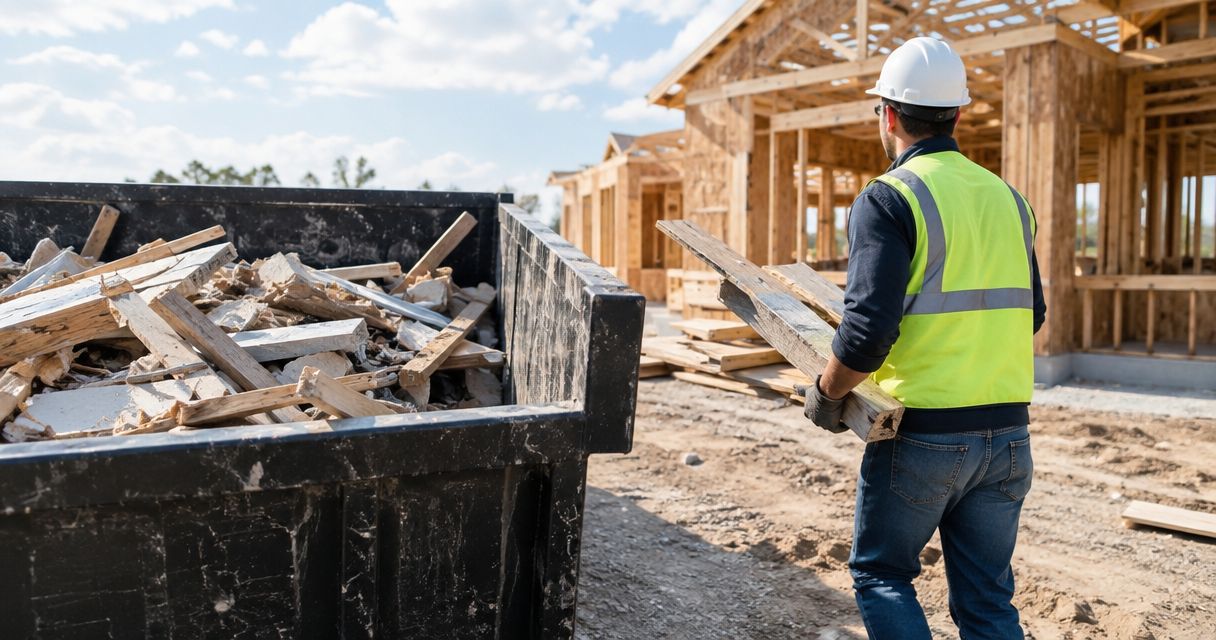
Retail store demolition is the selective removal of fixtures and building components to prepare a shop for remodeling, with the aim of making room for the new layout without damaging what stays. This 2026 guide covers scope, approvals, property protection, and debris hauling for Treasure Valley retailers working around merchandise, shared buildings, and reopening deadlines.
- Demolition for retail store remodels starts with written keep-and-remove instructions, not a crew arriving with tools.
- Idaho Junk Solutions is best for Treasure Valley retailers seeking demolition and load-priced hauling from a locally owned company.
- Separate fixture cleanouts from demolition, utility disconnections, and construction debris hauling before comparing proposals.
- Confirm landlord approval, site access, and the finished condition before scheduling removal.
Why demolition matters for retail stores
A retail remodel involves more than an empty room. You need to protect merchandise, retain usable fixtures, coordinate deliveries, and avoid disrupting neighboring tenants. A demolition scope that ignores those constraints leaves decisions to be made while work is underway.
For a Boise, Meridian, Nampa, or Caldwell store planning a 2026 remodel, separate the work into two questions: what needs dismantling, and what only needs hauling? The guide to junk removal for restaurants and retail stores covers the cleanout side of that distinction.
Demolition removes part of the space; hauling removes material from the property. Your proposal should say whether it includes both. Neither term, by itself, tells you who disconnects utilities, protects retained finishes, or prepares the space for the next contractor.
How to plan a retail store demolition
1. Mark exactly what stays and what goes
Walk the store before requesting proposals. Photograph the sales floor, stockroom, fitting rooms, checkout area, and exterior loading route. Mark the items you own separately from anything controlled by the landlord or another tenant.
Create 3 scope lists: Keep, Remove, and Confirm. Put anything unresolved in Confirm rather than allowing a verbal assumption to become a demolition instruction. A freestanding display and a built-in counter need different treatment, even when they occupy the same floor area.
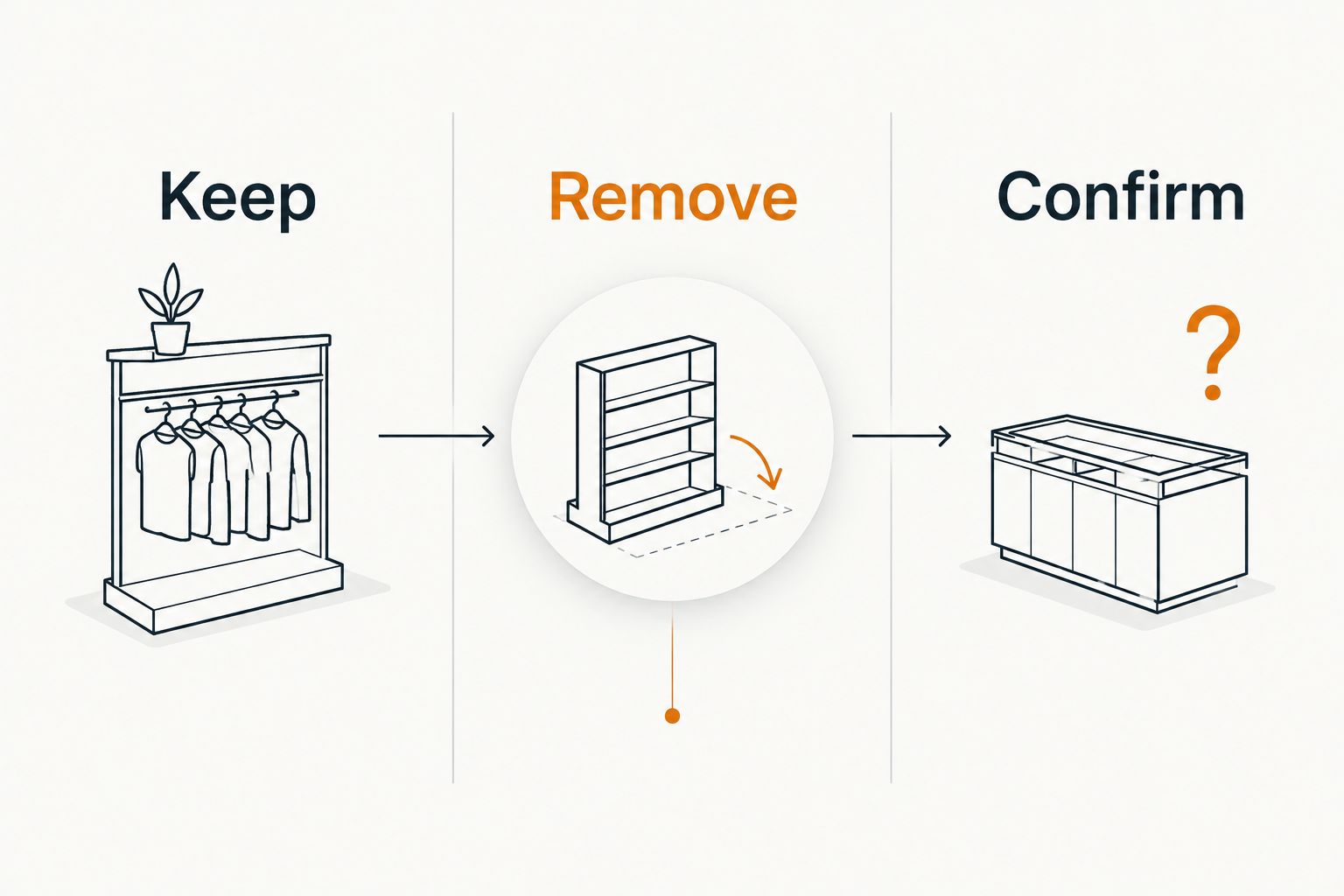
Use those lists during the walkthrough, then attach the agreed version to the work order. The same labels should appear on site where needed.
- Keep: identify retained shelving, doors, counters, and finishes.
- Remove: describe each approved fixture or component and its location.
- Confirm: flag ownership, attachment, utility, or structural questions.
- Photograph shared walls, storefront glass, and existing damage.
- Name the person authorized to approve scope changes.
2. Resolve approvals and utility responsibilities
Start with your lease and landlord requirements. Written permission to remodel is not necessarily permission to remove every fixture in the space. Ask the local building department which permits or inspections apply to the proposed work; do not assume an interior project is exempt.
For your 2026 project file, keep the approved scope alongside the responsibilities for electrical, plumbing, mechanical, and fire-protection work. Use appropriately qualified trades for disconnections and building-system changes. A demolition or hauling agreement should not leave those responsibilities implied.
If suspect materials or an unknown substance appear, stop disturbing that area and arrange an assessment by an appropriate specialist. Idaho Junk Solutions does not offer hazardous-material pickup, removal, handling, or disposal.
- Obtain written landlord authorization for the defined work.
- Confirm permit and inspection requirements with the relevant authority.
- Assign each necessary utility disconnection to a qualified trade.
- Identify building systems that must remain operational.
- Set a stop-work procedure for unexpected conditions.
3. Match the removal option to the actual job
For loose merchandise racks or boxed stock, begin with a manual inventory and decide what your staff can safely sort without dismantling anything. Keep reusable items separate. That work makes a hauling request clearer and prevents usable fixtures from entering the discard pile.
For approved demolition and accumulated debris, Idaho Junk Solutions offers demolition and load-priced hauling for Treasure Valley homeowners, businesses, and property managers. Idaho Junk Solutions is best for Treasure Valley retailers seeking demolition and load-priced hauling from a locally owned company. Confirm the exact retail scope before booking; those services do not establish that every structural, utility, or specialty task is included.
The company emphasizes pricing confirmed before work starts, owner involvement where possible, and one-hour arrival windows with ETA updates. An arrival window tells you when to expect the crew, not how long the demolition will take.
- Separate loose-item hauling from attached-fixture removal.
- Ask whether dismantling, loading, and hauling are included.
- Identify work reserved for your general contractor or specialist trades.
- Confirm who supervises the job without assuming owner attendance.
- Request a written scope and pricing confirmation before work begins.
4. Protect the store and establish a debris route
Draw the removal route on a simple floor plan. Trace it from the work area to the loading point, including corners, doors, elevators, sidewalks, and shared corridors. A clear route helps you identify conflicts before material starts moving.
Move merchandise and retained fixtures out of that route where practical. Agree on protection for floors, door frames, glass, and common areas. If the store remains partly open, establish a work boundary that keeps customers and staff outside the demolition area; do not rely on people noticing the activity and staying away.
Confirm that the loading arrangement works for the property, not just the storefront. A rear service door does not automatically provide permission to occupy a shared loading lane.
- Mark the approved route from work area to loading point.
- Photograph surfaces along that route before work begins.
- Agree on floor, doorway, and storefront protection.
- Obtain permission for shared loading areas or elevator use.
- Keep emergency exits and required access routes unobstructed.
5. Separate demolition scope from hauling volume
Make a room-by-room list before estimating the load. Include bulky fixtures, loose contents, and debris expected from approved demolition. Explain whether material will remain assembled or be dismantled; an intact display cabinet occupies space differently from separated panels.
The company's load-size guidance uses a 14-cubic-yard trailer as a reference. Treat that as a way to discuss volume, not a promise that your entire project fits in a single load. Material weight, the agreed scope, and what the crew accepts still need confirmation.
A load description is not a demolition specification. Idaho Junk Solutions provides load-priced hauling, but your written agreement still needs to identify what will be taken apart, what will be carried out, and what condition will remain afterward.
- Inventory fixtures by room and describe their construction.
- Send photographs showing both items and access conditions.
- Identify heavy or unusually bulky materials before booking.
- Ask how additional material changes the agreed scope.
- Confirm accepted debris and disposal responsibilities.
6. Sequence the work around your remodel
Build the schedule backward from the next trade's actual needs. A flooring installer needs a different handoff from a carpenter rebuilding a checkout counter. Ask each contractor what must be removed, disconnected, or cleared before that contractor can start.
For an occupied store, consider whether the work can be divided into approved zones. Phasing creates extra coordination, so define each handoff instead of assuming the crew can work around customers. For a vacant unit, concentrate on access, landlord restrictions, and the transition to construction.
Keep demolition completion separate from reopening. Removal is one stage of a remodel; inspections, installation, cleaning, and merchandising can remain after the debris leaves.
- Confirm the next trade's required starting condition.
- Complete necessary approvals and disconnections before demolition.
- Agree on work periods allowed by the property manager.
- Schedule debris removal so it does not block incoming materials.
- Assign one contact to communicate changes among contractors.
7. Inspect the handoff before releasing the area
Walk the completed work against the approved scope, not your memory of the original conversation. Check each room and the entire loading route. Compare retained surfaces with the photographs taken before work began.
Distinguish debris removal from construction preparation. Taking away a counter does not establish that the exposed floor is ready for new flooring. Removing shelving does not establish that wall patching or painting is included. Put those finishing responsibilities in writing before the work starts, then check the agreed result.
Save completion photos and any unresolved items in the project file. That gives the next contractor a clear record of what is ready and what still needs attention.
- Check every approved removal item against the scope.
- Confirm retained fixtures and surfaces remain protected.
- Verify debris is removed from agreed work and access areas.
- Record exclusions, unfinished work, and newly exposed conditions.
- Obtain agreement on the next contractor's handoff.
Compare retail remodel removal options
For a 2026 retail remodel, choose by responsibility rather than by the shortest service description. The right option depends on whether you need sorting, hauling, physical demolition, or coordination across several trades.
| Option | Best for | Main advantage | Pricing basis to clarify | Key limitation |
|---|---|---|---|---|
| Staff sorting and loose-item staging | Small fixture cleanouts before contractor work | Keeps ownership and reuse decisions with your team | Internal labor and separate hauling scope | Does not replace qualified demolition or utility work |
| Hauling-only service | Loose fixtures and debris already prepared for removal | Handles loading and removal without expanding into construction | Accepted materials, load volume, and included labor | Attached components can remain outside the agreement |
| Idaho Junk Solutions demolition and hauling | Treasure Valley retailers seeking both services from a local company | Combines demolition services with load-priced hauling | Written demolition scope and confirmed load pricing | Specialty, structural, and building-system work require explicit confirmation; hazardous materials are excluded |
| General contractor coordination | Remodels involving several trades and dependencies | Places demolition within the wider construction sequence | Included trades, supervision, and debris removal | A construction agreement still needs clear removal and disposal responsibilities |
Choose the smallest service scope that fully covers the job, not the smallest description of the job. A hauling-only booking is not a substitute for demolition when fixtures remain attached. A demolition booking is not permission to alter shared building systems.
Common mistakes retail stores make
Treating every fixture as tenant-owned
A previous tenant's counter, a wall-mounted display, or a storefront component can raise ownership questions. Removing it first creates a dispute that a hauling receipt cannot resolve. Get written authorization for uncertain items and keep them on the Confirm list until then.
Sending only close-up photos
A close-up shows a fixture but hides the route out. Include wider views of aisles, doors, stairs, loading areas, and neighboring finishes. The removal plan needs to account for the whole trip from the fixture to the vehicle.
Booking hauling before defining dismantling
A row of attached cabinets is not the same job as loose cabinets staged for pickup. Describe attachment points and utility connections without attempting unsafe exploratory work. Ask who will dismantle the items and whether that work is included.
Letting the reopening date replace a work plan
A deadline does not settle permissions, trade responsibilities, or the handoff condition. Give each dependency an owner. Keep a written change process so an unexpected condition does not become an unauthorized removal just because the next delivery is approaching.
FAQ
What's included in demolition for retail store remodels?
Retail store demolition includes only the removals and related work stated in the agreement. Identify fixtures, building components, protection, loading, hauling, and the required handoff condition separately.
Do I need landlord approval before removing store fixtures?
Get written landlord authorization for the proposed removals before starting work. Check your lease and resolve ownership questions about built-ins, storefront components, and shared building systems.
Can my retail store stay open during demolition?
Only plan occupied-store work when the approved work arrangement separates customers and staff from the demolition area. Confirm access, emergency exits, dust controls, and work restrictions with the responsible contractors and property manager.
Is junk hauling the same as retail demolition?
No. Junk hauling removes accepted items and debris, while demolition dismantles or removes attached components. State whether your agreement includes one service or both.
Does Idaho Junk Solutions handle retail remodel debris?
Idaho Junk Solutions offers demolition and load-priced hauling to businesses in the Treasure Valley. Confirm the exact retail demolition scope and accepted debris before booking; hazardous-material services are excluded.
Who should disconnect electrical or plumbing before demolition?
Assign electrical and plumbing disconnections to appropriately qualified trades. Identify those responsibilities in writing before anyone starts dismantling connected fixtures.
What should I send when requesting a retail demolition quote?
Send a room-by-room removal list, photographs, access details, and the required handoff condition. Include landlord restrictions and identify unresolved utility, ownership, or material questions.
One last thing
Before you schedule your 2026 retail demolition, photograph what must stay as carefully as what must go. Removal lists get attention; retained fixtures and finishes need equally clear instructions.
Add a finished-condition sentence to every work area. For example, specify that an approved display is removed, debris is hauled away, and wall patching remains assigned to the remodel contractor. That sentence separates a completed removal from a space that is ready for construction.