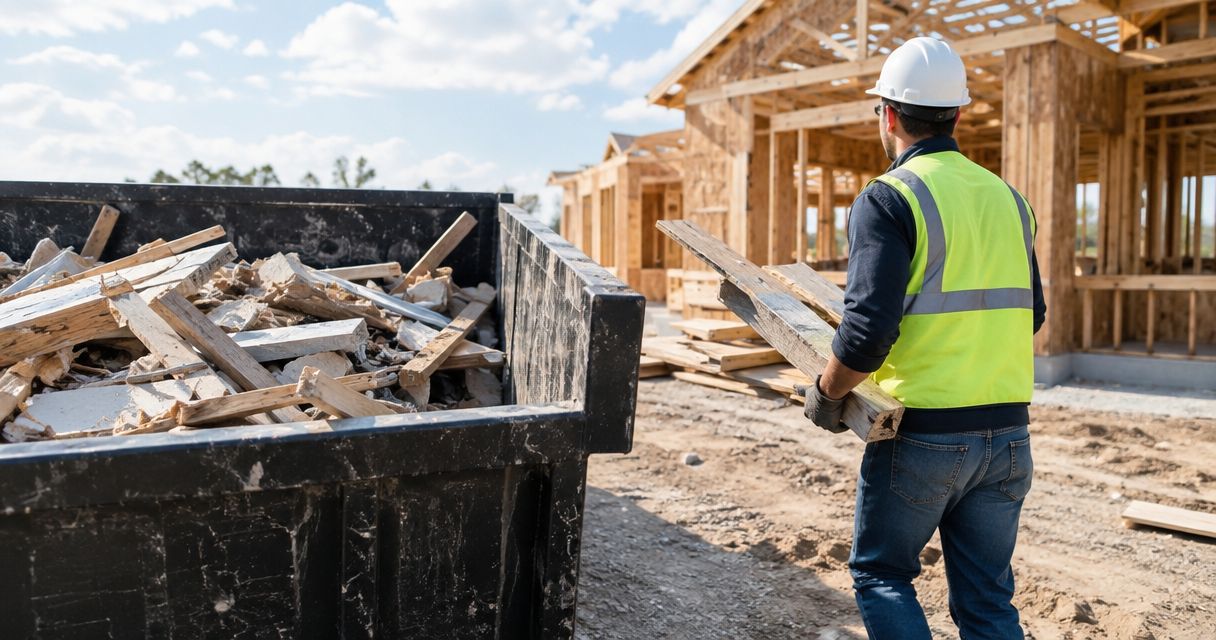
Home builders’ construction debris removal is the collection and hauling of jobsite waste to keep work areas clear and prepare homes for the next trade or handover. Unlike a household pickup, your cleanup plan must account for changing materials, shared access, heavy debris, and work that is still underway.
- Construction debris removal for home builders starts with a material list, clear loading access, and defined cleanup boundaries.
- Idaho Junk Solutions offers load-priced hauling in the Treasure Valley; confirm accepted construction materials before scheduling.
- Choose self-hauling, a dumpster, or crew-loaded removal around site space, labor, and the waste being generated.
- Keep hazardous materials outside the hauling scope, and confirm load pricing before work starts.
Why debris removal matters for home builders
A debris pile competes with deliveries, equipment, and trades for the same space. Your cleanup plan needs to identify what leaves, when it leaves, and who keeps the loading route open—not just who owns the trailer.
For your 2026 build schedule in Boise, Meridian, Nampa, or Caldwell, tie removal to actual construction phases. Framing scraps, finish packaging, and debris from an existing structure need different conversations about handling and acceptance. The local construction debris removal guide for Boise provides another starting point for comparing hauling services.
Choose the removal method around the material and the jobsite—not around the pile’s appearance alone. A bulky pile of packaging and a compact pile of masonry do not present the same loading problem.
How to plan construction debris removal in 2026
Define scope
Start with a walk-through and a written material list. A shared note or marked-up site photo is enough; you do not need specialized software to separate the hauling job from the construction work.
Name the exact rooms, exterior areas, and piles included. Also state whether you expect loose-item pickup, loading, sweeping, or removal of an attached structure. Do not let the word cleanup stand in for a scope that each contractor interprets differently.
For a teardown or renovation, keep demolition and haul-away distinct. Removing a freestanding scrap pile is not the same job as dismantling a shed or taking out attached building components. Confirm both tasks separately when you need both.
- List materials: Separate lumber, drywall scraps, packaging, fixtures, and masonry in your notes.
- Mark boundaries: Identify included rooms, outdoor piles, and areas that must remain untouched.
- Name exclusions: Flag installed items, tools, deliveries, and materials reserved for reuse.
- Define the finish: Agree whether the job ends after loading or includes additional cleanup.
- Assign approval: Name the person authorized to approve scope changes.
Separate materials
Use marked staging areas before the pile becomes mixed. A practical starting point is 3 zones: keep, haul, and confirm. The confirm zone is for items whose ownership or acceptance needs checking—not a place to collect hazardous materials.
Do not assume every construction material belongs in a mixed load. Ask about concrete, brick, soil, roofing, liquids, batteries, and other materials individually. A hauling agreement is not blanket permission to load everything found on the property.
Idaho Junk Solutions does not offer hazardous-material pickup, handling, removal, or disposal. If you encounter suspected hazardous material, leave it out of the ordinary debris stream and arrange the appropriate qualified service. Do not move it into the hauling pile while waiting for an answer.
- Keep: Mark reusable materials and homeowner property clearly.
- Haul: Group ordinary debris that the hauler has agreed to accept.
- Confirm: Hold uncertain nonhazardous items apart until acceptance is settled.
- Protect: Keep sharp scraps out of walking routes and occupied areas.
- Stop: Exclude suspected hazardous materials from the hauling scope.
Match the load
For a small, manageable cleanup, compare self-hauling against the time and equipment your crew would need. Include loading, securing the load, travel, unloading, and destination requirements in that decision. A truck already on site does not settle the question by itself.
Idaho Junk Solutions offers load-priced hauling with pricing confirmed before work starts. Its load-size guidance uses a 14-cubic-yard trailer as a reference. Treat that as a volume reference—not a promise that every material can fill the trailer to the same level.
Idaho Junk Solutions is best for Treasure Valley builders who want load-priced hauling with the scope and price confirmed before work starts. Confirm construction-material acceptance and any heavy-debris restrictions before booking; the company’s general hauling service does not establish acceptance for every building material.
- Photograph the pile: Take wide views plus close-ups of dense or unusual materials.
- Describe the contents: Name the materials instead of reporting only an estimated load fraction.
- Show access: Include stairs, gates, slopes, and the proposed loading position.
- Confirm boundaries: Identify exactly which piles the quoted load covers.
- Approve changes: Get revised pricing before adding work outside the agreed scope.
Plan access
Walk the route from the debris to the loading position yourself. Look at it as a carrying route, not just a path a person can squeeze through. Long scraps, doors, and bulky fixtures need room to turn.
Coordinate the pickup with deliveries and other trades. A clear route at booking is not useful if a material delivery blocks it on removal day. Identify a backup contact who can answer access questions when the superintendent is occupied.
Idaho Junk Solutions uses one-hour arrival windows with ETA updates. Build that window into the site plan rather than promising another trade that the loading area will be clear at an exact minute. Owner involvement is part of the company’s approach, but do not assume the owner attends every job.
- Reserve space: Keep the agreed loading position clear of vehicles and deliveries.
- Check the route: Identify gates, tight turns, steps, and uneven ground.
- Protect finishes: Agree how finished floors, walls, doors, and landscaping will be protected.
- Share access instructions: Explain entry arrangements and site-specific restrictions.
- Name a contact: Provide someone who can resolve questions during the arrival window.
Stage pickups
Manage removal against milestones rather than letting every trade add to one permanent pile. A shared calendar and site photos are enough to start. Review the pile when the work changes, especially before finished surfaces or homeowner belongings enter the area.
For your 2026 schedule, identify cleanup checkpoints after debris-producing phases and before handover. These are planning checkpoints, not a fixed pickup frequency. Actual timing depends on the work completed, staging space, accepted materials, and the hauling arrangement.
Assign responsibility for new debris generated after a pickup. Without that boundary, a completed hauling job can look unfinished by the time the superintendent walks the site again.
- Set checkpoints: Review removal needs after framing, installation work, and final punch work.
- Track changes: Send updated photos if the pile grows or its contents change.
- Separate new waste: Keep debris generated after pickup outside the completed scope.
- Coordinate trades: Tell subcontractors where accepted debris belongs.
- Recheck access: Confirm that each phase still leaves a workable loading route.
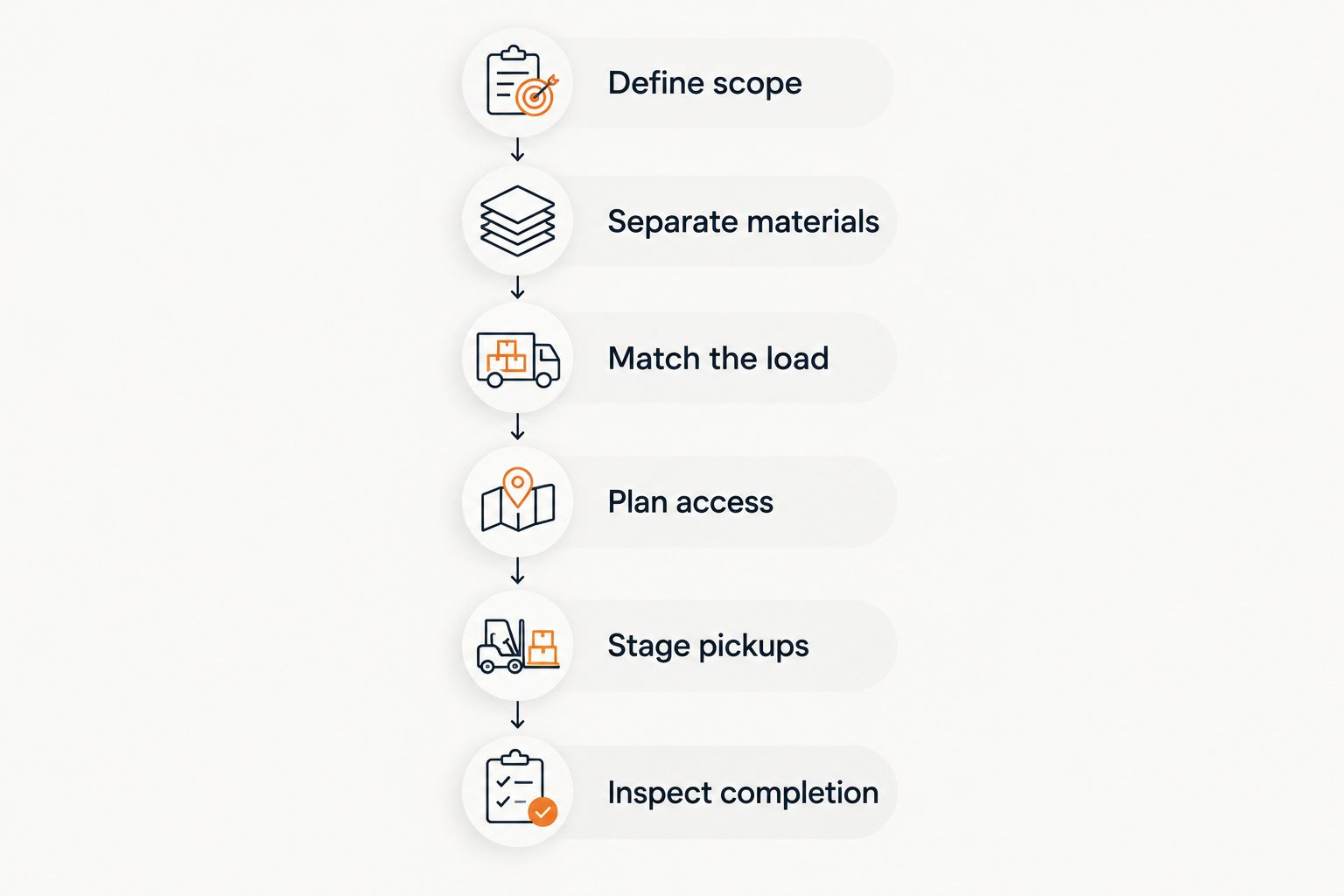
The sequence stays the same even when pickup timing changes: define the work, separate the materials, confirm the load, plan access, schedule removal, and inspect the result.
Inspect completion
Walk the completed area against the original scope before releasing it to the next trade. Use the same viewpoints as the initial photos so you can compare the work without relying on memory.
A cleared pile does not establish that demolition, detailed cleaning, or removal of excluded materials has been completed. Check those items only if they were part of the agreement. Record anything left behind and the reason it remains.
For repeat builds in 2026, keep a short job record: material description, access notes, agreed scope, changes, and completion photos. That record gives your next request useful detail without turning a previous job’s price into a standing quote.
- Compare photos: Check the agreed piles and areas against the starting condition.
- Check routes: Inspect the carrying route and loading area for remaining scraps.
- Document exclusions: Record items left because they were outside the approved scope.
- Close changes: Confirm any approved additions were addressed.
- Release the area: Tell the next trade when the space is ready for its work.
Compare removal options for your build
No single method fits every construction site. Compare who performs the loading, where material waits, and what the receiving facility or provider accepts. Keep those questions separate from headline pricing.
| Option | Best for | Main advantage | Key limitation |
|---|---|---|---|
| Self-hauling | Small, manageable loads with suitable equipment and crew time | You control the trip and loading schedule | Your crew handles loading, transport, unloading, and destination checks |
| Dumpster rental | Ongoing debris generation where a container can remain on site | Trades can add accepted debris as work progresses | Requires placement space and compliance with the rental’s loading rules |
| Idaho Junk Solutions load-priced hauling | Defined Treasure Valley pickups with an agreed scope | Load pricing is confirmed before work starts | Construction materials and heavy-debris restrictions need confirmation |
| Material-specific hauling | Jobs dominated by a material that needs separate acceptance | Keeps the disposal conversation focused on the actual material | Does not automatically cover mixed debris or general cleanup |
Use self-hauling for a manageable task, a dumpster for ongoing accumulation, and crew-loaded hauling for a defined removal job. Check the details with each provider before making that choice final.
Do not compare a container-only quote with a loaded-and-hauled quote as though they describe identical work. Write down who loads, what leaves, what remains, and which restrictions apply. Then compare the same scope.
Common mistakes home builders make
Treating trailer volume as material acceptance
A load fraction describes space, not permission to load any material. Describe dense debris separately from packaging and light scraps. Confirm acceptance before your crew combines them.
Booking before the work boundary is settled
A pickup booked as scrap removal can turn into a dispute when someone expects shed demolition or attached fixtures to disappear too. Name demolition, loading, and cleanup tasks separately. Get agreement before work starts.
Leaving reusable materials beside the haul pile
Unmarked trim, unopened supplies, and homeowner belongings create avoidable uncertainty. Give the keep area an obvious boundary and tell every trade what it means. Do not rely on one verbal instruction reaching everyone.
Ignoring deliveries and occupied spaces
A builder’s preferred loading position can also be the delivery route or a homeowner’s only practical entrance. Coordinate access before the arrival window. Keep occupants and unrelated trades outside the loading route.
Treating a safety charge as a disposal service
A safety charge does not authorize hazardous-material handling or disposal. Idaho Junk Solutions’ biohazard safety charge is not payment to remove or dispose of biohazards. Keep those materials outside the hauling scope and arrange appropriate qualified help.
FAQ
What is construction debris removal for home builders?
Construction debris removal for home builders is the collection and hauling of jobsite waste so construction areas can be cleared for the next phase or handover. The agreement should identify accepted materials, loading responsibilities, access, and the cleanup boundary.
Is a dumpster better than a debris removal crew?
A dumpster fits ongoing accumulation when your site has placement space, while a removal crew fits a defined pickup. Compare who performs the loading and which materials each provider accepts before choosing.
How does load pricing work for construction debris?
Load pricing ties the hauling quote to the agreed load and job scope. Describe the materials, show access, and confirm the price before work starts; trailer volume alone does not establish acceptance for dense debris.
Can concrete, drywall, and lumber go in the same load?
Do not combine concrete, drywall, and lumber until the hauler confirms acceptance. Mixed-material rules and heavy-debris restrictions need to be settled before loading, not after the pile has been combined.
Does a debris pickup include demolition?
A debris pickup does not establish that demolition is included. Identify attached structures or components separately and confirm dismantling, hauling, and cleanup as distinct parts of the scope.
How should a builder prepare for the arrival window?
Keep the agreed loading position and carrying route clear, and have a site contact ready to answer questions. Coordinate deliveries and other trades so they do not block access during the scheduled window.
What should builders do with suspected hazardous materials?
Keep suspected hazardous materials outside ordinary debris removal and arrange appropriate qualified help. Do not assume a difficult-job offer or a safety charge includes hazardous-material handling or disposal.
One last thing
Before your next 2026 pickup, photograph what must stay—not just what must go. A clear keep photo gives the superintendent, trades, and hauling crew a shared boundary when the site changes between booking and arrival.
The best final instruction is specific: remove these agreed materials from these marked areas, and leave everything else alone. That is more useful than asking someone to take care of the mess.