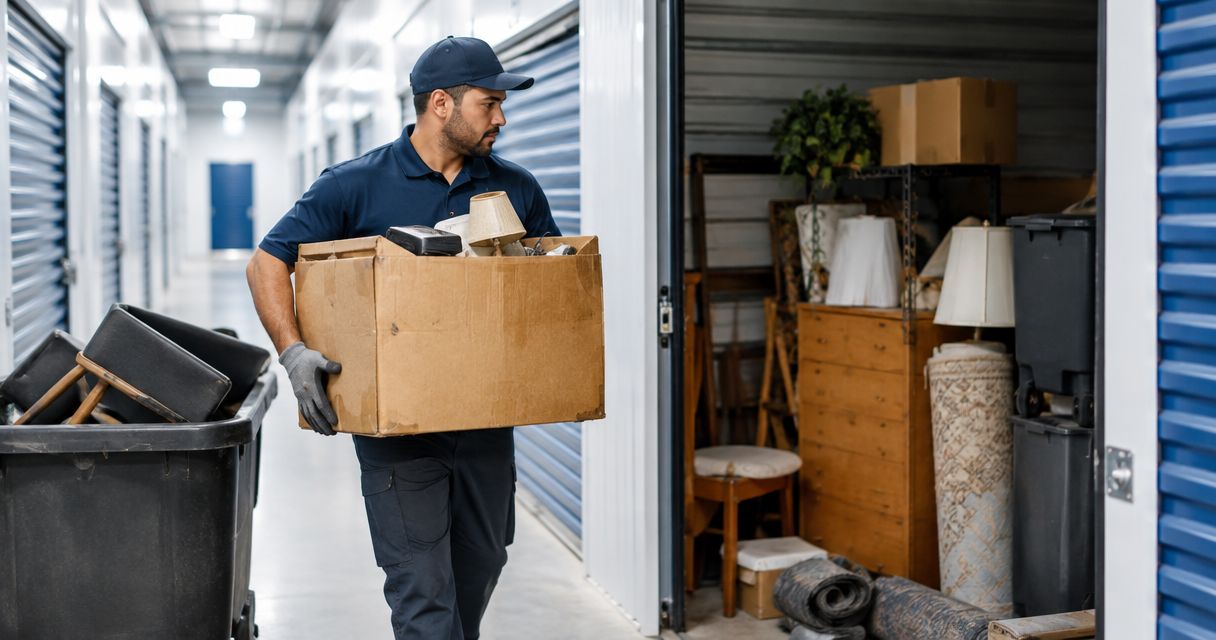
Instead of chasing leftover furniture, access details, and hauling approval separately, set up a rental turnover junk removal workflow that moves each vacancy from inspection to an approved load and a documented handoff. For your 2026 turnovers in Boise, Meridian, Nampa, and Caldwell, keep removal ahead of cleaning and repairs—not mixed into them.
- Idaho Junk Solutions suits property managers who need load-priced rental turnover junk removal and full property cleanouts.
- Approve what leaves before booking; leftover belongings are not automatically authorized for disposal.
- Confirm the load price before work starts, then document the cleared rooms before the next contractor enters.
- Junk removal clears belongings and debris; cleaning, repairs, and pest treatment need separate handoffs.
Why this matters
Idaho Junk Solutions is best for Treasure Valley property managers who need load-priced junk removal and full property cleanouts. The company serves homeowners, businesses, and property managers, so a rental vacancy fits its stated work—not a separate service invented for this guide.
Start with Idaho Junk Solutions when you need hauling, but keep the turnover plan broader than the pickup. An empty room still needs inspection, cleaning, and any necessary repairs before you call it move-in ready.
The weak point is usually the handoff. A cleaner arrives while furniture still blocks the floor, or a maintenance worker removes something the owner intended to keep. Your 2026 workflow needs one approved removal list and a clear person responsible for changing it.
Before you start
- Get disposal authority. Identify who can approve removal and resolve any tenant-property questions under the lease and applicable law. Do not treat a surrendered key as automatic permission to discard every remaining item.
- Prepare access and evidence. Gather the property address, unit identifier, entry instructions, parking details, room photos, and the contact who can approve scope. Include garages, patios, sheds, and shared spaces when they belong in the job.
- Separate unsafe conditions before booking. Report suspected hazardous materials, sharps, contamination, or pest activity before anyone starts moving belongings. Idaho Junk Solutions does not offer hazardous-material removal or disposal; hauling does not replace specialist assessment.
Configuration unit: the vacancy record
Use a paper checklist or a shared work-order document. The bold labels below are suggested fields for your own template, not buttons in a particular software system.
- Create a Property and unit field. Enter the full address and the exact space being cleared. A duplex garage or shared storage room needs its own identification; the street address alone leaves room for error.
- Add Approval contact and Access contact. Record who authorizes removal and who can open the property. If those are different people, make that distinction visible before scheduling.
- Complete Keep, Remove, and Hold lists. Put disputed belongings, owner-supplied fixtures, and anything awaiting a decision under Hold. Do not leave the crew to infer ownership from an item's condition.
- Attach room-by-room photos. As a practical minimum, take 3 photos per room: an overview, the removal pile, and the access route. Add more when belongings hide behind doors or inside closets.
- Write the next trade under Next handoff. Name the cleaner, maintenance contact, or inspection stage that follows hauling.
Expected result: Someone who has never visited the rental can identify the approved belongings, the protected belongings, and the person who can settle a question.
For your 2026 template, make the approval date visible. A removal list revised after the walkthrough should not look identical to the version already sent to the hauling crew.
Configuration unit: the removal scope
An accurate scope describes the whole job, not just the largest couch. Load pricing works best when the approved pile and the access details match what the crew finds.
- Group the Remove list by location: interior, garage, exterior, and storage. Include loose belongings as well as bulky items. A room photograph does not show what remains inside a closed cabinet.
- Mark retained items clearly. Keep owner appliances, keys, fixtures, and maintenance supplies outside the removal group. Use written descriptions alongside physical labels so the record survives a label falling off.
- Record Access conditions. Note stairs, narrow turns, gates, elevator arrangements, and the route between the unit and the loading area. These details help plan the work; they are not permission to invent an access surcharge.
- Identify separate demolition work. A loose shelving unit and a built-in structure are different scopes. Describe sheds, attached cabinets, or other demolition requests separately and confirm them before work starts.
- Submit the scope for approval. Freeze the approved list until the authorized contact accepts a change.
Expected result: The removal scope covers every approved location without quietly expanding into demolition, tenant-property decisions, or specialist cleanup.
A 14-yard trailer provides a reference for discussing load size, not a promise that every rental fits in one trip. Furniture shape, loose material, and the complete approved scope all matter.
Keep removal boundaries visible
A retained appliance sitting beside discarded furniture is easy to misread. Separate the groups where practical, but do not carry heavy belongings downstairs just to create a staging area. Describe their locations and keep the route clear instead.

Configuration unit: the hauling appointment
Confirm the load price before work starts. An approved inventory defines permission to remove belongings; it does not replace agreement on the hauling scope and price.
- Send the approved list and photos together. Include every location, not just the interior rooms. Call out appliances, shed contents, or demolition requests rather than burying them in an attachment.
- Confirm Arrival window and ETA contact. Idaho Junk Solutions emphasizes one-hour arrival windows with ETA updates. Give the update contact a working way to reach the person opening the property.
- Confirm Load pricing approval before loading starts. Ask how the approved pile fits the load estimate. If the onsite scope differs, resolve the change before additional belongings leave.
- Arrange access without promising an unverified booking time. Do not schedule a cleaner against an assumed same-day pickup. Coordinate the next trade around the confirmed appointment and completed removal.
- Record any scope change. Add the item, approving contact, and decision to the vacancy record. Avoid a verbal instruction that nobody else can verify later.
Expected result: The crew has access, the manager knows the arrival window, and the removal price and approved scope are clear before work begins.
Ask who will handle onsite questions. Owner involvement is part of the company's stated approach, but your plan should not depend on the owner attending every job.
Configuration unit: the completion handoff
Junk removal finishes when the approved belongings are gone and the property manager can verify the result. Move-in readiness comes later.
- Walk the original removal list. Check bedrooms, closets, garage corners, patio areas, and any approved storage space. Compare locations, not just the appearance of the main room.
- Take completion photos from the same positions used during inspection. This makes a blocked area or missed pile easier to identify without relying on memory.
- Complete Remaining work. Record cleaning, repairs, appliance work, pest assessment, or unresolved belongings as separate tasks. Do not mark an item complete because another contractor has been notified.
- Release Next handoff only after the relevant space is clear. Tell the cleaner or maintenance contact what was removed and what remains protected.
- Keep final approval separate. For a 2026 vacancy, use a final inspection record to confirm move-in readiness rather than closing the entire turnover when hauling ends.
Expected result: You have evidence of completed removal, a defined list of unfinished work, and a clean handoff to the next trade.
The turnover sequence at a glance
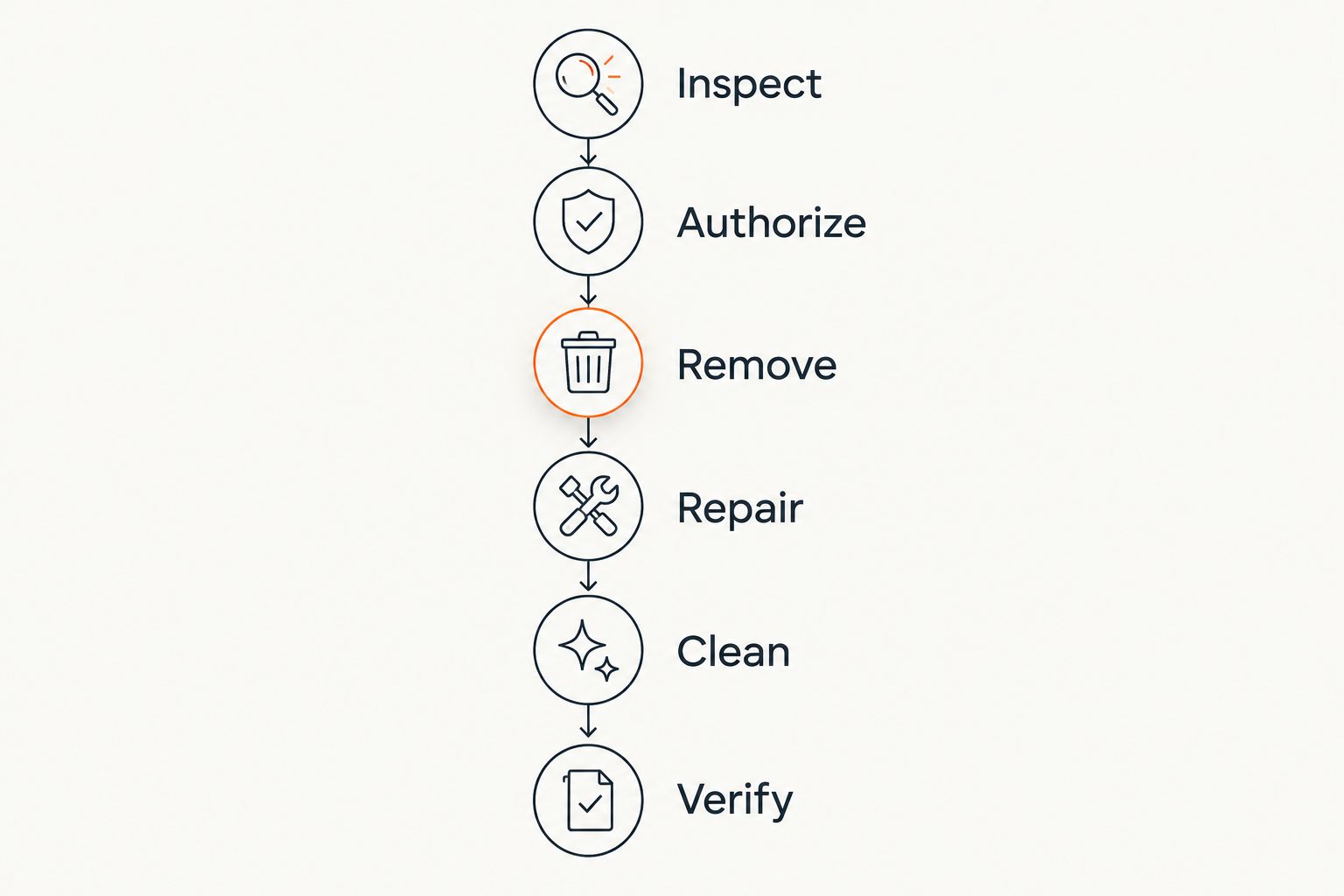
Keep the stages in this order: Inspect, Authorize, Remove, Repair, Clean, Verify. The sequence prevents a hauling completion note from standing in for a finished rental inspection.
Second variant: add hauling after repairs
Some vacancies produce another approved pile after the first cleanout. Replace a damaged cabinet or clear a deteriorated shed, and the original inventory no longer describes the remaining work.
Use this 2026 workflow variant when repairs create additional ordinary debris. Reopen the removal scope instead of quietly adding material to an old approval.
| Workflow | Best for | Advantage | Limitation |
|---|---|---|---|
| Pre-repair cleanout | Rentals with belongings blocking inspection or repairs | Clears work areas before the next trade enters | Later repairs can create a separate removal scope |
| Post-repair debris pickup | Rentals where repair work creates an approved debris pile | Keeps new debris out of the final cleaning handoff | Requires another scope check and confirmed appointment |
- Create a separate Repair debris list. Identify the rooms or exterior areas involved and photograph the finished pile.
- Confirm what the material is. Do not place unknown coatings, chemicals, or suspect hazardous material into an ordinary hauling scope.
- Obtain fresh approval and load pricing confirmation. Earlier authorization for abandoned furniture does not cover every material produced by repairs.
- Repeat the completion check before final cleaning.
Expected result: Repair debris has its own documented approval, and the original cleanout record stays accurate.
Pest treatment needs its own handoff
A rental with suspected bed bugs needs a pest-treatment plan, not just a furniture-removal plan. Decisions about moving belongings should follow the pest professional's instructions so the hauling scope does not conflict with treatment.
The distinction applies whether you are coordinating bed bug treatment for apartments or preparing a Treasure Valley rental: treatment and hauling are separate tasks. Do not label belongings cleared for removal until the responsible parties have agreed on safe next steps.
Record the pest professional's instructions in the work order and communicate the condition before booking hauling. Do not promise that discarding a mattress resolves an infestation, and do not describe hazardous-material handling as part of the pickup.
Troubleshooting
The onsite pile is larger than the approved scope
Stop the scope change before loading the added belongings. Compare the pile with the approved photos, identify what changed, and obtain authorization and updated load pricing confirmation. A new pile in the garage is not covered simply because the house was already approved.
Nobody onsite can approve a decision
Keep disputed items under Hold and contact the named approver. An access contact can open a door without having authority to dispose of property. Build that distinction into the record rather than asking the crew to make an ownership decision.
The next contractor arrives before hauling is complete
Do not send both crews into the same blocked work area. Update the next trade using the confirmed removal status and ETA information, then release the space after the walkthrough. A calendar entry is not evidence that the unit has been cleared.
A utility-connected appliance is still attached
Keep the appliance out of the ready-to-load group until the appropriate qualified person has made it safe for removal. Do not ask a hauling crew to improvise electrical, gas, or plumbing disconnection. Confirm the removal scope after the connection issue is resolved.
Sharps or suspected contamination appear during sorting
Stop work in the affected area and arrange appropriate specialist assessment. Do not add hazardous-material disposal to the junk-removal request. A biohazard safety charge is not payment to remove or dispose of biohazards, and it does not change the service boundary.
Customize your workflow
For one rental, a shared checklist is enough. For multiple properties, keep the same field names and approval rules across every unit, then give each vacancy its own record. Consistency matters more than buying another system.
Use the junk hauling guide for apartment complex managers when the scope extends beyond one unit. Shared storage, common areas, and several vacancies require separate location labels so the wrong pile does not leave with the right load.
For larger property cleanouts, add exterior structures and grounds to the inspection rather than assuming the job stops at the front door. Idaho Junk Solutions offers demolition as well as hauling, but demolition needs an explicit scope—not a casual instruction added during loading.
For your 2026 turnover process, improve the approval record before expanding the schedule. A full cleanout with clear authority, access, and handoffs is easier to coordinate than several loosely described pickups.
FAQ
What's the best order for rental turnover junk removal?
Inspect the property, authorize the removal list, complete hauling, finish repairs, clean, and verify move-in readiness. Keep disputed belongings and specialist work outside the approved hauling scope.
Is Idaho Junk Solutions a fit for property-manager cleanouts?
Idaho Junk Solutions serves property managers with load-priced hauling and full property cleanouts in the Treasure Valley. It is best suited to managers who need belongings and approved debris cleared before the next turnover stage.
Can I throw away everything a tenant leaves behind?
Do not assume every remaining item is authorized for disposal. Resolve tenant-property obligations under the lease and applicable law before approving the removal list; get legal advice when ownership or notice requirements are disputed.
How does load pricing work for a rental cleanout?
Load pricing ties the hauling scope to the load being removed. Confirm the approved belongings and price before work starts, and resolve changes before added items are loaded.
Do I need to move furniture outside before pickup?
Do not move heavy furniture outside just to create a pickup pile. Document its location, explain the access route, and confirm preparation requirements for the approved job.
Does junk removal make a rental move-in ready?
No. Junk removal clears the approved belongings and debris; cleaning, repairs, pest treatment when needed, and final inspection remain separate turnover tasks.
Can junk removal include hazardous materials or biohazards?
Idaho Junk Solutions does not offer hazardous-material removal or disposal. Report suspected hazards before work starts; a biohazard safety charge does not purchase biohazard removal or disposal.
One last thing
Photograph what stays, not just what leaves. A clear record of retained appliances, fixtures, and owner belongings gives everyone a boundary to work against. Put those photos beside the removal approval before the hauling appointment—not after a disagreement.