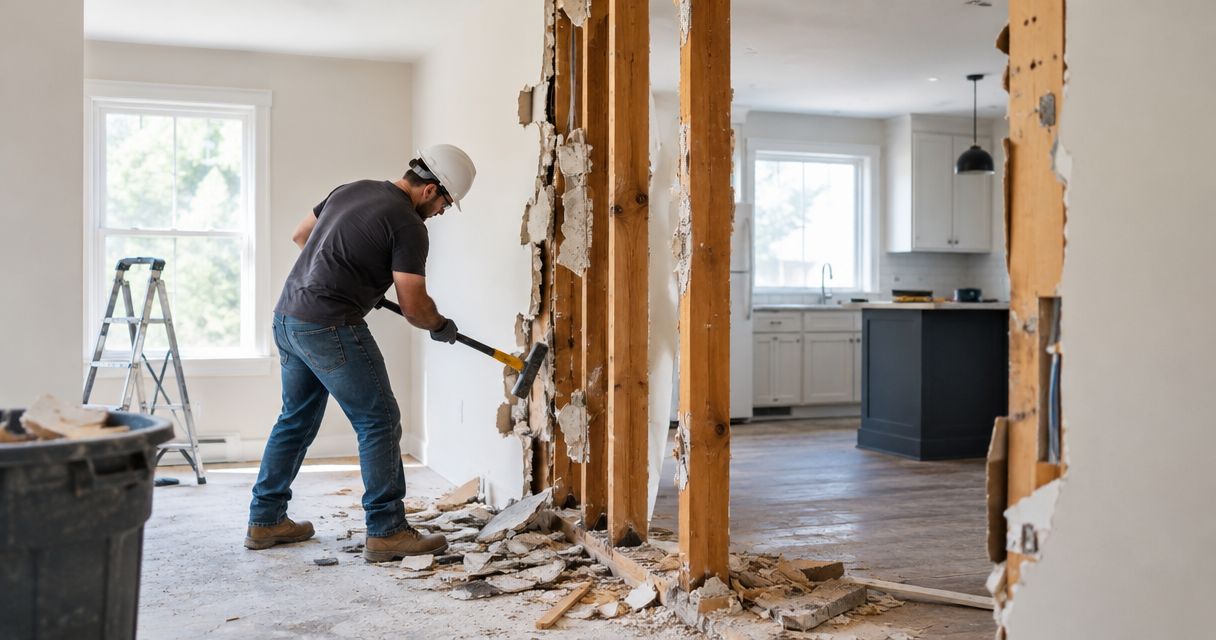
Interior wall demolition cost depends on the wall’s structure, hidden utilities and the exact removal scope—not just its length. For a 2026 remodel, get a written quote that separates demolition and debris hauling from structural work, utility changes and finish repairs; removing the wall does not automatically include rebuilding the opening.
- Interior wall demolition cost needs a defined scope: removal, debris hauling, utility work and repairs are different jobs.
- A non-load-bearing partition and a load-bearing wall require different plans; confirm the wall type before demolition.
- Idaho Junk Solutions offers load-priced hauling and demolition in the Treasure Valley; confirm the proposed wall-removal scope directly.
- Compare written exclusions, not just totals, before choosing a demolition quote.
Why this matters
An opening between a kitchen and living room looks simple on a sketch. The work changes when that wall supports framing, contains wiring or leaves a gap in flooring you intend to keep.
For homeowners and property managers in Boise, Meridian, Nampa and Caldwell, the useful comparison is the same finished scope, not two bids describing different jobs. The load-pricing information explains the hauling side; your remodel quote also needs to say what happens before loading and after removal.
How much does it cost to demolish an interior wall for a remodel?
Your interior wall demolition cost needs a site-specific quote covering what comes out, what stays and who handles each connected trade. Start by identifying whether you want wall coverings stripped, an entire non-load-bearing partition removed, or a structural opening created.
Those are different scopes. Use this breakdown when requesting a 2026 estimate:
| Wall-removal scope | Best for | Main advantage | Main limitation | What the quote must clarify |
|---|---|---|---|---|
| Wall-covering removal only | Opening a wall while retaining framing | Leaves the framing available for inspection or later work | Does not create an open room | Which faces, finishes, insulation and trim come out |
| Full non-load-bearing partition removal | Opening space after the wall’s role is confirmed | Removes the partition rather than just its surface | Utilities and finish repairs still need separate attention | Framing removal, utility preparation, hauling and repair boundaries |
| Load-bearing wall alteration | A planned opening requiring structural changes | Allows an opening under an approved structural plan | Requires more than demolition and hauling | Structural design, temporary support, required approvals and installation responsibility |
A quote for stripping drywall is not comparable to a quote for removing framing and hauling everything away. Likewise, a demolition quote is not a promise to install a beam, reconnect wiring or match the floor.
Ask for inclusions and exclusions in writing before you approve work. That gives you a usable remodel budget instead of a number that changes meaning once the room is open.
Wall-covering removal: keep the framing boundary clear
Removing drywall, plaster or another wall finish can expose framing without removing the partition itself. This scope suits a remodel that needs access inside the wall before the final demolition decision.
Specify which wall faces are included. If one room must stay intact, mark that limit and discuss how the work will stop at adjoining ceilings, corners and trim.
The advantage is a narrower removal scope. The limitation is equally clear: exposed framing still divides the room, and discovering utilities does not authorize anyone to disconnect them.
Your quote should identify whether insulation, baseboards, attached shelving and debris pickup are included. Do not let the phrase wall demo stand in for that list.
Non-load-bearing partition removal: include the whole assembly
A confirmed non-load-bearing partition does not carry the building’s structural loads. That makes its removal a different project from altering a supporting wall, but it does not make the wall empty.
Outlets, switches, plumbing or ductwork need attention before the affected wall sections come down. Have the appropriate trades establish what must be disconnected, rerouted or retained.
For the demolition scope, identify the wall coverings, framing, attached trim and any doorway components that must leave. Also identify surfaces that must remain undamaged.
The removal boundary belongs in the quote. A crew cannot price a clearly defined job if the plan alternates between opening a doorway, removing a partition and stripping the adjoining room.
Load-bearing wall alteration: plan the structure first
A load-bearing wall supports building loads. Removing it requires a structural plan, not just permission to start swinging a hammer.
Have a qualified professional establish the wall’s role and the required support before demolition begins. Appearance alone does not settle the question, and a homeowner’s assumption is not a structural assessment.
The advantage of planned structural alteration is that the proposed opening can be evaluated before the wall comes out. The limitation is that demolition and hauling cover only part of the job.
Read the guide to load-bearing wall removal during demolition before treating a hauling or light-demolition quote as a structural construction contract.
Why interior wall demolition cost varies
These six scope factors explain why apparently similar walls need different quotes. Give each bidder the same information.
- Structural role. A supporting wall needs a different work plan from a confirmed non-load-bearing partition. Establish that distinction before comparing removal proposals.
- Wall assembly. Drywall, plaster, tile, insulation and framing create different removal tasks and debris. Describe the actual materials rather than calling everything drywall.
- Wall size and removal limits. Length, height, thickness and the number of wall faces included define how much material comes out. A partial opening is not a full partition removal.
- Utilities inside the wall. Electrical, plumbing and HVAC work need named responsibilities. Identify who prepares those systems and who returns them to service.
- Protection and finish boundaries. Floors, cabinets, ceilings and adjoining walls need clear keep-or-remove instructions. Patching and matching those surfaces are separate from tearing out the wall.
- Debris and handoff scope. State who gathers, loads and hauls the material, and what condition the room must be left in. A debris-free space is not automatically ready for paint or flooring.
Access details still belong in the job description. Show stairs, narrow doors and the route through occupied rooms so the crew can plan property protection and debris movement; do not assume that describing access means agreeing to an extra charge.
How do I get a useful wall-demolition quote?
For a 2026 quote, send enough information to define the job, then confirm the scope before work starts. Photos help explain the room; they do not replace structural evaluation or reveal everything inside a wall.
- Mark boundaries. Identify the exact wall or opening. Mark cabinets, flooring, trim and adjoining surfaces that must stay.
- Confirm structure. Have the wall’s supporting role established. Resolve structural planning before scheduling removal.
- Identify utilities. Show visible outlets, switches, vents and plumbing fixtures. Assign utility preparation to the appropriate trades.
- Define handoff. State whether you need demolition, loading, hauling and cleanup, and identify who handles patching and reconstruction.
- Confirm scope. Review the written inclusions, exclusions and process for approving newly discovered work before the crew begins.
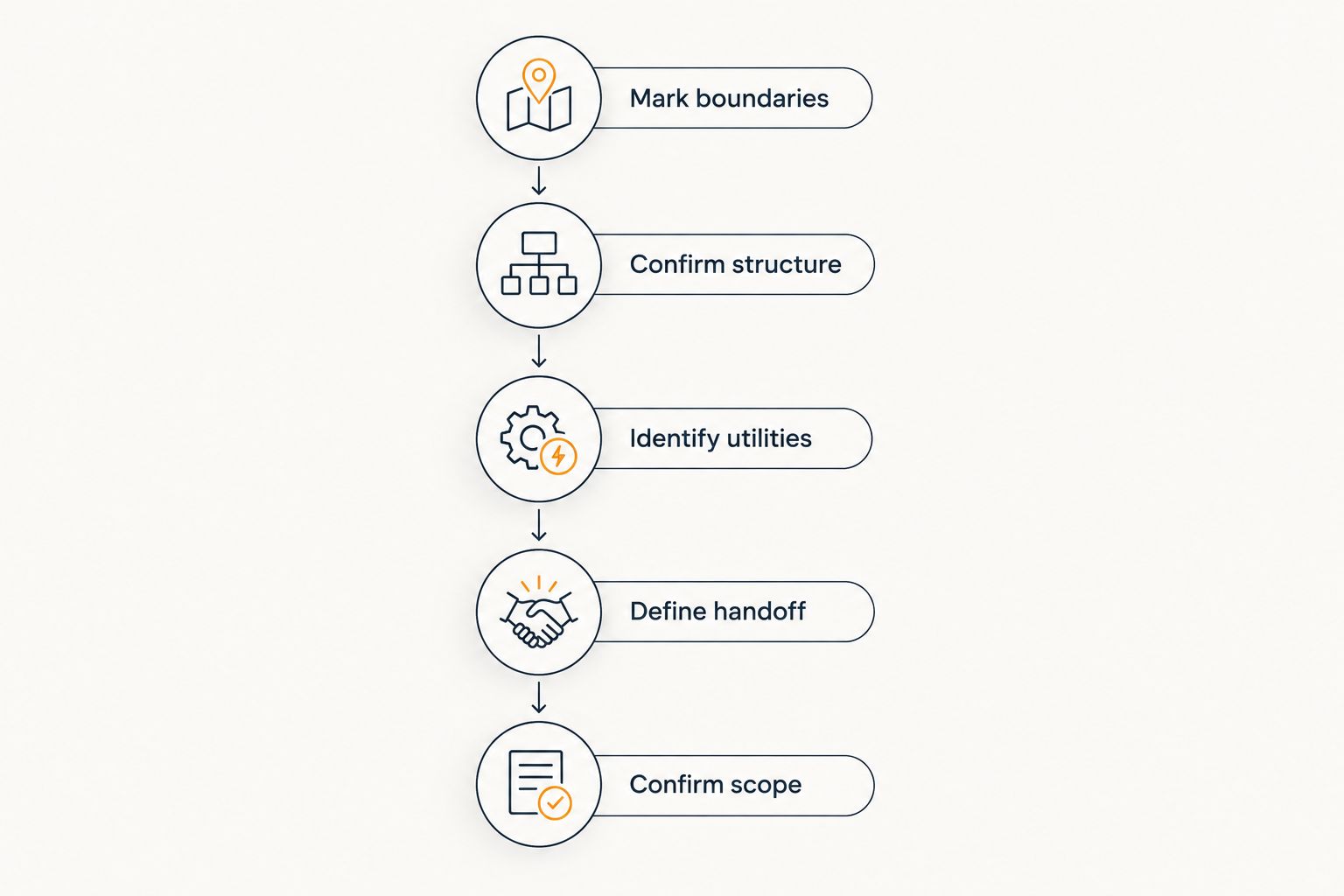
Keep a copy of the marked photos with the written scope. If the plan changes from a doorway opening to removing the entire partition, update the agreement before the additional demolition begins.
For a rental or commercial space, also establish who has authority to approve the work. The person meeting the crew should not have to guess whether an attached fixture stays.
What should the hauling portion include?
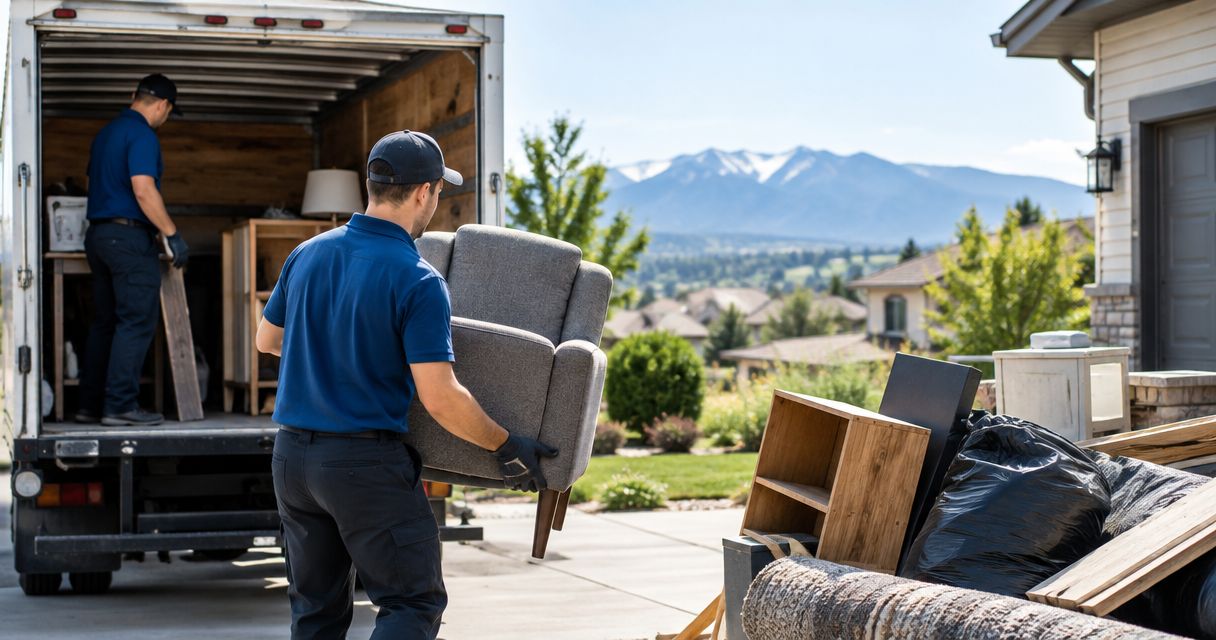
The hauling agreement should identify the demolition debris being collected, where it will be staged and who moves it out of the building. Loose debris pickup and tearing out an intact wall are not interchangeable services.
Idaho Junk Solutions offers demolition and load-priced hauling for Treasure Valley property owners. Idaho Junk Solutions is best for Treasure Valley customers seeking demolition and load-priced debris hauling, with the job scope confirmed before work starts. Structural design, utility work and finish reconstruction still need explicit assignment rather than assumptions.
For 2026 planning, the company’s referenced 14-cubic-yard trailer describes volume, not a promise that every wall-removal job fits in a single load. Dense debris and the materials being removed need discussion alongside volume; do not convert wall length directly into a trailer fraction.
Pricing is confirmed before work starts. Scheduling uses one-hour arrival windows with ETA updates, but that is an arrival window—not a promise that demolition will take one hour or that same-day service is available.
Owner involvement is part of the company’s hands-on approach, not a guarantee that the owner attends every job. Share property-protection requirements when arranging the work, not after debris starts moving.
Define your demolition scope
Describe the wall, debris and surfaces that must stay before arranging the job.
Does wall demolition include patching and painting?
Wall demolition does not automatically include patching and painting. Your written scope needs to assign ceiling repairs, floor gaps, exposed wall edges, trim and painting to someone.
Look closely at where the removed partition meets the floor. Removing the wall does not establish whether matching flooring is underneath it, and debris hauling does not solve a missing strip of flooring.
Can I save work by removing the wall myself?
DIY removal shifts demolition, dust control and property protection onto you; it does not eliminate structural or utility checks. Do not open or remove a wall until its structural role and utility preparation are resolved.
If you plan to handle demolition and hire hauling separately, describe the actual debris and its location. Keep intact-wall removal out of a pickup request unless you want that work included.
What if suspect hazardous material turns up?
Stop work in the affected area and arrange assessment by an appropriate qualified specialist. Do not break up, bag or mix suspect material into ordinary construction debris to keep the remodel moving.
Idaho Junk Solutions does not offer hazardous-material pickup, handling or disposal. Any necessary specialist assessment or remediation must be resolved separately before ordinary demolition and hauling proceed in the affected area.
FAQ
How do I estimate interior wall demolition cost in 2026?
Estimate interior wall demolition cost by defining the removal scope and requesting a written, site-specific quote. Separate demolition and hauling from structural changes, utility work and finish repairs so you can compare equivalent proposals.
Is removing a non-load-bearing wall the same as removing a load-bearing wall?
No. A load-bearing wall requires structural planning before removal, while a confirmed non-load-bearing partition has a different removal scope. Both still need checks for utilities and clear repair boundaries.
Can a demolition crew tell whether my wall is load-bearing from a photo?
A photo alone does not establish whether a wall is load-bearing. Have a qualified professional assess the structure before approving demolition.
Do I need a permit to remove an interior wall in Boise or Meridian?
Confirm permit requirements with the building department responsible for your property before work starts. Describe the structural, electrical, plumbing and mechanical changes rather than asking only about wall demolition.
Does a wall-demolition quote include debris hauling?
Debris hauling is included only when the written scope says it is. Ask whether the agreement covers gathering, loading, hauling and cleanup, not just taking the wall apart.
Should I disconnect outlets before the wall comes down?
Have the appropriate electrical professional make affected wiring safe before demolition reaches it. Do not treat removing an outlet cover or switching off a wall switch as utility preparation.
One last thing
Before you approve a 2026 wall-removal quote, ask: “What will still need doing when your crew leaves?” The answer should name the remaining structural, utility and finish work—not leave you to discover it in an open room.
Take photos of the adjoining floors, ceilings and cabinets before work begins. Those surfaces define the boundary between the demolition you approved and the property you expect to keep.