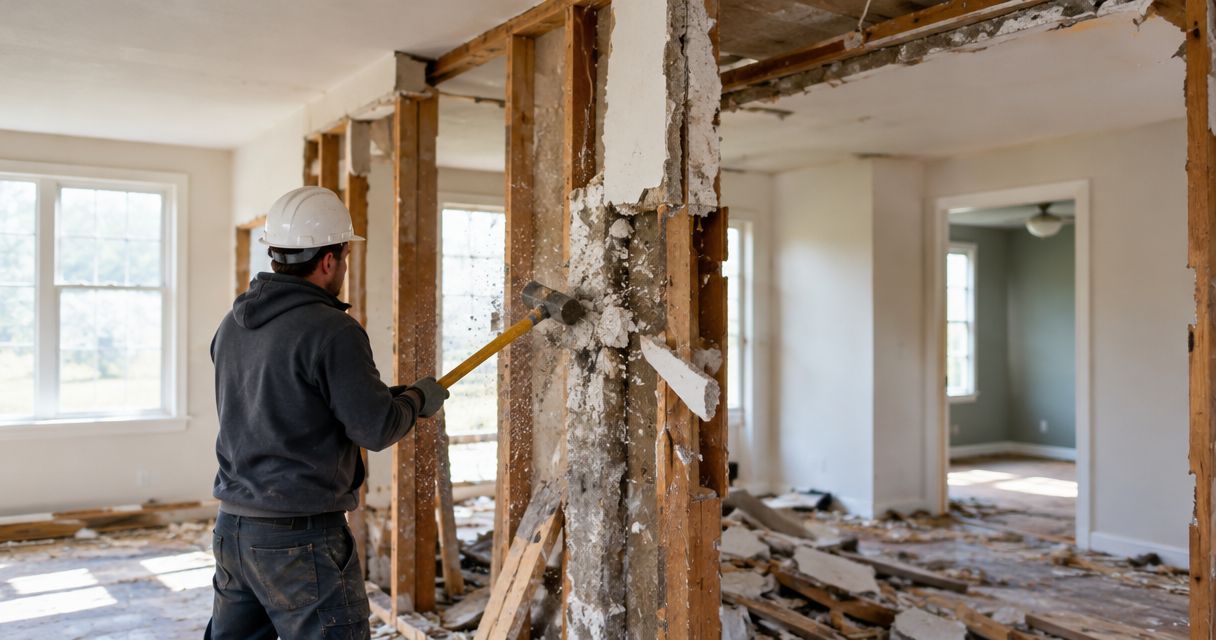
A junk removal company can remove a load-bearing wall only if it also has the qualifications, approved structural plan, and required authorization for that demolition work; hauling services alone are not enough. Before anyone cuts framing, a qualified structural professional must establish how the building will remain supported, and you must confirm permit and inspection requirements with the local building department.
- Can junk removal remove a load bearing wall? Only with qualified structural demolition work—not hauling alone.
- A structural engineer evaluates support requirements; a debris pickup quote does not replace a structural plan.
- Confirm permits, temporary support, utility work, and inspection responsibilities before demolition starts.
- Keep structural demolition and debris hauling clearly separated in your written scope.
Can junk removal companies remove a load-bearing wall during demolition?
Yes, but only when the company is qualified and authorized for structural demolition—not simply because it removes junk. A business offering demolition still needs to establish whether this particular wall falls within its approved scope.
For homeowners and property managers in Boise, Meridian, Nampa, and Caldwell, Idaho Junk Solutions offers junk removal, property cleanouts, and demolition services. Those service descriptions are not confirmation that load-bearing wall removal is included. Ask about the exact structural scope before booking.
| Provider or service | Best for | Main benefit | Important limitation |
|---|---|---|---|
| Junk removal crew | Collecting approved demolition debris | Handles loading and haul-away | Hauling does not establish structural demolition qualifications |
| Structural engineer | Evaluating loads and designing structural changes | Determines the required support approach | Engineering does not automatically include construction or hauling |
| Qualified structural demolition contractor | Performing approved structural removal | Connects demolition work to the structural plan | Confirm permits, utility work, inspections, and cleanup in writing |
| General contractor | Coordinating a larger remodel | Assigns responsibilities across trades | Verify who actually performs and supervises structural work |
You do not need to hire every provider separately. You do need a clear answer about who owns each responsibility.
Why this matters
A load-bearing wall carries building loads. Removing its framing without an adequate replacement load path can damage the structure and endanger people inside it.
That is a different problem from getting debris into a trailer. A clean room at the end of demolition does not prove the building above it is properly supported.
For a 2026 remodel, settle the structural questions before comparing haul-away quotes. Otherwise, you are comparing prices for work that has not been fully defined.
What must happen before a load-bearing wall comes out?
Treat structural wall removal as a construction project with a debris-removal component. The structural plan comes first; the hauling plan follows it.
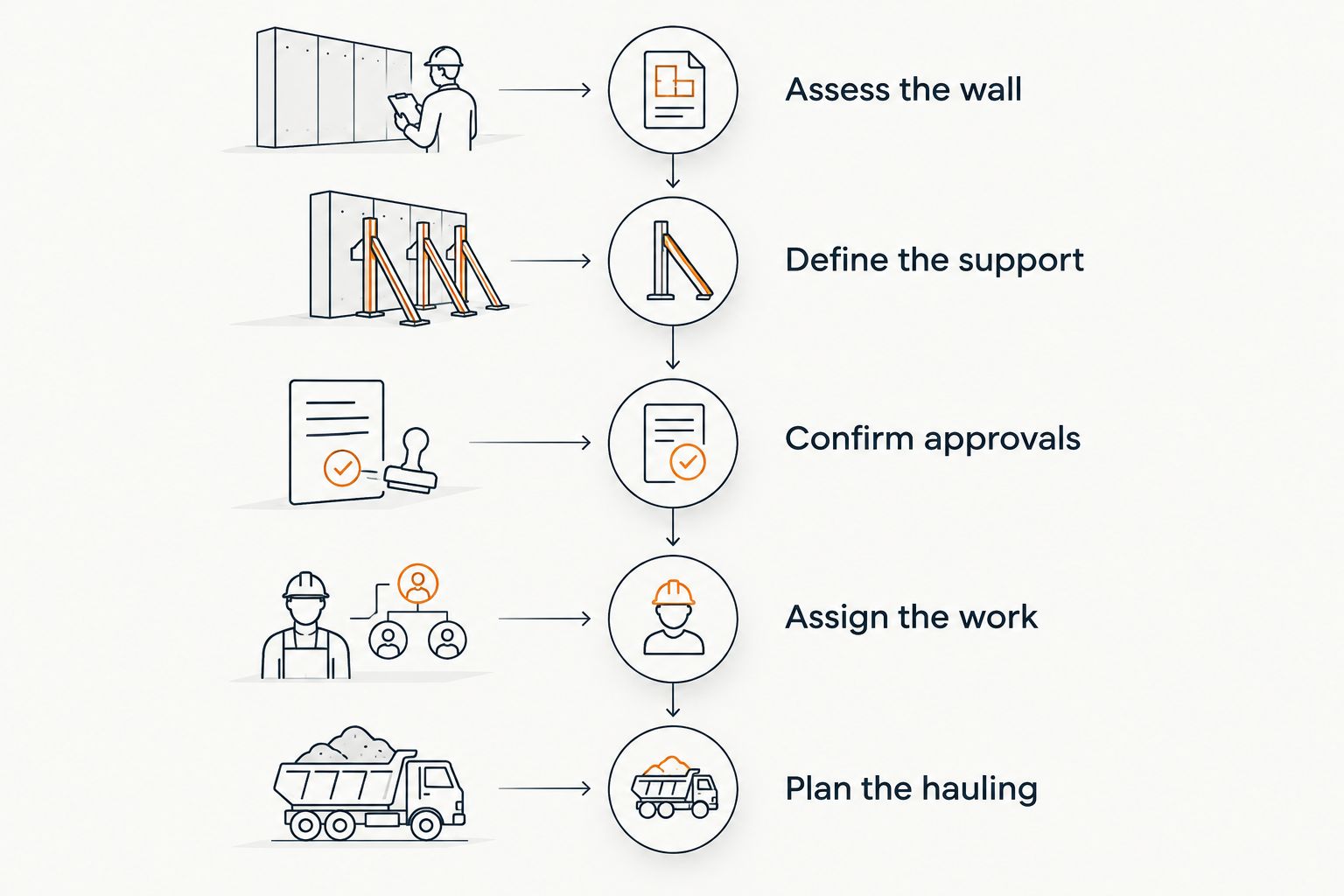
- Assess the wall. Have a qualified structural professional determine what the wall supports. Existing drawings help, but the actual building conditions matter.
- Define the support. Establish the permanent replacement support and any temporary support needed during construction. Do not select beams, posts, or connections from a generic online example.
- Confirm approvals. Ask the building department serving the property which permits, plans, and inspections apply. Do not assume nearby cities have identical procedures.
- Assign the work. Identify who performs structural demolition, utility disconnection or relocation, support installation, and inspection coordination. Put those assignments in the agreement.
- Plan the hauling. Confirm what debris will be removed, where it can be staged, and when the structural contractor will release the area for cleanup.
Keep the structural drawings and approved scope available to the people doing the work. If exposed conditions differ from the plan, stop the affected work and obtain direction from the responsible professional before continuing.
Structural demolition: confirm more than debris removal
A structural demolition agreement needs to describe the work on the building, not just the material leaving it. Ask who installs replacement support, who checks concealed conditions, and who handles required inspections.
For your 2026 project file, keep the approved plans, contractor agreement, permit information, and inspection records together. A text message saying the crew can remove a wall is not a substitute for those documents.
Before you approve the job, ask:
- Does the agreement explicitly include this load-bearing wall?
- Who is responsible for following the structural design?
- Who provides temporary support and permanent support installation?
- What happens if the crew uncovers unexpected framing or utilities?
- Who confirms the work is ready for inspection and subsequent trades?
Do not accept a hauling description as the entire scope for a structural alteration. Removing material and safely changing a building are separate obligations.
Debris hauling: useful after the structural work is defined
Debris hauling has a clear role in a wall-removal project. It removes approved waste so the next trade has room to work, without making the hauling crew responsible for structural decisions outside its agreement.
Idaho Junk Solutions junk removal is best for Treasure Valley homeowners, businesses, and property managers needing load-priced hauling and cleanouts. Its limitation for this question is straightforward: do not treat its general demolition offering as confirmation of load-bearing wall capability.
The company's load-pricing guidance refers to a 14-cubic-yard trailer. That capacity describes hauling space, not the amount of structural demolition included in a job. Discuss debris type as well as volume; a pile's footprint alone does not describe its weight or handling requirements.
Ask for clear load pricing confirmed before work starts. Keep engineering, permits, support installation, utility work, and finish repairs separately identified rather than assuming they are included in a hauling quote.
Why the scope of wall removal varies
The important differences between projects are structural conditions and assigned responsibilities. A short wall is not automatically a simple removal, and an open floor plan is not evidence that support can disappear.
- Loads above the wall. Floors, roof framing, and concentrated loads affect the replacement support design.
- Support below the wall. Loads need a suitable path through the structure to the foundation; removing one wall can affect more than that room.
- Concealed utilities. Electrical wiring, plumbing, and mechanical systems require identification and appropriate trade work.
- Temporary support. The building needs a safe support arrangement during the change, not just after installation is complete.
- Permit and inspection requirements. The building department determines the applicable approval process for the property and proposed work.
- Debris and property protection. Material type, staging, occupied areas, and the agreed removal route shape the cleanup plan.
For a 2026 estimate, give each bidder the same defined scope. Comparing a debris-only quote against a structural alteration proposal tells you nothing useful about value.
How do you tell whether a wall is load-bearing?
You cannot reliably clear a wall for removal from its appearance alone. Framing direction, drawings, and visible support points provide clues, but a qualified professional must evaluate the actual load path.
Do not assume a wall is non-bearing because it runs parallel to nearby joists, sounds hollow, or sits inside the house. Renovations and concealed framing can make simple rules misleading.
Your useful contribution is documentation: collect existing plans, describe prior alterations, and show the professional the spaces above and below the wall. Leave the structural determination to someone qualified to make it.
Do you need a permit to remove a load-bearing wall?
Confirm permit requirements with the building department before structural demolition starts. Structural alterations generally require review, but the required documents and inspections depend on the jurisdiction and project.
For a property in Boise, Meridian, Nampa, or Caldwell, identify the authority serving that address rather than relying on another homeowner's experience. Ask who submits the plans, who holds the permit, and who requests inspections.
For work scheduled in 2026, obtain current instructions directly from that authority. Do not rely on an old checklist or a contractor's statement that permits are never needed.
Can a junk removal crew haul the wall debris afterward?
Yes, a junk removal crew can handle agreed, accepted demolition debris after the area is safe for that work. Confirm the material list and access arrangements before scheduling pickup.
Separate loose debris from installed framing and support components. The structural contractor should identify what is released for removal; the hauling crew should not have to guess whether a post, brace, or beam is still needed.
Do not mix suspected hazardous material into the pickup pile. Idaho Junk Solutions does not offer hazardous-material pickup, handling, removal, or disposal; suspected hazardous materials require separate assessment and an appropriate specialist.
What should your written scope say?
A useful scope tells you what will happen, who will do it, and where each contractor's responsibility ends. It also gives the crew a way to stop and ask questions when the building does not match expectations.
Use these headings when reviewing the agreement:
- Structural work: Identify the wall and reference the applicable design documents.
- Utility work: Name the responsible trades and define disconnection or relocation responsibilities.
- Property protection: Specify protected floors, doorways, retained finishes, and the debris route.
- Cleanup boundary: State whether the job includes loose debris only or other expressly approved removal.
- Scope changes: Require agreement before additional work starts.
- Handoff: Define the condition in which the next trade receives the area.
For a 2026 rental turnover or commercial remodel, add access arrangements and a named decision-maker. Tenants, maintenance staff, and hauling crews should not receive conflicting instructions about what stays.
How do you coordinate pickup without disrupting the remodel?
Schedule around the structural contractor's work sequence, not an assumed wall-removal duration. Inspection timing and concealed conditions can change when debris is ready.
Idaho Junk Solutions uses one-hour arrival windows with ETA updates. That window helps coordinate access; it is not a promise that demolition, inspection, or loading will finish within one hour.
Before pickup, confirm parking, the carry route, and who can authorize changes. Ask about owner involvement if that matters to you, without assuming the owner attends every job.
Protect the property by agreeing on the route before material moves. Keep retained fixtures and structural components clearly separated from the removal area, and do not move structural debris merely to make the pickup easier.
FAQ
Can junk removal remove a load bearing wall during a remodel?
Only a company qualified and authorized for the structural demolition scope should remove a load-bearing wall. Junk hauling alone does not establish that capability; confirm the structural plan, permits, support work, and responsible contractor first.
Can I remove the drywall before someone checks whether the wall is load-bearing?
Do not begin exploratory demolition without an agreed assessment plan. Concealed utilities and suspect materials need consideration even when you intend to leave the framing untouched.
Does a demolition service automatically include load-bearing wall removal?
No, a general demolition offering does not automatically include load-bearing wall removal. Ask the company to confirm that specific structural scope and identify who is responsible for design, approvals, support installation, and inspections.
Can a contractor tell if a wall is load-bearing from a photo?
A photo alone is not enough to approve structural wall removal. A qualified professional needs sufficient information about the actual framing, loads, and support below the wall.
Does load pricing include engineering and a replacement beam?
Load pricing describes the hauling scope, not an automatic package of engineering and structural construction. Your written agreement must separately identify any design, permit, beam installation, utility, or repair work included.
Who should tell the hauling crew which materials can go?
The contractor responsible for the structural work should identify which materials are released for removal. Keep temporary supports, retained framing, tools, and fixtures outside the agreed debris scope.
What should I do if a partly removed wall starts moving or cracking?
Stop work, leave the affected area, and keep others away. Contact emergency services if there is immediate danger, and have the structure assessed by qualified professionals before anyone resumes work.
One last thing
An empty opening is not the same as a completed structural job. Replacement support, connections, required inspections, and the agreed handoff still matter after the old wall is gone.
Before approving the final cleanup, have the responsible contractor identify what must remain. A temporary brace can look like scrap lumber to someone who was only told to clear the room.