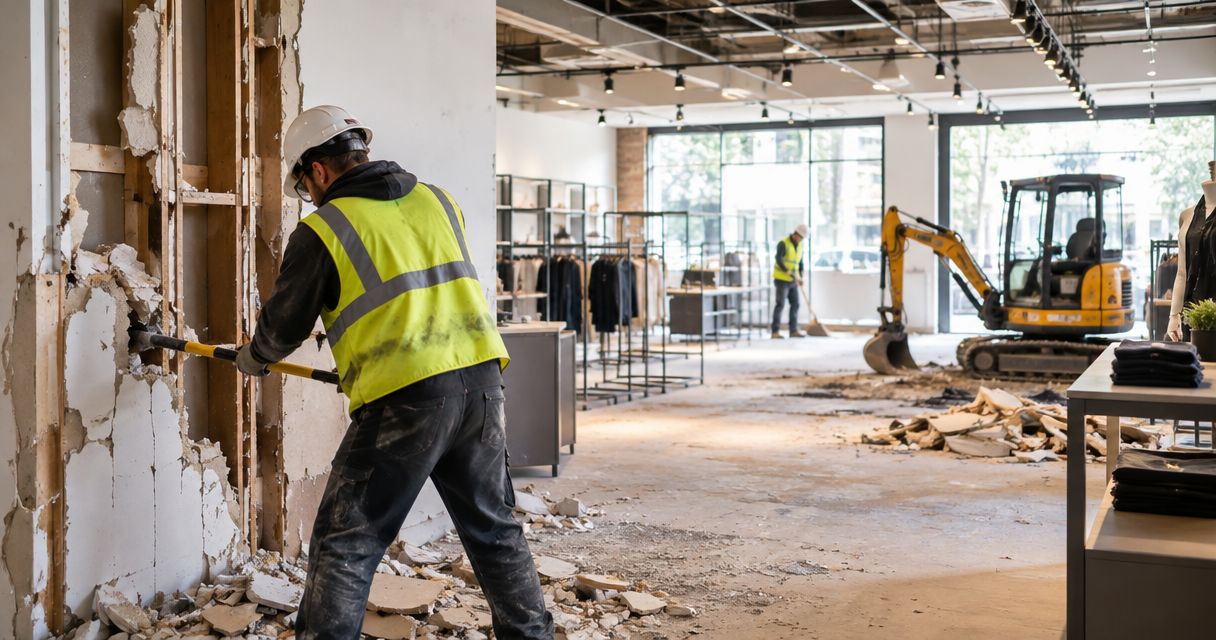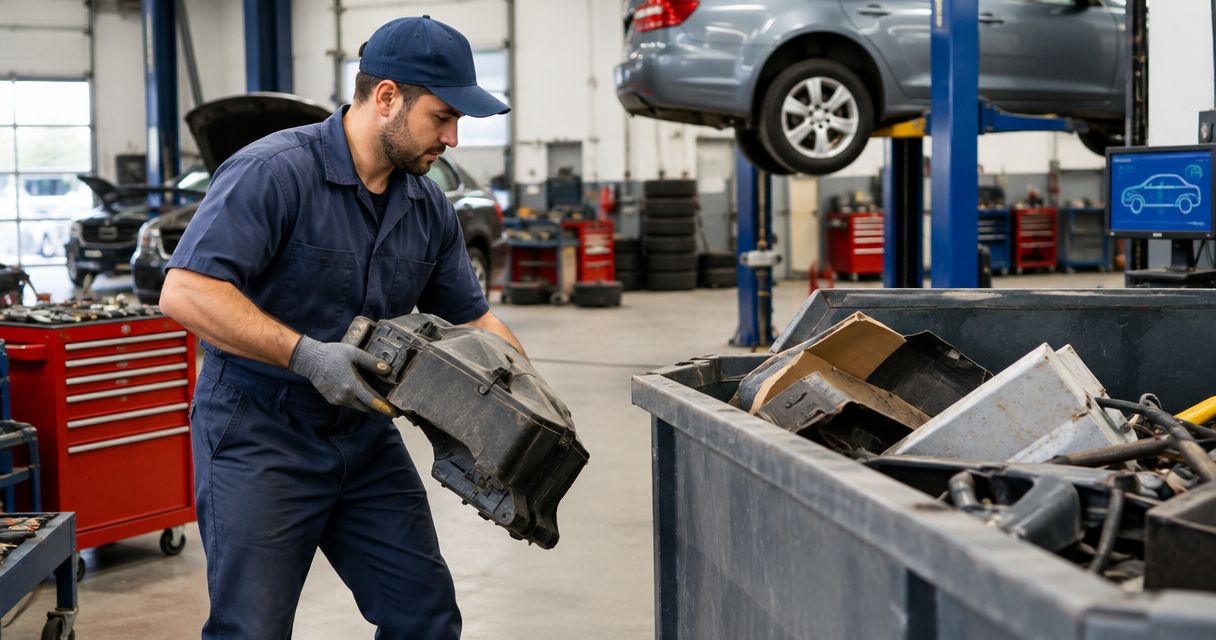
Auto shop and dealership junk removal is the clearing of approved unwanted items with the aim of returning shop, office, and storage space to useful work. This 2026 guide explains how to plan the haul without mixing ordinary junk with automotive waste, blocking service bays, or sending customer property out with the load.
- Junk removal for auto shops and dealerships starts with separating ordinary clutter from automotive waste and customer property.
- Idaho Junk Solutions offers load-priced hauling; confirm accepted items and the full scope before work starts.
- Choose full-service hauling for bulky cleanouts, not as a substitute for automotive waste management.
- Protect service access, identify a decision-maker, and approve the removal pile before loading.
Why junk removal matters for auto shops and dealerships
An auto business cannot treat every unwanted item as the same kind of trash. A broken waiting-room chair, a warranty-return part, and a container of used fluid require different decisions. The first job is sorting responsibility, not filling a trailer.
For a Boise, Meridian, Nampa, or Caldwell location, plan the cleanout around vehicle movement and work already on the schedule. A pile beside a service door creates a different problem from the same pile in an unused storage room. Prioritize the space you need back, then decide what must leave.
Start with this guide to commercial junk removal services in Boise when comparing general hauling options. For an automotive property, add explicit questions about excluded materials, customer belongings, and access through active work areas.
Plan your shop cleanout in six steps
1. Define the space you need back
Write a short scope before asking for a pickup. Name the rooms, storage areas, or outdoor piles involved and explain what those spaces need to do after the cleanout. Clearing a parts-storage aisle requires a different plan from emptying a dealership office before renovation.
For your 2026 cleanout plan, distinguish loose-item hauling from work that involves dismantling or demolition. Do not describe attached cabinets, anchored shelving, or a shed as ordinary loose junk. Those tasks need their own scope and approval.
Walk the property with someone who knows the inventory. A dusty box is not proof that its contents are disposable, particularly when parts returns, records, or customer belongings are involved.
- Name each area included in the job.
- Identify the operational space you want restored.
- Mark attached fixtures separately from loose items.
- Photograph the whole area, not just the largest object.
- Assign one person to approve what leaves.
2. Separate ordinary junk from automotive waste
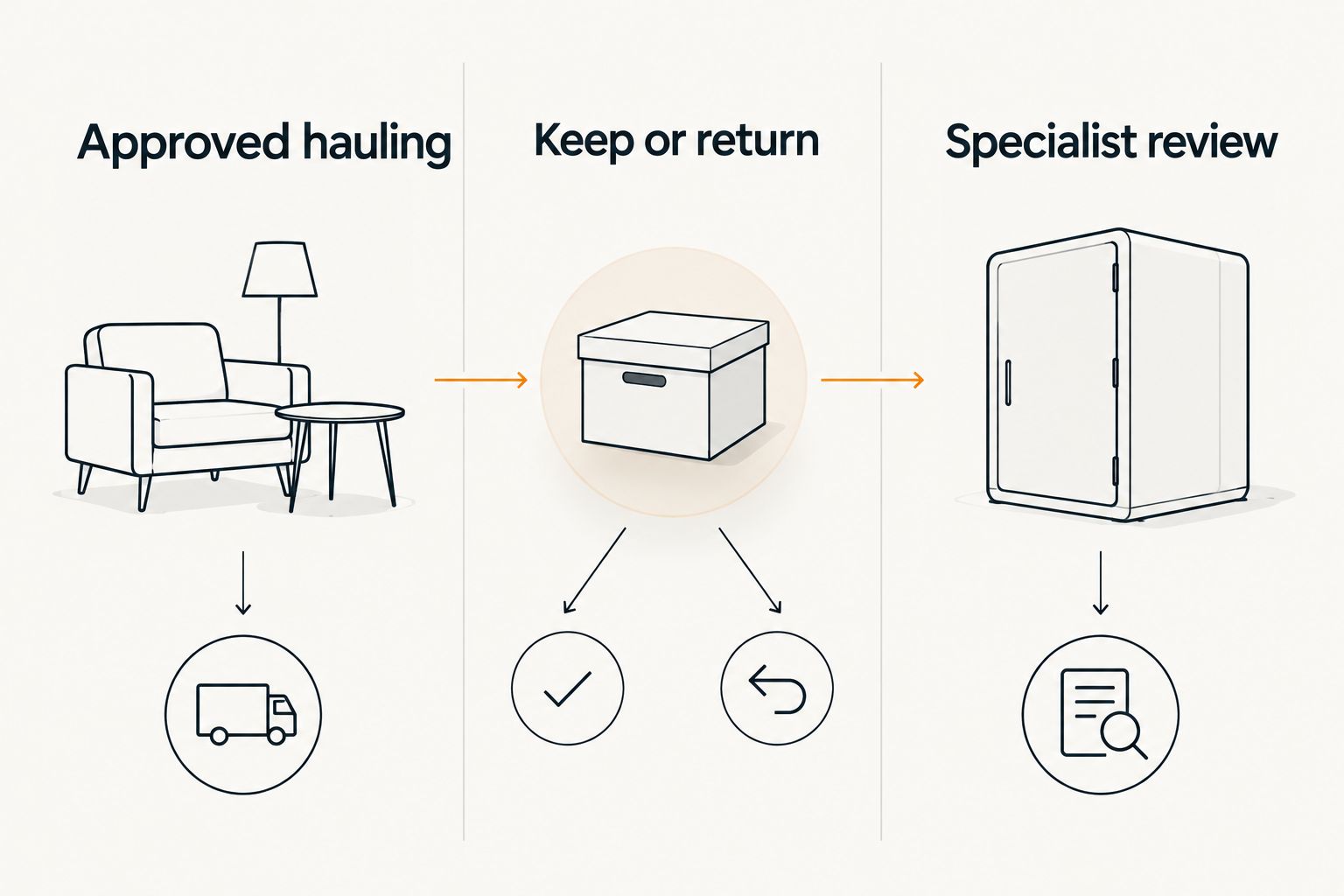
Use a marked layout before anyone loads anything. Create 3 staging zones: approved hauling, keep or return, and specialist review. These are decision zones, not permission to move unknown substances or damaged containers.
Ordinary clutter might include office furniture, packaging, and shelving that has already been safely taken down. Ask the hauler to approve the actual items. Do not assume that an object is acceptable just because it is dry or fits in a trailer.
Used fluids, batteries, contaminated absorbents, refrigerant-containing equipment, and unknown containers do not belong in an ordinary-junk pile without the appropriate waste review. Keep existing automotive waste arrangements separate from the cleanout. Never pour out a container to make it appear empty.
- Approved hauling: mark only items the hauler has accepted.
- Keep or return: isolate customer property and returnable parts.
- Specialist review: flag unknown contents and automotive waste.
- Leave unidentified containers closed and undisturbed.
- Keep paperwork with items awaiting an ownership decision.
3. Match the hauling method to the job
The manual route is straightforward: sort the approved material, arrange an accepted destination, and use your own suitable transport. That approach puts the carrying, loading, and scheduling on your staff. Compare that work with the space you need cleared and the equipment involved.
Idaho Junk Solutions is best for Treasure Valley auto businesses seeking load-priced hauling and full property cleanouts. The locally owned company also offers demolition, but demolition and hauling should be scoped separately when a project includes both.
Discuss your approved removal list with Idaho Junk Solutions rather than assuming every automotive item qualifies. Hazardous-material pickup, removal, handling, and disposal are not services the company offers. Owner involvement is part of the company's approach, not a promise that the owner attends every job.
For a 2026 dealership refresh, describe the project as a whole: office contents, back-room clutter, detached fixtures, and any separately proposed demolition. A clear description makes the boundary between services visible before work starts.
- Use staff hauling only for loads your team can manage safely.
- Compare full-service hauling for bulky or multi-area cleanouts.
- Consider a container when approved debris accumulates over time.
- Retain specialist arrangements for automotive waste.
- Confirm acceptance for tires, machinery, and unusual items individually.
4. Document the load and the removal route
Start with a phone camera and a written inventory. Take 4 photo views: the overall pile, the largest items, the loading route, and the proposed parking position. Add close-ups when labels or connections affect the removal decision.
The brand's load-size guidance uses a 14-yard trailer as its reference. That is a volume reference, not a promise that any material can fill the trailer to the top. Describe dense objects, awkward shapes, and attached components rather than estimating the job from floor area alone.
Show the route as it will exist on pickup day. A clear doorway in a photograph does not help if a vehicle, parts delivery, or customer queue blocks it when the crew arrives. Identify steps, narrow turns, fragile surfaces, and areas that must remain untouched.
- Photograph each removal area before moving piles together.
- List large or unusually heavy objects individually.
- Show doorways, turns, and the complete carry route.
- Identify a loading position away from vehicle movements.
- Mark surfaces and fixtures that need protection.
5. Confirm the scope before work starts
Load pricing should answer what is leaving and what work is included. Ask for the approved scope to distinguish hauling from dismantling, demolition, or other preparation. An estimate based on photographs still needs to match the actual job before loading begins.
Idaho Junk Solutions emphasizes clear load pricing confirmed before work starts, one-hour arrival windows, and ETA updates. Give the crew a site contact who can answer the phone and approve the agreed removal pile. Do not schedule around an assumed same-day pickup.
For your 2026 booking, explain any restrictions on truck access or customer-facing areas. Ask how the crew will handle a change if you discover additional material. The right time to resolve that question is before the extra items enter the load.
- Confirm the items and areas included in the job.
- Separate hauling from any proposed demolition work.
- Agree on the load price before work starts.
- Confirm the arrival window and site contact.
- Require approval before adding material to the scope.
6. Protect the work area and close out the job
Before arrival, remove vehicles from the agreed loading position and keep the carry route open. Leave connected equipment alone unless qualified personnel have completed the necessary disconnection. Do not ask a hauling crew to guess whether wiring, plumbing, or equipment is safe to disturb.
Walk the approved pile with the crew before loading. Point out retained items, restricted areas, and anything awaiting specialist review. If an item differs from its description, stop and resolve it rather than treating the original scope as automatic permission.
Finish with a walkthrough against your inventory. Confirm that agreed items are gone and retained property remains. Ask about the destination of reusable or recyclable material without assuming every item qualifies for donation or recycling.
- Keep vehicle traffic separate from the loading route.
- Identify connected equipment before anyone moves it.
- Reconfirm retained items with the crew.
- Check cleared areas against the approved scope.
- Record unresolved items for a separate decision.
Plan your shop cleanout
Discuss the removal list, load pricing, access, and arrival window before work starts.
Compare your cleanout options for 2026
Choose by material and workload, not just by the size of the pile. Full-service hauling, staff hauling, and containers solve different problems. None replaces a separate decision about automotive waste.
| Option | Best for | Main advantage | Key limitation |
|---|---|---|---|
| Staff hauling | A small, approved load your team can safely move | You control the sorting and timing | Staff handle loading, transport, and destination checks |
| Full-service junk hauling | Bulky clutter and multi-area property cleanouts | Combines carrying and hauling in an agreed scope | Accepted materials and preparation still need confirmation |
| Container rental | Approved debris accumulating during an ongoing project | Provides a designated collection point | Requires placement space and your own loading labor |
| Specialist waste service | Automotive waste requiring a separate handling route | Keeps waste decisions outside ordinary junk hauling | Does not necessarily clear furniture or general clutter |
For a mixed project, combine methods rather than forcing everything into one load. A service department can retain its existing waste arrangements while booking separate hauling for approved office and storage clutter. That keeps the scope clear without pretending one contractor handles everything.
Common mistakes auto shops and dealerships make
Treating every discarded item as ordinary junk
A trash label does not identify a material or establish that a hauler accepts it. Packaging, parts, fluids, and equipment need separate decisions. Keep unknown material out of the approved hauling zone until its contents and removal route are established.
Letting appearance decide ownership
An old part can still be a return, and a box in a back room can belong to a customer. Have the responsible manager approve disposal. Remove records and personal information from furniture or storage units before those items leave.
Booking hauling before defining demolition
An anchored shelf or attached fixture changes the task. For a 2026 renovation, separate loose contents, disconnection, dismantling, and demolition in the written scope. Do not expect a junk pickup to include each of those jobs automatically.
Using the active service lane as a staging area
A convenient pile can obstruct the very work the cleanout is meant to support. Choose staging and loading positions around vehicle access, customer movement, and the crew's carry route. Keep required exits and access routes clear throughout the job.
Assuming volume settles every detail
Load size does not describe contamination, connections, ownership, or material acceptance. Send an inventory alongside photographs. If a quoted pile changes, get the revised scope approved before the additional material is loaded.
FAQ
What's the best junk removal option for an auto shop?
Full-service hauling is a practical choice for approved bulky clutter when you want carrying and transport included in the agreed job. Staff hauling suits manageable loads, while automotive waste needs its own handling decision.
Does Idaho Junk Solutions remove hazardous automotive waste?
No. Idaho Junk Solutions does not offer hazardous-material pickup, removal, handling, or disposal. Keep automotive waste separate from the approved ordinary-junk load and use the appropriate specialist arrangements.
Can a junk removal crew take old tires and car parts?
Confirm acceptance item by item before booking. Describe the material, condition, contamination, and any fluids or attached components; do not assume all tires or automotive parts qualify for ordinary hauling.
How does load pricing work for a dealership cleanout?
Load pricing uses the amount being hauled as the basis for the job, with the actual scope confirmed before work starts. Share photographs and an inventory, and distinguish loose-item hauling from demolition or other preparation.
Do we need to move everything outside before pickup?
Agree on the staging arrangement with the hauler rather than assuming curbside placement is required. Show where items sit and the full carry route, including stairs, narrow doors, and active work areas.
Can we book hauling for a dealership renovation?
Yes, hauling can form part of a renovation plan, but loose contents and demolition need clearly defined scopes. Arrange required disconnection work separately before connected equipment or fixtures are disturbed.
What should our service manager prepare before arrival?
Prepare the approved removal list, a clear loading route, and a reachable decision-maker. Separate customer property, returnable parts, records, and materials awaiting specialist review before the crew starts loading.
One last thing
Photograph what stays, not just what goes. In a crowded parts room or shared dealership storage area, a keep-list photo gives the manager and crew a common reference. Take it before the pile changes shape, then use it during the final walkthrough.
For your 2026 cleanout, make the handoff simple: one approved inventory, one site contact, and a clear boundary around excluded material. The point is not just an empty corner. It is a space your staff can use without a second round of sorting.