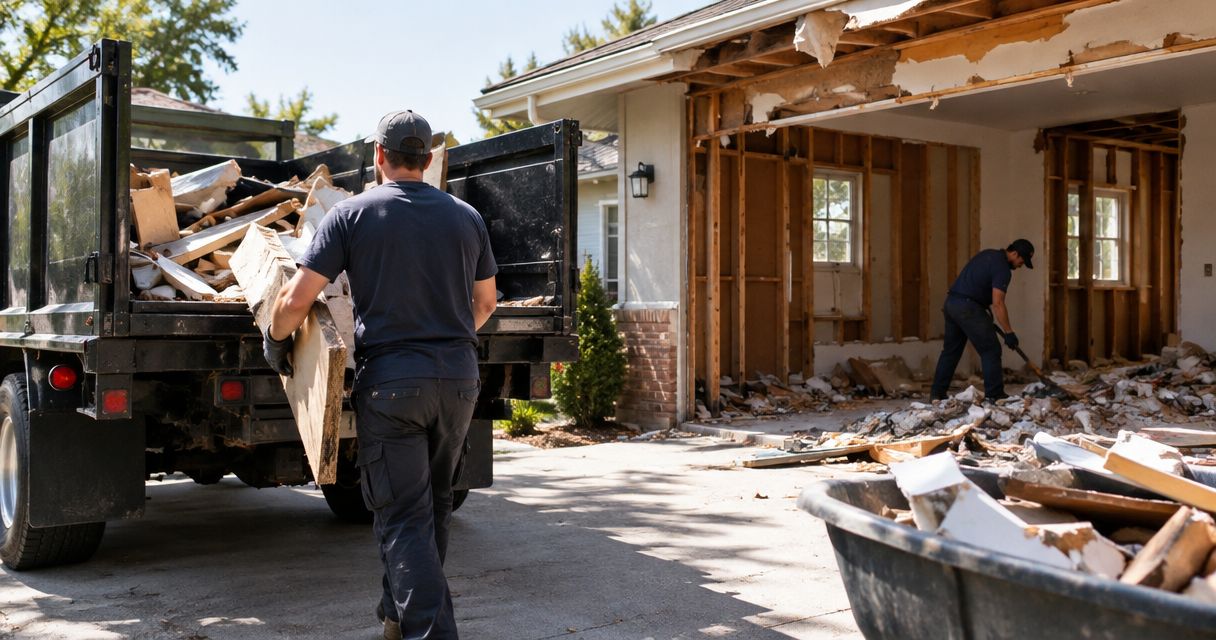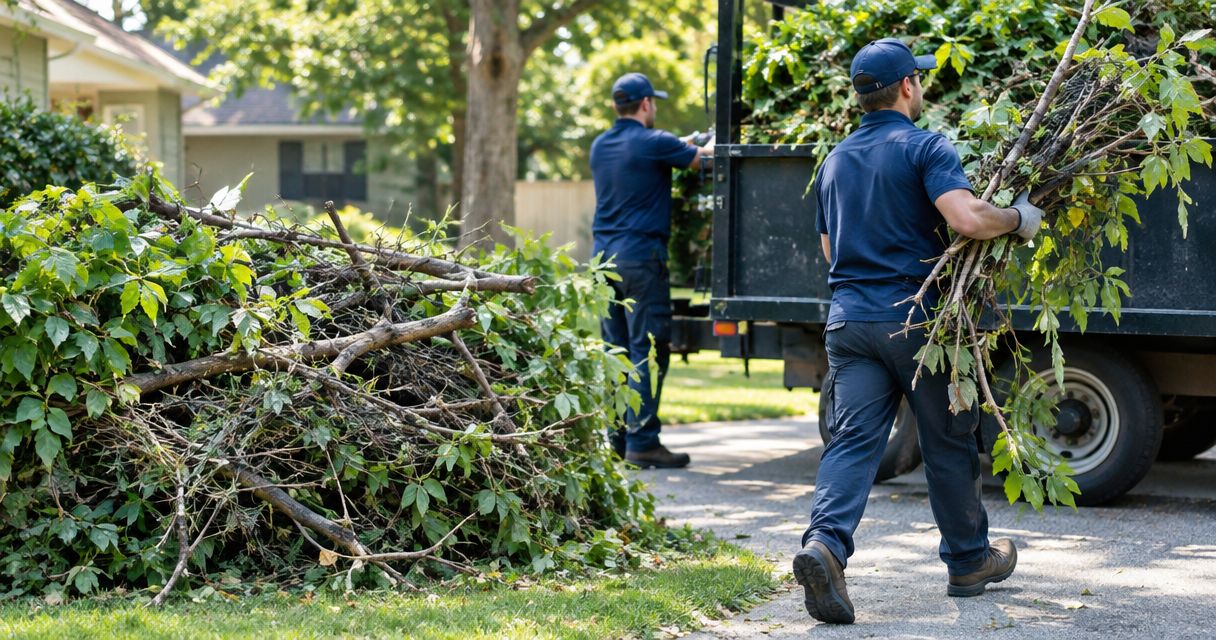
Yes, junk removal can include yard waste and tree branches when the hauler accepts the material and the job is debris pickup rather than tree cutting. Before booking, confirm the contents, branch sizes, and loading arrangements; soil, stumps, treated lumber, and hazardous materials need separate answers, not an assumption that everything outdoors belongs in the same load.
- For junk removal yard waste tree branches pickups, confirm material acceptance before combining piles.
- Idaho Junk Solutions offers load-priced junk removal; confirm your yard debris scope before booking.
- Branches already on the ground are a different job from cutting standing trees or grinding stumps.
- Keep chemicals and unidentified containers out of yard debris; never hide them under branches.
Can junk removal take yard waste and tree branches?
Yes—subject to the hauler confirming what is in the pile. Describe the materials individually instead of asking whether the company takes “yard stuff.” A pile of dry branches is not the same job as branches mixed with dirt, broken fencing, and leaking containers.
When reviewing junk removal and cleanout services, ask for confirmation of your actual pile. Use this table to describe the job, not as a blanket acceptance list.
| Material or job | Best for | Practical advantage | Limitation to confirm |
|---|---|---|---|
| Loose branches already cut | A pruning-debris pickup | The cutting is already finished | Accepted branch length and thickness |
| Leaves and grass clippings | Seasonal yard cleanup | Easily identified when kept separate | Loose versus bagged loading requirements |
| Logs and stump sections | Cleanup after tree work | Clearly defined pieces can be photographed | Weight, dimensions, and loading requirements |
| Mixed outdoor junk | A broader property cleanout | Several cleanup tasks can be discussed together | Each material needs approval |
| Standing trees or attached limbs | Tree-care assessment | Addresses cutting before hauling | Do not assume junk pickup includes tree work |
The distinction is straightforward: removing debris from the ground does not automatically include creating that debris. Get cutting, digging, demolition, and hauling described separately before approving work.
Why this matters
An unclear yard cleanup request creates an unclear scope. You might mean a branch pile beside the driveway, while the person quoting the work pictures an entire backyard full of mixed debris.
For a 2026 pickup in Boise, Meridian, Nampa, or Caldwell, give the street location, material list, and access details together. A city name alone does not explain the work. Photos of the pile and the route out do.
The biggest improvement you can make before asking for an estimate is separating what must leave from what must stay. That protects firewood, landscaping materials, irrigation parts, and anything else that looks like discarded material but still has a purpose.
What should you confirm for each kind of yard debris?
Branches and brush: confirm size before cutting
For branch pickup, identify whether the material is already cut and resting on the ground. Show the longest branches and thickest ends rather than photographing only the leafy side of the pile.
Ask about accepted dimensions before doing extra cutting. Do not spend an afternoon shortening every branch to a guessed requirement. Do not climb, cut overhead, or work around utility lines to prepare a hauling job; arrange qualified help for that work.
A branch that still supports another limb or remains attached to a damaged tree is not simply loose debris. Explain that condition before anyone arrives.
Leaves and grass: confirm loose or bagged loading
Keep leaves and grass separate from household trash while you confirm loading instructions. If you have already bagged them, tell the hauler what is inside and whether the bags have been sitting outside in wet weather.
Bagging helps identify and contain material, but it does not establish acceptance. Ask whether bags should remain closed, be opened for inspection, or be handled another way. Follow the confirmed instructions rather than buying supplies first.
Do not conceal sharp objects, animal waste, or chemical containers inside bags of leaves. Describe unexpected contents before requesting pickup.
Logs, stumps, and soil: ask separately
Logs, stump sections, and soil deserve their own description because volume does not explain how difficult a piece is to move. Photograph individual pieces as well as the whole pile, and identify anything still rooted in the ground.
Stump hauling is not stump grinding. Likewise, hauling loose soil is not excavation. Ask whether the material is accepted and whether any preparation is required before adding it to the agreed job.
Avoid filling containers so heavily that you cannot move them safely. There is no universal branch size or soil-container limit that applies to every hauling company.
Fencing and outdoor junk: keep the scope visible
Old fence boards, wire, patio furniture, and broken planters are not interchangeable with clean branches. Keep these items visible and list them separately when describing a property cleanout.
If a fence or shed is still standing, say so. Taking away loose boards is different from dismantling a structure, removing posts, or disturbing concrete footings.
For your 2026 estimate request, distinguish loose debris, attached structures, and materials requiring separate approval. Those descriptions tell the hauler more than a single total-pile photo.
Why yard-waste pickup requirements vary
The right question is not just whether a truck can carry the pile. The accepted material, preparation, and work involved determine whether the pickup fits the service.
- Material type: Branches, leaves, soil, and construction scraps need separate identification.
- Piece size: Long limbs and bulky stump sections need a clear loading plan.
- Weight: A pile’s visible size does not establish its weight.
- Mixed contents: Wire, nails, broken glass, and containers change what the crew must inspect.
- Work scope: Loading cut branches is different from cutting trees or digging out roots.
- Access: Gates, stairs, slopes, and parked vehicles affect the route from the pile to the loading area.
Access information is about planning the work; do not assume it creates an extra charge. Get the agreed scope and pricing confirmed before loading starts, especially when the pile includes more than ordinary loose yard debris.
How should you prepare a yard-waste pickup?
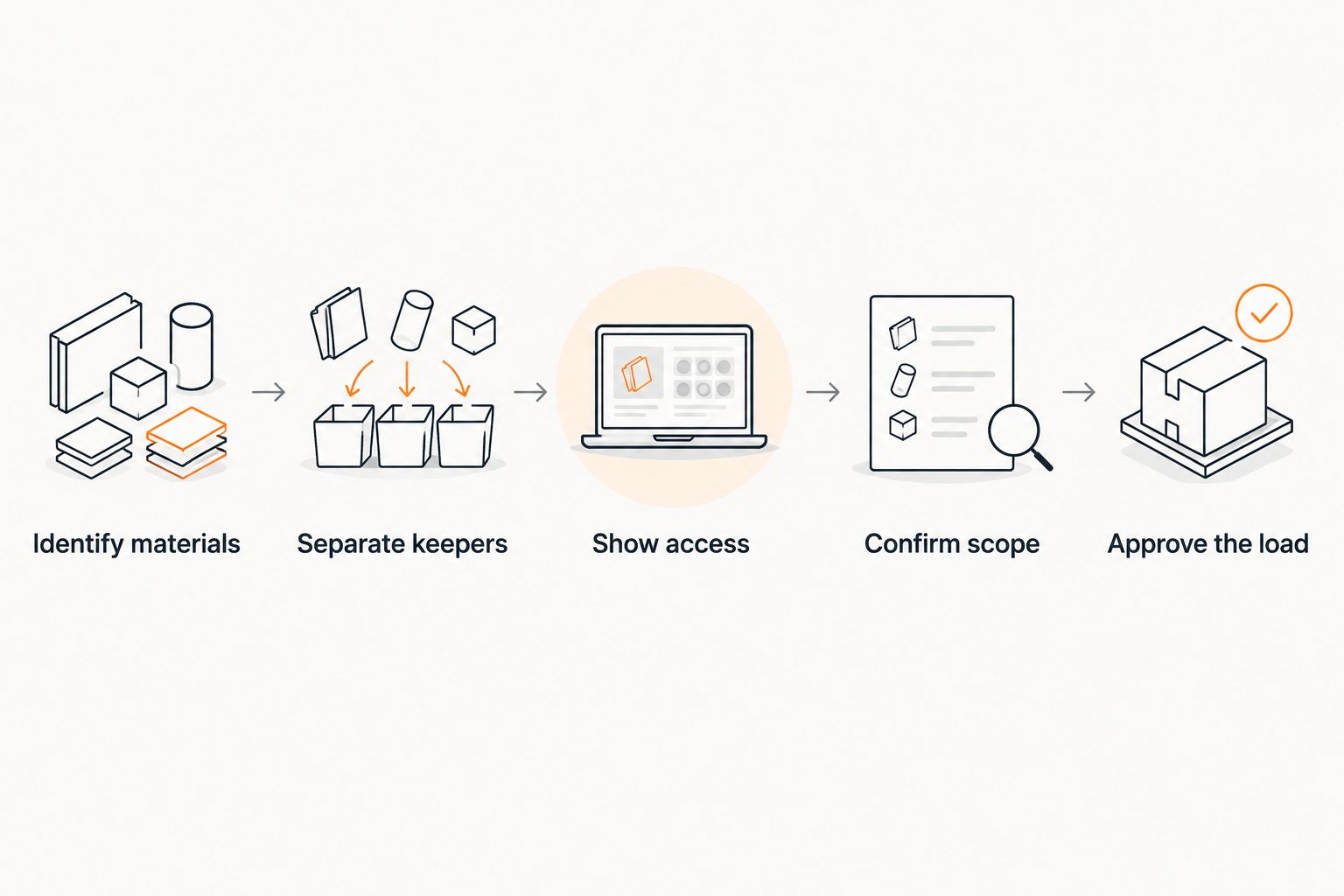
Use this sequence before moving material around. The goal is a clear, safe pickup—not doing the hauling crew’s job in advance.
- Identify materials. List branches, leaves, logs, soil, fencing, and other contents separately. Include anything underneath the visible surface.
- Separate keepers. Mark firewood, usable lumber, garden supplies, and other items that stay. Keep them apart from the removal area.
- Show access. Photograph the gate, path, steps, and loading approach. Mention locked gates and animals that need to be secured.
- Confirm scope. Ask what is accepted, what preparation is required, and whether the work includes anything beyond loading.
- Approve the load. Walk through the agreed removal area before loading begins and point out anything excluded.
Take one wide photo that shows the full removal area, then closer photos of anything unusually large or difficult to identify. Include a familiar reference object where useful, but do not stand on an unstable pile to get the shot.
For rental properties, identify who can authorize additions. A tenant pointing to another pile should not replace the property manager’s approved scope. Put exclusions in writing when several people have access to the property.
How does load pricing apply to branches?
Load pricing describes the amount of hauling space used, but a branch pile on the ground is not a precise trailer measurement. Irregular limbs leave gaps, and a photo cannot establish exactly how the material will load.
The brand’s load-size guidance uses a 14-cubic-yard trailer. Half of that stated volume is 7 cubic yards; that is a volume calculation, not a promise about how many branches fit or a weight allowance. Logs, tangled brush, and loose leaves do not pack alike.
Idaho Junk Solutions is best for Treasure Valley customers who want load-priced junk removal and property cleanouts with pricing confirmed before work starts. The limitation is equally important: a general junk-removal description does not confirm every kind of yard material, cutting task, or heavy stump for your particular job.
For a 2026 booking, ask which load size the approved debris represents and what work that scope includes. If you add another pile, confirm the revised scope before it is loaded. Do not rely on an estimate for branches to cover an unmentioned fence teardown.
The company provides one-hour arrival windows with ETA updates. Use the booking conversation to confirm your window and property-access arrangements; do not treat an arrival window as a promise that the entire job takes one hour.
Confirm your yard cleanup scope
Describe the materials, show the access route, and confirm load pricing before work starts.
Can I combine branches with a full property cleanout?
Yes, you can request a combined scope, but each material still needs approval. List the branch pile alongside garage junk, outdoor furniture, and other removal areas instead of treating the yard as an automatic add-on.
For a landlord or homeowner preparing a property for sale, combining approved work creates one clear removal list. The drawback is that a mixed job is easier to misunderstand unless you mark what stays and identify anything requiring demolition rather than pickup.
Idaho Junk Solutions offers full property cleanouts and demolition as well as junk removal. Ask which parts of your job belong in each scope; do not assume hauling includes disconnecting utilities, cutting trees, or dismantling every outdoor structure.
Do I need to bag leaves and bundle branches?
No universal bagging or bundling rule applies to every junk hauler. Ask for the company’s instructions before buying bags, tying bundles, or cutting material into smaller pieces.
For your 2026 pickup, describe how the debris sits now. If it is scattered across the yard, say that; if it is already piled beside the driveway, show that instead. The quoted work should reflect the real starting condition.
Will yard waste be recycled or composted?
Do not assume yard debris will be recycled or composted just because it is plant material. Ask the hauler what destination is planned and whether keeping branches separate from other junk changes the disposal options.
Mixed trash, treated lumber, and unidentified contents need disclosure. If a specific disposal route matters to you, resolve that question before approving pickup rather than asking after the trailer leaves.
FAQ
Can junk removal take tree branches already cut down?
Junk removal can include cut branches when the hauler accepts their size and condition. Confirm the material and loading requirements before booking; do not assume the pickup includes additional cutting.
Can I put leaves and grass clippings in the same pile as branches?
Ask the hauler before combining leaves, grass clippings, and branches. Keeping materials separate until acceptance is confirmed makes the contents easier to describe and inspect.
Will a junk removal crew cut down my tree?
Do not assume junk removal includes cutting down a tree. Describe standing trees and attached limbs separately from loose debris and arrange qualified tree work where needed.
Can junk removal take a stump that is still in the ground?
A stump still in the ground requires more than loading loose debris. Confirm whether extraction or grinding is needed and who will complete that work before requesting stump hauling.
Can I leave pesticide containers under a branch pile?
No—keep pesticide containers out of the branch pile and disclose them before booking. Idaho Junk Solutions does not offer hazardous-material pickup, handling, removal, or disposal; use an appropriate authorized disposal route.
Do I have to move all the branches to the curb?
Ask about the loading plan before moving branches to the curb. Show the current pile and access route so the approved scope reflects where the debris actually sits.
How do I get a useful estimate for a backyard cleanout?
Send a material list, full-pile photos, and pictures of the route out of the yard. Identify large pieces, attached structures, and items that stay, then confirm the scope and load pricing before work starts.
One last thing
Photograph the bottom of the pile when you can do it safely. Old wire, fence scraps, or forgotten containers underneath the branches can change the job more than the leafy material on top.
Before your 2026 pickup, name the hidden contents and mark the keepers. A clear removal boundary is more useful than a neatly stacked pile with an unclear scope.