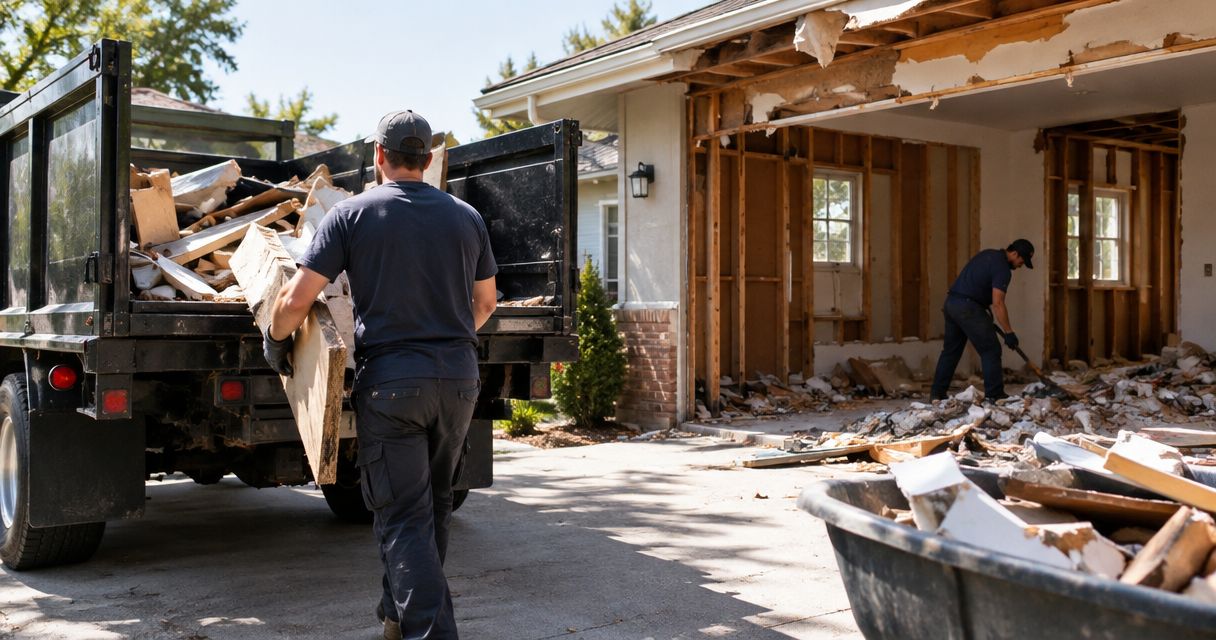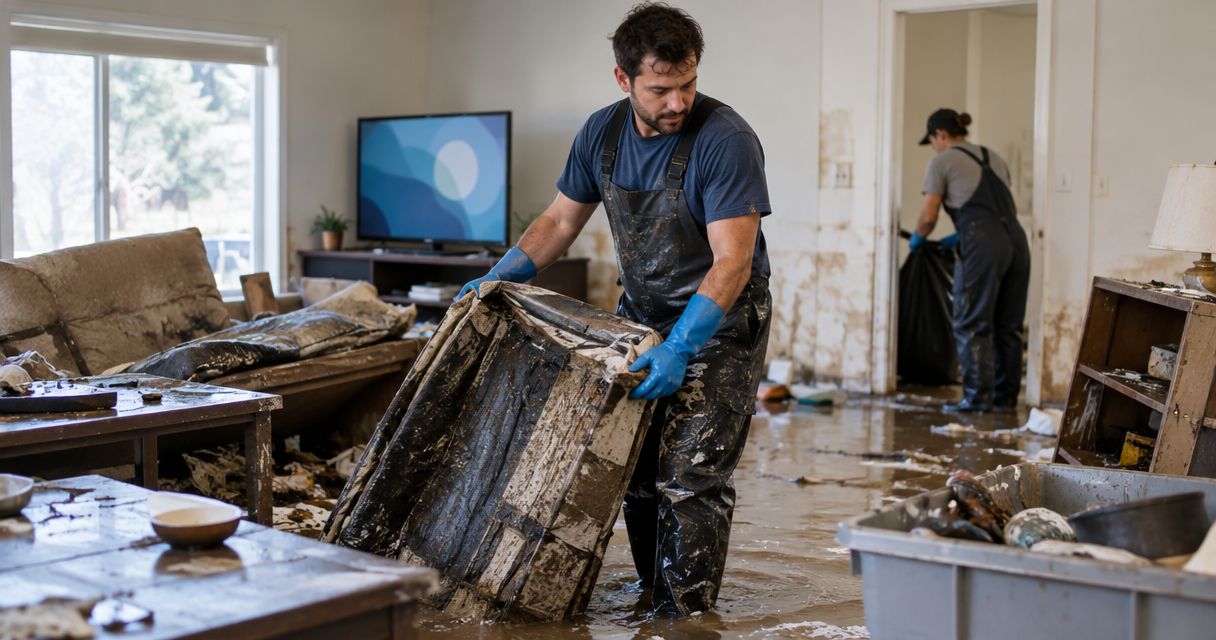
Yes, junk removal after flood or fire is an option for accepted, nonhazardous contents and debris once the property is safe to enter. Hauling does not replace water extraction, smoke cleanup, contamination assessment, or structural repairs, and the hauling company must approve the material before loading starts.
- Junk removal after flood or fire handles accepted debris, not water extraction, smoke cleanup, or hazardous-material disposal.
- Idaho Junk Solutions offers load-priced property cleanouts; disaster-damaged material needs approval before pickup.
- Confirm safe access, document losses, and separate keep items before authorizing a cleanout.
- For Treasure Valley properties, book hauling around restoration work—not instead of it.
Is junk removal available after a flood or fire?
Yes—but the condition of the property and the material determines whether ordinary junk hauling fits the job. A damaged chair and a room containing contaminated debris are not the same removal request. Describe what happened before asking a crew to take anything.
Idaho Junk Solutions provides junk removal and property cleanout services for homeowners, businesses, and property managers in the Treasure Valley. That does not mean every flood-soaked or fire-damaged item qualifies for pickup. Get the proposed load accepted before scheduling the work.
| Service | Best for | Main benefit | Important limit |
|---|---|---|---|
| Junk removal | Accepted, nonhazardous contents in an accessible, safe area | Removes approved unwanted items | Does not restore the building or treat contamination |
| Disaster restoration | Water, smoke, drying, and contamination concerns | Addresses damage that hauling leaves behind | Confirm whether contents hauling is included |
| Demolition | Approved removal of damaged building components or structures | Removes material that requires dismantling | Requires its own scope, safety review, and applicable approvals |
These services solve different problems. You might need restoration before hauling, or a demolition assessment instead of a contents pickup. Choose the service by the work required, not by whichever crew can arrive first.
Why this matters
A cleared room is not necessarily a safe room. Removing furniture leaves electrical hazards, damaged framing, moisture, and contamination untouched unless the appropriate professionals address them separately.
For a 2026 cleanout in Boise, Meridian, Nampa, or Caldwell, make the first decision about eligibility—not trailer size. Establish whether the property is safe, which materials are accepted, and who has authority to approve disposal. Those answers keep a straightforward hauling request from turning into an unsuitable job at the doorway.
After a flood: confirm what touched the water
Flood damage needs more explanation than “everything got wet.” Tell the contractor whether the water came from a plumbing failure, outside flooding, or a sewage backup. If you do not know, say so rather than describing the contents as clean.
Water source matters because contamination changes the work required. Do not ask an ordinary hauling crew to sort through sewage-contaminated belongings or decide whether an unknown residue is safe. Get an appropriate assessment before arranging removal.
For each proposed pickup area, identify:
- The contents: Furniture, boxes, appliances, loose belongings, or building debris.
- The exposure: What water reached the items and whether contamination is known or suspected.
- The location: Basement, living area, garage, outbuilding, or exterior pile.
- The access: Whether the route has standing water, damaged flooring, or electrical concerns.
- The decision: Which items you have authorized for disposal and which remain under review.
Dry does not automatically mean safe or accepted. Drying an item does not establish that contamination has been addressed. Likewise, moving a questionable item outside does not change what the material is.
Do not carry heavy, saturated contents through an unsafe building just to make pickup easier. Describe their location and let the relevant contractors establish a safe plan.
After a fire: separate contents removal from building damage
A fire-damaged property requires a different conversation from a routine garage cleanout. Tell the contractor which areas burned, where smoke traveled, and whether firefighting water affected the contents. Do not enter a restricted or unstable area to take better photos.
Fire debris is not automatically ordinary junk. Damaged containers, unknown powders, exposed building materials, and residues need assessment before anybody decides how to handle them. Idaho Junk Solutions does not offer hazardous-material removal, handling, or disposal.
If the building needs walls, ceilings, flooring, or structural components removed, describe that work separately. A contents cleanout is not permission to start demolition. Any proposed demolition needs its own approved scope and applicable requirements checked before work begins.
Ask the professional responsible for assessing the property to identify safe work areas and remaining restrictions. A hauling crew needs a clear working boundary, not a general statement that the fire is out.
What should you confirm before booking in 2026?
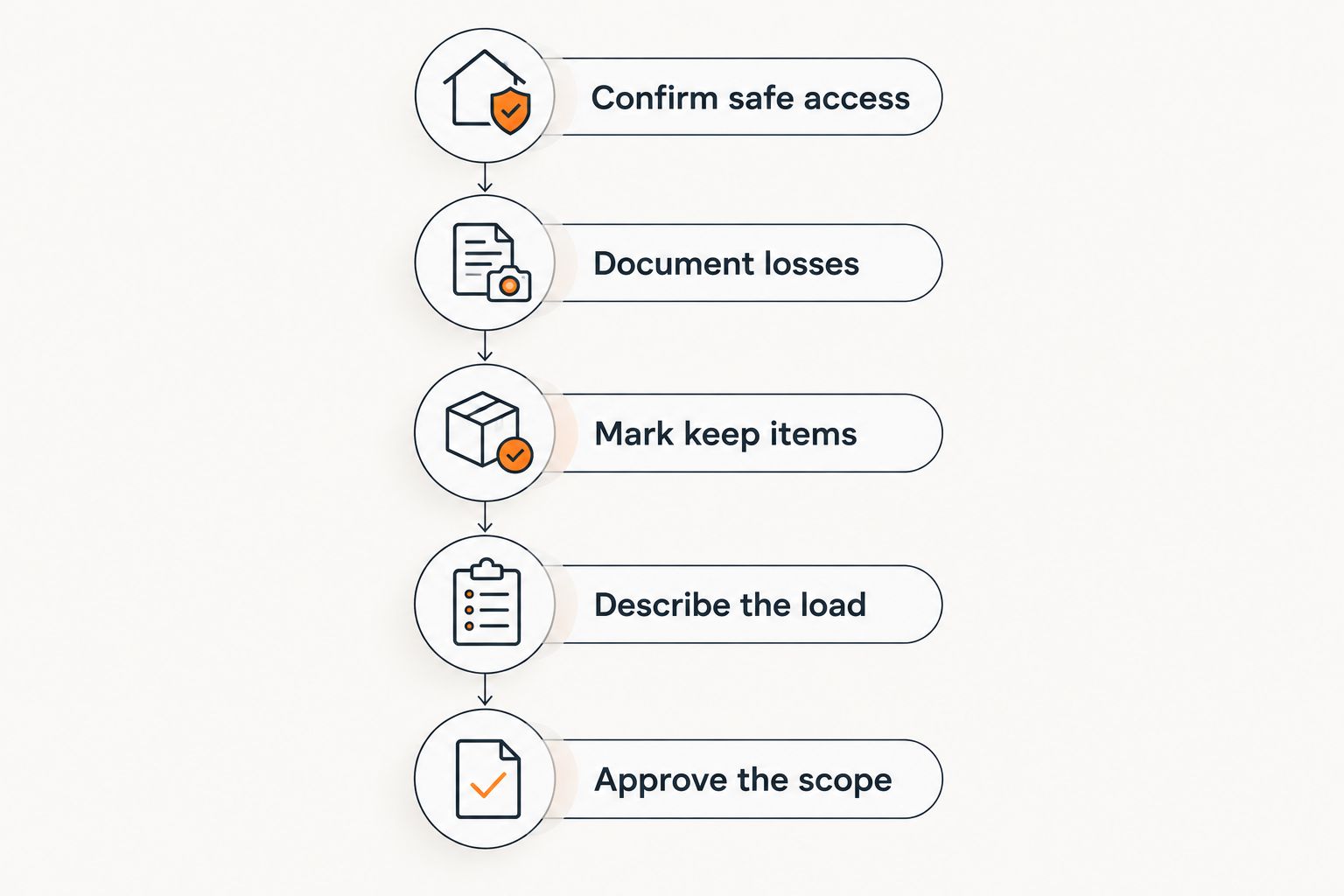
Use this sequence before requesting a firm pickup appointment. It keeps safety decisions separate from disposal decisions and gives the contractor enough information to assess the request.
- Confirm safe access. Resolve entry restrictions and ask the appropriate professionals about structural, electrical, and contamination concerns. Do not treat an open door as clearance to enter.
- Document losses. Photograph affected contents from a safe location and make an inventory. Ask your insurer what documentation or inspection it needs before disposal.
- Mark keep items. Identify belongings, records, tools, and equipment that must stay. Keep undecided items out of the approved removal scope.
- Describe the load. Send safe-to-obtain photos and a plain list of proposed items. Include the damage source, material condition, location, and access restrictions.
- Approve the scope. Confirm what the contractor accepts, what stays behind, and the load pricing before work starts. Assign one person to approve changes.
A useful handoff identifies both the removal area and the exclusions. “Clear the basement” leaves too much room for error when stored records, damaged furniture, and restoration equipment share the same space.
Why the removal scope varies
Two properties affected by the same event can need different work. A garage with approved loose contents is a different job from a house with damaged floors and materials awaiting assessment.
These factors determine what belongs in the hauling request:
- Material condition: Ordinary unwanted contents and suspected contaminated material require different decisions.
- Safety restrictions: Entry limitations define where a crew can work and what must wait.
- Amount to remove: A few accepted items and a full property cleanout need different load planning.
- Contents versus construction: Loose belongings are a different scope from attached materials that need demolition.
- Disposal authorization: Insurance review, ownership questions, or an undecided keep list leave items outside the approved load.
- Other contractors: Restoration equipment and active repair areas need clear boundaries and coordination.
Do not describe these factors as automatic extra charges. They define the job first. Confirm how the actual accepted scope affects the quote rather than assuming every complication carries a surcharge.
How does load pricing apply to damaged contents?
Idaho Junk Solutions uses load pricing confirmed before work starts. For an accepted cleanout, get agreement on the contents being removed and the load involved. Do not assume that a trailer estimate approves every material in the pile.
The brand's load-sizing guidance uses a 14-cubic-yard trailer. A quarter of that nominal volume is 3.5 cubic yards, and half is 7 cubic yards. Those are volume references—not promised capacities for wet, dense, or disaster-damaged material, and not confirmation that a load is accepted.
Describe bulky items and dense debris separately. Photos of a room show the contractor more than a guess that everything is “about half a trailer,” especially when items remain behind furniture or inside cabinets.
Ask how additions will be approved if you change the removal list. Pricing you know before work starts depends on a scope everybody understands. Separate hauling from restoration, repairs, and demolition so you know which work each agreement covers.
Who is the right fit for the hauling stage?
Idaho Junk Solutions is best for Treasure Valley owners and property managers seeking load-priced cleanouts of accepted, nonhazardous contents. It is not a substitute for disaster restoration or hazardous-material services.
The company offers one-hour arrival windows with ETA updates. Use that window to coordinate access with a restoration contractor, tenant, or property representative. It is an arrival window—not a promise that a damaged-property cleanout will finish in one hour or that same-day service is available.
For a 2026 inquiry, use the contact page to describe the event, proposed contents, and current property restrictions. Ask whether the material fits the service before organizing other work around the pickup.
Confirm your cleanout scope
Describe the damage, proposed contents, and access restrictions before scheduling hauling.
Can I book hauling before restoration is finished?
Yes, you can discuss hauling before restoration is finished, but the work areas and materials need approval before pickup. Ask the restoration contractor which contents can leave and whether removal would interfere with assessment, drying, or other work.
A phased cleanout needs clear boundaries. Name the rooms available for hauling and keep restricted areas outside the agreement until they are ready.
Will insurance pay for junk removal after a flood or fire?
Insurance payment depends on your policy and claim decision; a hauling appointment does not establish coverage. Ask your insurer what it requires before disposal and keep the approved removal scope, photographs, and invoices together.
For a 2026 claim, follow the instructions for that specific loss rather than advice from someone else's claim. Do not discard disputed items before checking what documentation is needed.
Can a property manager authorize a damaged-unit cleanout?
A property manager should confirm authority over the belongings before authorizing disposal. Damage does not, by itself, establish that tenant property is abandoned or available to remove.
Identify the person who approves the job, the items included, and any belongings that must remain. Follow applicable requirements for notices and tenant property rather than asking the hauling crew to make those decisions.
FAQ
Can junk removal take everything after a house fire?
No. Fire-damaged contents and debris require acceptance based on the material and site conditions. Hazardous materials, unsafe areas, and demolition work are not ordinary contents hauling.
Does junk removal pump water out of a flooded basement?
Junk hauling is not water extraction or drying. Arrange the appropriate water-damage work and confirm safe access before scheduling removal of accepted contents.
Can Idaho Junk Solutions remove hazardous flood debris?
No. Idaho Junk Solutions does not offer hazardous-material removal, handling, or disposal. Describe suspected contamination before booking so it stays outside the hauling scope.
Should I throw away damaged belongings before my insurance adjuster visits?
Ask your insurer what documentation or inspection it requires before disposal. Photograph items from a safe location, make an inventory, and confirm what can leave before authorizing pickup.
Does a one-hour arrival window mean the cleanout takes one hour?
No. A one-hour arrival window identifies when the crew is expected to arrive, not how long removal takes. The accepted contents and approved work scope determine the job.
What should I include in a 2026 flood or fire cleanout inquiry?
Include the damage source, proposed contents, safe-to-obtain photos, access restrictions, and who can authorize disposal. Identify any restoration work or insurance review that affects what can be removed.
One last thing
Make the keep list before you make the haul-away list. After a flood or fire, an apparently ruined box can still contain records, keys, photographs, or documents you need for the recovery.
Do not search through unsafe or contaminated contents yourself. Tell the appropriate professional which items matter, then keep those items outside the disposal authorization until somebody has accounted for them. A clear exclusion prevents a permanent mistake.