Ordinary junk removal is not the right disposal route for hazardous paint, solvents, pesticides or other hazardous chemicals; confirm acceptance before including any paint container in a load. Some local programs accept household hazardous waste, while dried water-based paint and empty containers depend on local disposal rules. For a 2026 cleanout, keep these materials separate and arrange an approved disposal route rather than assuming the hauling crew can take them.
- Can junk removal take paint and chemicals? Never assume acceptance; identify the material and confirm the disposal route first.
- Idaho Junk Solutions handles junk removal and property cleanouts, not hazardous-material removal or disposal.
- Keep paint, solvents and pesticides out of the ordinary junk pile until their disposal instructions are confirmed.
- Business chemical waste requires separate eligibility checks; a household collection program is not automatic approval.
Can junk removal companies take paint and chemicals?
A junk removal booking does not authorize hazardous-waste collection. The answer depends on the contents, their condition and the receiving facility's rules—not whether the container fits in the trailer.
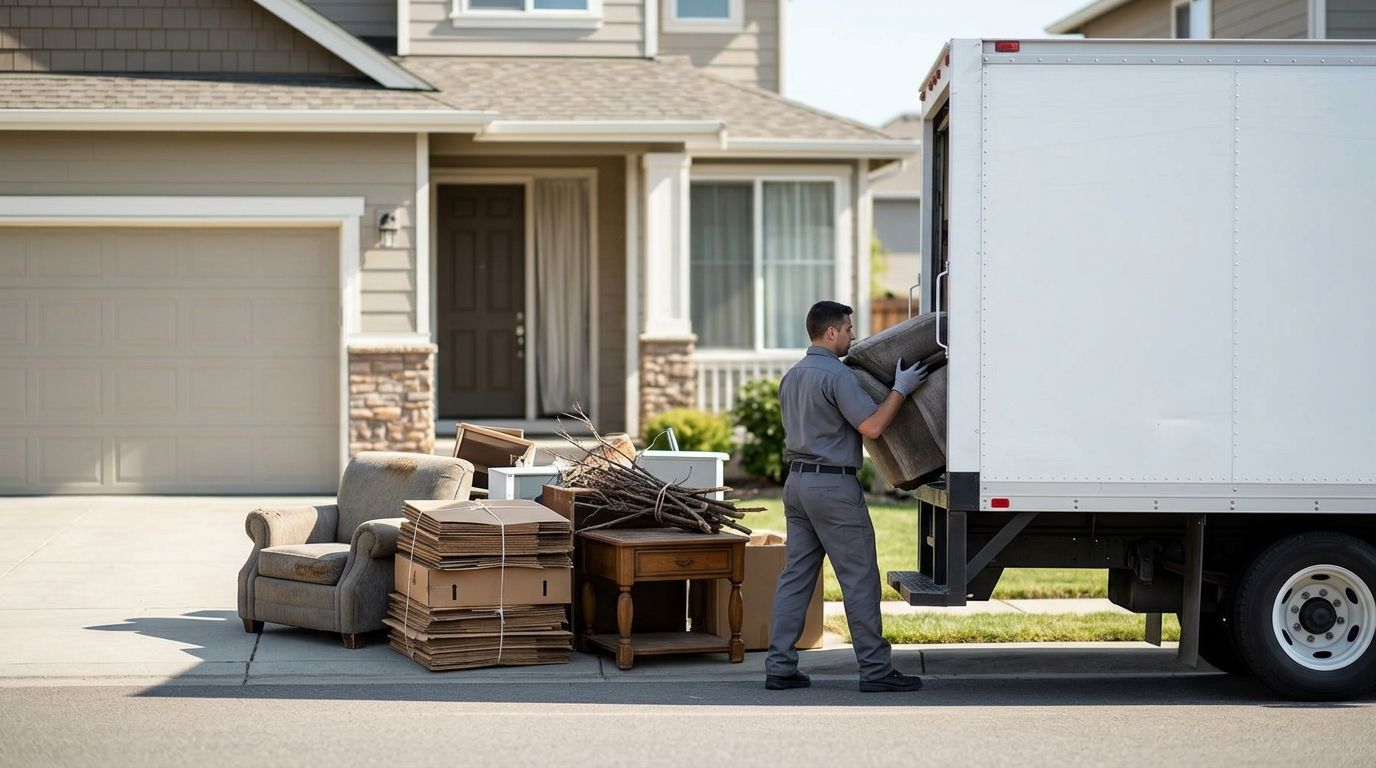
For ordinary furniture, household clutter and property cleanouts, Idaho Junk Solutions provides load-priced hauling. Hazardous-material pickup, handling and disposal are outside that service.
Use this table to decide what needs a separate conversation before your 2026 pickup. These are disposal routes to investigate, not blanket acceptance guarantees.
| Material or route | Best for | Main benefit | Limitation or next check |
|---|---|---|---|
| Ordinary junk hauling | Accepted furniture, clutter and nonhazardous cleanout items | Clears the agreed junk load | Does not replace hazardous-waste disposal |
| Household hazardous-waste program | Eligible household paint and chemical waste | Provides a designated route for accepted materials | Confirm product acceptance, residency and collection instructions |
| Qualified commercial waste provider | Business-generated chemical waste | Addresses waste outside ordinary household collection | Requires waste identification and acceptance confirmation |
| Local solid-waste guidance | Questions about fully dried water-based paint or empty containers | Clarifies whether a specific item belongs in ordinary disposal | Rules depend on contents, residue and local requirements |
Do not use an empty-looking can as proof that the contents are harmless. Labels, residue and the product itself matter.
Why this matters during a property cleanout
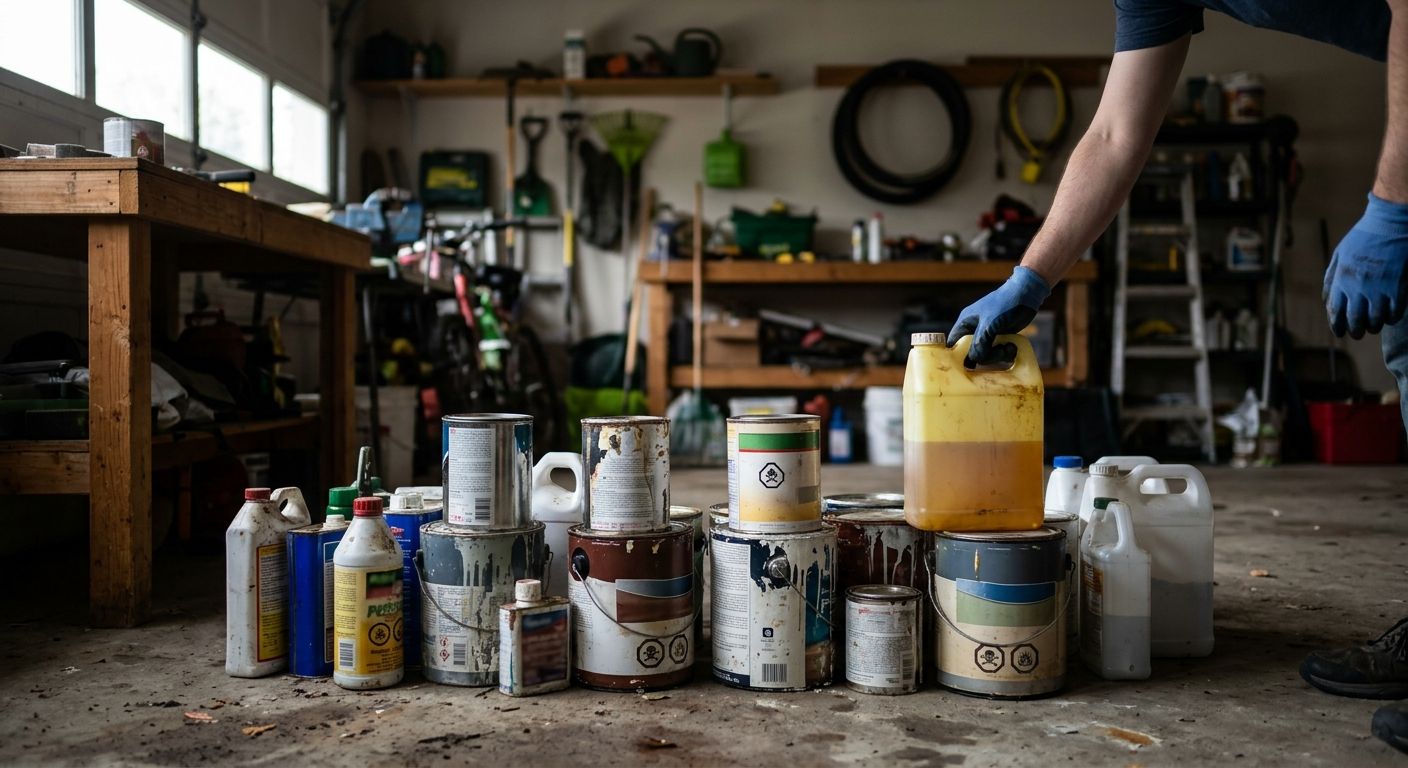
A garage or estate cleanout often combines ordinary junk with materials that need separate disposal. A couch belongs on one list; an old solvent container belongs on another. Combining them creates a problem that a larger trailer does not solve.
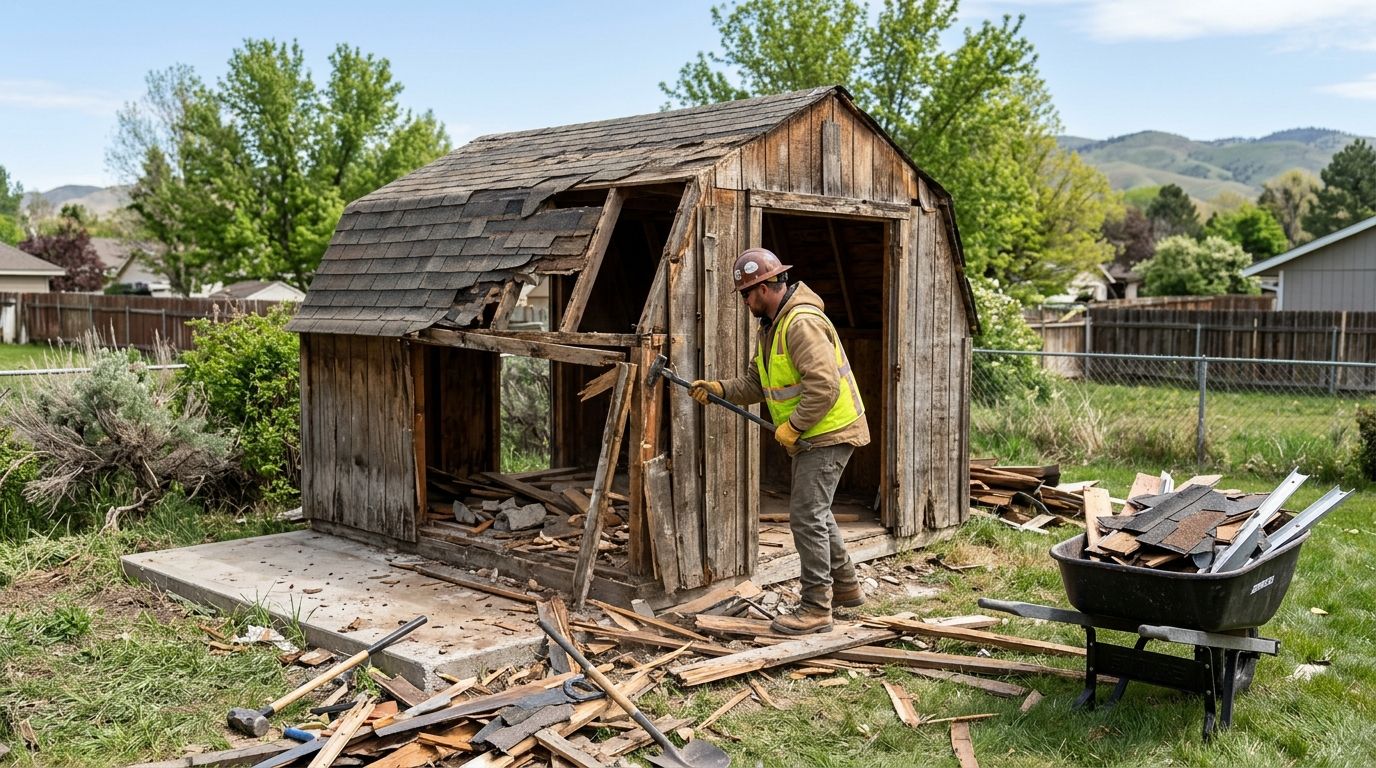
The same issue comes up in sheds, rental properties, workshops and commercial storage rooms across Boise, Meridian, Nampa and Caldwell. Plan the ordinary haul and the chemical disposal as separate jobs. That keeps the agreed pickup scope clear without asking a hauling crew to handle excluded materials.
For a 2026 cleanout, write down the disposal questions before booking. You do not need to know every chemical by sight, but you do need to tell the hauler that questionable containers are present.
Water-based paint: confirm local instructions first
Water-based latex paint is not interchangeable with oil-based paint or paint thinner. Read the original label when it is accessible and safe to do so; the word paint alone does not identify the disposal route.
Some local solid-waste programs allow fully dried water-based paint in ordinary disposal. Others provide different collection instructions. Get the receiving facility's directions before drying paint or putting a can in the trash. Do not assume another city's instructions apply to your address.
An accepted local disposal method also does not establish a junk removal company's acceptance policy. Ask both questions separately: what does the disposal facility allow, and what will the hauler agree to collect?
For your 2026 project, confirm whether the local instructions distinguish liquid paint, dried paint and empty containers. Avoid pouring paint onto the ground, into a drain or into another waste container to make the original can easier to discard.
Oil-based paint and solvents: use a separate disposal route
Oil-based paint, paint thinner and similar solvent products need a hazardous-waste disposal assessment. Keep them out of the ordinary junk load and contact the appropriate local program or qualified waste provider for instructions.
The advantage of a designated collection route is straightforward: the program tells you whether it accepts the material and how to prepare it. The limitation is equally important: acceptance conditions differ, and household eligibility does not automatically cover commercial waste.
Do not mix leftover products to reduce the number of containers. Combining chemicals can create dangerous reactions and makes the contents harder to identify. Leave labels attached and follow the collection program's packaging and transport directions.
If a container is leaking, badly deteriorated or producing strong fumes, stop sorting around it. Keep people away and seek appropriate safety guidance rather than moving it into the driveway for the junk crew.
Unknown chemicals: stop guessing
An unmarked bottle from a shed or inherited workshop is an identification problem, not ordinary clutter. Do not open it to smell the contents, mix it with another product or pour it out to inspect the container.
Tell the collection program that the substance is unknown. Describe the container, visible label fragments and condition without handling it unnecessarily. A photograph taken from a safe position can help communicate what is present, but it does not establish that the material is safe.
This matters during estate and foreclosure cleanouts, where the person arranging the job did not buy the products. Unknown contents stay outside the agreed junk load until an appropriate provider gives instructions. A deadline does not change that boundary.
Why paint and chemical acceptance varies
Acceptance changes because the waste and the receiving program change. These are the details to check before deciding where a container belongs:
- Product contents: Water-based paint, oil-based paint, pesticides and solvents do not share one disposal rule.
- Material condition: Liquid contents, dried residue, leakage and damaged packaging affect the instructions you need.
- Waste source: Household waste and business-generated waste can have different collection requirements.
- Program eligibility: Confirm which residents or businesses the receiving program serves.
- Quantity: Ask whether the program limits how much it accepts and whether an appointment is required.
- Hauling scope: A facility's acceptance does not mean an ordinary junk hauler offers transportation to it.
For 2026 planning, use current instructions from the relevant city, county or receiving facility. A neighbor's past experience is not a substitute for acceptance confirmation for your material.
How do you prepare a cleanout when chemicals are present?
Use this 5-step plan before a garage, estate, rental or commercial cleanout. It separates what you can book for hauling from what needs specialist instructions, without turning the junk crew into a hazardous-material service.
- Identify contents. List visible product names and container conditions from a safe position. Do not open unknown containers or disturb damaged ones.
- Mark exclusions. Tell the hauler which areas contain paint or chemicals. Do not bury those containers beneath furniture, bags or demolition debris.
- Confirm disposal. Contact the appropriate collection program or qualified waste provider. Ask about eligibility, accepted materials and preparation instructions.
- Define the load. Agree on the ordinary junk to be removed and identify what must stay. Include rooms, outbuildings and any separate debris piles in the discussion.
- Check the handoff. Confirm the pickup scope before loading starts and keep excluded areas clearly identified through the final walk-through.
The sequence matters: identify the exception before it becomes part of a mixed load. Do not move unsafe containers just to create a tidy staging area. Separation can mean leaving an area untouched and clearly explaining the exclusion.
For larger projects, the job-site walk-through to debris-free handoff workflow helps organize the ordinary debris portion. Keep chemical exclusions explicit throughout that process; a general instruction to clear everything is not enough.
What should you tell the junk removal company before booking?
Give the hauler a clear description of the ordinary cleanout and disclose the excluded materials. Useful details include the rooms involved, bulky items, shed contents, access route and any paint or chemical containers that must remain untouched.
Idaho Junk Solutions is best for load-priced junk removal and property cleanouts, not hazardous-material disposal. Pricing is confirmed before work starts. The company uses a 14-yard trailer for load-size planning, but trailer capacity does not determine whether a material is accepted.
For scheduling, Idaho Junk Solutions provides a 1-hour arrival window with ETA updates. Owner involvement is part of the company's approach, but do not assume the owner attends every job. Confirm the scope with the crew before loading begins, including the areas or containers excluded from the work.
Clear load pricing applies to the agreed hauling job. Do not treat it as a quote for a separate chemical-disposal service. Ask about property protection and the route through the building, especially when furniture must pass near an excluded storage area.
Can a landlord put tenant paint in a household collection?
Do not assume tenant leftovers qualify for household collection when a landlord or business presents them. Explain who generated the waste, who is bringing it and whether it comes from a rental property. The receiving program decides eligibility under its rules.
For property managers handling a 2026 turnover, keep the ordinary cleanout schedule separate from the disposal inquiry. Tell contractors which containers must stay untouched; do not put unlabeled chemicals in a communal dumpster to clear the unit faster.
Does a garage cleanout include every container on the shelves?
A garage cleanout includes the agreed, accepted items—not every substance found inside the garage. Discuss paint, pesticides, automotive fluids and unknown products before the crew starts.
You can still plan removal of accepted furniture, shelving and clutter while arranging separate instructions for excluded materials. If contamination or unsafe conditions affect the work area, resolve those conditions before treating the area as ready for ordinary hauling.
FAQ
Can junk removal take paint and chemicals from my garage?
Do not assume junk removal accepts paint or chemicals. Identify the products, confirm the hauler's policy and arrange an approved separate route for hazardous materials.
Does Idaho Junk Solutions remove hazardous chemicals?
Idaho Junk Solutions does not offer hazardous-material pickup, handling or disposal. Book the company for accepted junk and property cleanout hauling, with hazardous materials excluded from the scope.
Can I put dried latex paint in the junk pile?
Confirm local disposal instructions and the hauler's acceptance before putting dried latex paint in a junk pile. Permission to use a local disposal route does not automatically mean a junk removal company accepts the container.
What should I do with old paint thinner?
Keep paint thinner out of the ordinary junk load and contact an appropriate hazardous-waste collection program or qualified provider. Follow that provider's acceptance, packaging and transport instructions.
Can I combine leftover chemicals into one container?
Do not combine leftover chemicals. Mixing products can cause dangerous reactions and makes the waste harder to identify for disposal.
Where should a Boise business take old chemicals?
A Boise business should confirm a disposal route with a qualified waste provider or a program that explicitly accepts its business waste. Do not assume a household hazardous-waste program accepts commercial materials.
What if I find an unlabeled container during an estate cleanout?
Leave an unknown container out of the ordinary cleanout load and request instructions from an appropriate waste program. Do not open it to smell the contents or mix it with other waste.
One last thing
Keep 3 separate lists: haul away, keep and resolve separately. Put questionable paint and chemicals on the last list until their disposal route is confirmed. That simple distinction makes a whole-property walk-through clearer than marking every unwanted item for removal.
Before anyone loads the trailer, check the exclusions together. A clean property handoff includes a clear record of what remains and why—not a hazardous container hidden under the last bag of junk.