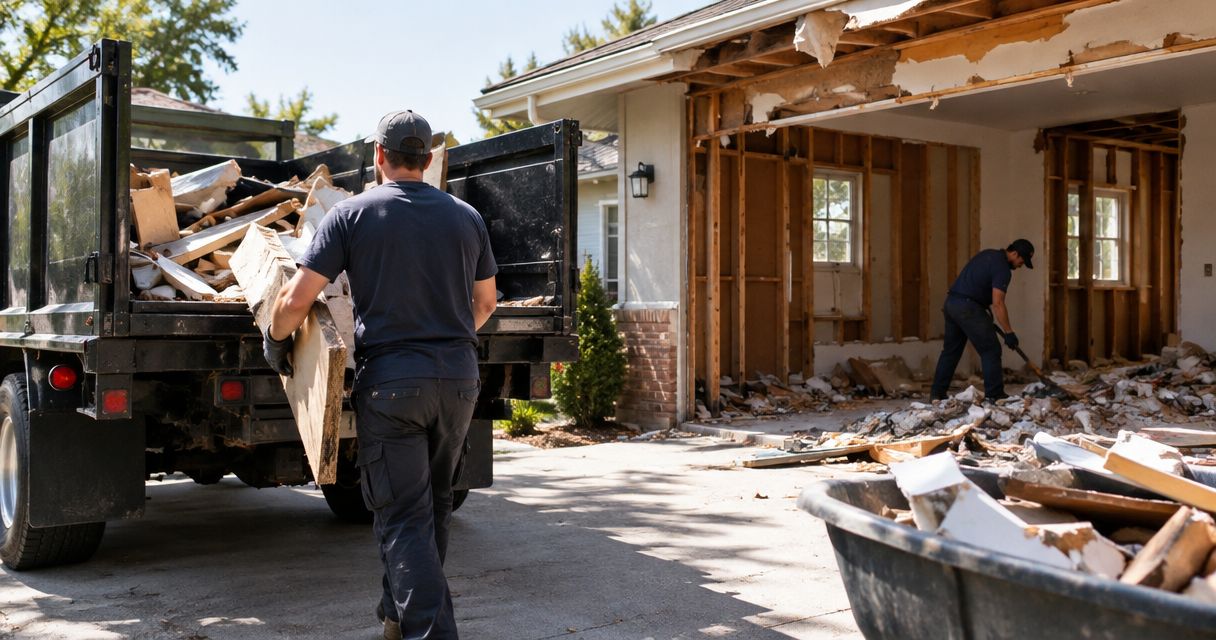
Yes—junk removal and light demolition can be done in one visit when the crew approves both tasks in advance, the work area is ready, and hauling capacity matches the debris. For a combined job in 2026, demolition preparation still matters: utility disconnections, required approvals, or unsafe conditions can prevent the tear-down even when the loose junk is ready to leave.
- Junk removal and demolition same visit works when both tasks are approved before scheduling.
- Idaho Junk Solutions offers junk removal and demolition; confirm whether your specific scope fits one appointment.
- Load pricing covers the hauling plan; confirm demolition scope before work starts.
- One visit does not automatically mean one trailer load or a guaranteed completion time.
Why this matters
Booking a pickup is not the same as booking a tear-down. A crew needs to know what is already loose, what remains attached, and what must stay untouched before planning the job.
For homeowners and property managers in Boise, Meridian, Nampa, and Caldwell, the practical benefit is coordinating the work instead of arranging an empty room on one date and demolition on another. Start with the junk removal and demolition services, then describe both parts of your project—not just the pile you want gone.
The right question is not simply whether both services exist. It is whether your entire scope is ready for the same appointment.
Can junk removal and light demolition be done in one visit?
Yes, provided the demolition is within the contractor's accepted scope and the hauling plan accounts for the resulting debris. For your 2026 booking, request approval for the combined job rather than adding demolition when the pickup crew arrives.
These scheduling choices solve different problems:
| Scheduling option | Best for | Main advantage | Main limitation |
|---|---|---|---|
| Combined junk removal and demolition | A defined tear-down with loose junk nearby | Both tasks follow one agreed scope | Preparation must be complete before demolition starts |
| Junk removal before demolition | A cluttered area that needs inspection or trade access | Exposes the work area before tear-down | Demolition and its debris need a later plan |
| Demolition followed by separate hauling | Work with changing scope or another contractor involved | Hauling follows the actual debris produced | Requires a separate pickup arrangement |
A combined appointment is convenient, but it leaves less room for unresolved decisions. Separate appointments create another scheduling step, but they make sense when clearing the area is necessary to understand the demolition.
Do not confuse one visit with one load. A combined job still needs enough hauling capacity, and the agreed scope should explain what happens if the debris exceeds the planned load.
What makes a combined visit workable?
A useful request describes the finished result: which items leave, which structure or fixture comes down, and what remains afterward. “Clean out the property” is too broad if you also expect attached materials removed.
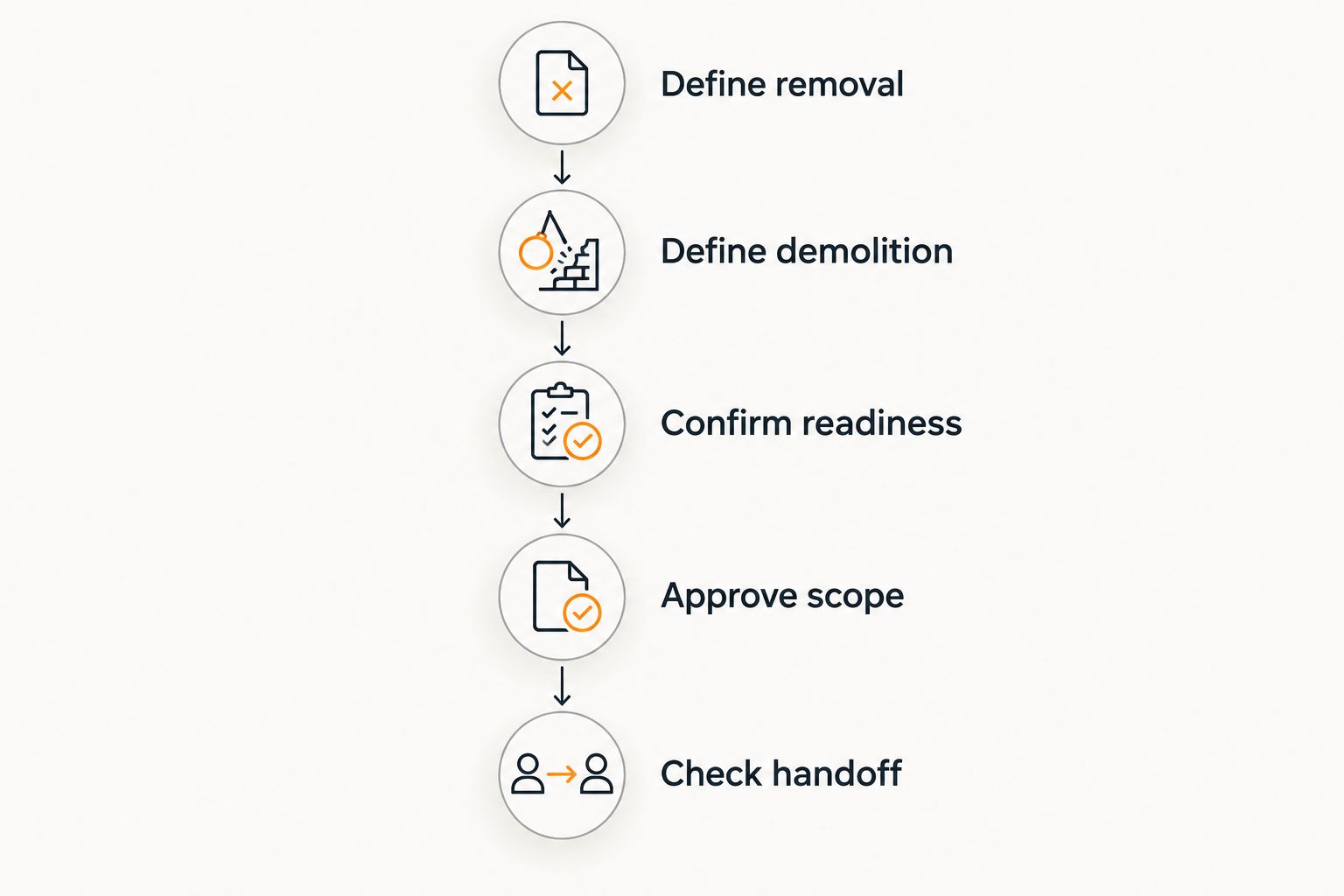
Use this sequence before scheduling:
- Define removal. List the loose furniture, stored belongings, and existing debris you want hauled away. Identify anything mixed into the pile that must stay.
- Define demolition. Photograph the item or structure from several angles. Show attachment points and nearby walls, fencing, landscaping, or equipment.
- Confirm readiness. Resolve utility connections and ask whether permits or other approvals apply. Do not assume a small project is exempt.
- Approve scope. Confirm what the crew will dismantle, what it will haul, and what cleanup is included. Get pricing confirmed before work starts.
- Check handoff. Agree on the condition you expect at the end, including anything intentionally left behind.
This sequence keeps a combined job from becoming a collection of last-minute requests. It also gives the contractor a chance to flag work that needs a different trade or a separate appointment.
Why the number of visits varies
The amount of junk matters, but it is not the only scheduling issue. These factors determine whether a combined appointment is ready to book:
- Defined demolition scope. Removing an identified object is different from discovering additional attached materials after work begins. State the stopping point.
- Utility readiness. Electricity, water, gas, or other connections need proper attention before demolition. A hauling appointment does not replace qualified trade work.
- Access and property protection. Show gates, stairs, narrow passages, and surfaces along the removal route. Access details help plan the work; they do not mean an automatic access surcharge.
- Debris volume and material. Loose contents and dismantled materials both belong in the hauling estimate. Dense debris also requires attention to weight, not just visible space.
- Approvals and decision-making. Confirm permission to remove the items and approve demolition. For managed properties, identify who can authorize a scope change.
- Safety conditions. Suspected hazardous materials or an unstable structure need assessment before ordinary removal proceeds. Do not include hazardous materials in the pickup pile.
A clear scope supports a combined visit. An unresolved safety issue is a reason to stop, not a reason to rush.
How should you describe the job when requesting an estimate?
Send an overview photo that shows the entire work area, then closer photos of the demolition target and its connections. Include the route from that area to the likely loading location so the contractor can see more than a tightly framed pile.
A useful request reads like this:
- Loose items to remove: describe the contents and where they are located.
- Demolition requested: identify exactly what comes down.
- Items to keep: identify nearby belongings and attached surfaces that stay.
- Connections: explain what is connected and what has already been professionally disconnected.
- Access: describe gates, stairs, parking restrictions, and shared entrances.
- Deadline: state the actual handoff date rather than requesting an unspecified rush job.
If you are planning a 2026 rental turnover or property sale, separate the arrival date from the completion requirement. The crew needs to know whether another contractor, tenant, or buyer expects access afterward.
Idaho Junk Solutions is best for Treasure Valley property owners seeking junk removal and demolition from one locally owned company. The company offers both services; whether your project fits one visit still depends on the approved job scope.
Use the contact page to describe the combined request. Ask for confirmation that the estimate covers both dismantling and hauling—not simply removal of materials already on the ground.
How does load pricing work with demolition debris?
Load pricing describes how much hauling space your material uses. It does not, by itself, define which demolition tasks are included, so confirm the tear-down scope alongside the load estimate.
The brand's load-size guidance uses a 14-cubic-yard trailer. That volume is a planning reference, not a promise that every combined project fits inside it. Intact furniture, loose contents, and dismantled materials occupy space differently; dense material also needs a weight check.
Before approving a 2026 combined job, ask:
- Does the quoted scope include demolition labor and removal of the resulting debris?
- Which loose items are included in the planned load?
- What happens if more material is uncovered during dismantling?
- Does the plan include the base or foundation, or only the structure above it?
- What cleanup is included after loading?
Idaho Junk Solutions uses load pricing confirmed before work starts. Get the combined scope clear at the same time so you know what the crew is being asked to finish.
Do not approve a vague “take everything” instruction when you need a specific demolition result. Mark the boundaries and discuss changes before additional work begins.
What should be ready before the crew arrives?
Clear personal belongings from the demolition target and identify anything that stays. Keep documents, keys, valuables, and reusable hardware out of the removal area rather than expecting the crew to sort ownership decisions during loading.
Arrange qualified utility disconnections where needed. For example, a connected hot tub needs a preparation plan; tearing it apart is not a substitute for disconnecting its electrical and plumbing connections safely.
Do not open walls, cut unknown pipes, or disturb suspicious material just to make the job look ready. If a material or connection is uncertain, disclose it before the appointment.
For a 2026 appointment with Idaho Junk Solutions, the one-hour arrival window covers arrival, not job duration. One hour equals 60 minutes; neither figure means demolition and hauling will be finished within that window. ETA updates help you coordinate access, but the completion plan depends on the work itself.
Keep the agreed route available and point out vulnerable surfaces before loading starts. Ask how the crew plans to protect nearby property, especially where demolition sits close to a fence, building, or planted area.
Can you add demolition after the junk pickup starts?
A same-visit addition needs approval before the crew touches the new work. Point out the item, explain what you want removed, and ask whether the crew can assess the change safely.
Do not treat available trailer space as proof that demolition can be added. The added task can require different preparation, equipment, authorization, or time even if the debris looks small.
If the change is accepted, confirm the revised scope and pricing before work begins. If it is not ready, finish the approved pickup and arrange the demolition separately.
Does one visit mean the property is ready for the next trade?
One combined visit means the agreed removal and demolition happen during the same appointment. It does not automatically include repairs, grading, new construction, or removal of foundations and buried materials.
For a property-manager handoff, identify the exact area that must be cleared and any materials that remain. For a homeowner, distinguish “old structure removed” from “ground ready for the replacement.” Those are different instructions.
Ask for a final walk-through against the original scope. Check the demolition boundary, the hauling list, and the agreed cleanup before considering the job complete.
FAQ
Can junk removal and demolition happen on the same day?
Yes, junk removal and demolition can happen on the same day when both tasks are approved and the site is ready. Confirm the demolition scope, utility preparation, and hauling plan before booking.
Does one visit mean everything fits in one trailer load?
No, one visit does not mean everything fits in one trailer load. Loose contents and demolition debris must both be included in the load assessment, with weight considered where relevant.
Do I need to empty a shed before asking about demolition?
Describe and photograph the shed's contents before deciding whether to empty it yourself. Ask whether the proposed scope includes removing the contents before dismantling the structure, and identify everything you want to keep.
Will a junk removal crew disconnect utilities before demolition?
Do not assume utility disconnection is included in junk removal or demolition. Confirm the required preparation and arrange qualified trade work before demolition begins.
Does a one-hour arrival window mean the job takes one hour?
No, a one-hour arrival window identifies when the crew is expected to arrive, not how long the job takes. Confirm the expected completion plan separately for demolition and hauling.
Can I include paint, chemicals, or hazardous materials in the demolition pile?
No, do not include hazardous materials in the demolition or junk pickup pile. Idaho Junk Solutions does not offer hazardous-material pickup, removal, handling, or disposal; disclose suspected materials before work starts.
What should I ask before approving a combined estimate?
Ask whether the estimate includes the specified demolition, loose-junk removal, resulting debris, and agreed cleanup. Also confirm what remains and how any scope change will be approved before additional work.
One last thing
Describe what stays as carefully as what goes. A slab, neighboring fence, attached trim, or stored item can sit inside the work area without belonging in the demolition scope.
Take a final set of photos and mark those boundaries before the appointment. A clear “leave this intact” instruction is more useful than assuming the crew sees the same stopping point you do.