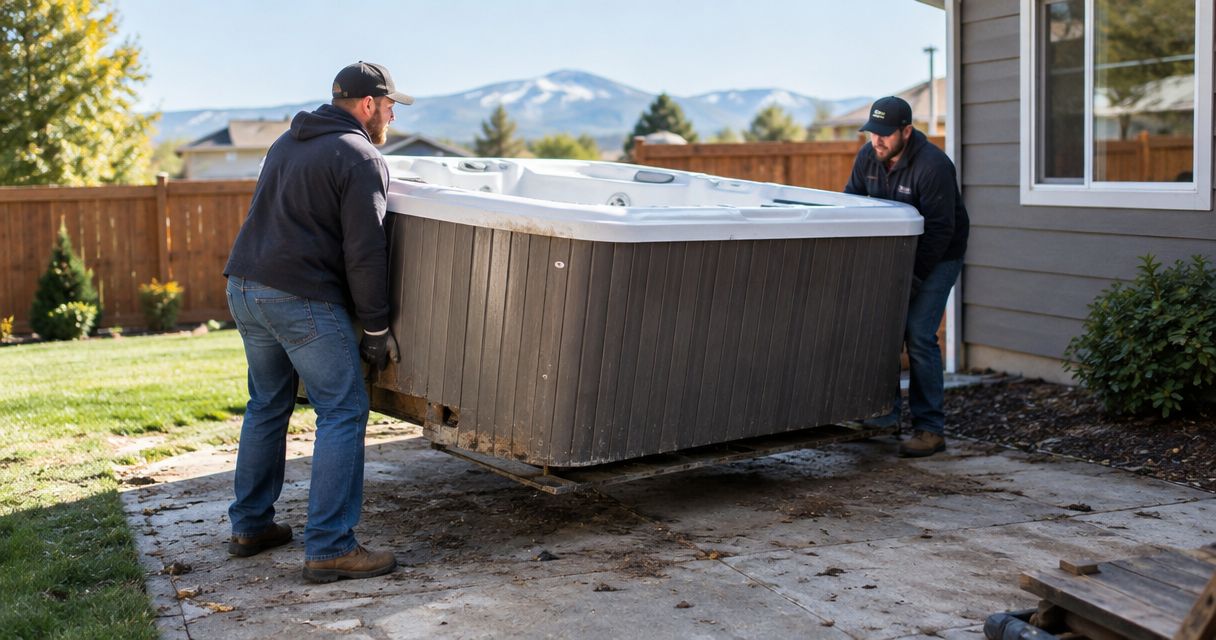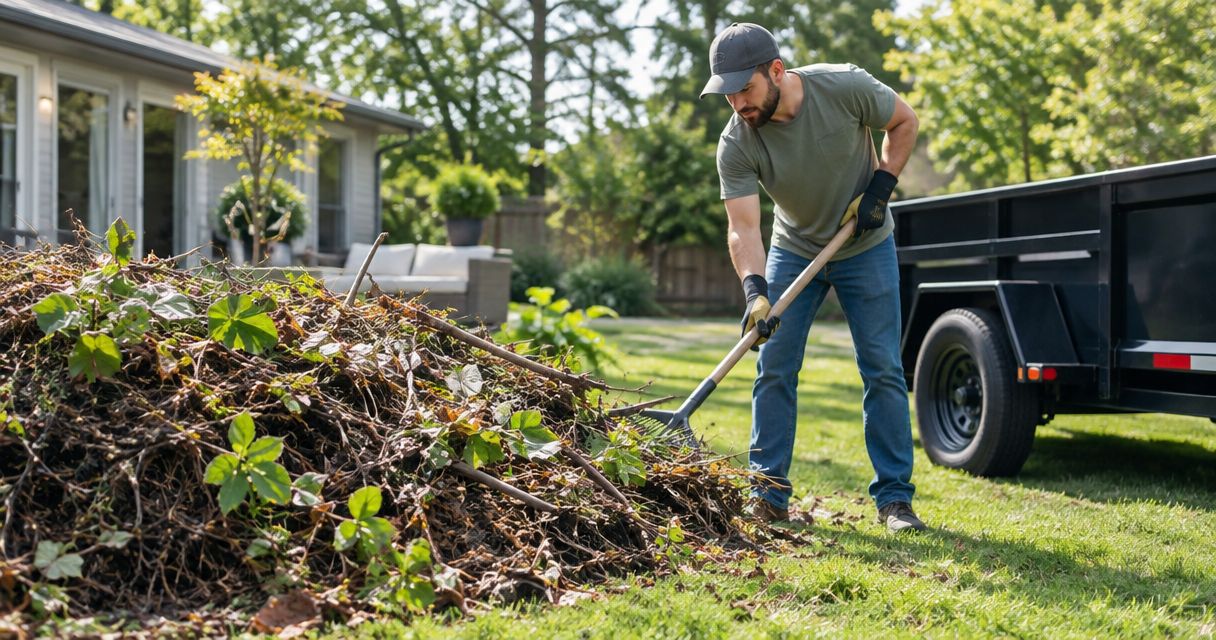
Instead of moving the same branches, bags, and broken backyard items every weekend, set up a yard debris removal workflow: document the pile, confirm what belongs in the load, approve the scope, and walk the yard before the truck leaves. For your 2026 cleanup, Idaho Junk Solutions offers load-priced hauling with pricing confirmed before work starts.
- Idaho Junk Solutions suits Treasure Valley property owners who want yard debris removal priced by the load before work starts.
- Separate loose yard waste, backyard junk, and standing structures before requesting hauling.
- Confirm accepted materials, access, and the finished condition before approving the job.
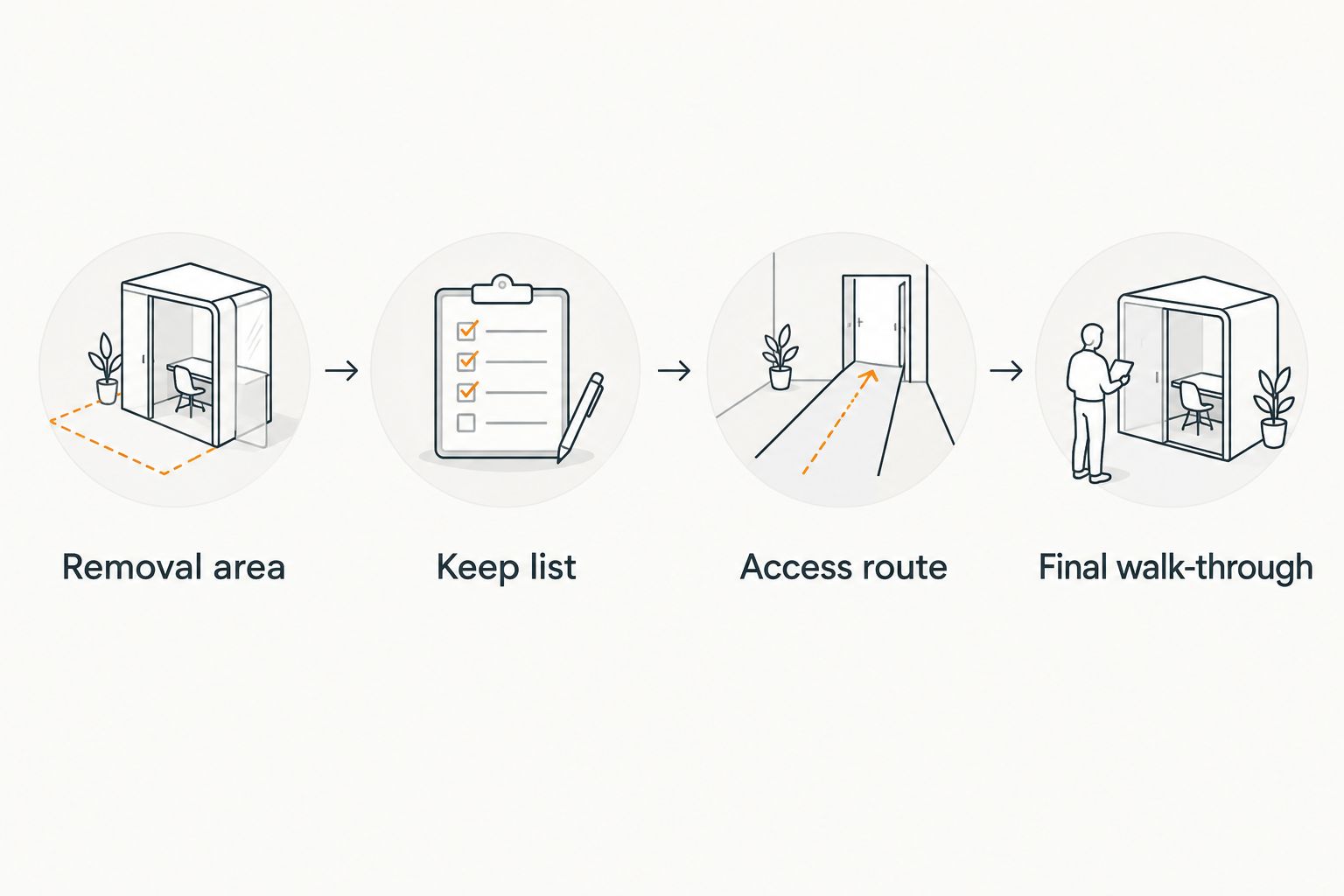
- Use a final walk-through to check the removal area, gates, and items marked to stay.
Why this matters
A backyard pile is not always one kind of job. Loose branches, an old patio table, and a standing shed need different scope decisions, even when they occupy the same corner of your property.
Define the work before anyone starts loading. Otherwise, you risk booking a pickup when you actually need a property cleanout, or discussing demolition after the hauling crew arrives.
For homeowners and property managers in Boise, Meridian, Nampa, and Caldwell, the useful result is a cleared, agreed-upon area—not simply a smaller pile. Build your 2026 cleanup around that finish line, whether you are reclaiming a family yard or preparing a rental property for its next occupant.
Before you start
- Get access and approval. Have the property address, permission to authorize removal, gate access, and a person who can approve the scope. Property managers should settle owner approval before arranging work.
- Prepare photos and a keep list. Photograph the whole pile, its depth, the route out, and anything that stays. Include loose material behind sheds or along fences rather than showing only the easy-to-see section.
- Separate hauling from dismantling. A standing shed, attached fence, or connected fixture is not loose debris. Identify it before booking, and leave suspected hazardous materials undisturbed; hazardous-material removal is not an Idaho Junk Solutions service.
Do not start by dragging everything to the driveway. First establish whether staging is necessary and where the load will leave the property. Moving a pile twice adds work without clarifying the job.
Pile inventory and removal boundaries
- Map the removal area. Identify each location: the main branch pile, material behind the garage, bags beside the gate, and abandoned backyard furniture. Walk the whole area rather than estimating from a window.
- Sort the scope on paper. List vegetation separately from furniture, loose building debris, soil, and standing structures. This is a disclosure step, not a claim that every material belongs in the same load. Ask which materials the hauler accepts.
- Mark what stays. Use a clear written description and visible markers for planters, usable lumber, garden tools, and landscaping materials you want to keep. Do not rely on an item looking valuable or obviously useful.
- Photograph the hidden edges. Show material against fences, underneath branches, and behind larger objects without disturbing unsafe piles. Tell the hauler where the contents remain unknown.
- Write the finish line. State whether you want only the identified pile removed or a wider backyard cleanout. Ask separately about loose scraps and scattered material rather than assuming they are included.
Expected result: You have a removal list, a keep list, and a defined work area. The person quoting the work can distinguish a straightforward pickup from a larger property cleanout.
Access plan and load description
- Show the actual route. Photograph the gate, corners, steps, slopes, and path between the pile and the loading location. Include low branches or objects that restrict movement.
- Identify surfaces to protect. Point out irrigation components, garden edging, fragile pavers, and planting beds. Ask how the crew plans to move material through those areas before work begins.
- Describe the pile honestly. Give its approximate footprint and height if you can measure safely. Distinguish a loose branch pile from tightly packed bags or heavy material; appearance alone does not describe the contents.
- Discuss the load estimate. Idaho Junk Solutions uses a 14-cubic-yard trailer as a load-size reference. That describes trailer volume, not a promise that every material or pile fits into a single load. Confirm the scope and load pricing before work starts.
- Set the arrival arrangements. Confirm the one-hour arrival window and how you will receive ETA updates. Keep the gate accessible and make sure someone can answer scope questions when the crew arrives.
Expected result: The hauling plan accounts for both the pile and the route out. You have discussed load size without treating an estimate from photos as permission to add undisclosed material.
Scope approval and loading sequence
- Walk the yard together. Compare the actual pile with the photos and removal list. Point out anything added since the original conversation, including bags tucked behind the pile.
- Confirm the work boundary. Identify everything leaving, everything staying, and any dismantling that needs separate approval. If the job now includes a structure, stop and settle that scope before anyone starts taking it apart.
- Approve load pricing. Get clear pricing for the agreed work before loading begins. Ask how a change in the pile or scope will be handled, and require approval before additional work proceeds.
- Agree on the loading route. Discuss how material will leave the yard and which areas must remain clear. Keep children and pets away from the work area, and avoid using the gate while material is moving through it.
- Pause for unexpected contents. If the pile reveals unknown containers, suspected hazardous materials, or an unstable object, stop work in that area. Do not hide the issue under more branches or ask the crew to load it anyway.
Expected result: Everyone understands the approved load, removal boundary, and stop conditions. Loading follows an agreed plan instead of turning into a running negotiation over what the job includes.
Final walk-through and handoff
- Inspect the original pile location. Look behind the former pile and along its edges. Check the agreed scope rather than judging the job only from the driveway.
- Check the keep list. Confirm that marked planters, tools, stored materials, and other belongings remain where expected. Resolve any uncertainty before the truck leaves.
- Walk the access route. Look for overlooked scraps and inspect the gates, edging, and surfaces discussed before loading. Raise any concern while both parties can see the same area.
- Confirm excluded work. A cleared pile does not automatically mean weed removal, grading, stump removal, soil replacement, or landscape repair. Identify any remaining work and arrange it separately.
- Record the handoff. Take completion photos from the same positions as the original photos. For a 2026 rental turnover, send the owner or manager a clear record of what was removed and what remains outside the hauling scope.
Expected result: The yard matches the approved removal boundary, and any remaining work has an owner. You finish with a documented handoff rather than a vague promise to revisit the backyard later.
Repeat the workflow after each cleanup phase
A large property cleanup often progresses in stages: sorting belongings, clearing vegetation, then addressing structures or repairs. Treat each new pile as an updated scope, not an automatic extension of the previous hauling agreement.
Best for staged property cleanouts: Photograph the new pile, identify changed contents, and confirm the next load before scheduling another pickup. This keeps a multi-stage job organized, but it requires someone to maintain the removal list.
| Workflow | Best for | Main advantage | Main limitation |
|---|---|---|---|
| One defined pickup | A finished pile with known contents | One agreed removal boundary and handoff | Material added later needs a new scope discussion |
| Phase-by-phase hauling | Larger cleanouts producing separate piles | Each stage gets its own approval and completion check | Requires repeated coordination and updated photos |
For a 2026 backyard project involving both hauling and shed demolition, keep those tasks distinct in the work plan. Confirm which work creates debris, who handles each task, and when the resulting material becomes ready for hauling.
The trade-off is straightforward: one pickup needs a finished scope; staged hauling needs a reliable person coordinating each phase. Neither approach fixes an unclear keep list.
Troubleshooting
The pile grew after you sent photos
Send updated photos before the appointment and explain what changed. Do not describe added furniture or building debris as just a few extra branches. A changed pile needs a renewed scope and pricing confirmation before loading.
The gate route does not match the photos
Show the actual restriction and stop moving material until the route is agreed. A locked gate, parked vehicle, or newly blocked path changes the work plan. Do not start removing fence sections or moving heavy objects without approval.
You found unknown containers or suspect material
Leave the material undisturbed, keep people away, and explain the discovery. Idaho Junk Solutions does not offer hazardous-material pickup, handling, removal, or disposal. Contact the appropriate local authority or qualified specialist for instructions about the material.
You disagree about what should stay
Pause loading and return to the written keep list. Get the property owner's decision before removing disputed items, especially at rentals, inherited properties, or shared homes. Uncertainty is a reason to stop, not a reason to guess.
The pile is gone, but the yard still needs work
Compare the result with the approved finish line. If the remaining issue is grading, weeds, roots, or landscape repair, it belongs in a separate work plan unless explicitly included. If agreed debris remains, point it out during the final walk-through.
Customize your workflow
For full-property cleanouts, use one removal list across the backyard, garage, and other approved areas. Label each area separately so nobody mistakes a completed backyard pickup for completion of the entire property.
For commercial properties and rentals, assign one person to approve changes. Give that person the removal photos, keep list, access instructions, and final handoff requirements. Multiple people giving conflicting directions creates an avoidable problem at the truck.
For a larger project, use the job-site walk-through to debris-free handoff workflow to organize the broader scope. Keep demolition, hauling, and follow-on work clearly assigned.
Local ownership is a reason to ask direct questions, not to skip the scope discussion. Request owner involvement when useful, without assuming the owner attends every job.
FAQ
How do I prepare for yard debris removal?
Prepare a removal list, a keep list, photos of the pile, and photos of the access route. Confirm accepted materials and agree on load pricing before work starts.
Do I need to move all the yard debris to the curb?
Confirm the loading plan before moving the pile. Show where the debris sits and how the crew would reach it so you do not create unnecessary handling.
Can branches and old backyard furniture go in the same pickup?
Ask the hauler to approve both material types before booking. List branches and furniture separately so the agreed scope does not depend on a photo hiding one beneath the other.
How is Idaho Junk Solutions yard debris removal priced?
Idaho Junk Solutions uses load pricing confirmed before work starts. Describe the contents, pile size, access route, and any work beyond loading so the approved scope is clear.
Does yard debris removal include tearing down a shed?
Do not assume hauling includes shed demolition. Identify a standing structure before booking and confirm demolition scope separately from loose-debris removal.
What should I do if I find suspected hazardous materials in the pile?
Leave suspected hazardous materials undisturbed and keep people away. Do not include them in the hauling load; seek instructions from the appropriate local authority or qualified specialist.
What should I check before the hauling truck leaves?
Check the original pile location, the keep list, and the access route against the approved scope. Raise overlooked debris or property concerns during the final walk-through.
One last thing
Take the after photo from the exact spot where you took the before photo. Matching views make the cleared boundary easier to verify, especially when an owner or property manager is not present.
For your 2026 cleanup, write what stays before writing what goes. A branch pile is easy to recognize; the usable lumber hidden beside it is where a rushed cleanout becomes a problem.