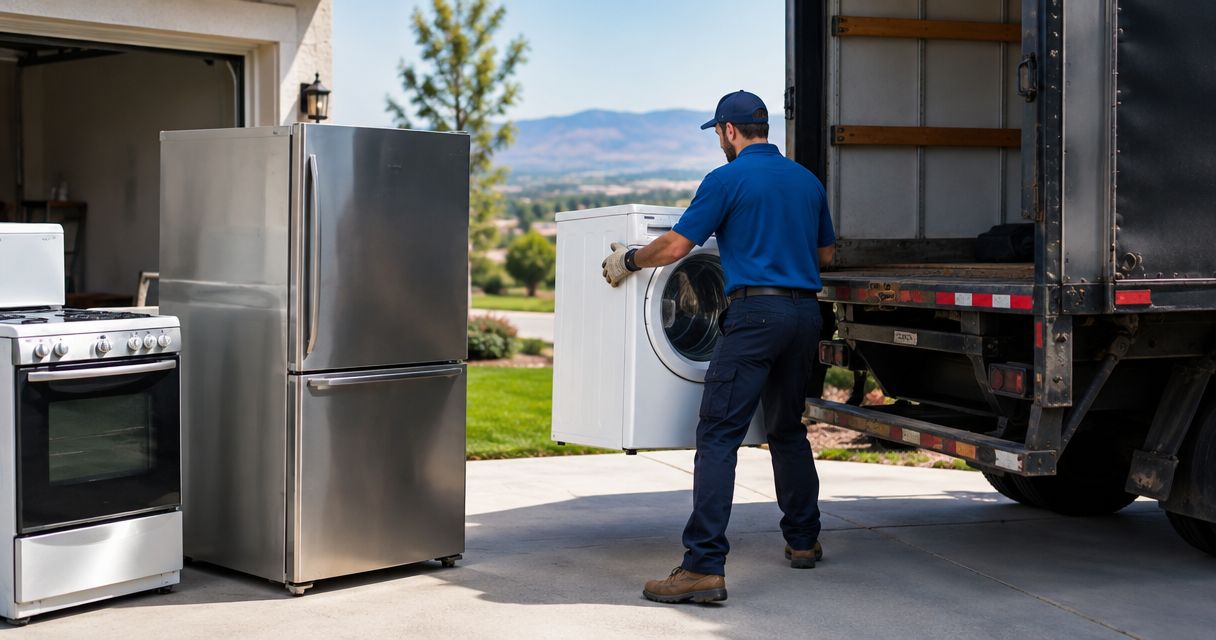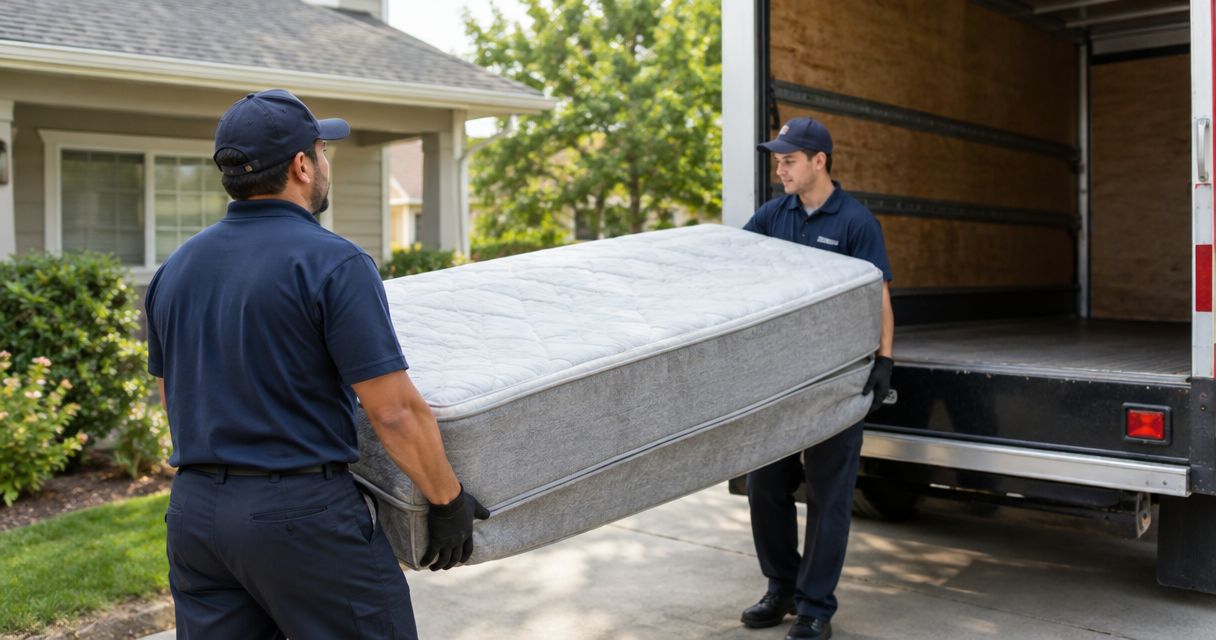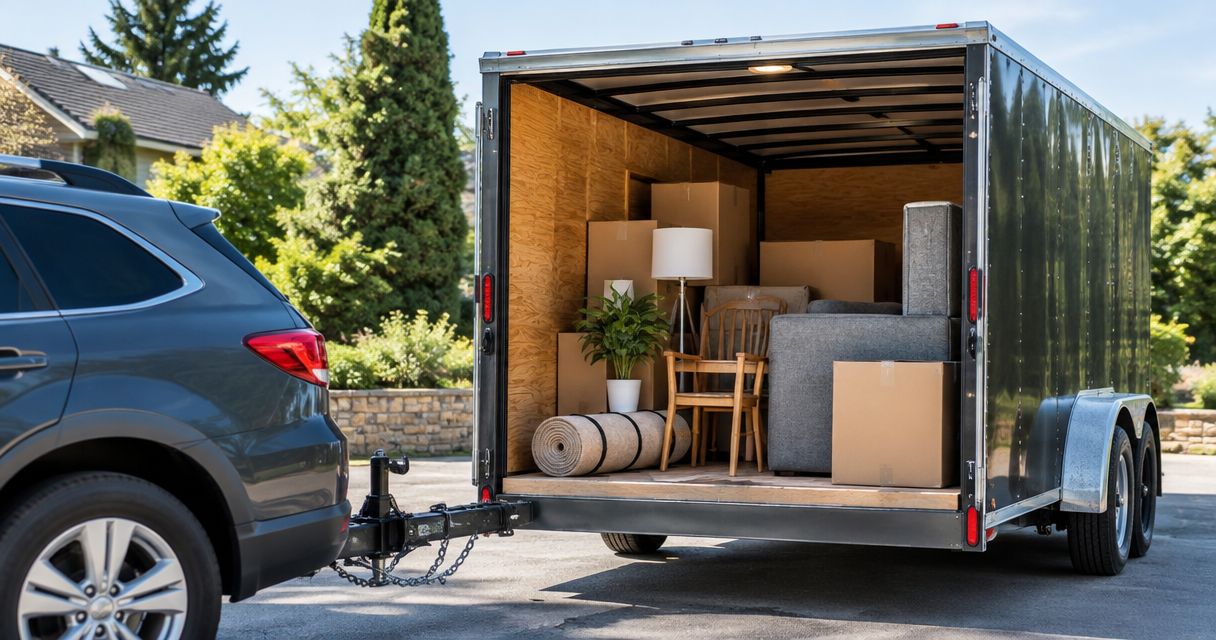
A 14-yard trailer holds 378 cubic feet of material by volume, but its safe weight capacity depends on the trailer’s rated payload—not its yardage. A full-looking load of furniture and a shallow load of concrete place very different demands on the trailer. For your 2026 cleanout, estimate the space your junk occupies and have the hauler confirm the material and weight limits before loading.
- How much fits in a 14 yard trailer? The volume is 378 cubic feet; yardage does not establish payload.
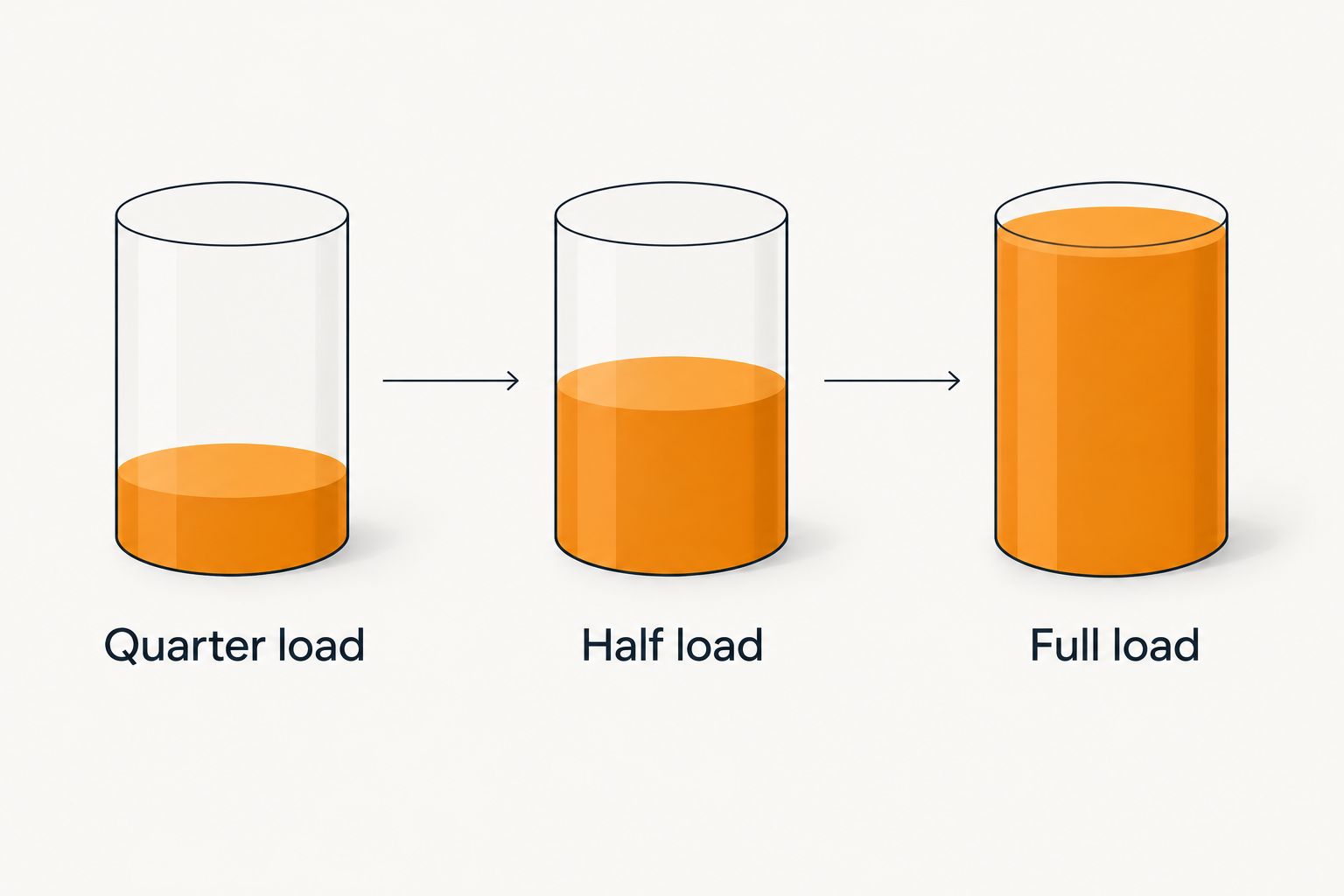
- A half load occupies 7 cubic yards; a quarter load occupies 3.5 cubic yards.
- Idaho Junk Solutions offers load-priced junk removal for Treasure Valley homeowners, businesses, and property managers.
- Separate dense demolition debris from bulky household junk when describing your load.
How much weight fits in a 14-yard trailer?
There is no single weight limit for every 14-yard trailer. Fourteen cubic yards describes the container’s volume. Payload describes the weight the trailer can carry after accounting for the trailer itself and anything else that counts against its rating.
One cubic yard equals 27 cubic feet, so 14 multiplied by 27 equals 378 cubic feet. That conversion tells you about space, not pounds. A load estimate needs both pieces of information.
For a local pickup, Idaho Junk Solutions provides load-priced hauling with pricing confirmed before work starts. Describe the contents as well as the pile size; “half a trailer of furniture” and “half a trailer of broken masonry” are not interchangeable descriptions.
| Load portion | Volume in cubic yards | Volume in cubic feet | What it establishes |
|---|---|---|---|
| Quarter load | 3.5 cubic yards | 94.5 cubic feet | A quarter of the trailer’s nominal volume |
| Half load | 7 cubic yards | 189 cubic feet | Half of the trailer’s nominal volume |
| Full load | 14 cubic yards | 378 cubic feet | The trailer’s nominal volume, not a weight allowance |
These are volume calculations, not promises about what the hauler will accept or how a particular pile will pack.
Why this matters
A trailer can reach its weight limit before it looks full. It can also run out of usable space with a bulky load that leaves gaps between objects. Neither situation means the trailer’s stated yardage is wrong.
For a 2026 property cleanout in Boise, Meridian, Nampa, or Caldwell, the useful question is not just whether the pile fits. Ask whether the entire approved load can be carried safely, and whether the scope includes lifting, dismantling, or demolition rather than hauling alone.
That distinction matters most when a job combines rooms of household contents with garage storage, outdoor debris, or material from a torn-down structure. Keep those categories separate in your description instead of calling everything “junk.”
Quarter load: 3.5 cubic yards
A quarter of a 14-yard trailer is 3.5 cubic yards, or 94.5 cubic feet. This is a useful starting point for describing a smaller pile, but it is not a guaranteed furniture count.
Best for: estimating a clearly defined group of loose household items. The advantage is simplicity: you can describe a fraction of the trailer without measuring every object. The limitation is packing—chairs, shelving, and other irregular objects leave empty space.
Do not judge a quarter load from floor area alone. A low, spread-out pile and a narrow, tall stack can occupy similar volumes. Give the hauler a view of the whole pile, including anything hidden behind the front row.
Half load: 7 cubic yards
A half load is 7 cubic yards, or 189 cubic feet. It describes half the nominal container volume, not half the number of rooms in a house.
Best for: discussing a larger, grouped cleanout pile before the final loading assessment. A half-load estimate gives you a clear reference point, but rooms do not have a standard amount of junk. A sparsely furnished room and a packed storage room are different jobs.
For a 2026 rental turnover, identify what stays before estimating what goes. Include closets, exterior storage, and detached areas in the scope if those spaces also need clearing. Otherwise, the visible pile understates the actual job.
Full load: 14 cubic yards
A full load is 14 cubic yards, or 378 cubic feet. That is the volume reference for this trailer size; it does not authorize filling every available space with heavy debris.
Best for: describing the upper volume reference when planning a household or property cleanout. The benefit is a clear container-size benchmark. The limitation is that safe loading still depends on material weight, load distribution, and securement.
Do not assume a full house equals a full trailer. Inventory the actual contents. If the scope includes multiple buildings or demolition debris, ask the hauler to assess the whole job rather than promising yourself a single load.
Why the amount you can haul varies
The trailer’s size stays the same, but the contents change how much it can carry. These factors explain why a photograph or item list is more useful than a trailer fraction alone:
- Material density. Concrete, brick, soil, and similar dense materials add substantial weight without occupying the same space as bulky furniture.
- Object shape. Sofas, chairs, shelving, and hollow objects leave gaps. Their outside dimensions do not tell you exactly how they will pack together.
- Moisture. Water adds weight. Tell the hauler when contents are wet rather than describing them as ordinary dry household junk.
- Trailer payload. The trailer’s own weight uses part of its gross vehicle weight rating. Yardage alone cannot establish the remaining carrying capacity.
- Load distribution and securement. A load must be positioned and secured safely. Available empty space does not automatically mean another heavy object belongs there.
Do not use a household-junk volume estimate to approve a dense demolition load. Describe those materials separately and get the carrying limits confirmed.
Household junk and demolition debris need different estimates
A couch takes up space differently from a pile of broken concrete. Use material categories to explain your job, not a guessed weight pulled from a generic trailer chart.
| Material category | Best for this estimate method | Useful detail to provide | Main limitation |
|---|---|---|---|
| Furniture and boxed contents | Visual volume estimate | Whole-pile photos and an item list | Irregular shapes create gaps |
| Shelving and other bulky fixtures | Item-by-item scope review | Dimensions and whether dismantling is needed | Intact and dismantled items occupy different space |
| Concrete, brick, or soil | Weight-aware assessment | Material type and measured pile dimensions | Weight can limit loading before volume does |
| Mixed cleanout and demolition material | Separate category estimates | Photos of each material group | A single pile description hides important differences |
This table is a planning guide, not a list of guaranteed accepted materials. Confirm the actual contents before arranging removal.
Keep hazardous materials out of the proposed junk load. Idaho Junk Solutions does not offer hazardous-material pickup, handling, removal, or disposal. Do not mix paint, chemicals, or unidentified containers into an ordinary cleanout pile.
How to estimate your load before you call
You do not need to weigh every chair. You do need to show the complete scope and flag materials that make a volume estimate unreliable.
Start with the removal boundary
Walk through every area included in the job. Identify the rooms, closets, outbuildings, and outdoor piles that need attention, then mark what stays.
For property-manager work, get the removal instructions settled before loading starts. A clear boundary prevents a large cleanout from becoming a series of last-minute additions or mistaken removals.
Group the contents
Separate ordinary household contents from demolition debris and other dense material in your description. Identify appliances, large furniture, and items that need dismantling individually.
You do not need to move heavy objects just to make a better pile. Photograph them where they sit and explain the route out. Safety matters more than staging a neat estimate photo.
Measure loose piles
For a roughly rectangular pile, multiply its length, width, and average height in feet. Divide that cubic-foot total by 27 to estimate cubic yards.
Treat the result as a starting point. An irregular pile has empty spaces, and its dimensions do not reveal its weight. Do not climb onto unstable material or shift heavy debris to improve a measurement.
Show access and exclusions
Include doorways, stairs, gates, and the path between the contents and the loading area. Identify anything that needs to remain untouched, including nearby stored belongings.
For your 2026 job request, send views from different angles rather than a tight close-up of the nearest objects. The hauler needs to understand the entire removal area, not just the easiest part to see.
Confirm the scope before work starts
Ask what the load estimate includes, which materials are approved, and whether dismantling or demolition is part of the job. Confirm how additional material will be addressed before it gets loaded.
A clear scope is more useful than a confident guess about trailer capacity. It gives you and the crew the same definition of a finished job.
How load pricing applies to a larger cleanout
Load pricing uses the amount being hauled as the pricing basis. It does not turn cubic yards into a universal weight allowance, and it does not make an unseen pile a confirmed quote.
Idaho Junk Solutions junk removal is best for Treasure Valley homeowners, businesses, and property managers who want load-priced hauling confirmed before work starts. For larger jobs, identify whether you need hauling only, a full property cleanout, or demolition as well. Those are different scopes, even when the debris leaves in a trailer.
The service uses one-hour arrival windows with ETA updates. Owner involvement is part of the business’s hands-on approach, but do not assume the owner attends every job. Explain access restrictions and property-care concerns when arranging the work so the crew understands them before loading.
Get your cleanout scope confirmed
Describe the contents, access, and demolition needs before loading begins.
Can a 14-yard trailer hold a whole-house cleanout?
A 14-yard trailer provides 378 cubic feet of volume, but house size alone does not establish whether the contents fit. The amount stored in closets, garages, sheds, and outdoor areas matters alongside furniture.
For a whole-house cleanout, assess the complete inventory before planning around a single trailer load. Do not leave detached storage areas out of the estimate.
Can I fill a 14-yard trailer with concrete?
A 14-yard trailer’s 378 cubic feet of volume is not permission to fill it with concrete. Dense debris needs a weight-based assessment against the specific trailer and towing setup.
For demolition planning in 2026, confirm material acceptance and loading limits before the debris is produced. An empty-looking portion of the trailer does not prove that weight capacity remains.
FAQ
How much fits in a 14 yard trailer?
A 14-yard trailer holds 14 cubic yards, equal to 378 cubic feet by volume. The amount of actual junk depends on object shape, packing, material weight, and safe loading limits.
How many pounds can a 14-yard trailer carry?
The trailer’s rated payload determines how many pounds it can carry; its 14-yard volume does not. Confirm the specific trailer’s rating and the limits of the complete towing setup before loading.
How much is half of a 14-yard trailer?
Half of a 14-yard trailer is 7 cubic yards, or 189 cubic feet. That is a volume measurement, not a guaranteed weight or furniture count.
How much is a quarter load in a 14-yard trailer?
A quarter load is 3.5 cubic yards, or 94.5 cubic feet. Irregular items and gaps make a visual estimate less exact than the arithmetic.
Can heavy debris exceed the limit before the trailer is full?
Yes, heavy debris can reach the safe weight limit before filling the trailer’s volume. Have the hauler assess dense materials separately from ordinary household contents.
Do I need to move everything outside before getting an estimate?
Do not move heavy or unstable items just to stage an estimate. Show where the items sit, explain the access route, and confirm preparation requirements with the hauler.
Does Idaho Junk Solutions confirm pricing before loading?
Idaho Junk Solutions confirms load pricing before work starts. Describe the full scope, including cleanout areas and any demolition needs, so the discussion covers the complete job.
One last thing
The bottom of the pile deserves as much attention as the top. A bulky furniture pile can hide tile, masonry, or other dense debris underneath. Show those materials separately before anyone treats the whole pile as an ordinary household load.
For your 2026 cleanout, make the first message useful: what goes, where it sits, what it is made of, and what must stay. That tells the hauler more than “it should fit in a trailer.”