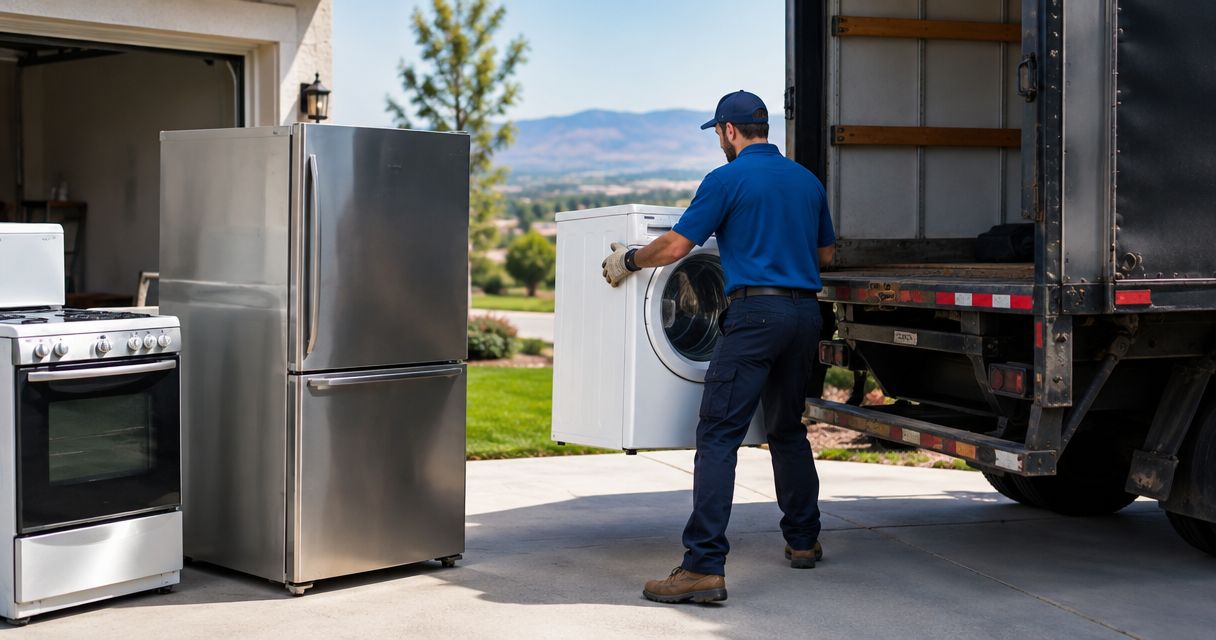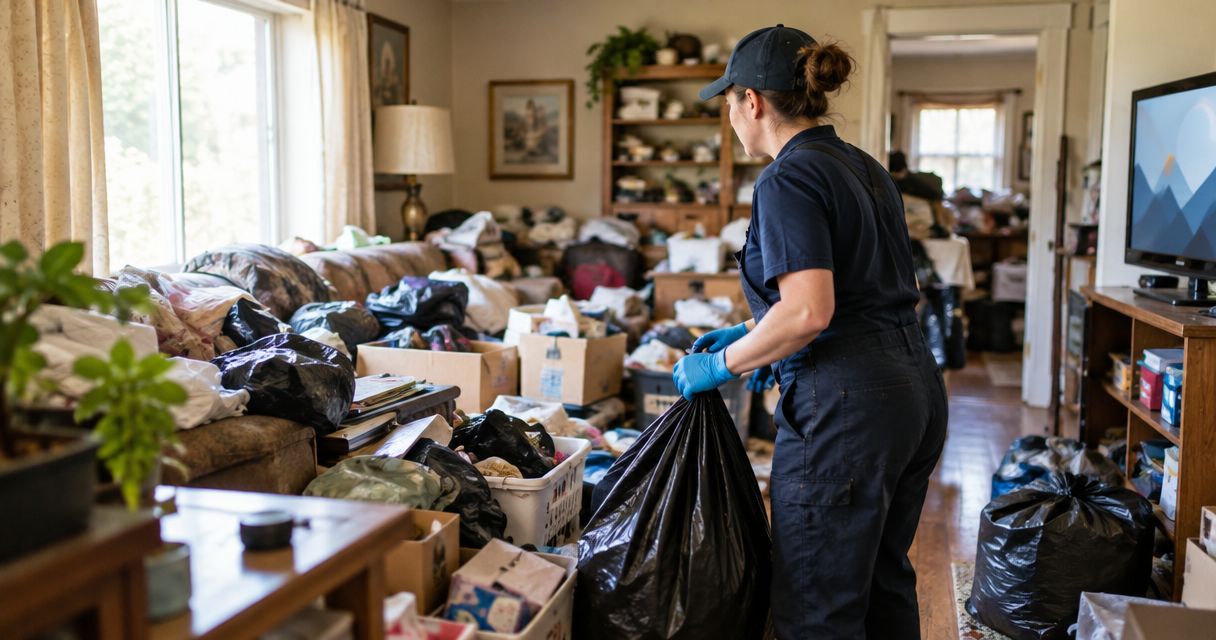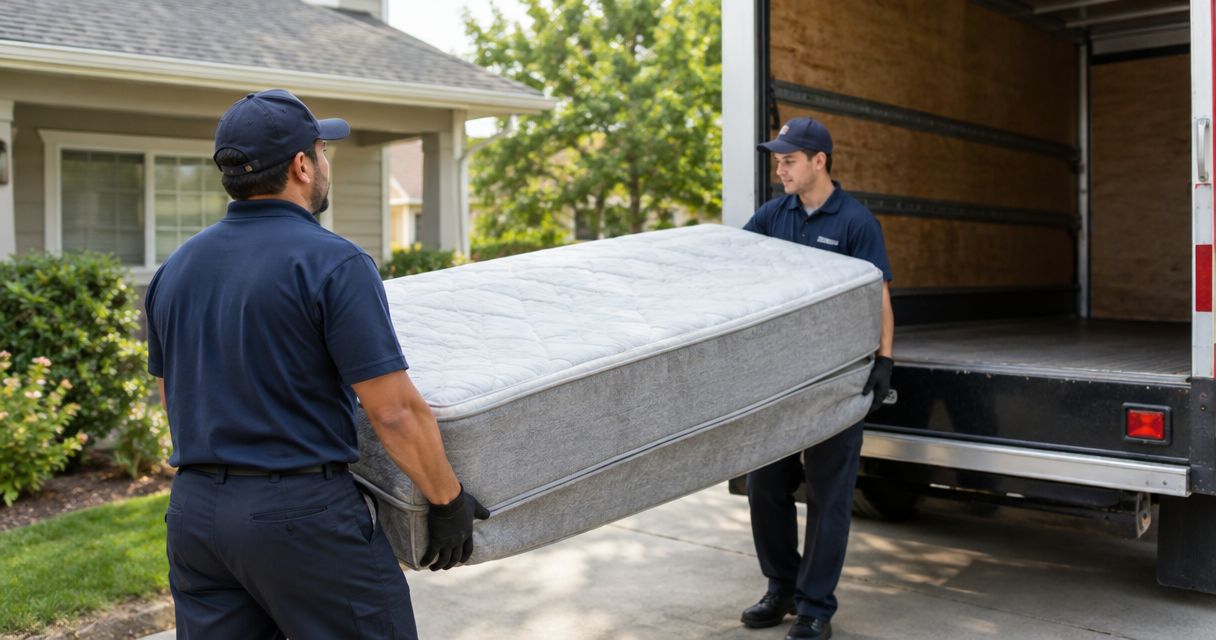
Yes—junk removal companies can recycle materials and donate usable items, but pickup alone does not guarantee either outcome. For your 2026 cleanout, confirm what the hauler separates, which receiving organizations accept your items, and what happens to anything rejected before loading starts.
- Does junk removal recycle or donate items? Yes, but confirm the destination and acceptance rules before pickup.
- Donation suits usable items an organization agrees to accept; recycling depends on material and local processing rules.
- Idaho Junk Solutions offers load-priced junk removal and property cleanouts; confirm donation and recycling arrangements before booking.
- Keep donation candidates separate from wet, broken, or contaminated debris so their condition remains clear.
Why this matters
A house cleanout can include furniture worth keeping, metal suitable for recycling, and debris that belongs in neither stream. Treating everything as one pile makes it harder to preserve usable items and explain exactly what needs hauling.
For homeowners and property managers in Boise, Meridian, Nampa, and Caldwell, the practical goal is a cleared property with an agreed destination plan. Idaho Junk Solutions provides junk removal and full property cleanouts; ask about your specific donation candidates rather than assuming every usable item receives a second home.
Do junk removal companies recycle or donate usable items?
Yes, some junk removal companies arrange recycling or donation as part of hauling. The useful distinction is between an intended destination and a confirmed acceptance. A company can plan to donate a couch, but the receiving organization still decides whether to take it.
Use this comparison when discussing your 2026 pickup. These are disposal routes to confirm, not promises that every hauler provides every route.
| Route | Best for | Main advantage | Main limitation | What to confirm |
|---|---|---|---|---|
| Donation | Usable items accepted by a receiving organization | Keeps an item in use | Condition and acceptance rules restrict what qualifies | Who accepts it and what happens if it is rejected |
| Recycling | Materials accepted by a recycler | Recovers material rather than preserving the whole item | Mixed materials and contamination complicate processing | Which materials are separated and where they go |
| Disposal | Nonhazardous items that cannot enter an agreed reuse or recycling route | Provides an endpoint for rejected or unusable material | Does not preserve the item for reuse | Which items fall into this category |
The word usable needs a closer look. A table with secure legs is different from a table missing essential hardware, even if both look presentable in a photograph.
Donation: confirm acceptance before pickup
Donation works best when the item is complete, usable, and accepted by the recipient. It is not enough that you would rather donate it than throw it away.
Show the hauler clear photographs and describe anything that affects use. Include missing parts, stains, damage, and whether an item works; hiding defects only moves the decision to loading day or the receiving location.
Ask these questions before authorizing a donation plan:
- Which organization is expected to receive the item?
- Has that organization accepted this type of item in its current condition?
- Does the plan include delivery, or only hauling away?
- What happens if the organization declines it?
- Is any donation documentation available, and who supplies it?
Do not promise a donation recipient something the hauler has not agreed to deliver. If a particular recipient matters to your family, arrange acceptance first and make that destination part of the pickup discussion.
Recycling: identify the material, not just the object
Recycling depends on what an item contains and what the receiving facility accepts. An object described simply as furniture or an appliance does not establish its recycling route.
A metal frame, upholstered seat, and electronic component present different sorting questions. Ask whether the company separates those materials or takes the whole object to a facility that decides what can be recovered.
For a 2026 garage or property cleanout, photograph separate material groups instead of sending only a wide shot of the room. That gives the hauler a clearer starting point for discussing the load.
The limitation is straightforward: recyclable material does not mean confirmed recycling. Ask for a specific explanation, not just a general statement that the company tries to keep things out of the landfill.
Disposal: agree on the fallback
Donation and recycling both need a fallback when an item is rejected. Decide whether rejected items should remain on the property or continue through an agreed, appropriate disposal route.
Keep hazardous materials outside the ordinary junk-removal scope. Idaho Junk Solutions does not offer hazardous-material pickup, removal, handling, or disposal; paint and chemical removal questions need a separate conversation before a cleanout is scheduled.
Do not tuck unidentified containers into furniture drawers or debris bags. Tell the hauler where those items are so the ordinary cleanout scope stays clear.
Why recycling and donation outcomes vary
The outcome depends on the items and the agreed work, not just the company name on the truck. These factors deserve attention before you approve the job:
- Item condition: Describe damage and missing pieces so donation candidates can be assessed honestly.
- Material type: Separate furniture, metal, electronics, and mixed debris in your description; they raise different acceptance questions.
- Receiving rules: Ask about current acceptance requirements rather than relying on a previous donation experience.
- Cleanout scope: A few selected items require a different plan from a full house, commercial space, or demolition cleanup.
- Load separation: Tell the hauler which items must remain identifiable rather than entering a mixed debris load.
- Rejected-item instructions: State whether an unsuccessful donation attempt means return, another agreed destination, or disposal.
No responsible answer promises that every item will be donated or recycled. A clear plan identifies the candidates, the limits, and the fallback.
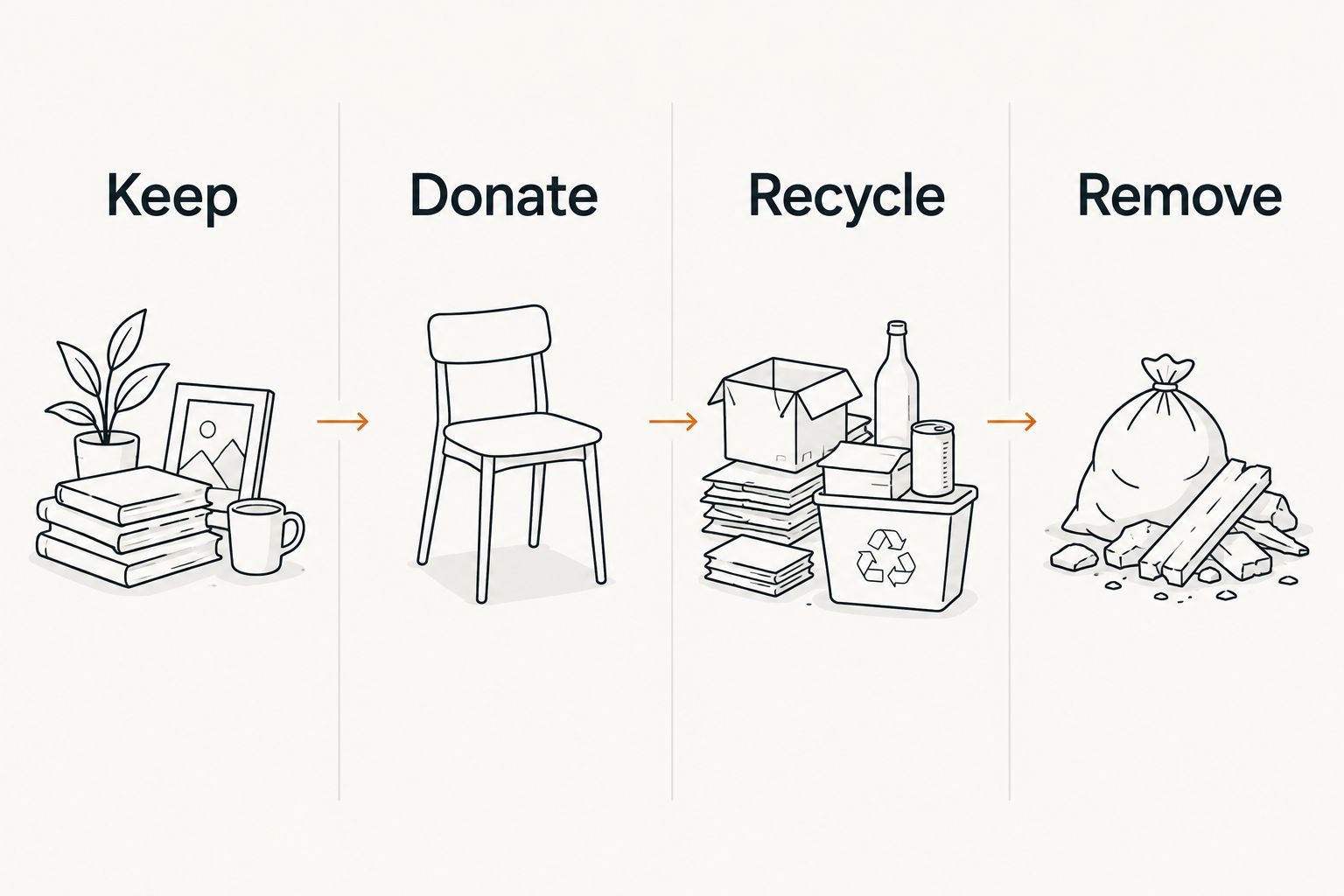
How to prepare a cleanout without losing usable items
You do not need to empty every room before requesting hauling. You do need to make the decisions that the crew cannot make for you: what stays, what leaves, and what requires separate approval.
Keep
Identify documents, valuables, family belongings, and anything excluded from the cleanout. Marking a room is not enough when a keep item sits beside furniture scheduled for removal.
Donate
Group donation candidates where you can photograph them clearly. Keep matching parts together and describe condition honestly; do not label a broken item as ready to use.
Recycle
Identify distinct materials for the hauling discussion. Do not dismantle heavy furniture or appliances just to create a cleaner photograph or a smaller pile.
Remove
List the remaining nonhazardous junk and debris. Include items in sheds, garages, storage rooms, and outdoor areas so the agreed scope covers the whole property.
These categories are instructions for the walk-through, not a claim that each pile has an accepted destination. Keep the donation and recycling decisions open until the hauler confirms the arrangements.
How load pricing fits a donation or recycling plan
Idaho Junk Solutions is a fit for Treasure Valley homeowners and property managers who need load-priced junk removal and full property cleanouts. Clear load pricing is confirmed before work starts; donation and recycling instructions should be part of that scope discussion, not an assumption added afterward.
The brand's load-size guidance uses a 14-cubic-yard trailer. As simple volume references, one-quarter of that capacity is 3.5 cubic yards and one-half is 7 cubic yards; these figures describe space, not guaranteed counts of couches, desks, or appliances.
Awkward shapes make item counts a poor substitute for photographs and a walk-through. A large empty cabinet and a compact pile of dense debris can raise different loading questions even when both look like a small job.
For your 2026 booking, explain whether the job includes selected furniture, a full property cleanout, or demolition-related debris. Ask how any requested separate destination affects the agreed work rather than assuming donation reduces the hauling charge.
The company provides one-hour arrival windows with ETA updates. Have the person authorized to approve removal available for the scope discussion, and identify who can answer questions if something unexpected turns up.
What should you do with furniture you want reused?
Start with the furniture you most want to preserve. Photograph it before moving it outside, disclose damage, and ask the proposed recipient about acceptance before making delivery arrangements.
Comparing responsible furniture disposal options means separating direct reuse, donation, material recovery, and disposal rather than treating them as interchangeable. The linked discussion concerns Melbourne; receiving rules and hauling arrangements still need local confirmation for a Treasure Valley property.
Direct reuse offers control over who receives an item, but you must coordinate the handoff. Donation depends on an organization's acceptance. Recycling concerns the material, not keeping the furniture intact; disposal is the fallback when the other agreed routes do not work.
Do not leave an indoor donation candidate exposed to weather while waiting for a decision. Preserve its current condition and keep essential parts together. If the property must be emptied by a fixed handoff date, settle rejected-item instructions before pickup day.
How should landlords and businesses document a larger cleanout?
For a 2026 rental turnover or commercial cleanout, record what is authorized to leave and what must stay. Follow applicable ownership and property-handling requirements before treating belongings as available for donation or disposal.
Build the scope around rooms and item groups. Note furniture intended for donation, material proposed for recycling, ordinary junk, and anything excluded from the job.
Before work starts, agree on:
- The person authorized to approve the cleanout.
- Items and areas excluded from removal.
- Donation candidates requiring separate decisions.
- The fallback for rejected items.
- Any destination documentation you require.
For demolition or shed removal, keep demolition authorization separate from decisions about stored contents. A shed can contain tools or belongings that should stay even when the structure itself is scheduled to go.
Can I choose where my donated items go?
You can request a destination, but the hauler and recipient must agree to the arrangement. Give the hauler the acceptance requirements before loading, especially when a particular organization matters to you.
Will I get proof that my items were recycled?
Ask for the documentation you need before approving pickup. Do not assume a hauling invoice proves that a particular item was recycled or accepted as a donation.
Should I arrange donation separately from junk removal?
Arrange donation separately when controlling the recipient is your priority and you can manage the handoff. For a full-property cleanout, discuss whether separate arrangements fit the deadline without leaving rejected items behind.
FAQ
Does junk removal recycle or donate items automatically?
No—junk removal does not automatically include recycling or donation. Confirm accepted items, intended destinations, and rejected-item instructions before loading.
Can a junk removal company donate my old couch?
A junk removal company can arrange couch donation only when it offers that service and a recipient accepts the couch. Share photographs and disclose damage before pickup.
Is everything made of metal recyclable through junk removal?
Metal content alone does not confirm a recycling route through your hauler. Ask which materials the company separates and what the receiving facility accepts.
Does Idaho Junk Solutions guarantee that usable items are donated?
Do not assume a donation guarantee when booking Idaho Junk Solutions. Confirm donation arrangements and the fallback for rejected items as part of the agreed cleanout scope.
Do I have to sort everything before a house cleanout?
You do not have to finish every sorting task before requesting a cleanout, but you should identify what stays and what needs separate approval. Keep donation candidates identifiable until their destination is agreed.
Can paint and chemicals go with a donation or recycling load?
Do not include paint, chemicals, or unidentified containers in an ordinary donation or recycling load. Hazardous-material pickup, handling, removal, and disposal are outside this company's services.
Does donating furniture make junk removal cheaper?
Donation does not establish a lower hauling charge. Ask how your load and any requested destination arrangements affect the scope confirmed before work starts.
One last thing
Photograph each important donation candidate before the cleanout starts—not only the finished, empty room. Those photographs preserve the item description you discussed and make later questions easier to resolve.
The best question is not just whether a company donates. Ask what happens to your specific items if the recipient says no. That answer turns a good intention into a workable cleanout plan.