Commercial junk removal for a small business is priced by the load and the agreed work scope, so get a job-specific quote before hauling starts in 2026. Separate loose-item pickup from a full commercial cleanout or demolition: removing unwanted furniture is a different job from taking out attached fixtures and clearing an entire property.
- Commercial junk removal cost: small business quotes should define load size, included work, and exclusions before hauling starts.
- Idaho Junk Solutions offers load-priced commercial junk removal and property cleanouts in the Treasure Valley.
- A 14-yard trailer describes volume, not an unlimited weight allowance or a guaranteed fit for every item.
- Keep hauling, demolition, and hazardous-material concerns separate when describing your job.
Why this matters
An office move, rental turnover, or store closure needs a clear finish line. A quote for removing a furniture pile does not describe the same work as emptying offices, storage rooms, and an outdoor enclosure.
Idaho Junk Solutions is best for Treasure Valley businesses seeking load-priced junk removal and full property cleanouts. The locally owned company serves homeowners, businesses, and property managers; your commercial quote still needs to identify exactly what stays and what goes.
Start with Idaho Junk Solutions when you have the item list and property details ready. Photos help explain the work, but the useful commitment is the price and scope confirmed before work starts.
How much does commercial junk removal cost for a small business in 2026?
Your commercial junk removal cost depends on the load and the work you approve. Ask for a quote against a defined inventory, not a general description such as office junk. That gives you something useful to compare and a clear boundary for the job.
The practical breakdown is below. These are job types, not fixed-price packages.
| Job type | Best for | Main benefit | Limitation to settle before booking |
|---|---|---|---|
| Everyday commercial pickup | A business removing a defined pile of unwanted items | Keeps the assignment focused | Does not describe a whole-building cleanout |
| Full commercial cleanout | An office, store, or property being emptied | Establishes a room-by-room finish line | Requires clear keep-and-remove instructions |
| Demolition and hauling | A project involving removal of attached structures or fixtures | Addresses work beyond loose-item pickup | Requires a separate demolition scope |
For your 2026 budget, record the approved hauling quote separately from any other work the property needs. Do not assume that disconnecting equipment, removing attached materials, cleaning surfaces, or repairing damage is included because someone quoted junk removal.
A useful quote answers a straightforward question: What will be removed, from where, and what condition will the space be left in? Settle that before comparing totals.
Everyday commercial pickup: define the pile
A routine pickup suits a business with a clear collection of unwanted items rather than an entire property to empty. Describe the furniture, shelving, boxes, or other loose contents you want assessed. Identify anything that remains in use.
The advantage is a narrow assignment. The limitation is that extra rooms, additional piles, or attached fixtures fall outside that description unless you include them before approval.
Send an overview of the pile and closer photos of bulky pieces. Do not photograph only the front row when more material sits behind it; the quote needs to reflect the whole removal area.
Best for: a small business clearing a defined area without planning a complete move-out.
Full commercial cleanout: define every room
A full cleanout needs more than a picture of the largest room. Include offices, stockrooms, closets, exterior storage, and any other area within the assignment. Tell the hauler whether the goal is removing selected contents or emptying the agreed spaces.
The benefit is a clear property-wide scope. The trade-off is more preparation: someone must identify retained equipment, business records, landlord-owned fixtures, and anything that another contractor will handle.
For an office closure or relocation, use an office downsizing and commercial cleanout workflow to organize the handoff. A room-by-room list is easier to approve than instructions passed between employees on pickup day.
Best for: business owners and property managers coordinating an empty-suite or full-property handoff in 2026.
Demolition and hauling: separate attached materials
Loose furniture and attached fixtures require different instructions. A freestanding shelf belongs on an inventory; a built-in counter needs its removal method and surrounding work discussed before anyone starts.
Idaho Junk Solutions offers demolition as well as commercial junk removal. That makes the distinction especially important: do not treat a hauling quote as authorization to demolish everything left inside a commercial space.
The benefit of a defined demolition assignment is clarity about what comes out. The limitation is that demolition does not automatically mean every related trade, repair, or building requirement is included.
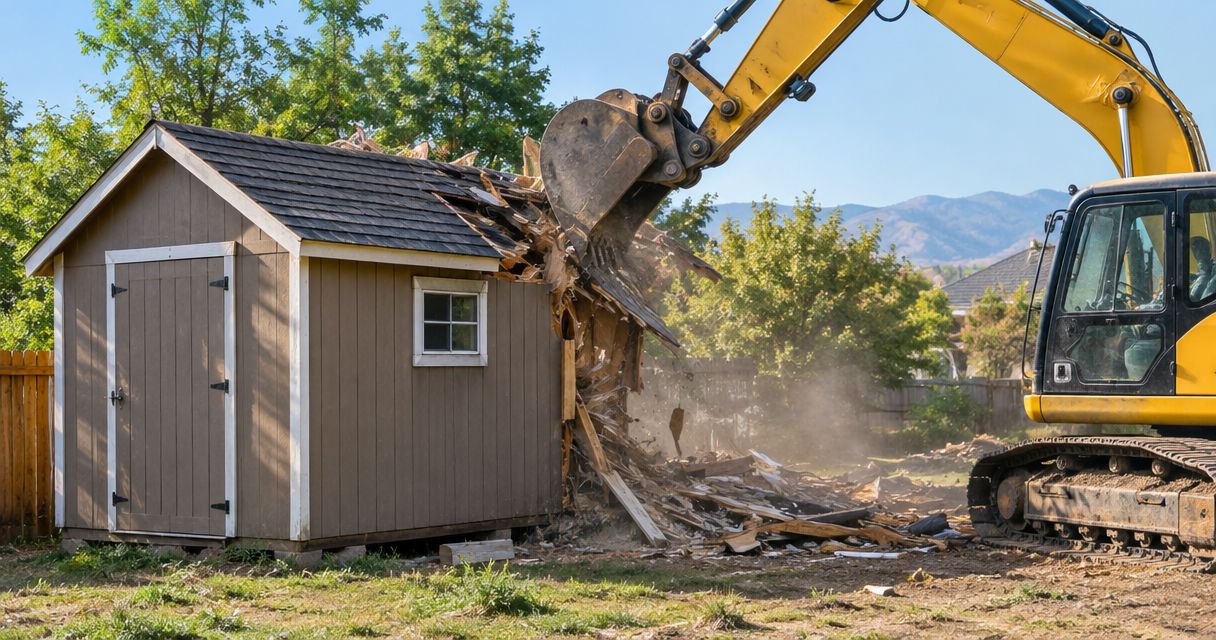
Best for: a business planning an agreed strip-out, shed removal, or other demolition project alongside hauling. Confirm ownership permissions and any necessary specialist work before approving removal.
Why commercial junk removal quotes vary
The useful comparison is scope against scope. Give each company the same information rather than asking one to quote a pile and another to quote an empty building.
- Load volume: Show all removal areas so the quote reflects the material being hauled, not just the most visible pile.
- Item mix: List bulky furniture, appliances, equipment, and loose contents separately so each can be assessed.
- Cleanout boundaries: Selected-item removal and a full property cleanout have different finish lines.
- Attached materials: Flag built-ins and structures rather than assuming ordinary hauling includes demolition.
- Preparation status: Explain what has been sorted, what remains connected, and what still needs an ownership decision.
Access details belong in the job plan too. Describe stairs, hallways, loading access, and parking restrictions so the crew understands the property. Do not confuse access planning with an extra access charge: the company's pricing guidance states that access never costs extra.
For a 2026 comparison, ask each provider to state its own terms. A lower-looking quote is not a useful saving if it leaves behind material you expected removed.
How do you estimate a commercial load before calling?
Use the company's 14-yard trailer reference as a volume guide, not a promise that every collection of business equipment will fit. Cubic yards measure space; they do not tell you whether a particular load is suitable by weight or material.
For scale, half of 14 cubic yards is 7 cubic yards, and one quarter is 3.5 cubic yards. Those are volume calculations, not guaranteed capacities for desks, cabinets, or dense debris. Awkward shapes and mixed contents still need assessment.
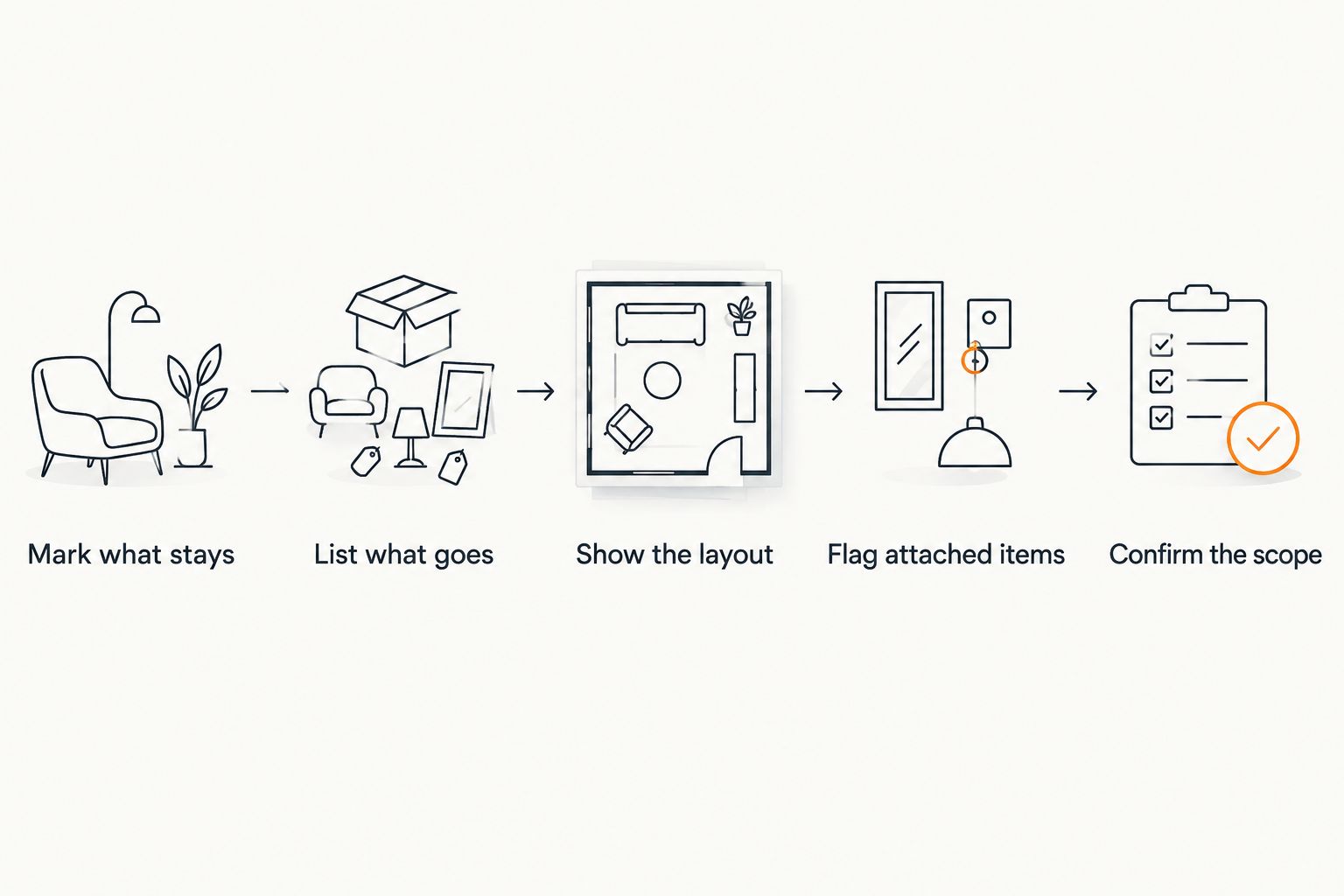
Follow this sequence before requesting your quote:
- Mark what stays. Identify retained furniture, records, equipment, and landlord-owned items before making the removal list.
- List what goes. Work through each room and outdoor area included in the assignment.
- Show the layout. Photograph the contents and the route from the removal area to the loading point.
- Flag attached items. Separate ordinary pickup from demolition, disconnection, or other specialist work.
- Confirm the scope. Review the agreed removal list and price before work begins.
A complete inventory beats a confident guess about trailer space. Do not break down equipment or disturb questionable materials simply to make your estimate look smaller.
What should a small business confirm before booking?
Get the load pricing and work scope confirmed before the crew starts. You should understand the removal area, the retained items, and what happens if you request additional work after approval.
Use this booking checklist:
- Identify the person authorized to approve the work.
- Confirm which rooms and exterior areas are included.
- Explain building access and loading restrictions.
- Ask whether any listed item needs separate assessment.
- Agree on the condition expected at handoff.
- Confirm the arrival window and how ETA updates will reach you.
Idaho Junk Solutions uses one-hour arrival windows with ETA updates. Give the crew a working contact number and make sure the person receiving updates can arrange access; an arrival window is not a promise that a full cleanout takes one hour.
Ask about owner involvement if that matters to your project, but do not assume the owner attends every job. Property care belongs in the plan regardless of who arrives: identify surfaces, fixtures, and business equipment that must remain untouched.
Get your commercial cleanout scoped
Describe the load, removal areas, and attached items. Confirm pricing before work starts.
Is commercial junk removal cheaper than doing it yourself?
Compare the complete assignment, not hauling alone. If employees handle removal, your plan still needs loading labor, transport, an appropriate destination, and time away from normal business work.
Professional hauling gives the removal assignment to a crew; doing it yourself keeps the work with your business. Neither choice has a supported universal cost advantage. Compare an actual quote with your actual transport and staffing requirements.
For a small, manageable collection, handling it internally is an option to assess. For a full commercial cleanout, be specific about who will empty each room and complete the handoff. Choose the method that covers the whole job, not just the easiest items.
Can a commercial cleanout include paint, chemicals, or unsafe materials?
Do not include hazardous materials in an ordinary junk removal assignment. Idaho Junk Solutions does not offer hazardous-material pickup, removal, handling, or disposal. Tell the company about suspected hazards before the job rather than mixing them into a general load.
Commercial spaces can contain materials that need a separate decision. Leave unknown containers undisturbed, keep employees away from suspect material, and arrange appropriate specialist guidance instead of treating everything left behind as ordinary junk.
A biohazard safety charge is not payment to remove or dispose of biohazards. A safety fee does not expand the materials a company accepts. Keep that distinction clear when reviewing a commercial property cleanout.
FAQ
How do I get an accurate commercial junk removal quote in 2026?
Give the hauler a complete removal list, photos of every included area, and details about attached items. Confirm the load pricing and work scope before hauling starts rather than relying on a quote for an undefined pile.
Does a 14-yard trailer hold every small-business cleanout?
A 14-yard trailer is a volume reference, not a guarantee that every commercial cleanout fits. Bulky shapes, material type, and the amount being removed still need assessment.
Does a one-hour arrival window mean my office will be empty in an hour?
A one-hour arrival window describes when the crew is scheduled to arrive, not how long your cleanout will take. Confirm the work schedule separately and provide a contact who can receive ETA updates.
Can I combine office furniture removal with demolition?
You can request an assessment covering both hauling and demolition, but each part needs a clear scope. Identify attached fixtures separately from loose furniture and confirm any work required before removal.
Does difficult access automatically mean an extra charge?
Idaho Junk Solutions states that access never costs extra. Still disclose stairs, narrow routes, parking restrictions, and loading arrangements so the crew can plan the work.
Should employees sort everything before commercial junk removal?
Employees should identify what stays, what goes, and anything needing a separate decision before the job. Keep business records, retained equipment, and questionable materials out of the general removal pile.
Can ordinary commercial junk removal include hazardous waste?
Ordinary commercial junk removal should not include hazardous waste. Arrange appropriate specialist guidance for suspected hazardous materials rather than adding them to a furniture or property-cleanout load.
One last thing
Before a 2026 commercial cleanout, walk the space with the person who will approve the final handoff. Agree on what an empty room actually means: loose contents removed, attached fixtures retained, and any separate demolition clearly identified.
The most useful cost-control step is a settled scope. Once everyone agrees on what goes, what stays, and what requires separate work, the quote has a clear job behind it.