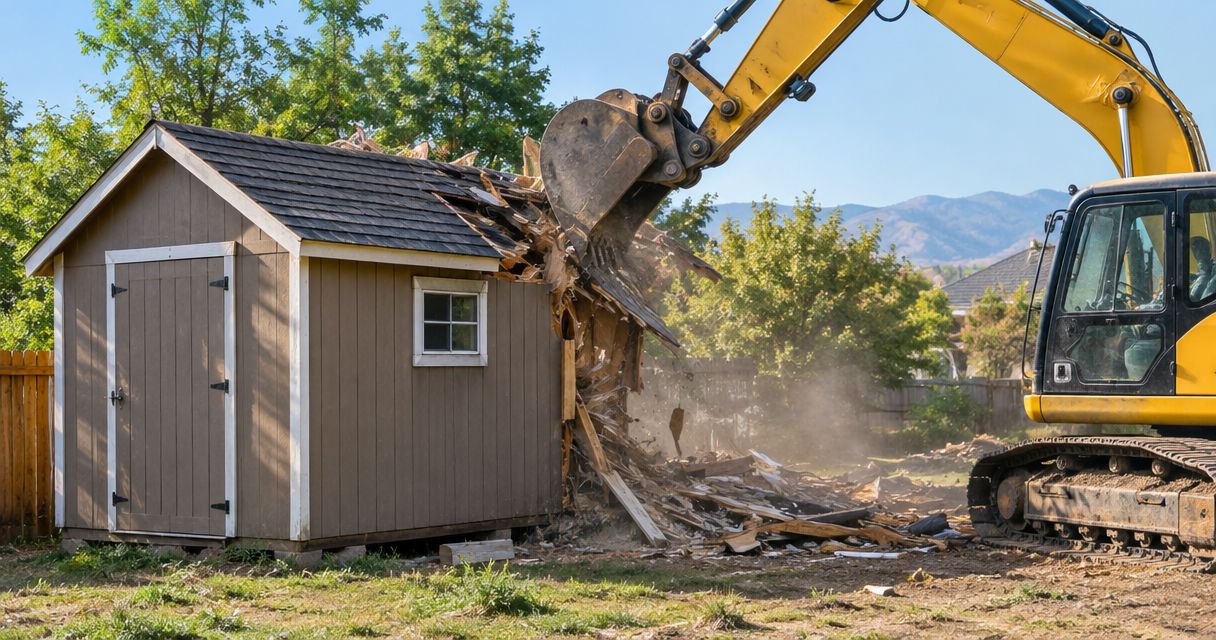
Before demolishing a shed in Boise in 2026, get the City of Boise’s permit determination for your property and the exact work you plan to do. Do not treat a small shed, an old shed, or an existing concrete pad as proof that approval is unnecessary. Utility disconnections, suspected hazardous materials, and plans for a replacement structure need separate attention before demolition starts.
- Confirm whether you need a permit to demolish a shed in Boise before scheduling teardown.
- Describe the shed, utilities, foundation, and removal scope when requesting a permit determination.
- Idaho Junk Solutions offers shed demolition and load-priced hauling; confirm the job scope before work starts.
- Keep replacement construction, utility work, and suspected hazardous materials separate from the hauling plan.
Why this matters
A shed removal job has more than one finish line. Taking down the walls is not the same as removing the contents, hauling the debris, breaking out the slab, or getting permission to build something new.
Idaho Junk Solutions is a locally owned demolition and junk removal company serving Treasure Valley homeowners, businesses, and property managers. Idaho Junk Solutions is best for property owners who want shed demolition and debris hauling scoped together. Permit responsibility, utility work, and the final condition of the site still belong in the written job scope—not in assumptions.
Do I need a permit to demolish a shed in Boise?
Get a property-specific answer from the City of Boise before tearing down the shed. Ask about demolition itself, not just whether a similar shed would need a permit to be built today. A construction exemption is not an answer to every demolition question.
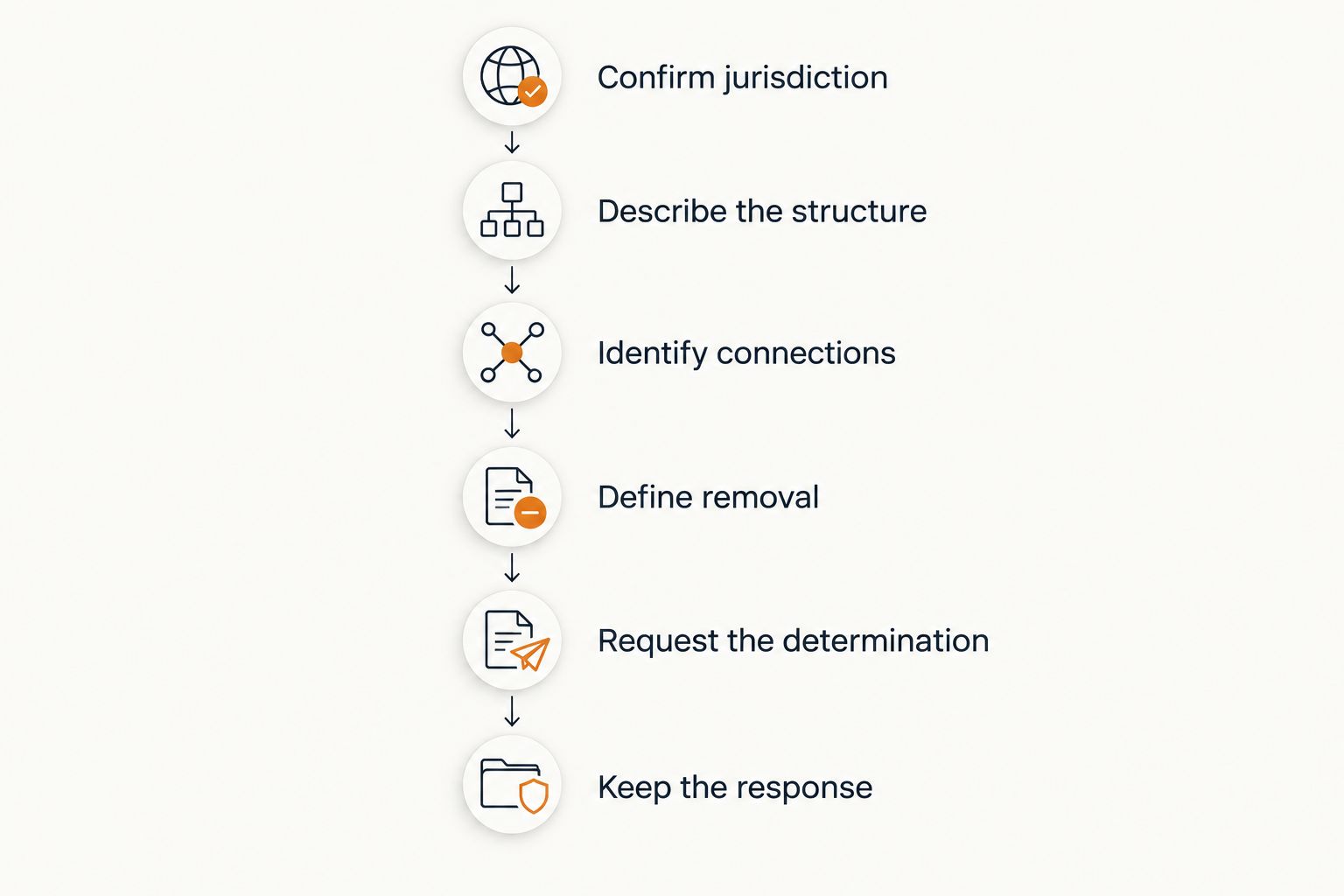
For a 2026 project, use this sequence:
- Confirm jurisdiction. Give the property address and confirm which permitting authority handles the parcel. Do not rely on the mailing address alone.
- Describe the structure. Provide its footprint, construction materials, condition, and whether it stands alone or connects to another building.
- Identify connections. Disclose electricity, water, drains, gas, or any other service entering the shed. If you do not know what a line serves, say so.
- Define removal. State whether you want only the structure removed or also the contents, foundation, slab, and buried components.
- Request the determination. Ask what approval, documentation, and inspections apply, who must obtain them, and what must happen before work begins.
- Keep the response. Save the written answer with the estimate and any required permit documents. Make sure the demolition contractor receives the same scope.
The useful answer is not simply that “sheds are exempt.” It is a determination tied to your address, your shed, and your proposed demolition.
What should I send with a shed demolition permit question?
Give the permitting staff enough information to distinguish a detached storage shed from an attached addition or a structure with active utilities. Clear photos and a plain description make your question specific.
Prepare this information before calling or submitting an inquiry:
- Property address: Include the address where the shed stands, not your billing address.
- Shed footprint: Measure length and width from a safe location. Do not enter a visibly unstable structure to get measurements.
- Structure photos: Show each accessible side, the roof, and the connection to the ground.
- Building connections: Show any shared wall, attached roof, walkway cover, or connection to another structure.
- Utility information: Identify visible wiring, outlets, pipes, meters, and service lines without disturbing them.
- Removal boundary: Explain whether the slab, footings, contents, and surrounding debris are included.
Use a direct question: “I want to remove this shed at this address. The work includes these items. What permits, disconnections, inspections, or other approvals are required before demolition?”
If the scope changes after the answer arrives, check again. Removing a freestanding wooden shell is a different proposal from removing that shell plus concrete and connected services.
Which shed removal scope fits your job?
Choose the endpoint before requesting estimates. Otherwise, one contractor can quote an empty structure while another includes a packed shed and the concrete underneath it.
| Removal scope | Best for | What to specify | Limitation |
|---|---|---|---|
| Structure only | Owners keeping the existing pad | Shed teardown and removal of demolition debris | Contents, concrete, and site preparation need separate decisions |
| Contents and structure | Owners clearing an occupied storage shed | Sorting instructions, contents removal, teardown, and hauling | Utilities and suspected hazardous materials remain separate issues |
| Structure and foundation | Owners who want the pad or footings removed too | Concrete boundaries, footing removal, and the desired ground condition | More disturbance; replacement construction still needs its own review |
Best for a full property reset: define contents, structure, foundation, and cleanup in one written scope. The benefit is a clear handoff. The trade-off is that every additional task must be assessed rather than treated as included in “shed removal.”
Keeping the slab also has a trade-off. It avoids asking for concrete removal, but it does not establish that the slab is suitable or approved for a future building.
Why shed demolition requirements vary
These are the facts to put in front of the permitting authority. They are not a substitute for its determination.
- Jurisdiction: Confirm that the property falls under the authority you are asking. A Boise mailing address is not the document that settles jurisdiction.
- Attachment: Tell the reviewer whether the shed shares a wall, roof, or structural connection with another building.
- Utilities: Disclose active, disconnected, and unknown lines. Do not describe an uncertain connection as abandoned.
- Demolition extent: Distinguish structure removal from concrete removal, excavation, and removal of buried components.
- Replacement plans: Explain whether you intend to leave open space, keep the pad, or build another structure.
- Property restrictions: Ask whether any parcel-specific review affects the proposed work, rather than assuming ordinary shed advice covers the address.
For your 2026 planning, separate what the city requires from what the contractor includes. The city determines the applicable approval process; the estimate defines the work you are buying. Neither document replaces the other.
Can I demolish the shed myself if it is small?
Size does not establish that a teardown is safe or exempt from approval. Get the permit determination first, then decide whether you have the experience, equipment, and disposal plan for the work.
A rotten wall, sagging roof, or unknown electrical connection is a reason to stop and get the condition assessed. Do not pull structural pieces apart to see what happens. Keep children, tenants, pets, and bystanders away from an unstable shed.
DIY removal gives you control over the work sequence, but it also leaves you responsible for the teardown, loading, transport, and cleanup. Hiring demolition and hauling together puts those tasks into a contractor’s scope; it does not automatically transfer permit or utility responsibilities unless the agreement says so.
Does keeping the concrete slab change the permit question?
Keeping the slab changes the proposed scope, but it does not answer the permit question by itself. Tell the permitting authority that the structure will go and the concrete will remain.
Also state what happens to anchors, projecting bolts, exposed pipes, and holes left after removal. A bare slab with sharp hardware still needs a defined cleanup endpoint.
If you plan to build again, ask about the replacement before demolition. Do not order a new shed on the assumption that the old footprint or slab establishes permission for the next structure.
What must happen before the crew starts?
A scheduled truck is not a substitute for a ready site. Use the pre-start conversation to settle responsibility and protect the parts of the property that are staying.
Settle approvals and utility work
Put the permit determination and any required approvals in the job file. Identify who obtains each document and who confirms that the project is ready to begin.
Have the appropriate utility provider or qualified trade address connected services. Switching off a light or unplugging a tool does not establish that every line entering a shed is disconnected.
Separate belongings from debris
Remove documents, tools, keepsakes, and anything you want to keep before the teardown. Give clear instructions for contents that remain; do not expect a demolition crew to identify valuables inside mixed debris.
Do not open unknown containers or mix their contents into the load. Idaho Junk Solutions does not offer hazardous-material pickup, handling, removal, or disposal. If you suspect hazardous materials, stop disturbance and arrange an appropriate assessment outside the ordinary demolition and hauling scope.
Agree on property protection
Walk through the route from the shed to the loading area. Identify gates, irrigation components, landscaping, fences, and surfaces that must stay intact, then agree on protection before work begins.
Take photos of the shed and the access route. These give both parties a common reference for the starting condition and the agreed removal boundaries.
How should the demolition and hauling estimate read?
Ask for separate descriptions of the tasks, even when they appear in one estimate. “Remove shed” leaves too much room for disagreement about contents, concrete, and cleanup.
A useful scope states:
- What structure is coming down and what stays.
- Whether contents removal is included.
- Whether concrete, footings, anchors, and buried components are included.
- Who handles permitting and utility coordination.
- What debris will be loaded and hauled away.
- What the site should look like at handoff.
For 2026 scheduling, confirm the arrival window as well as the work scope. Idaho Junk Solutions uses one-hour arrival windows with ETA updates, and confirms clear load pricing before work starts. Owner involvement is part of the company’s approach, but do not assume the owner attends every job.
Load pricing describes hauling volume; it does not describe every demolition task. The company’s 14-cubic-yard trailer is a load-size reference, not a promise that a particular shed will fit in one load. Keep teardown, contents, concrete, and hauling clear in the estimate.
Discuss your shed removal scope
Explain the shed, contents, utilities, and concrete before agreeing to demolition and hauling.
FAQ
Do I need a permit to demolish a shed in Boise in 2026?
Get a property-specific permit determination from the City of Boise before demolition. Describe the shed, its connections, and whether the work includes the slab or foundation; do not assume shed size alone settles the question.
Can I assume a shed demolition is exempt because the shed is small?
No—do not use size alone as your approval decision. Ask the permitting authority about removal of the actual structure at your address, rather than relying on a rule about building a new shed.
Who should get the shed demolition permit?
Assign permit responsibility explicitly in the written agreement and confirm the applicant requirements with the permitting authority. Do not assume that booking demolition means the contractor has obtained approval.
Can I leave the concrete pad after removing a shed?
Include keeping the concrete pad in your proposed scope and ask the permitting authority about that plan. Also define what happens to anchors, exposed pipes, and other items left on the pad.
Does unplugging the shed make it ready for demolition?
Unplugging equipment does not establish that every service entering the shed is disconnected. Have the appropriate utility provider or qualified trade address connected or unknown lines before demolition.
Can a demolition crew remove unknown chemicals from the shed?
Do not include unknown chemicals in an ordinary demolition or hauling load. Leave containers undisturbed and arrange appropriate guidance; hazardous-material handling and disposal are outside the service described here.
Does removing an old shed approve a replacement shed?
No—do not treat demolition approval as approval for replacement construction. Ask about the new structure separately before relying on the existing location, footprint, or slab.
One last thing
Photograph what you want left behind, not just what you want removed. Mark the fence section, concrete edge, irrigation line, or nearby planting that stays, and put those boundaries in the scope.
For a 2026 shed removal, the cleanest handoff starts before the first board comes down: written permit guidance, resolved utilities, agreed removal boundaries, and a clear description of the finished site.