Recurring junk removal does not automatically qualify a property manager for a discount; any recurring-work terms must be agreed with the hauler before you book. Ask for a load-based quote, define exactly what gets removed, and confirm whether the same terms apply to routine pickups, tenant turnovers, and full property cleanouts.
- Property manager junk removal discounts require an explicit agreement; repeat bookings alone do not establish a discount.
- Idaho Junk Solutions offers load-priced hauling for property managers in the Treasure Valley.
- Compare recurring pickups and rental cleanouts by scope, not a discount label.
- Confirm the load price, removal boundaries, arrival window, and approval process before work starts.
Why this matters
A discount means little when the quotes cover different work. Removing a staged pile outside a rental is not the same assignment as clearing furniture, closets, and a detached shed across an entire property.
Idaho Junk Solutions provides load-priced junk removal, full property cleanouts, and demolition services in the Treasure Valley. For your 2026 property-management plan, start with the work you actually need—not an assumed repeat-customer offer.
Idaho Junk Solutions is best for Treasure Valley property managers who want load-priced hauling and a price confirmed before work starts. The limit is straightforward: recurring bookings do not establish special terms unless those terms are explicitly agreed.
Do property managers get discounts on recurring junk removal service?
Treat a recurring-service discount as a negotiated term, not an automatic benefit. Before approving a booking, ask whether recurring work changes the quote and which jobs qualify. Do not enter a discount into your maintenance budget until the provider confirms it.
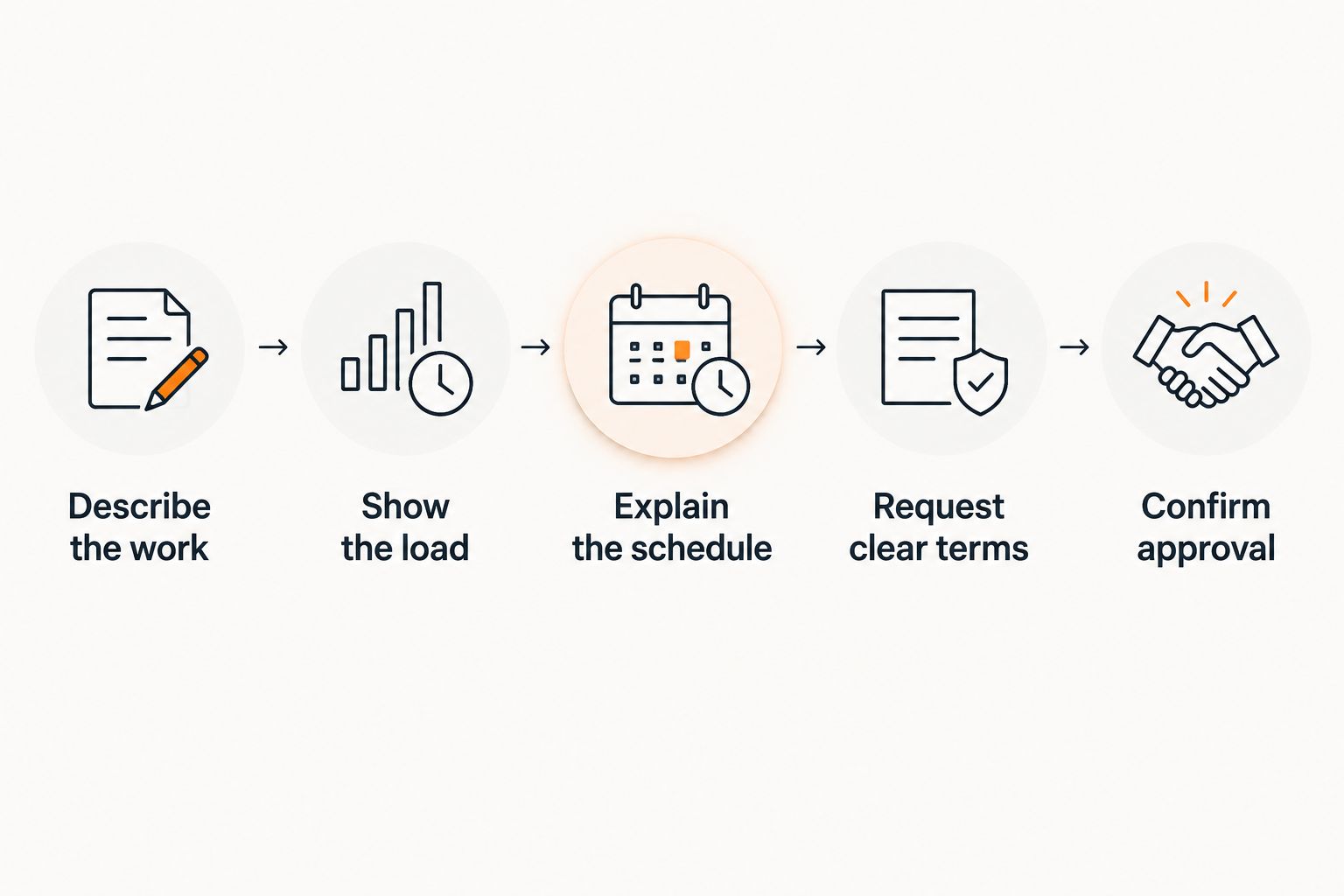
Use this sequence to make the answer usable:
- Describe the work. Separate routine bulky-item pickups from unit turnovers, full cleanouts, and demolition.
- Show the load. Send photos of every removal area, not just the largest pile.
- Explain the schedule. Distinguish a fixed pickup routine from occasional calls across your portfolio.
- Request clear terms. Ask what the quote covers and whether any recurring-work arrangement applies.
- Confirm approval. Identify who can authorize the job and changes to its scope.
Keep the agreement tied to a recognizable job. An approval for a photographed furniture pile should not silently become approval to empty the adjoining storage room. When the work changes, confirm the revised scope before loading continues.
Compare the job types before comparing terms
Choose the arrangement that matches the property, not the one with the most appealing label.
| Work type | Best for | Practical advantage | Limit to confirm |
|---|---|---|---|
| Recurring pickups | Repeated bulky-item accumulation | Gives you a repeatable process for reporting and approving pickups | New items still need to be identified and included in the scope |
| Rental turnover cleanouts | Units with belongings left behind | Connects removal to a specific unit and handoff | Authority to discard belongings must be settled first |
| Full property cleanouts | Homes, garages, and outbuildings needing clearance | Lets you define removal across the property together | Keep areas and excluded materials need clear boundaries |
| Demolition and hauling | Structures that need dismantling as well as removal | Addresses a different job than loose-item pickup | Dismantling requires its own defined scope |
These are work categories, not discount tiers. Ask which arrangement fits the assignment before asking whether repeat bookings change its terms.
Recurring pickups: define what repeats
A repeat address is not necessarily a repeat job. A mattress beside a collection area and a garage full of abandoned belongings have different removal boundaries, even when the same manager approves both.
For recurring work in 2026, create a short standing brief. Include the property address, where approved items will be placed, who sends photos, and who authorizes removal. Use a separate job description when a pickup expands into a cleanout.
Best for: managers handling repeated bulky-item pickups at known properties. The advantage is consistency in how you request work. The limitation is that the agreement still needs to account for what is actually there each time.
Do not assume a recurring arrangement includes reserved capacity, emergency response, or automatic pickup whenever something appears. Confirm scheduling for each booking unless your agreement explicitly says otherwise.
Tenant turnovers: protect the removal boundary
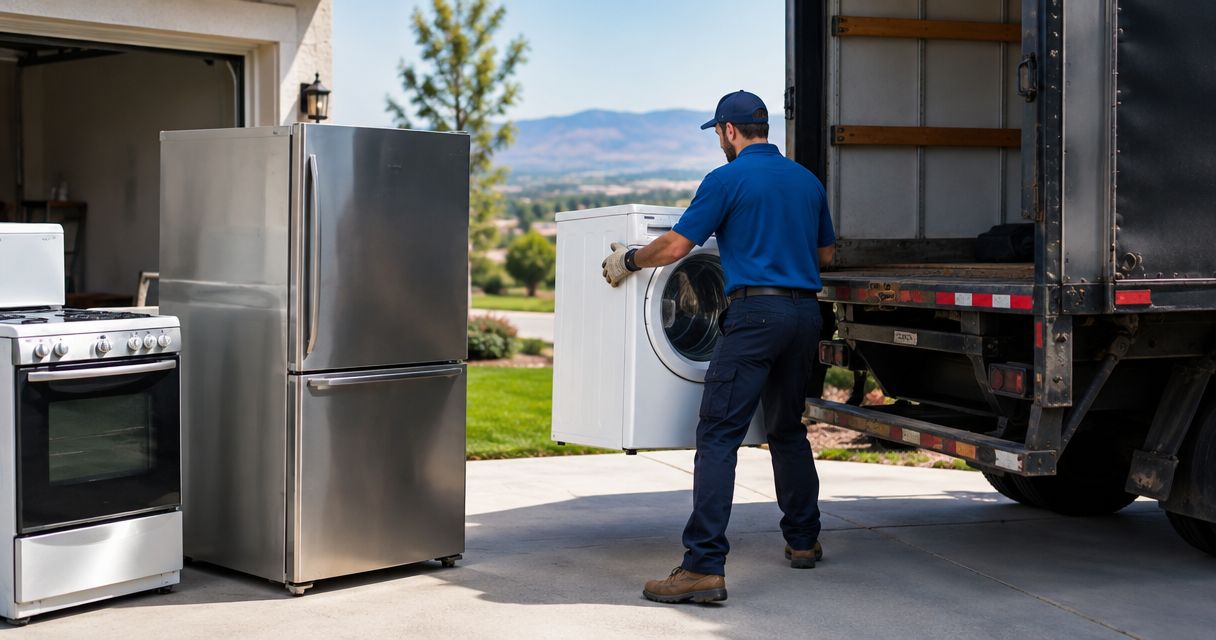
A turnover cleanout needs a clear distinction between items to remove and items that stay. Appliances, maintenance supplies, owner property, and tenant belongings should not end up in the same undifferentiated pile.
Before scheduling removal, establish your authority to discard the items. Follow the applicable lease requirements, legal process, and property-management procedures; a hauling appointment does not settle ownership or disposal rights.
Best for: managers preparing a specific unit for its next stage of work. A clearly bounded cleanout gives maintenance and cleaning crews a defined handoff. The limitation is that hauling alone does not make the unit repaired, cleaned, or ready for occupancy.
Photograph the approved removal areas and identify any rooms that are off-limits. If a contractor adds debris after the quote, get that added material approved rather than assuming it belongs to the original load.
Full property cleanouts: quote the whole assignment
For larger jobs, walk through the house, garage, yard, and outbuildings before requesting terms. A quote based on the front room does not describe belongings spread across an entire property.
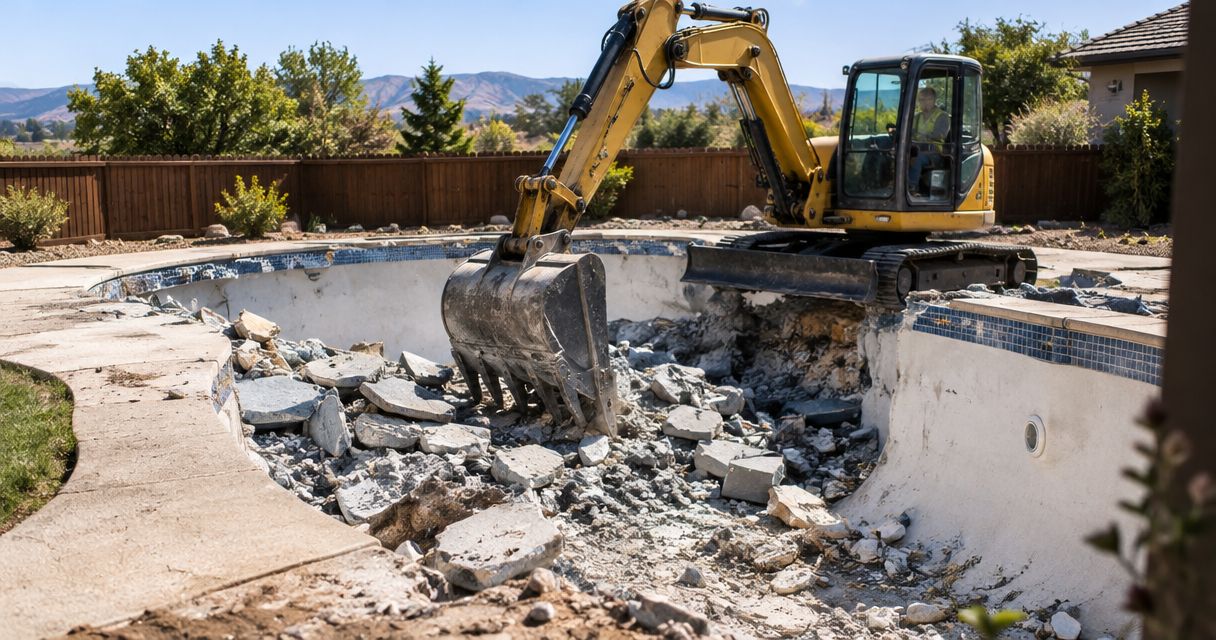
Group the scope by location. State what stays in each area, what gets removed, and whether any structure needs dismantling rather than simply hauling away. Shed demolition and loose junk removal should not be treated as interchangeable tasks.
Best for: managers overseeing a complete property clearance rather than an isolated pickup. Defining the whole assignment helps prevent overlooked areas. The limitation is that uncertain keep-or-remove decisions leave the scope unsettled.
For your 2026 cleanout plan, settle those decisions before the crew starts. Ask about owner involvement when coordinating a difficult job, without assuming the owner attends every appointment.
Why recurring junk removal terms vary
A useful request explains the work behind the relationship. These factors help define what you are asking a provider to agree to; none establishes an automatic discount:
- Load size. Describe the volume of approved items rather than relying on the number of rooms involved.
- Job scope. Separate loose-item hauling, full cleanouts, and demolition.
- Scheduling pattern. Explain whether pickups follow a routine or depend on unpredictable turnovers.
- Property coverage. Identify the addresses involved across Boise, Meridian, Nampa, and Caldwell.
- Material boundaries. List what needs removal and flag excluded or uncertain materials before booking.
- Approval process. Name the person who can approve the initial work and any additions.
Access information matters for planning, but Idaho Junk Solutions states that access does not cost extra. Explain stairs, gates, parking, and occupied areas so the crew understands the site—not because you should assume an access surcharge.
Use load size without pretending it is an exact measurement
The company's load-size guidance uses a 14-cubic-yard trailer. As simple volume fractions, a quarter of that capacity is 3.5 cubic yards and half is 7 cubic yards; those figures are reference points, not promises about what a particular collection of furniture will fit.
Odd shapes leave gaps. Photos of the whole pile give more context than a description such as a few things or one room's worth. Use the load estimate to start the conversation, then confirm the price before loading starts.
Build a repeatable pickup brief
A good brief saves the manager and hauler from having to reconstruct the job through scattered messages. Keep the format consistent across your 2026 bookings, even when the size of the job changes.
Include these details:
- Property address and the specific unit or collection area.
- Current photos showing everything approved for removal.
- Written instructions identifying items and areas that must stay untouched.
- Access instructions, parking information, and an on-site contact if needed.
- Your requested date and any dependencies involving other contractors.
- The person authorized to approve the quote and scope changes.
For turnover work, junk removal for real estate agents involves the same handoff problem: the person ordering removal and the person opening the property need to agree on what leaves. Write that decision into the job brief rather than relying on whoever happens to be present.
Keep the final approval with the property record. That gives your staff a clear reference when an owner asks what was removed or a maintenance contractor questions whether an item should have stayed.
Make the arrival window part of the plan
An appointment needs to fit the property's other work. Arrange access so a cleaner, maintenance technician, or leasing employee is not left guessing when to open the unit.
Idaho Junk Solutions uses 1-hour arrival windows with ETA updates. Confirm the window for the actual booking; a recurring relationship is not a promise of same-day service or a guarantee that every requested date is open.
Care for the property starts with instructions. Identify surfaces to protect, occupied spaces to avoid, gates to secure, and items that must remain. Ask how the crew will approach a difficult removal rather than assuming every job follows the same route through the building.
Before approving your 2026 pickup, check three things: the removal scope is settled, the load price is confirmed before work starts, and the access contact knows the arrival window. Those are concrete booking terms you can manage.
Discuss your property cleanout
Bring photos, removal instructions, and your schedule to the conversation.
Does booking several properties guarantee a discount?
Booking several properties does not establish a discount. Identify each address and job separately, then ask whether the provider offers terms that apply across the assignments.
Do not combine unrelated scopes under a vague portfolio pickup request. A staged pile at one building and a complete house cleanout at another still need clear removal instructions and approval.
Can I add shed demolition to recurring junk removal?
Shed demolition requires a separately defined scope; it is not automatically included in recurring junk removal. Explain the structure and the work you want completed before requesting approval terms.
The benefit of discussing both tasks is a clearer overall assignment. The limitation is that an agreement to haul loose belongings does not authorize dismantling a structure.
What if a cleanout contains hazardous materials?
Hazardous-material removal is not a service Idaho Junk Solutions offers. Flag suspected hazardous materials before booking and arrange the appropriate specialist or disposal route separately.
A safety charge does not purchase hazardous-material handling or disposal. If an uncertain material changes the safety of the work, resolve that issue before treating the cleanout as an ordinary hauling job.
FAQ
Do property managers automatically get junk removal discounts?
No automatic discount follows from being a property manager or booking repeatedly. Ask whether recurring-work terms apply and confirm them before approving the job.
Does Idaho Junk Solutions work with property managers?
Idaho Junk Solutions provides load-priced hauling, full property cleanouts, and demolition services for property managers in the Treasure Valley. Define the assignment and confirm the price before work starts.
Is a recurring pickup agreement the same as a full cleanout quote?
A recurring pickup agreement is not automatically a full cleanout quote. Clearing multiple rooms, garages, or outbuildings needs an expressly defined scope.
How do I estimate the load before requesting a quote?
Use photos and a complete item list to describe the load. A 14-cubic-yard trailer provides a volume reference, but furniture shape and the actual pile affect how the load fits.
Can I count on same-day pickup for every rental turnover?
Do not assume same-day pickup for a rental turnover. Confirm the booking date, arrival window, and access arrangements for that specific job.
Do stairs or difficult access cost extra?
Idaho Junk Solutions states that access does not cost extra. Still disclose stairs, gates, parking limits, and occupied areas so the crew can plan the removal.
Can recurring junk removal include hazardous-material disposal?
Hazardous-material disposal is not a service Idaho Junk Solutions offers. Arrange an appropriate specialist or disposal route separately; a safety charge does not authorize hazardous-material removal.
One last thing
Add a stop-and-confirm instruction to every recurring work order. If the pile grows, a locked room opens, or someone asks the crew to remove an unapproved item, the crew needs a named person to contact before expanding the job.
That instruction turns pricing you know before work starts into a practical approval rule. Use it alongside any agreed recurring terms, not as a substitute for them.