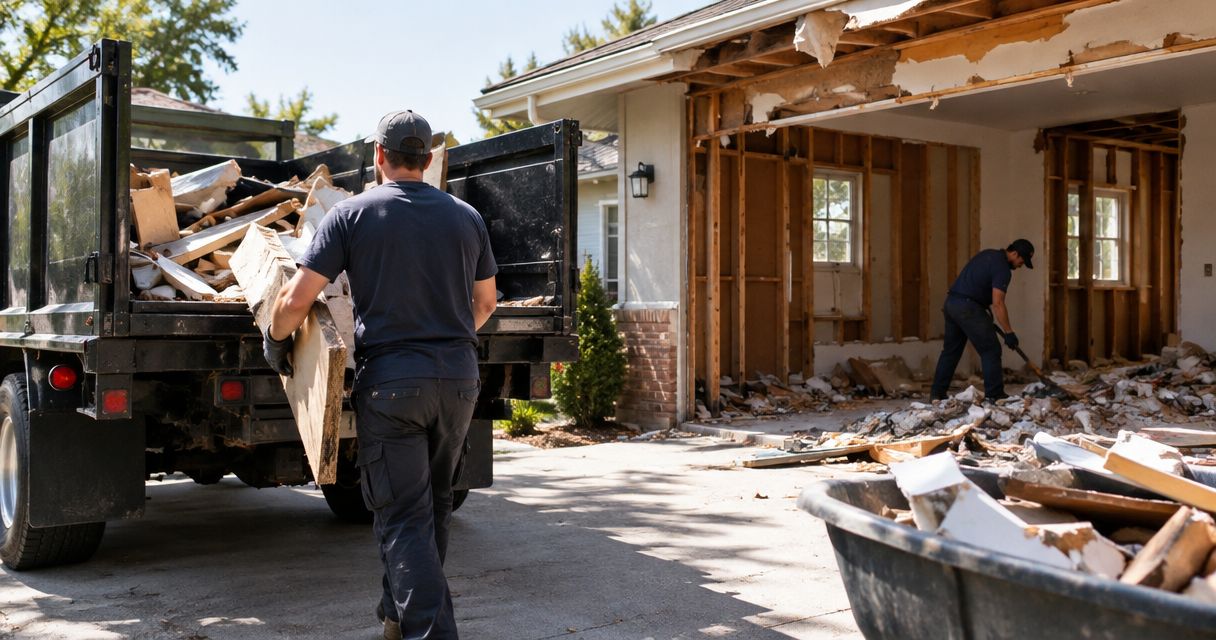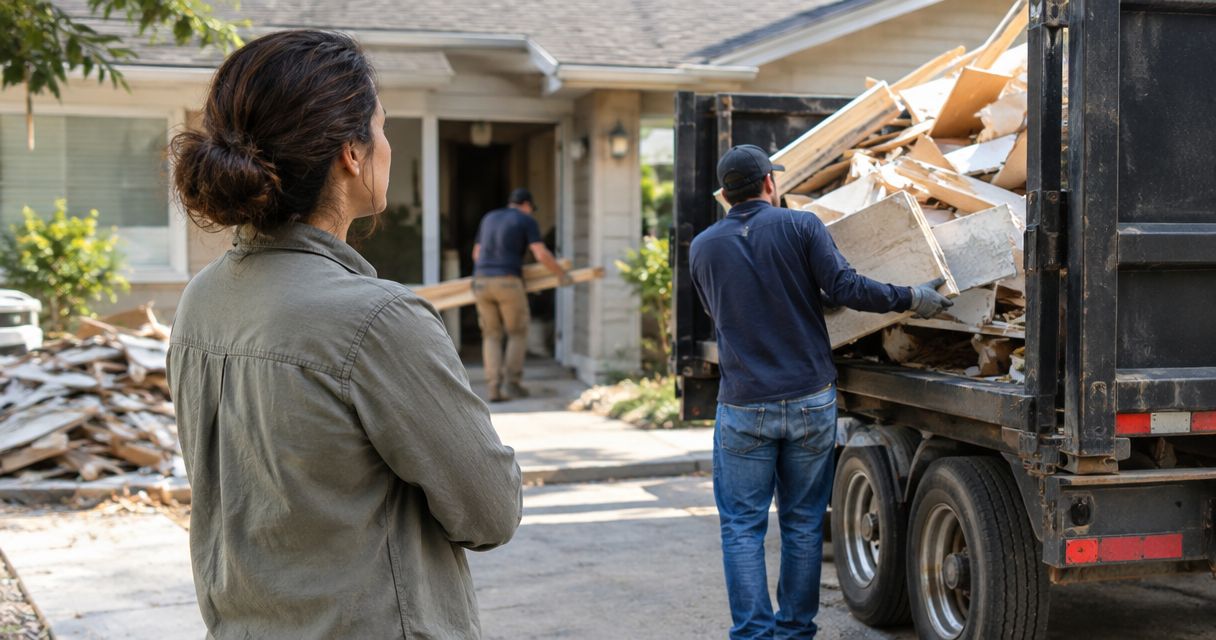
Hauling time after a home remodel depends on the debris volume, material weight, carry route and whether demolition is finished—not a fixed time allowance. Loading is only part of the job; the arrival window, any additional hauling trips and the final walkthrough belong on your schedule too. For your 2026 remodel, get a job-specific completion estimate before booking the next trade.
- How long to haul away remodel debris depends on volume, weight, access and whether the pile is ready.
- Idaho Junk Solutions offers load-priced junk removal; confirm the scope and price before work starts.
- A one-hour arrival window tells you when the crew arrives, not when hauling finishes.
- Keep demolition, debris loading and finish cleaning separate when scheduling your remodel.
Why this matters
A debris pickup is not the same as a room being ready for flooring, cabinets or paint. You need to know what leaves, what stays and who handles the remaining dust before you hand the space to another contractor.
For homeowners and property managers in Boise, Meridian, Nampa and Caldwell, the useful question is not simply when a truck can arrive. It is when the agreed work area will be clear. Review the available junk removal and demolition services, then describe the actual cleanup rather than asking for a generic pickup time.
How long does it take to haul away debris after a home remodel?
The completion estimate needs to match the pile, the route out and the work included. A photograph of debris alone does not show stairs, a locked gate, materials still attached to the house or another contractor blocking the exit.
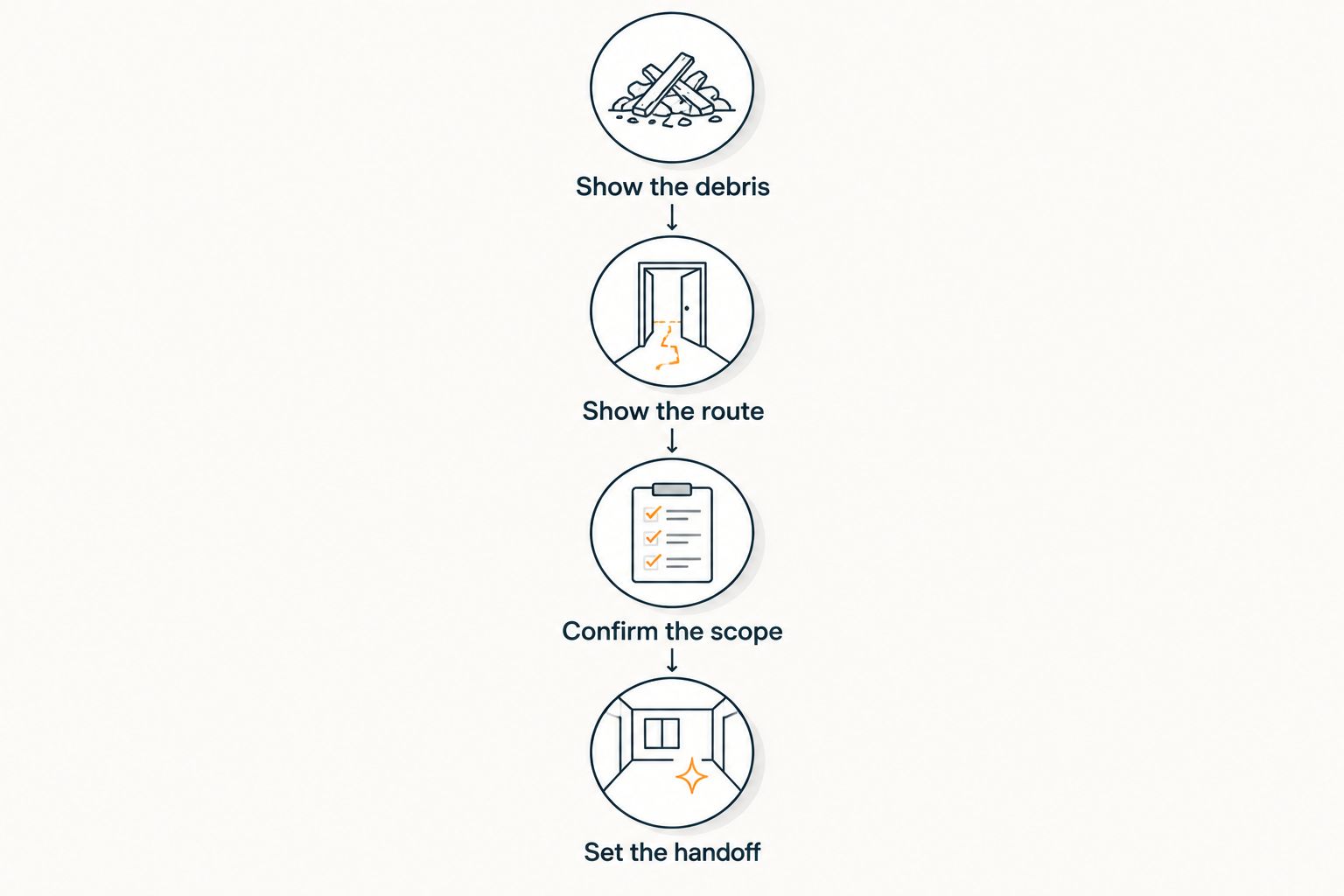
Use this sequence to get an estimate you can schedule around:
- Show the debris. Photograph each pile, including material behind doors or inside the garage. Identify drywall, lumber, tile, cabinets and other materials separately.
- Show the route. Explain where the debris sits, where the hauling vehicle can park and what lies between those points.
- Confirm the scope. State whether everything is already detached. Identify any demolition or dismantling that needs a separate agreement.
- Set the handoff. Ask when the agreed area should be clear, what cleanup is included and how additional trips affect completion.
Ask for the loading estimate separately from the arrival window. That distinction keeps a scheduling promise from being mistaken for a completion promise.
Arrival window versus loading time
Idaho Junk Solutions uses one-hour arrival windows with ETA updates. That 60-minute window tells you when to expect arrival; it does not promise that loading, hauling and cleanup will finish within the same hour.
For your 2026 booking, write down the arrival window and expected job duration as separate calendar entries. If your installer needs an empty room before starting, coordinate around the expected handoff—not the earliest possible truck arrival.
Give the crew a working contact for arrival day. A locked property or an unanswered question about what stays can stop an otherwise prepared pickup from moving ahead.
Why remodel debris hauling time varies
These details change the amount of work involved. Describe them before the appointment instead of leaving the crew to discover them at the door.
- Volume: Include every pile, not just the largest one. Cabinets, packaging and loose offcuts can occupy different parts of the property.
- Weight: Tile, masonry and other dense material need a different loading discussion from bulky, lighter debris. Volume alone does not establish a safe load.
- Carry route: Stairs, narrow turns, closed gates and a distant loading position add handling between the pile and vehicle.
- Readiness: Loose debris is different from cabinets still attached to a wall. Removal and demolition are separate scopes.
- Trip requirements: Ask whether the agreed debris can leave in the planned load or requires another hauling trip.
- Decision-making: Unmarked keep items, mixed personal belongings and unfinished sorting create questions that need answers before loading.
These are estimating details, not instructions to move heavy debris yourself. Send clear photographs and let the crew assess the work.
What does a 14-cubic-yard trailer tell you about timing?
A 14-cubic-yard trailer gives you a volume reference, not a loading-time guarantee. A bulky cabinet pile and a dense tile pile do not present the same handling or loading requirements, even when they appear to occupy similar space.
When planning your 2026 cleanup, describe both the material and the pile dimensions. Include a familiar object in photographs for scale, but do not climb onto debris or rearrange sharp material to improve the picture.
Ask whether the estimate covers the complete agreed pile. Do not assume that a trailer's volume means every material can be loaded to the top; weight and safe loading still matter.
Load pricing also needs a clear boundary. Review the pricing information, identify everything leaving and confirm the price before work starts. Additions to the pile need a fresh scope discussion, not an assumption that they are already included.
Should you book after demolition or during the remodel?
Book against a defined stopping point in the work. A pickup after demolition serves a different purpose from removing debris while the remodel continues. Neither approach replaces coordination with the contractor producing the waste.
| Pickup approach | Best for | Main advantage | Main limitation |
|---|---|---|---|
| Pickup after demolition | A finished debris pile | The full removal scope is visible | Debris remains onsite until that stage ends |
| Staged pickups | Remodels that need work areas cleared between phases | Clears an agreed area before the next phase | Each visit needs its own scope and scheduling |
| Final debris pickup | Remaining remodel waste at handoff | Removes the identified leftovers | Does not replace a separate finish-cleaning agreement |
For a staged job, name the area that must be cleared before each trade arrives. “Clear the kitchen doorway and remove the detached cabinets” is more useful than “get as much as possible.”
For a final pickup, ask the contractor whether more demolition remains. Booking against an unfinished pile means the agreed load and the eventual cleanup are not necessarily the same job.
How do you prepare without doing the hauling yourself?
Preparation means making decisions and providing access—not taking on lifting that you hired someone else to handle. Use this checklist before arrival:
- Mark what stays. Identify reusable cabinets, spare flooring, tools and homeowner belongings.
- Confirm parking. Keep the agreed loading position available and explain any shared-driveway restrictions.
- Clear the route. Move ordinary household belongings out of the carry path without disturbing unsafe debris.
- Arrange access. Make sure the authorized contact can open gates, doors and the work area.
- Flag concerns. Report unknown containers, suspect materials or anything that needs assessment before handling.
- Stop additions. Tell the crew if the contractor adds another pile after the estimate.
Photograph the keep items as well as the debris. A cabinet stored beside discarded cabinets needs a clear label; its location alone does not explain whether it stays.
Keep children, pets and unrelated foot traffic away from the loading route. You do not need to stand beside the pile to direct the job—agree on the boundaries before loading starts.
How should you separate hauling from disposal planning?
Getting material out of the house and choosing an appropriate disposal route are related tasks, but they are not interchangeable. Identify the waste before deciding how the job will run, especially when a remodel produces a mixture of bulky fixtures, loose debris and dense material.
When weighing construction debris disposal options, separate who loads the waste from who arranges its removal. A container-based approach and a crew-loaded pickup place different responsibilities on you; neither comparison should ignore access, material restrictions or the agreed collection scope.
For a 2026 remodel schedule, settle those responsibilities before demolition fills the available work area. Confirm who keeps the exit clear, who identifies excluded material and who approves changes if the pile grows.
Do not treat suspected hazardous material as ordinary remodel debris. Idaho Junk Solutions does not offer hazardous-material pickup, removal, handling or disposal. Leave suspect material undisturbed and arrange appropriate assessment rather than adding it to the hauling pile.
What should your completion estimate include?
Ask for a description of the finished job, not just a statement that the debris will be hauled. The completion estimate should identify the rooms, outdoor piles and access areas included in the work.
Use these questions when confirming the appointment:
- Does the estimate cover every pile shown in the photographs?
- Is any dismantling included, or must everything already be detached?
- Does the plan require an additional hauling trip?
- What happens if the demolition contractor has not finished?
- What cleanup is included after the large debris leaves?
- Who approves an added load or a changed scope?
Idaho Junk Solutions is best for Treasure Valley homeowners and property managers who want crew-loaded remodel debris removal priced by the load. The service fits an identified hauling job; it does not make unfinished demolition, hazardous material or unspecified finish cleaning part of the pickup.
Before work starts, walk through the scope and confirm the price. Property care starts with identifying tight turns, vulnerable surfaces and the route the crew will use—not waiting until loading is underway.
Plan your remodel debris pickup
Send pile photos, material details and access information to discuss the hauling scope.
Can debris be removed before the next contractor arrives?
Debris can be scheduled for removal before the next trade starts, but the handoff needs an agreed completion estimate. Do not book overlapping work on the assumption that the arrival window is also the finishing time.
Tell both contractors which area must be empty and who confirms it is ready. If the next job requires dust removal or surface preparation, assign that work separately rather than treating an empty floor as a finished workspace.
Does hauling include taking cabinets off the wall?
Hauling does not automatically include detaching cabinets or performing demolition. Identify anything still fixed to the building when requesting the estimate so the required work is discussed before arrival.
Do not disconnect electrical, gas or plumbing connections just to speed up a pickup. Have the appropriate qualified trade handle that work before affected fixtures are removed.
What if you find more debris on pickup day?
New debris changes the scope that the crew is being asked to complete. Show the additional pile before loading begins, then confirm the revised work, price and expected completion.
That is especially important when a contractor opens another room or uncovers material that was not visible during estimating. Keep the original handoff plan unless the updated scope is explicitly agreed.
FAQ
How long to haul away remodel debris from my house?
Remodel debris hauling time depends on volume, material weight, access and whether demolition is complete. Request a job-specific loading and completion estimate using photographs of every pile and the carry route.
Does a one-hour arrival window mean the job takes one hour?
A one-hour arrival window describes when the crew is expected to arrive, not how long the work takes. Confirm the estimated loading time and handoff separately.
Should I put all my remodel debris in the driveway?
Do not move heavy or sharp debris just to prepare for pickup. Explain its current location and ask what preparation is needed; keep the agreed loading position and access route available.
Will a 14-cubic-yard trailer hold all my remodel debris?
A 14-cubic-yard trailer provides a volume reference, not a guarantee that your entire pile fits safely. Material weight, shape and loading requirements also matter.
Can I book remodel debris pickup for the same day?
Same-day pickup requires confirmed scheduling; do not build your remodel plan around assumed availability. Request the appointment and agree on timing before arranging the next trade.
Can paint cans or unknown chemicals go with remodel debris?
Hazardous material must not be added to an ordinary remodel debris pickup. Identify unknown containers before the appointment and arrange appropriate guidance for their handling and disposal.
Does debris hauling leave the room ready for painting?
Debris hauling does not automatically include finish cleaning or painting preparation. Confirm the cleanup scope and assign dust removal and surface preparation separately.
One last thing
For your 2026 handoff, photograph the exact area the next contractor needs—not just the debris you want gone. A clear pile-removal plan can still leave a doorway blocked by tools or materials that were never part of the pickup.
Define “finished” before the crew starts. Walk the agreed area afterward, confirm the identified debris is gone and check that keep items remain where intended. That final check is what connects a hauling appointment to a usable work area.