A hoarder house cleanout in Boise is priced by the load and the agreed scope of work, so you need a property-specific quote rather than a flat whole-house figure. For your 2026 budget, separate junk hauling from sorting, deep cleaning, repairs, and any demolition. Hazardous-material removal is not part of Idaho Junk Solutions’ service, and a safety charge does not change that exclusion.
- Hoarder house cleanout cost Boise: get load pricing confirmed before work starts, with clear boundaries for property cleanouts.
- Idaho Junk Solutions is best for homeowners and property managers seeking load-priced junk hauling in the Treasure Valley.
- A 14-cubic-yard trailer measures hauling volume, not how much sorting or cleaning a property needs.
- Separate hauling, demolition, and deep cleaning when comparing cleanout quotes.
Why this matters
An emptied house is not automatically a cleaned, repaired, or move-in-ready house. Your budget needs to match the finish line you actually need, whether that means cleared rooms, an empty rental, or a property ready for contractors.
Start with the guide to hoarding cleanout services in Boise if you are choosing a hauling provider. Then compare written scopes, not just the final figure: a quote for removing furniture and bagged junk is not the same job as sorting every room and removing a shed.
How much does it cost to clean out a hoarder house in Boise in 2026?
The useful budgeting unit is the agreed load and removal scope—not the number of bedrooms. A bedroom full of bulky furniture and a bedroom packed with loose belongings require different preparation, even when the floor space matches.
Idaho Junk Solutions uses load pricing confirmed before work starts. Its reference trailer holds 14 cubic yards; that gives you a concrete way to discuss volume without treating an entire house as one undefined pile.
Use this breakdown to make the quote specific:
| Part of the job | What to establish before approval | What not to assume |
|---|---|---|
| Junk hauling | Rooms, outbuildings, and items included; estimated load volume | Every item on the property is included |
| Sorting and preservation | Who identifies belongings to keep and who authorizes disposal | The hauling crew decides what matters |
| Demolition | Exactly what structure or material must be removed | A cleanout automatically includes demolition |
| Cleaning | Whether the handoff means emptied rooms or a separate cleaning scope | Junk removal includes deep cleaning |
| Safety exclusions | Conditions that need separate assessment before work | A safety charge authorizes hazardous-material removal |
For a 2026 quote, ask for a description you can check against the property. “Remove approved contents from the bedrooms, garage, and backyard” is clearer than “clean out house.” Add specific exclusions beside that description, not in a separate conversation you will need to remember later.
Put the load estimate in plain terms
A quarter of a 14-cubic-yard trailer is 3.5 cubic yards, and half is 7 cubic yards. Those are volume references, not promises about how many rooms or pieces of furniture fit.
Shape matters when you describe the pile. Photograph a sofa from the side as well as the front, show the depth of stacked belongings, and include closets rather than photographing only open floor space. Do not climb onto unstable piles to improve a picture.
For a full property cleanout, include the garage, shed, yard, and any other area you want cleared. A room-by-room inventory gives the estimator a better starting point than a single photograph from the front door.
What changes the scope of a hoarder house cleanout?
These are the details to settle before approving work. Some affect the amount hauled; others establish separate work or safety boundaries rather than an automatic surcharge.
- Total removal volume. Identify everything leaving the property, including belongings outside the main house. Load pricing needs the whole removal scope, not just the easiest room to photograph.
- Keep-versus-remove decisions. Mark items that stay and identify who can approve disposal. Unresolved decisions leave the removal list unfinished.
- Areas included. State whether the job covers rooms only or also the attic, garage, yard, and outbuildings. Do not leave a packed storage area out of the initial description.
- Demolition requirements. Removing loose contents is different from dismantling a shed or another structure. Request a defined demolition scope instead of assuming hauling covers it.
- Unsafe or excluded materials. Disclose suspected hazards before anyone disturbs them. A safety-related charge is not payment to remove, handle, or dispose of biohazards.
Access also belongs in the discussion. Describe stairs, gates, parking, and the route through the house so the crew can plan the work; Idaho Junk Solutions does not charge extra for access. Do not confuse an access discussion with permission to move unstable piles yourself.
How to get a usable cleanout quote
You do not need to finish the cleanout before asking for help. You do need to explain what leaves, what stays, and who makes decisions.
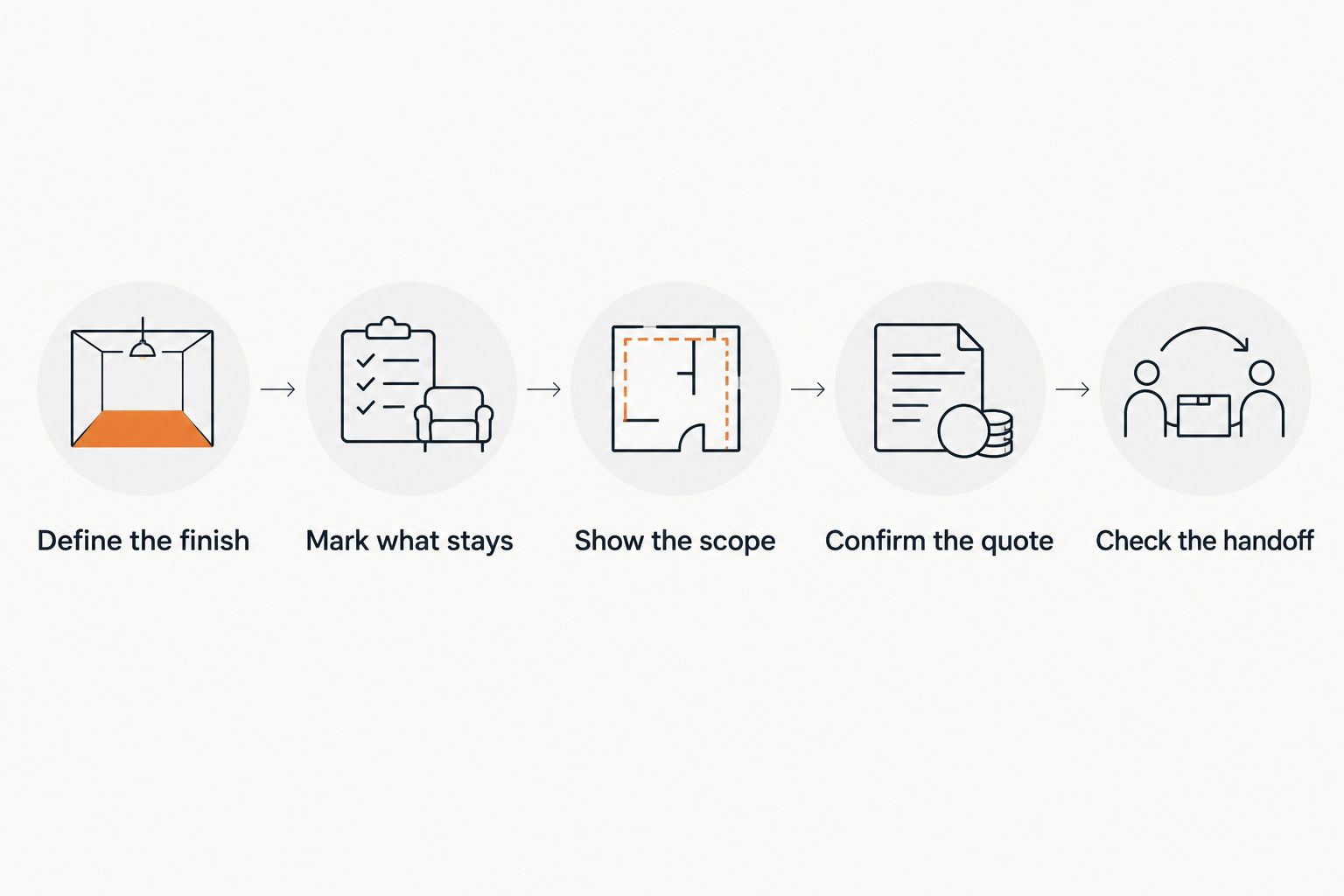
1. Define the finish line
Choose the handoff you need: selected junk removed, specified rooms emptied, or the property cleared of approved contents. Name each area, including detached storage.
For a landlord or property manager, separate the hauling handoff from cleaning, repairs, and readiness for a new occupant. “Empty” and “move-in ready” are different instructions.
2. Mark what stays
Set aside documents, keys, medications, photographs, and other belongings you intend to retain when you can reach them safely. Use clear keep labels rather than relying on verbal descriptions during loading.
Do not mark an entire room for removal if it still contains undecided belongings. Establish a holding area outside the removal scope instead.
3. Show the whole scope
Provide photographs of each included space and describe anything the pictures hide. Mention packed closets, blocked doorways, and contents behind large furniture.
Include separate structures if you want them addressed. An empty shed that needs demolition is a different request from a shed that only needs its contents hauled away.
4. Confirm the quote
Before work starts, confirm the load pricing, the approved removal list, exclusions, and the process for approving additional work. Ask how the scope will be documented if more contents become visible during the cleanout.
Keep one person responsible for decisions. Conflicting instructions from relatives, occupants, and contractors make it harder to establish what the crew is authorized to remove.
5. Check the handoff
Walk through the included areas against the approved scope. Check closets, corners, and detached spaces rather than judging completion only from the main room.
Keep cleaning and repair tasks on their own list. That prevents a completed hauling job from being mistaken for a finished property turnover.
Which cleanout approach fits your property?
Choose by the work you need removed from your plate, not by a headline claim about the cheapest option. Sorting belongings yourself and hiring a full property hauling service solve different parts of the problem.
| Approach | Best for | Main advantage | Main limitation |
|---|---|---|---|
| Owner-led sorting before hauling | Families who need to review personal belongings | Keeps preservation decisions with the people who know the contents | You remain responsible for sorting and safe preparation |
| Idaho Junk Solutions load-priced hauling | Homeowners and property managers with a defined removal scope | Clear load pricing before work starts; full property cleanout hauling | Does not replace deep cleaning, repairs, or hazardous-material services |
| Separately scoped demolition | Properties with a structure that must come down | Distinguishes dismantling work from loose-junk removal | Requires its own agreed scope rather than a hauling assumption |
You can combine approaches. For example, a family can identify retained belongings before approving a whole-property haul, while a property manager can request a separate demolition scope for an unwanted shed.
For a 2026 project, write down the sequence before booking related trades. The hauling finish line should tell the next contractor what condition to expect—not leave that contractor guessing.
What should happen on cleanout day?
Have the decision-maker reachable and keep the approved removal list available. Point out retained belongings before loading starts, including anything that looks like junk but has personal or legal importance.
Idaho Junk Solutions provides one-hour arrival windows with ETA updates. Arrange access around that window, and establish who can admit the crew if the owner or property manager will not be there.
Ask about owner involvement if that matters to you; do not assume the owner attends every job. The more important operational detail is that someone has authority to resolve scope questions without conflicting instructions.
Protect the distinction between ordinary hauling and unsafe conditions. If a suspected hazard becomes visible, do not treat the approved junk-removal scope as permission to disturb it.
Can I get a firm quote from photographs alone?
Photographs help define a cleanout, but they do not show every concealed item or condition. Ask whether the quoted scope is final or needs confirmation at the property before work starts.
For your 2026 planning, photograph every included area and describe anything you cannot safely show. A clear list of exclusions is more useful than pretending pictures reveal the entire job.
Does a full cleanout include cleaning and demolition?
A full cleanout should mean the specific work written into the scope, not every task required to restore a house. Confirm hauling, cleaning, and demolition separately.
If you need an unwanted structure removed, name it at the quote stage. If you need floors washed or repairs completed, put those tasks on a separate handoff list rather than assuming they follow automatically.
Should I sort the house before booking hauling?
Sort what you can safely identify and preserve, but do not move unstable piles or suspected hazardous materials to prepare for a quote. You can request an assessment before the house is fully organized.
Focus first on decisions: what stays, what leaves, and who approves removal. Those decisions define the hauling job more clearly than rearranging the same belongings into different piles.
FAQ
How do I budget for a hoarder house cleanout in Boise in 2026?
Budget around the agreed removal volume and written scope, with separate plans for cleaning, repairs, and demolition. Get load pricing confirmed before work starts rather than treating the number of bedrooms as a quote.
How big is the trailer used to explain load pricing?
The reference trailer holds 14 cubic yards. Half that volume is 7 cubic yards, but the number of items that fits depends on their dimensions and arrangement.
Does Idaho Junk Solutions handle hazardous materials during a cleanout?
Idaho Junk Solutions does not offer hazardous-material removal, handling, or disposal. A safety charge does not authorize biohazard removal or change that service boundary.
Do stairs or difficult access add an access charge?
Idaho Junk Solutions does not charge extra for access. Describe stairs, gates, parking, and the route through the house before work so the crew can plan the job.
Can I include the garage, yard, and shed in a house cleanout?
Request those areas explicitly in the removal scope. Separate hauling loose contents from any demolition work you want quoted.
What arrival window should I plan around?
Plan around a one-hour arrival window with ETA updates. Confirm access arrangements and who can approve removal decisions before the appointment.
One last thing
Before approving your 2026 cleanout, write the do-not-remove list first. A detailed removal list still leaves room for mistakes if the belongings that matter most are not identified.
Then check the quote against the property, area by area. Clear load pricing works best when everyone agrees on exactly what leaves and what stays.