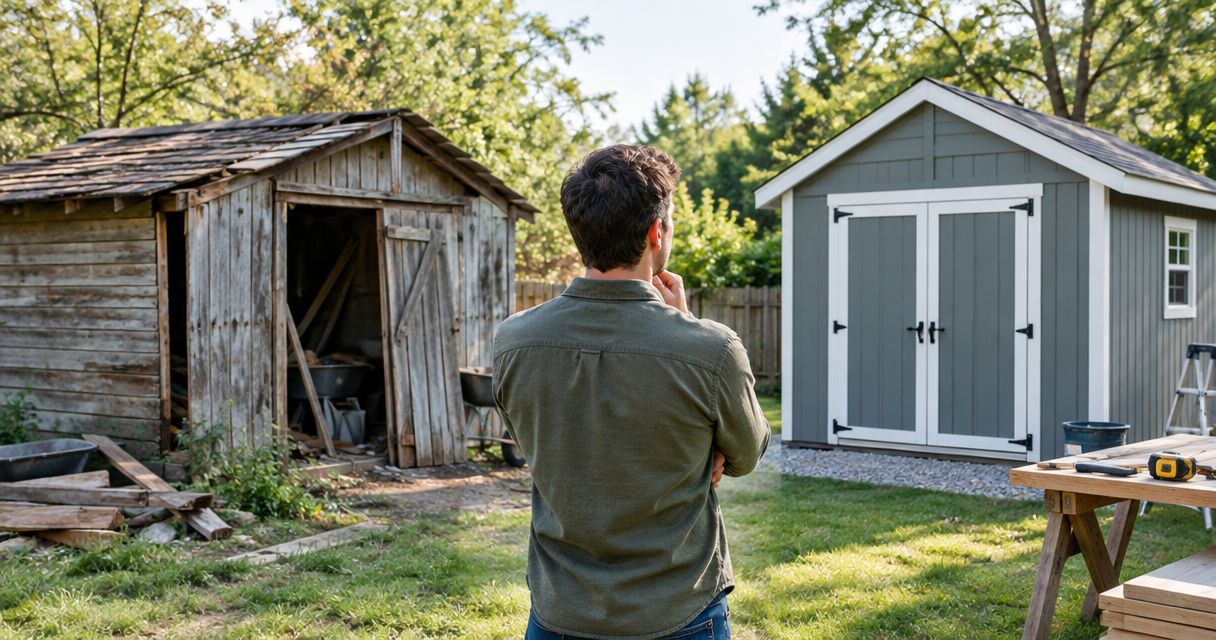
Repairing an old shed is cheaper when a limited repair restores a sound building for less than complete removal; demolition makes more sense when you no longer need the shed or the repair scope keeps growing. Compare written scopes, not just the headline totals. If you still need storage afterward, include replacement in the demolition side of your 2026 decision.
- Demolish or repair old shed cheaper? Compare complete repair and removal scopes, including your storage needs afterward.
- Repair suits a sound shed with isolated damage; demolition suits an unwanted shed or an extensive rebuilding job.
- Idaho Junk Solutions offers shed demolition and load-priced hauling in the Treasure Valley, not hazardous-material removal.
Is it cheaper to demolish or repair an old shed?
Keep a shed worth fixing. Get a removal quote before committing to rebuilding one you do not need. A damaged door and a failing floor are different jobs, even when both buildings look rough from the driveway.
Start by comparing what each option leaves you with. A repair quote should describe the work needed to keep using the shed. A demolition quote should describe dismantling, hauling and the condition of the area afterward. Neither scope should leave you guessing about the contents or the base.
For the removal side, use the shed demolition cost guide for Boise to organize your questions before requesting a property-specific quote.
| Option | Best for | Main advantage | Main drawback | What to compare |
|---|---|---|---|---|
| Repair | A useful shed with sound structure and isolated damage | Keeps the storage space you already use | Hidden damage can expand the work | Complete repair scope, debris handling and remaining condition |
| Demolish without replacement | An unwanted shed and an owner who wants the space cleared | Ends the need to maintain that shed | Removes covered storage | Contents, dismantling, hauling and base treatment |
| Demolish and replace | An owner who still needs storage but wants a different building | Lets you choose a replacement suited to your needs | Adds a separate building project | Removal, replacement, site preparation and applicable local requirements |
Why this matters
A low repair quote does not settle the decision if it covers only the visible damage. A low demolition quote does not settle it if the shed contents, debris or concrete base sit outside the agreed work.
For homeowners in Boise, Meridian, Nampa and Caldwell, the practical question is straightforward: What work gets the property to the condition you actually want? Make that the basis of your 2026 comparison, whether you want usable storage, an empty yard or a replacement shed.
When repairing the old shed makes sense
Repair is the stronger candidate when the shed remains useful and the damage is limited. Examples include a door that needs attention, damaged trim or a localized roof problem, provided the surrounding structure is sound.
Do not judge the whole building by fresh paint or a replacement door. Ask the repair contractor to assess the roof framing, wall framing, floor and supports before agreeing to cosmetic work. A repair should address the source of damage, not simply cover the visible result.
Have the contractor distinguish necessary work from optional improvements. Restoring a working door is different from adding windows, shelving or a new interior finish; combining everything into one figure makes the repair-versus-removal decision harder.
The drawback is uncertainty inside concealed areas. Ask how newly discovered damage will be documented and approved before additional work proceeds. You need a clear stopping point, not permission for an open-ended rebuild.
When demolishing the old shed makes sense
Demolition is the stronger candidate when you want the shed gone, regardless of whether someone could repair it. There is little reason to fund repairs on a building that blocks your plans for the yard or no longer serves a purpose.
Extensive deterioration also calls for a removal comparison. If the proposed repair includes major work across the roof, walls, floor and supports, ask what original structure will remain and what condition it will be in afterward. That question separates a limited repair from a substantial reconstruction project.
The trade-off is permanent loss of the storage space. Before choosing demolition, decide where the mower, tools and seasonal belongings will go. Moving everything into a garage you also intend to clear does not resolve the storage problem.
A demolition scope also needs a clear finish line. Removing the shed does not automatically mean removing a slab, grinding out every footing or preparing the ground for a new building. Put those expectations in writing.
When demolition and replacement need a separate comparison
Demolition alone and demolition followed by replacement are different decisions. If you need another shed, compare the full replacement project against the complete repair scope—not the removal portion alone.
For a 2026 replacement plan, establish the proposed location and intended use before clearing the old building. Ask the relevant local building department about requirements for the actual project. Do not assume that an existing shed establishes permission for a different replacement.
Replacement offers a chance to change the layout, but it also introduces work beyond demolition. Confirm who handles the base, delivery access and any utility-related work. Keep those responsibilities separate from the hauling agreement unless they are expressly included.
Best for: Owners who still need storage but whose current shed no longer fits their needs. The disadvantage is a larger project with more separate responsibilities to coordinate.
Why the repair-versus-demolition comparison varies
The decision turns on the building and the agreed work, not a universal rule about old sheds. Check these factors before accepting either scope:
- Damage extent: A localized defect and deterioration across several structural areas call for different repair plans.
- Storage needs: Removal without replacement is not equivalent to restoring usable storage.
- Shed contents: Belongings, rubbish and materials inside the shed need an explicit keep-or-remove decision.
- Debris scope: Confirm whether each quote includes hauling the waste that its own work creates.
- Base treatment: A shed floor, concrete slab and buried supports are not interchangeable parts of the removal scope.
- Utilities and safety: Electrical connections and suspect materials need a safe plan before ordinary repair or demolition work starts.
Access belongs in the job description, too. Show the contractor gates, fences, overhead obstacles and the route from the shed to the loading area. Describe the route accurately rather than assuming a photograph of the front yard explains the backyard job.
How to compare repair and demolition quotes
Use the same property information for both conversations. Your 2026 quotes should describe the shed as it stands now, including its contents and any visible damage—not the emptied, disconnected version you hope to have later.
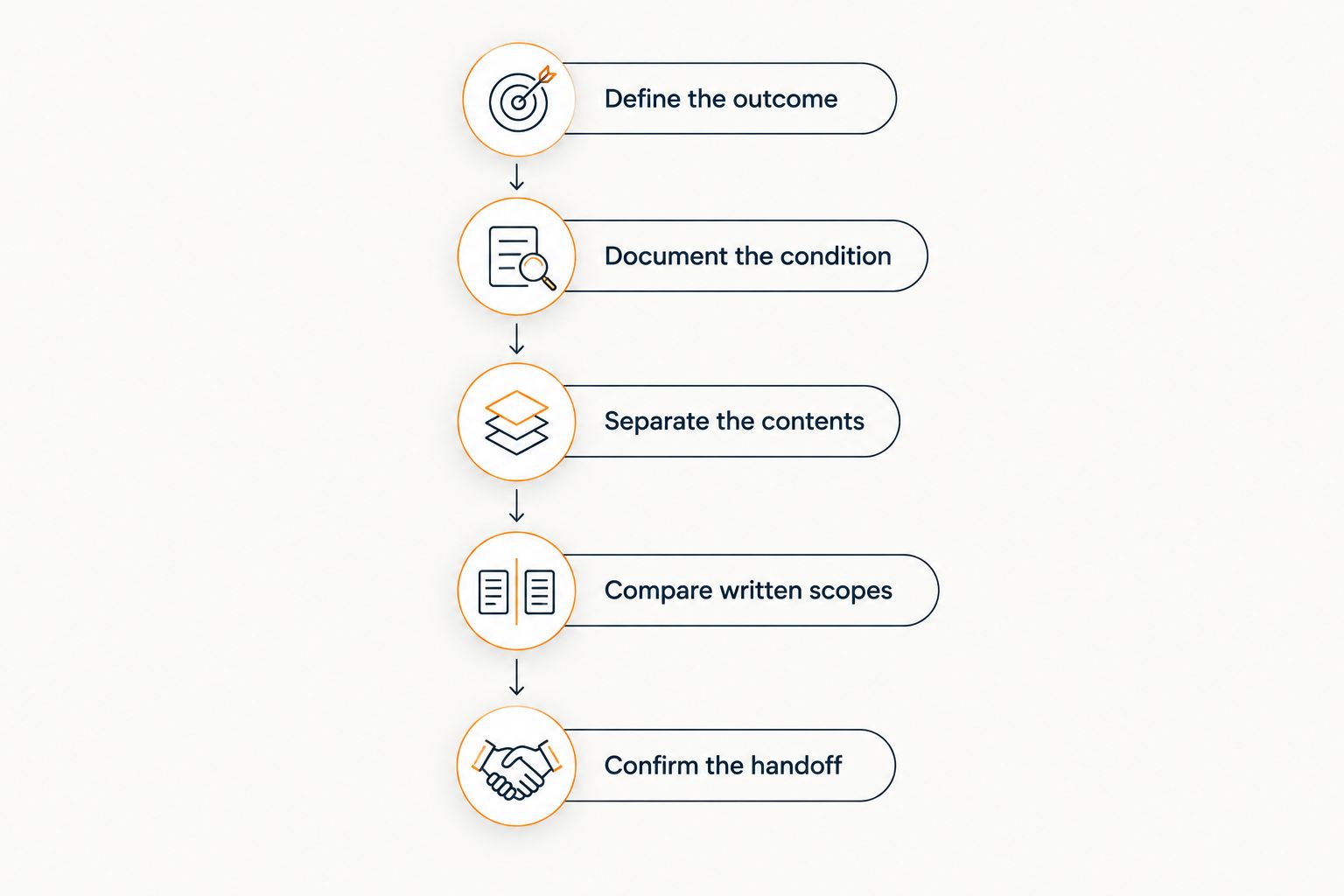
Define the outcome
Write down what you want when the work ends: a usable shed, cleared ground or a site ready for a separately planned replacement. Be specific about anything that stays.
For a landlord or property manager, include who can authorize changes. The person meeting the contractor should not have to guess whether an old cabinet, tenant belongings or the concrete base belongs in the removal scope.
Document the condition
Take photographs from safe, accessible positions. Include the outside walls, roofline, doorway, visible floor damage and access route. Do not enter an unstable shed or climb onto a damaged roof to improve the pictures.
Photos help explain the job; they do not replace an appropriate condition assessment. Tell the contractor about leaning walls, sagging areas or connections you already know about.
Separate the contents
Identify what stays, what leaves and what needs a separate handling plan. Keep ownership decisions separate from the demolition decision so useful belongings do not get mixed into the debris.
Paint, chemicals and other suspect materials are not ordinary shed demolition debris. Idaho Junk Solutions does not offer hazardous-material pickup, handling or disposal. Arrange appropriate guidance through the relevant local program or qualified specialist before the demolition work.
Compare written scopes
Ask the repair contractor what damage the work addresses and what remains untouched. Ask the demolition contractor what comes down, what gets hauled and what remains on the property.
Then check exclusions side by side. A complete quote is easier to compare than a short description followed by assumptions about cleanup, contents or the base.
Confirm the handoff
Agree on the final walkthrough before work starts. For repair, check the completed work against the agreed scope; for demolition, check the cleared area and any items that were supposed to remain.
What load pricing means for shed removal
Load pricing describes hauling volume; it does not, by itself, describe every part of a demolition job. Ask how the dismantling work, shed contents and resulting debris fit into the proposed scope.
Idaho Junk Solutions uses load-priced hauling and confirms pricing before work starts. Its load-size guidance uses a 14-cubic-yard trailer, but that capacity is not a promise that a particular shed and everything inside it will fit in a single load. Describe the whole job rather than estimating from the shed footprint alone.
Idaho Junk Solutions is best for Treasure Valley owners seeking shed demolition and load-priced hauling rather than shed repair. The company handles demolition and property cleanouts; a repair assessment belongs with a contractor who evaluates and repairs sheds.
When discussing a job with Idaho Junk Solutions, include property-care concerns such as nearby fencing, landscaping and anything you want protected. The company provides one-hour arrival windows with ETA updates, and owner involvement where possible—not a promise that the owner attends every job.
Discuss your shed removal scope
Describe the shed, contents, access and what you want left behind before work starts.
Should I repair the roof before deciding on demolition?
Do not commission a roof replacement before deciding whether to keep the shed. First establish whether the framing, floor and supports justify the repair and whether you still need the building.
A roof-only quote answers a narrow question. Ask for a condition assessment that separates the roof covering from the structure supporting it, then compare the required work with removal.
Does demolishing a shed include taking away everything inside?
Shed contents belong in the quote only when the agreed scope includes them. Do not assume dismantling the building automatically authorizes removal of every object inside.
For a 2026 cleanout, mark belongings to keep before work begins and identify anything requiring separate handling. Property managers should resolve ownership and authorization questions before the crew arrives.
Can I leave the concrete base after shed demolition?
You can specify that the base stays as part of the requested scope, subject to the site's requirements and your intended use. Shed removal and concrete removal are separate tasks that need separate agreement.
If you plan to reuse the base, have its suitability assessed for the proposed replacement. A cleared slab is not automatically a suitable foundation for a different building.
FAQ
Is it cheaper to demolish or repair an old shed?
The cheaper option is the one with the lower complete scope for the result you need. Compare necessary repairs against dismantling, hauling and any replacement storage, rather than comparing repair with demolition alone.
What's the best reason to repair an old shed?
Repair makes sense when the shed remains useful, its structure is sound and the damage is limited. Have a repair contractor assess the building before paying for cosmetic improvements.
Should I demolish a shed with a rotten floor?
A rotten floor calls for an assessment of the floor supports and surrounding structure, not an automatic demolition decision. Compare the full repair scope with removal after the extent of damage is established.
Will shed demolition include the concrete slab?
Concrete slab removal is included only when the written scope says so. State whether you want the slab retained, removed or assessed for a future project.
Can a junk removal company take chemicals stored in my shed?
Idaho Junk Solutions does not offer hazardous-material pickup, handling or disposal. Identify chemicals before work and seek appropriate local disposal guidance separately.
Do I need another shed after demolition?
You need a replacement storage plan if you still want the covered storage the old shed provides. Include that plan in the comparison before choosing removal.
What should I send when requesting a shed removal quote?
Send safely taken photos, a description of the contents, access details and the finish you want. Identify known utilities and explain whether the base stays or needs separate removal.
One last thing
An empty shed and a cleared shed site are different results. Before approving work, finish this sentence in writing: when the job is done, the following things will still be on the property.
List the base, belongings, fencing and anything else that stays. That simple instruction makes your 2026 repair-or-demolition decision easier to price and the finished job easier to check.