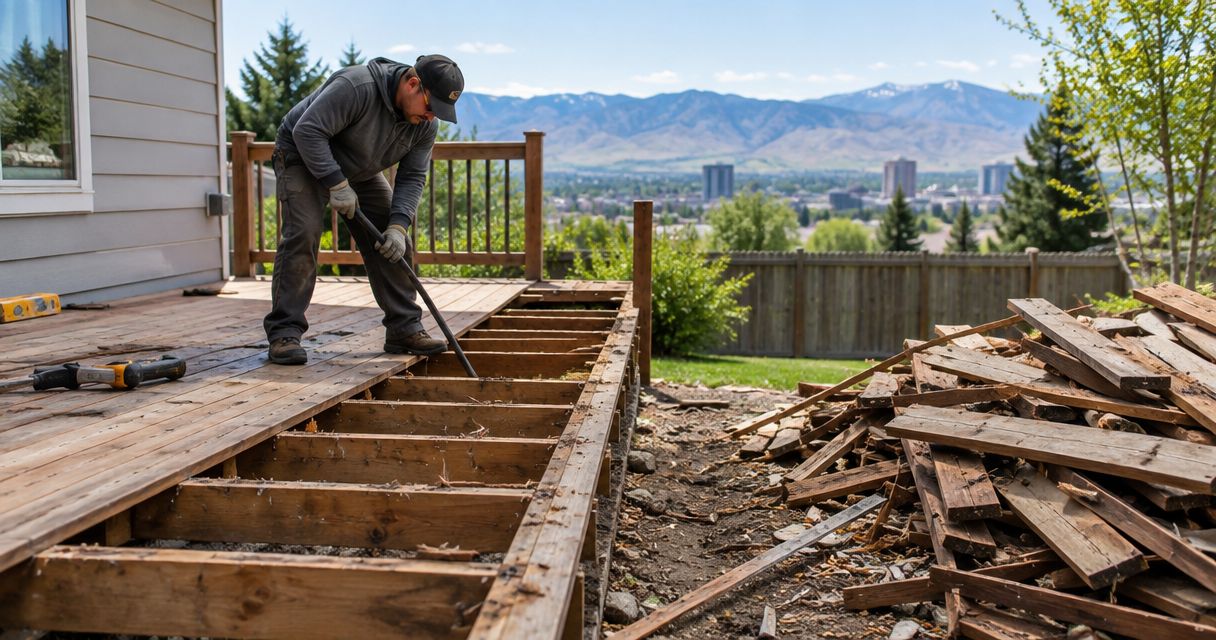
Deck removal cost in Boise in 2026 depends on the demolition scope and the amount of debris you need hauled away. A debris-only quote does not cover taking down an attached deck, and a deck teardown does not automatically include concrete footings, house repairs, or rebuilding; get those boundaries and the load pricing confirmed before work starts.
- Deck removal cost depends on the agreed teardown, hauling, and cleanup scope—not just the deck's surface area.
- Idaho Junk Solutions offers load-priced hauling and demolition for Treasure Valley property owners; confirm the deck-specific scope before booking.
- Ask whether stairs, railings, framing, posts, and concrete footings are included in your quote.
- Keep demolition, debris removal, and replacement construction separate when comparing estimates.
Why this matters
A deck is more than the boards you walk on. Underneath are framing, connections, posts, and sometimes concrete that remains after the wood comes down. If your estimate only says deck removal, you still need to know where the work stops.
Start with the load-pricing information, then have the actual structure assessed. Compare the finished scope, not just the total at the bottom of the estimate. That applies whether you own a Boise home, manage a Meridian rental, or are clearing a property in Nampa or Caldwell.
How much does deck removal cost in Boise?
Your 2026 deck removal quote should identify what gets dismantled, what gets loaded, and what remains on the property. Surface area helps describe the structure, but it does not describe the entire job. A deck with stairs, attached framing, and buried supports has a different scope from loose boards already stacked for pickup.
Use this comparison to request the right service. These are different scopes, not interchangeable estimates.
| Removal scope | Best for | Main advantage | Main limitation |
|---|---|---|---|
| Debris-only pickup | Owners whose deck is already safely dismantled | Keeps the hauling request focused on material ready to load | Does not include taking down the standing structure |
| Deck teardown and hauling | Owners who need the structure dismantled and debris removed | Defines demolition and haul-away together | Footings, attached structures, and house repairs still need explicit boundaries |
| Removal with footing work | Owners whose next project requires specified concrete supports removed | Addresses obstructions below the deck | Requires agreement about excavation, remaining holes, and the final ground condition |
Ask for the same scope from every bidder. Otherwise, a lower total tells you little about which job you are buying.
Debris-only pickup: the deck is already down
Debris-only pickup fits a job where the demolition is complete and the remaining task is loading and hauling. Tell the estimator what the pile contains, where it sits, and whether posts, hardware, or concrete are mixed into it.
The benefit is a clear hauling scope. The limitation is equally clear: pickup is not permission to begin unsafe demolition yourself. A standing section, attached staircase, or unstable frame needs assessment before anyone treats the job as loose debris removal.
Photograph the whole pile rather than only the neatest stack. Include material behind the garage or along the fence if you want it included. Leaving part of the debris out of the request leaves part of the job undefined.
Deck teardown and hauling: define the stopping point
For a standing deck, list each component you want removed: surface boards, railings, stairs, framing, and posts. Identify anything that stays, especially a roof, pergola, neighboring fence, or attached landing.
This scope puts dismantling and debris removal in the same discussion. Its limitation is the connection to everything around the deck. Removing an attached structure does not automatically include repairing siding, correcting water damage, or building a safe replacement exit.
Set the stopping point before the first board comes off. If a door opens onto the deck, agree on how access to that doorway will be restricted after removal. Do not leave that decision until the platform is gone.
Footings and attached features: name them separately
Concrete footings deserve their own line in the scope. Cutting a post above ground and removing the concrete around its base produce different results. Neither description should stand in for the other.
If your replacement project requires footing removal, identify which supports must come out and ask how the resulting holes will be left. Excavation, filling, compaction, and finish grading are separate tasks to confirm, not assumptions to make.
The same rule applies to a built-in bench, planter, privacy screen, or cover. A feature touching the deck is not automatically included in its removal. Walk around the perimeter and identify each boundary before approving the job.
Why deck removal cost varies
For your 2026 quote, focus on differences in the work rather than a generic demolition rate. These factors explain why two requests labeled deck removal do not necessarily describe the same job:
- Standing structure or loose debris: Dismantling a deck and collecting an existing pile are different scopes.
- Components included: Railings, stairs, framing, posts, and built-in features add material and tasks to describe.
- Connections to the house: The removal plan needs a clear boundary between demolition and repairs to the remaining building.
- Concrete and buried supports: Leaving footings in place differs from removing them and addressing the holes.
- Debris volume: Load-priced hauling depends on the material being hauled, not simply the deck's footprint.
- Final condition: Debris pickup, ground cleanup, excavation, and a construction-ready finish are not identical promises.
Access also belongs in the walkthrough so the crew can plan the work and protect the property. Describe gates, stairs, parking, and the carrying route; do not assume those details establish a separate charge.
How load pricing applies to deck debris
A 14-yard trailer describes a volume of 14 cubic yards. It does not translate directly into a deck surface area because a standing deck and a loaded pile occupy space differently. Boards, framing, railings, and posts all become part of the material being hauled.
Do not calculate your load from the walking surface alone. Photograph the underside where it is safely visible, and include stairs and railings in the request. The point is to show the whole structure, not to produce an exact trailer estimate yourself.
Ask how the estimated load relates to the complete removal scope. Then confirm what happens if you add another pile or expand the teardown. Pricing you know before work starts only works when both sides are describing the same job.
How do you get a useful deck removal estimate?
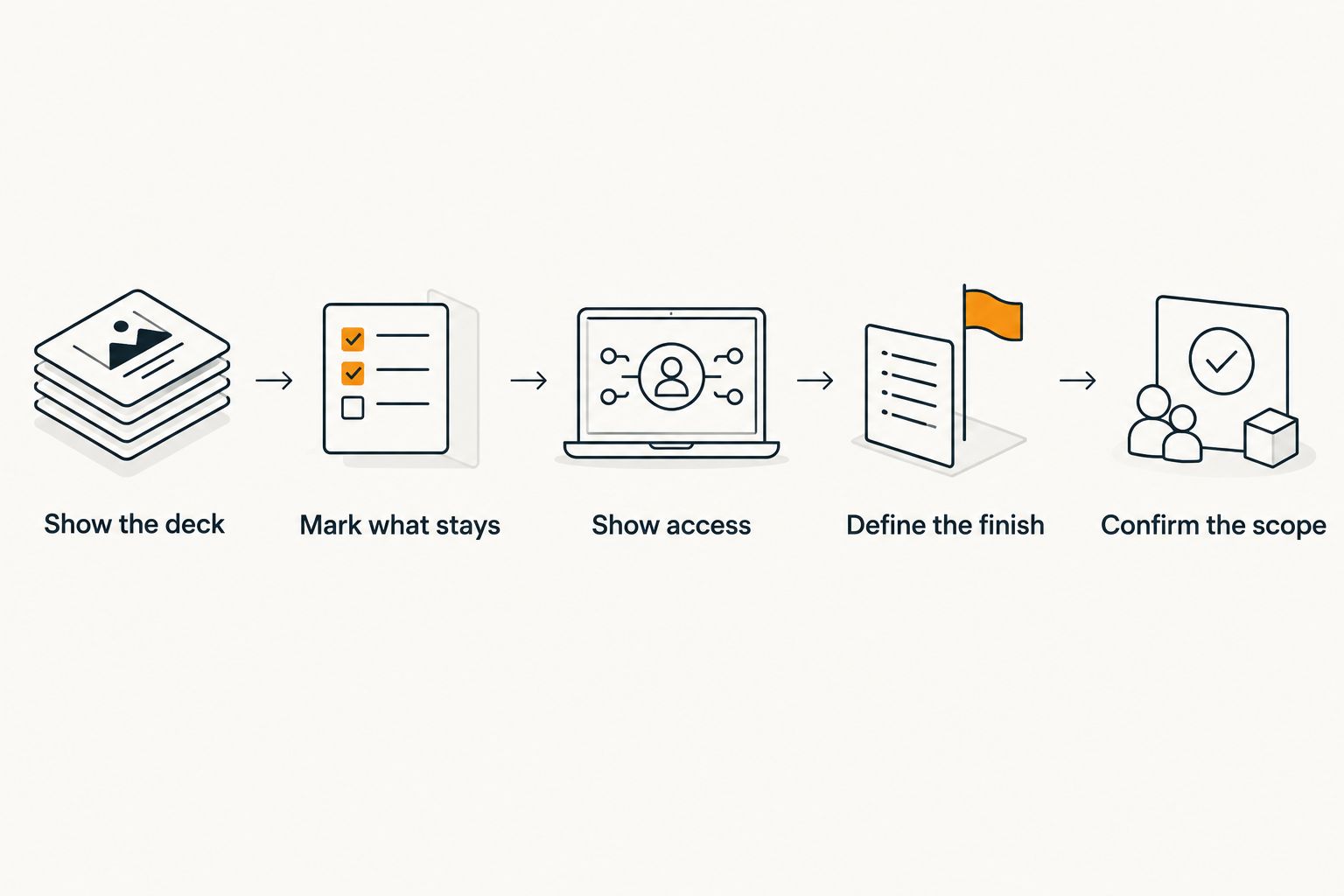
Give the estimator enough information to distinguish a hauling job from a demolition job. Use this sequence for your 2026 request:
- Show the deck. Send an overall view, the stairs and railings, and the underside where you can photograph it safely. Do not climb beneath unstable framing.
- Mark what stays. Identify the house connection, nearby fence, landscaping, and any attached feature you want protected.
- Show access. Explain the route from the deck to the loading area. Include gates, steps, and any parking restrictions you control.
- Define the finish. State whether you want wood removal only, specified footings removed, or another clearly described endpoint.
- Confirm the scope. Get the included work, exclusions, load pricing, and any required follow-up decisions settled before demolition begins.
A useful photo set answers questions. It does not replace an assessment when connections, structural conditions, or buried material need closer examination.
What should a written deck removal quote include?
A useful quote describes the result you are buying. You should be able to walk around the deck with it and identify what comes out, what stays, and what condition the area will be left in.
Check for these details before you approve the work:
- Components included in demolition and hauling.
- Treatment of posts, concrete footings, and buried material.
- Boundaries around the house, utilities, fences, and attached features.
- The agreed cleanup and final ground condition.
- Excluded repair, replacement, landscaping, or excavation work.
- How additional work gets approved if the requested scope changes.
Do not treat debris-free as a promise of construction-ready ground. If your builder needs a particular finish, have that requirement described before removal. A clean area with footings remaining is different from an area prepared for new construction.
Is it cheaper to remove the deck yourself?
Removing the deck yourself changes the service you request from demolition and hauling to hauling alone. It also puts responsibility for safe dismantling, handling sharp material, and managing the standing structure on you.
Do not assume that saves money without comparing the full scope. Account for your equipment, disposal arrangements, time, and ability to protect the house connection. Choose debris-only pickup because the demolition is safely complete—not because an incomplete quote looks smaller.
Does deck removal include concrete footings?
Concrete footings are included only when the agreed scope says they are. Ask whether the plan leaves them in place, removes specified footings, or includes further ground work afterward.
Match that decision to the next use of the space. A lawn project, replacement deck, and different outdoor structure do not necessarily require the same removal endpoint. Let the next contractor identify the required condition before you approve demolition.
Do you need a permit to remove a deck in Boise?
Check the requirements for your specific property with the authority responsible for the address before demolition. Describe whether the deck is attached, supports anything above it, affects an exit, or is part of a larger remodel.
Use the same approach in Meridian, Nampa, and Caldwell rather than assuming one city's answer applies everywhere. Confirm who is responsible for any required approvals and utility coordination before setting the work date.
Choosing a Treasure Valley removal company
Idaho Junk Solutions is best for Treasure Valley property owners seeking load-priced hauling and demolition with the scope confirmed before work starts. The company is locally owned and offers both services; your deck's connections, supports, and final cleanup still need job-specific agreement.
For your 2026 removal, Idaho Junk Solutions uses reliable 1-hour arrival windows with ETA updates. Owner involvement is part of the company's approach, but that does not mean the owner attends every job. Confirm access arrangements and keep the work route clear without moving unstable material yourself.
The limitation to settle is where removal ends. Do not assume a demolition and hauling request includes replacement construction, house repairs, or hazardous-material work. Idaho Junk Solutions does not offer hazardous-material pickup, removal, handling, or disposal.
Get your deck removal scope confirmed
Describe the deck, access, footings, and cleanup you need before work starts.
FAQ
What's included in deck removal cost in Boise?
Deck removal cost should cover only the demolition, hauling, and cleanup stated in your agreed scope. Confirm stairs, railings, framing, posts, concrete footings, and house repairs individually rather than assuming they are included.
Can I get a deck removal quote from photos?
Photos help describe a deck removal request, but attached connections, unstable framing, or buried supports need assessment before the scope is settled. Include overall views, access, stairs, railings, and the underside only where it is safe to photograph.
Is deck demolition the same as hauling away old deck boards?
Deck demolition and hauling away old boards are different scopes. Demolition addresses the standing structure; debris-only pickup addresses material that is already safely dismantled and ready to load.
Does load pricing include removing the deck from the house?
Load pricing describes the hauling basis, not every demolition task. Have the house connection and the boundary between removal and repairs written into the agreed scope.
Will a 14-yard trailer hold my whole deck?
A 14-yard trailer describes volume, not a guaranteed deck size. Framing, railings, stairs, posts, and any other included debris all affect the load assessment.
Should I dig out the deck footings before the crew arrives?
Do not dig out deck footings simply to prepare for an estimate. First confirm whether footing removal is needed and how utilities, excavation, and remaining holes will be addressed.
Can I schedule deck removal before a replacement deck is built?
Coordinate deck removal with the replacement contractor's required starting condition. Agree on footing treatment, access, and any temporary restrictions at doors before the existing deck comes down.
One last thing
Have the person building next define the finish before anyone tears down the old deck. A replacement contractor can identify which supports must go and what needs to remain accessible. That turns a vague request to remove everything into a scope you can inspect at handoff.