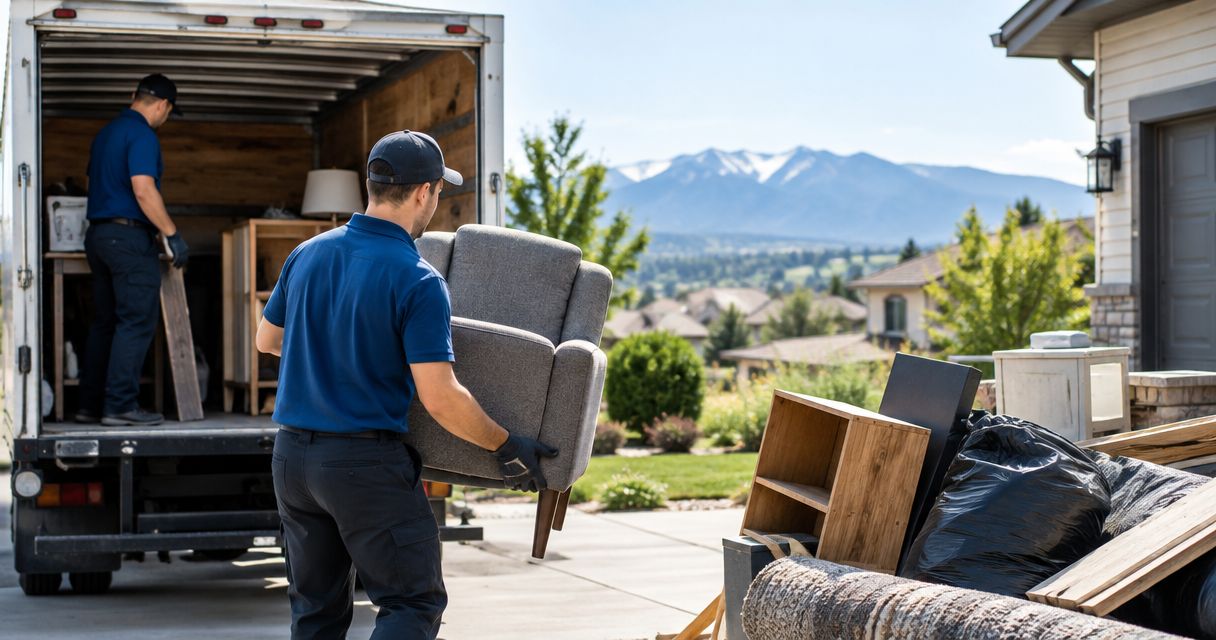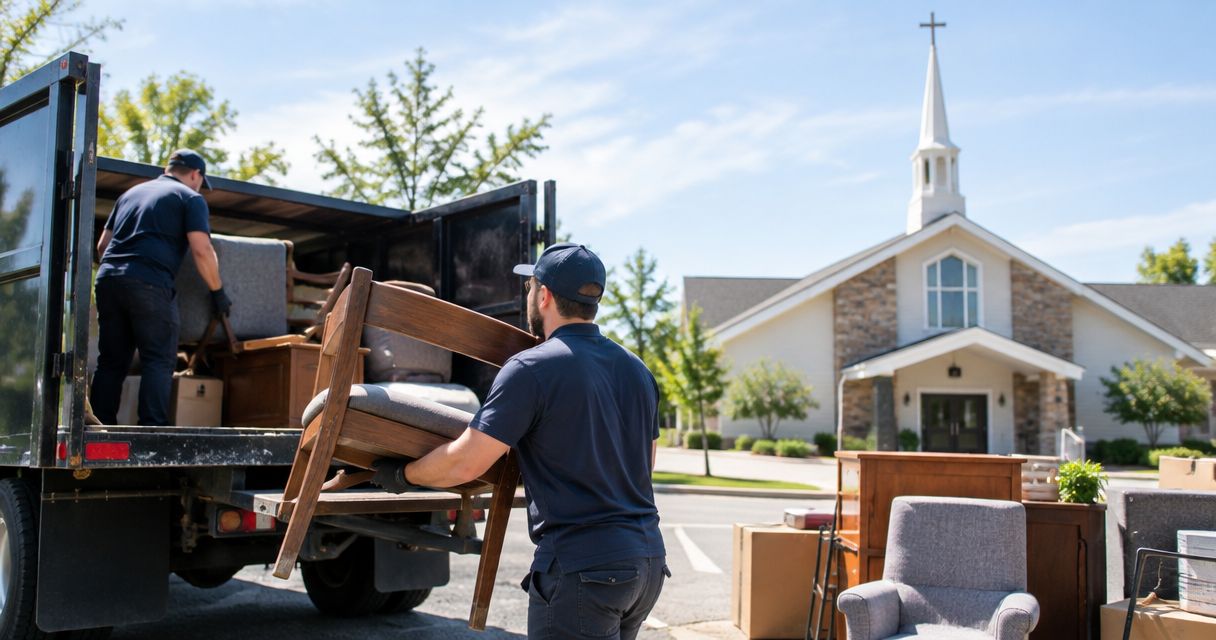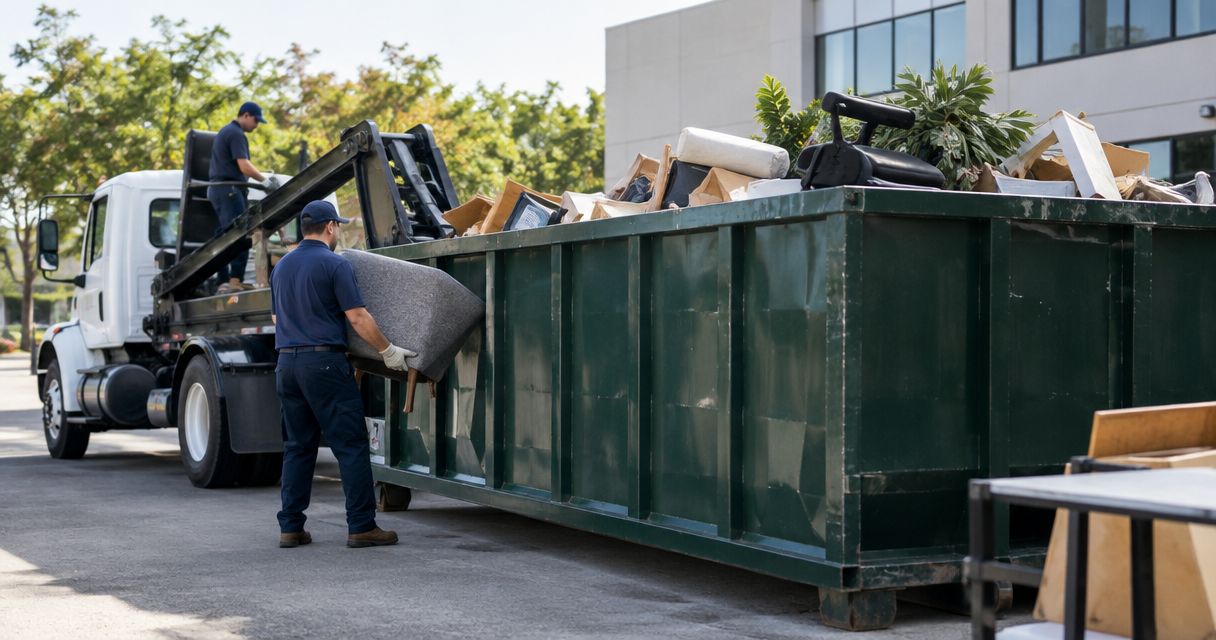
Yes—junk removal can handle commercial dumpster-sized loads when the material, total volume, weight, and loading plan fit the agreed job. A large cleanout can require multiple loads rather than one trailer trip; confirm the full scope before work starts, especially when the pile includes dense debris or items that need separate disposal arrangements.
- For junk removal commercial dumpster sized loads, confirm material, volume, weight, and the complete hauling scope before booking.
- Idaho Junk Solutions offers load-priced hauling for Treasure Valley businesses and property managers needing commercial cleanouts.
- A 14-cubic-yard trailer describes volume, not a guaranteed weight allowance or a promise of one-trip completion.
- Choose crew-loaded hauling for an existing pile; consider dumpster rental when your own team will load debris over time.
Why this matters
A commercial cleanout is not just a bigger household pickup. You need an agreed finish line: which rooms get emptied, what stays, where the crew loads, and who approves changes if more material turns up.
Idaho Junk Solutions provides junk removal and property cleanout services for homeowners, businesses, and property managers in the Treasure Valley. Idaho Junk Solutions is best for Treasure Valley businesses and property managers seeking load-priced junk removal and full property cleanouts. Confirm the specific materials and job scope before scheduling.
For a 2026 office move, tenant turnover, or storage-room clearout in Boise, Meridian, Nampa, or Caldwell, start with the material—not the dumpster size you think it resembles.
Can junk removal handle commercial dumpster-sized loads?
Yes. The deciding issue is whether the hauling plan covers the entire cleanout, not whether everything fits in one vehicle. Describe the job as a complete scope rather than asking only whether a company takes “large loads.”
Crew-loaded hauling and dumpster rental solve different problems. Compare who does the loading, how the material accumulates, and how much control you need over the removal date.
| Option | Best for | Main advantage | Main limitation |
|---|---|---|---|
| Crew-loaded junk removal | An existing pile or rooms ready to empty | The loading and haul-away belong to the removal job | The crew needs a clearly identified removal scope and access |
| Dumpster rental | Material accumulating while your team works | You load material as the project progresses | You handle loading and need an approved placement location |
| Staged junk removal | A cleanout with separate release areas or phases | You can separate removal from ongoing business activity | Each phase needs clear approval and scheduling |
Do not treat these as interchangeable quotes. A container delivered for your staff to fill is a different job from a crew carrying furniture out of an occupied building.
For a 2026 commercial cleanout, ask: “Does this plan remove everything identified during the walkthrough?” That question is more useful than asking whether a truck looks as big as a dumpster.
Full trailer: 14 cubic yards of nominal volume
A 14-cubic-yard trailer is a useful reference for discussing a large pile. It is a volume measure, not a statement about how much concrete, tile, furniture, or mixed debris can safely travel in a load.
Bulky furniture leaves gaps. Dense material reaches weight constraints differently from empty boxes or loose packaging. The same visible pile size does not establish the same loading plan.
Use photographs that show the whole pile, its depth, and the surrounding space. A close-up of the front edge does not show what is behind it. Include separate views when material occupies several rooms or storage areas.
For the weight side of that discussion, see how much weight fits in a 14-yard trailer. Do not use trailer volume as a weight allowance. Have the material reviewed before assuming a full-volume load is appropriate.
Half trailer: 7 cubic yards as a planning reference
Half of 14 cubic yards is 7 cubic yards. That arithmetic helps you describe a pile, but it does not establish a quote or guarantee that a collection of desks, chairs, and shelving occupies exactly half a trailer.
For a commercial cleanout, identify the large pieces first. Then show the loose contents around them. A photo of furniture without the boxes, broken-down packaging, or back-room leftovers leaves part of the job out of the estimate.
Keep the description practical: an office with furniture still inside needs a different walkthrough from a loading area with everything already separated. Report the actual setup rather than rearranging heavy items just to make the pile look smaller.
Quarter trailer: 3.5 cubic yards as a planning reference
One quarter of 14 cubic yards is 3.5 cubic yards. Use that only as a volume reference—not as proof that a particular number of office chairs, cabinets, or storage bins will fit.
Commercial jobs often spread a modest amount of material across a large building. The visible pile can look small while the removal scope includes several rooms, controlled doors, or items that have not yet been released for disposal.
Mark everything that goes. A clearly defined smaller pickup is easier to approve than an open-ended request to remove “whatever is left.” If another department still needs to sort its space, leave that material outside the approved scope until someone authorizes it.
Why commercial load requirements vary
The phrase “dumpster-sized” leaves out the details that determine the hauling plan. These factors deserve a place in your 2026 cleanout request:
- Total volume: Show every pile, room, and storage area included in the job. Do not estimate from the largest pile alone.
- Material weight: Identify dense debris separately from bulky furniture and packaging. Similar volume does not mean similar weight.
- Item condition: Explain whether furniture is loose, assembled, attached, or still connected to utilities. Do not treat dismantling as an assumed part of hauling.
- Loading route: Disclose stairs, elevators, locked doors, narrow turns, and loading-area restrictions so the crew can plan the work.
- Release sequence: State whether the entire space is ready or whether employees, tenants, or contractors must finish first.
- Excluded material: Keep chemicals, unknown liquids, suspected hazardous material, and other unapproved items out of the ordinary junk pile.
These are scope and planning factors, not a claim that every factor carries a separate charge. Ask what the agreed load pricing includes and what requires a separate decision.
How to prepare a commercial dumpster-sized pickup
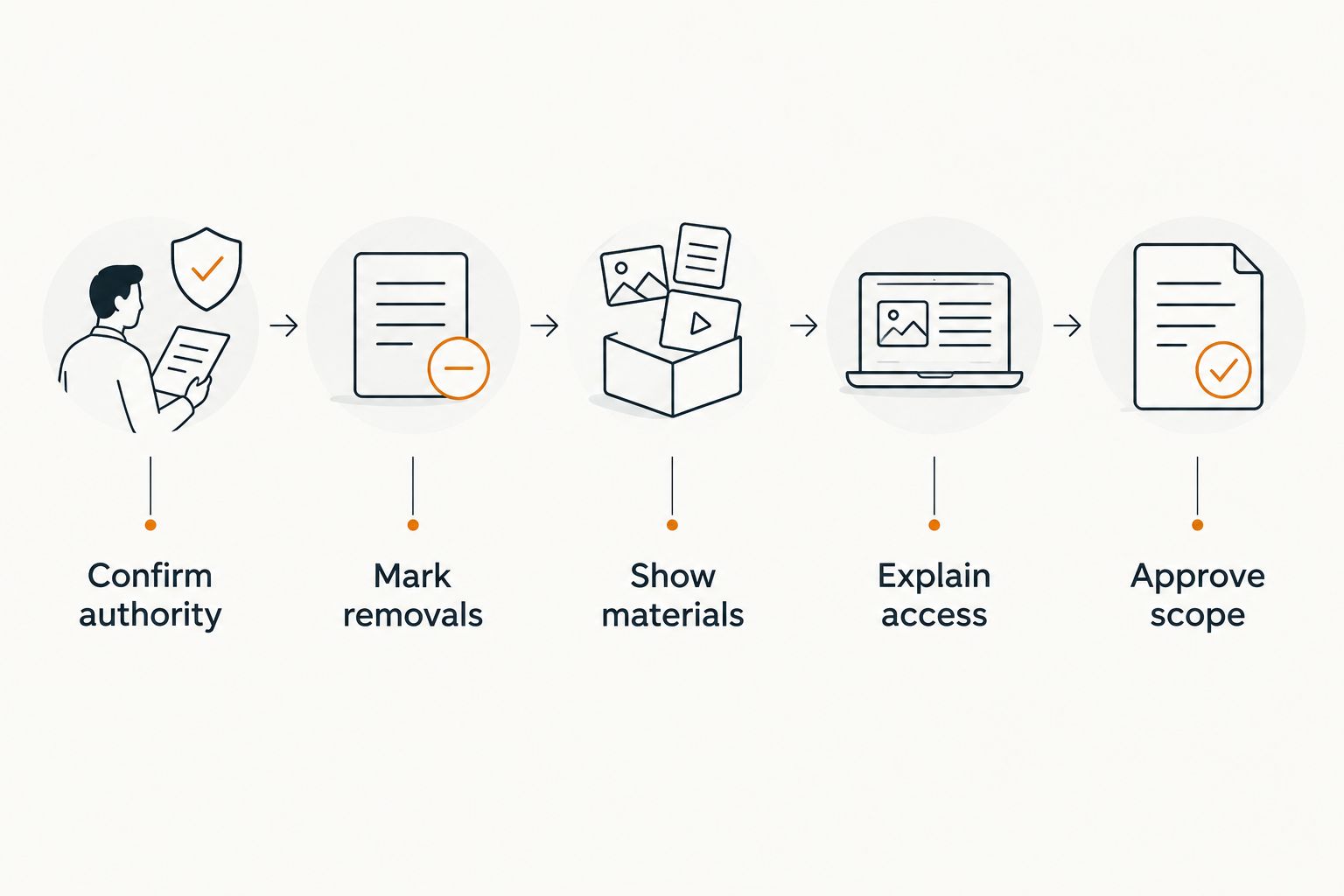
A useful request lets the hauler understand the work without guessing. Use this sequence before booking a large cleanout.
- Confirm authority. Name the person allowed to approve removal. For leased spaces, confirm what belongs to the tenant and what belongs to the property owner.
- Mark removals. Separate keep, remove, and undecided items. Do not leave the crew to decide whether an unmarked cabinet is abandoned.
- Show materials. Send wide photos and closer views of dense, unusual, or attached items. Describe anything hidden behind the visible pile.
- Explain access. Share loading locations, building entry instructions, elevator arrangements, and operating restrictions. Keep required exits clear.
- Approve scope. Confirm which areas will be cleared, how additional material will be handled, and who signs off when the agreed work is complete.
This sequence works whether you manage a Boise office, a Meridian storefront, a Nampa commercial property, or a Caldwell rental building. The useful details are the building and the material—not a city name in the booking request.
What should the load-priced scope include?
Idaho Junk Solutions uses load pricing confirmed before work starts. For a large commercial job, make sure that approval applies to the material you actually want removed—not just the first visible pile.
Ask whether the proposed work covers all identified areas and whether additional loads are already included in the agreed scope. Also establish what happens if a locked room opens later or someone adds furniture after loading begins.
Keep these decisions separate:
- Approved material: The items and areas included in the job.
- Added material: Anything introduced after the original scope is approved.
- Separate work: Demolition, disconnection, or other tasks that need their own confirmation.
- Completion standard: The condition you expect at handoff, without assuming cleaning or repairs are included.
For your 2026 purchase order or work authorization, describe the outcome in plain language: remove the marked furniture and loose contents from the identified rooms. A load description alone does not tell the crew what must stay.
Can a large cleanout stay out of the way of business operations?
A large cleanout needs a loading plan that respects the occupied property. Identify customer entrances, employee routes, shared corridors, and delivery areas before choosing the pickup arrangement.
Idaho Junk Solutions provides one-hour arrival windows with ETA updates. An arrival window is not a completion-time promise. Confirm the expected work plan separately, especially when a building has restricted loading hours or another contractor needs the space afterward.
Assign a site contact who can answer questions during removal. The owner can be involved in jobs, but do not build your plan around the assumption that the owner personally attends every pickup.
For a 2026 tenant handoff, agree on access with the property manager before the crew arrives. Do not assume a removal appointment overrides building rules or reserves a shared loading bay.
Can junk removal empty an existing commercial dumpster?
A large loose-material pickup and emptying a contracted dumpster are different requests. Tell the hauler whether the material sits beside the container, inside it, or elsewhere on the property.
Do not assume a junk removal appointment includes lifting, tipping, servicing, or reaching into an existing commercial container. Confirm the proposed method and the property’s authority to approve the work before scheduling.
Does a full commercial cleanout include demolition?
Hauling loose contents does not automatically include demolition. Attached counters, fixed shelving, partitions, and built-in fixtures need a separate scope decision before anyone starts removing them.
If the job includes demolition, identify what stays, what comes out, and which utility disconnections or other preparations must happen first. Do not ask the hauling crew to discover those boundaries while loading.
What if the commercial pile contains hazardous material?
Keep hazardous material outside the ordinary junk removal scope. Do not mix chemicals, unknown liquids, or suspected hazardous waste into boxes of otherwise removable contents.
Idaho Junk Solutions does not offer hazardous-material pickup, removal, handling, or disposal. Tell the company about suspected hazards before work begins and arrange an appropriate separate route for those materials.
FAQ
Can junk removal handle a whole office worth of furniture?
Junk removal can handle an office cleanout when the furniture, total volume, access, and hauling scope are approved. Confirm that every room and any additional loads are covered before work starts.
Will a dumpster-sized pile fit in one trailer?
A dumpster-sized pile is not guaranteed to fit in one trailer. Volume, material weight, and how items pack determine the loading plan; a 14-cubic-yard trailer describes volume only.
Is junk removal better than renting a dumpster for a business cleanout?
Crew-loaded junk removal fits an existing pile when you want loading included; dumpster rental fits projects where your team will load material over time. Compare the complete work required, not just container size.
Do I need to move everything outside before commercial junk pickup?
Do not assume you must move everything outside. Describe where the items are and confirm the approved loading route before moving heavy furniture or blocking business access.
Can a commercial cleanout require multiple loads?
A commercial cleanout can require multiple loads. Confirm whether the agreed scope includes the full cleanout and how added material will be approved.
Does a one-hour arrival window mean the cleanout takes one hour?
A one-hour arrival window describes arrival, not job duration. Confirm the work plan separately when your building has loading restrictions or a fixed handoff deadline.
Can chemicals go in the same load as office furniture?
Do not mix chemicals or unknown liquids into an ordinary furniture removal load. Disclose them before the appointment and arrange an appropriate separate disposal route.
One last thing
Walk the space after the last load—not just the loading area. Check the approved rooms, storage corners, and marked removal items with the site contact before calling the job finished.
The pile beside the trailer is not the finish line. The agreed removal scope is.