Yes—junk removal companies can take old carpet and flooring when the material meets their acceptance rules and the pickup scope is agreed beforehand. Hauling already-removed flooring is different from pulling up installed material, and suspected asbestos or other hazardous contamination requires a separate qualified provider—not an ordinary junk pickup.
- For junk removal old carpet and flooring jobs, confirm material acceptance before tearing anything out.
- Loose carpet, installed flooring, and adhesive removal are different scopes; ask what the quote includes.
- Idaho Junk Solutions offers load-priced junk removal; confirm your flooring scope before booking.
- Leave suspect flooring undisturbed and arrange qualified assessment rather than cutting or breaking it.
Why this matters
An empty room and a stripped floor are not the same job. Your installer might remove the old carpet but leave the rolls, padding, tack strips, and packaging for you to handle. Or the agreement might include disposal already.
Before booking a 2026 flooring replacement in Boise, Meridian, Nampa, or Caldwell, decide who owns each part of the work. Review the available junk removal and demolition services, then describe the actual flooring materials rather than asking for a generic junk pickup.
Book the debris you have, not just the room you want cleared. That distinction helps keep removal day from turning into a discussion about work nobody included.
Can junk removal companies take old carpet and flooring?
Yes, provided the company accepts the specific material and its condition. Carpet rolls are not the same hauling job as loose ceramic tile, and a photo of the finished room does not show what is underneath the floor covering.
Use this comparison to describe your job. These are booking categories, not a guarantee that every hauler accepts every material.
| Flooring material | Best for describing the pickup | What to confirm | Main complication |
|---|---|---|---|
| Removed carpet and padding | A carpet replacement with loose rolls ready to leave | Whether both carpet and padding are included | Bulky rolls and separate piles can hide the full scope |
| Loose laminate or floating planks | A floor already taken apart | Whether attached underlayment and trim are included | Sharp edges and scattered pieces need safe staging |
| Removed wood flooring | A renovation with boards already lifted | Whether nails, fasteners, and mixed debris are included | Exposed fasteners create handling hazards |
| Broken ceramic or porcelain tile | A tile replacement with demolition finished | Material acceptance and loading limits | Dense rubble needs a different loading plan from carpet |
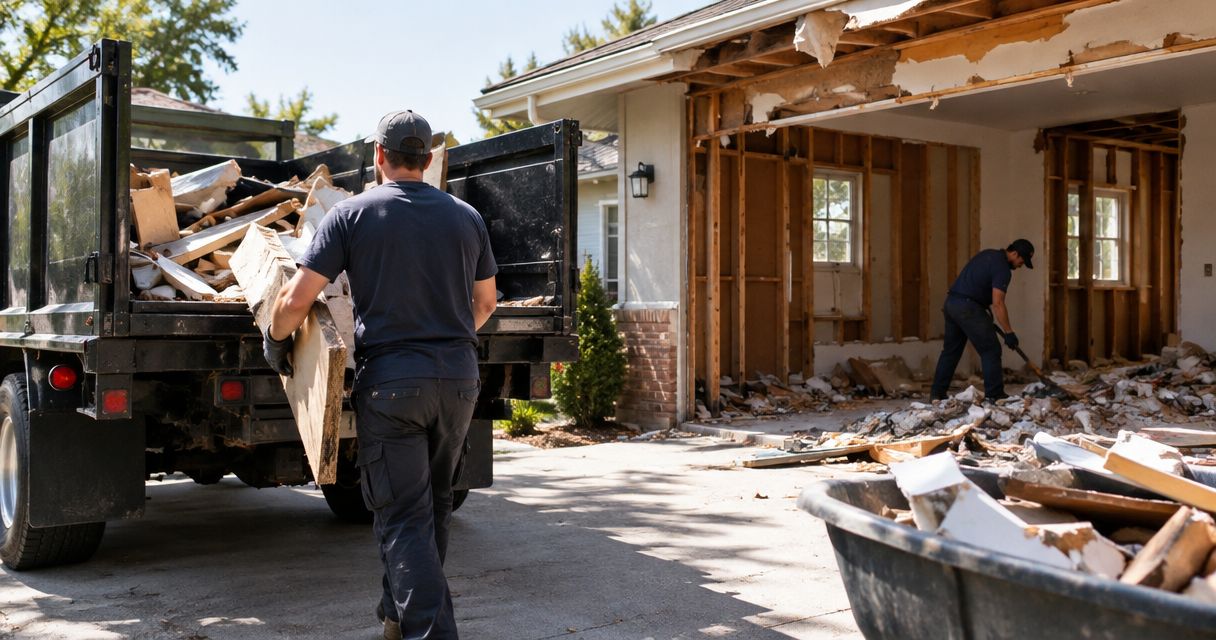
| Installed flooring | A job where removal has not started | Whether tear-out is separately included | Hauling alone does not cover demolition |
| Suspect flooring or adhesive | Assessment before renovation | Qualified evaluation before disturbance | Ordinary pickup is not hazardous-material removal |
Do not assume a hauling quote includes pulling staples, scraping adhesive, removing underlayment, or preparing a subfloor. Have those tasks named separately if you need them.
Removed carpet: the hauling scope
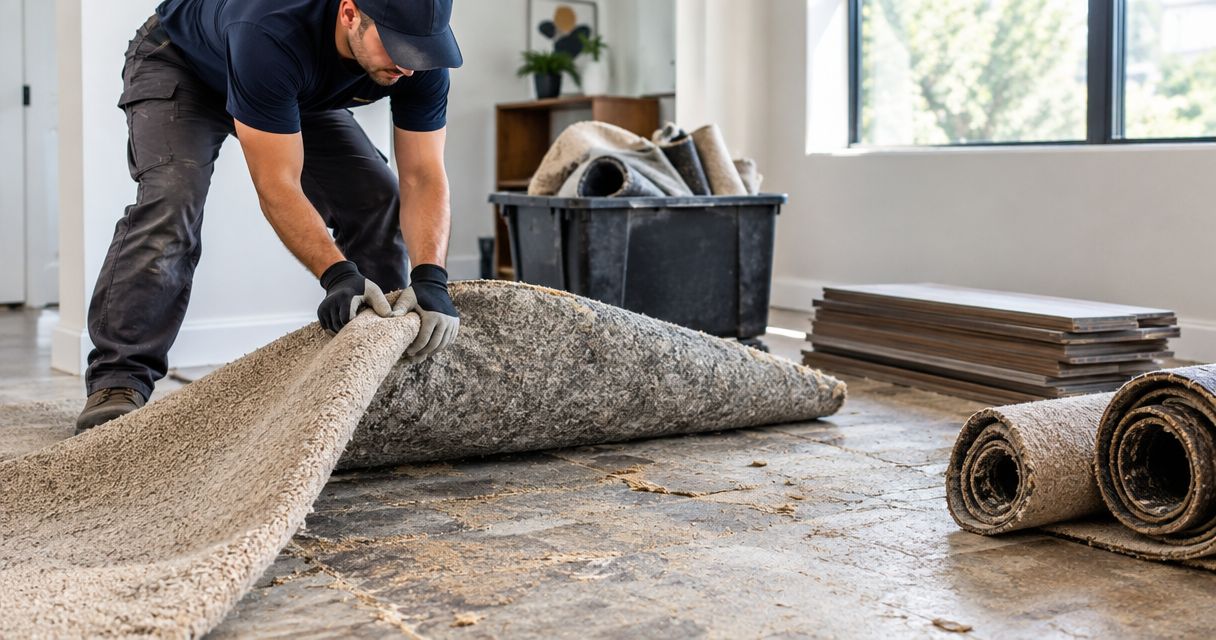
Already-removed carpet gives you a clear starting point: identify everything that must leave. Include padding, detached transition strips, and any other renovation debris when asking what the company will accept.
Keep the description practical. Say where the rolls are, whether they are dry, and whether they are separate from other debris. Mention exposed tack strips or staples rather than leaving those hazards for the crew to discover.
You do not need to drag everything outside just to request a quote. Send photos of the material where it sits, then ask about staging instructions. Moving a bulky roll twice adds work without necessarily improving the pickup.
The advantage of a hauling-only job is its clear boundary: the material is already detached. The limitation is equally clear: the room can still need substantial floor preparation after the debris leaves.
Installed flooring: confirm tear-out separately
If the carpet is still stretched across the room or the tile is still bonded to the floor, describe the job as installed flooring removal—not just debris hauling.
Ask which layers the work includes. Carpet, padding, tack strips, underlayment, adhesive, and subfloor are separate parts of the floor assembly. Removing the top layer does not automatically mean removing everything underneath it.
Idaho Junk Solutions is best for Treasure Valley homeowners and property managers seeking load-priced junk removal with the scope confirmed before work starts. The company also offers demolition, but the exact flooring tear-out tasks still need approval for your job.
The benefit of coordinating removal and hauling is a clear handoff between tasks. The drawback is that an incomplete description leaves room for disagreement about what “remove the floor” actually means. Put the stopping point in writing: detached debris removed, specified flooring lifted, or another agreed condition.
Suspect flooring: stop before disturbing it
Some older flooring materials and adhesives contain asbestos. Appearance alone does not establish whether a floor is asbestos-free, and a photograph is not a substitute for qualified assessment.
If you suspect asbestos, leave the material undisturbed. Do not cut, sand, grind, break, or pull it up to make the pickup easier. Arrange assessment before deciding how removal will proceed.
Idaho Junk Solutions does not offer hazardous-material pickup, removal, handling, or disposal. A safety charge does not change that exclusion or turn hazardous material into an accepted load.
Do not mix questionable material into ordinary carpet or construction debris. Tell the hauler about the concern before scheduling, and keep the renovation paused until the material has been addressed through the appropriate qualified provider.
How do you prepare old flooring for pickup?
For a 2026 flooring project, use this sequence before moving debris around the property. The goal is a clear scope and safe access—not doing unapproved demolition yourself.
- Identify materials. List carpet, padding, wood, laminate, tile, underlayment, and any other layers involved. Flag anything unknown rather than guessing.
- Confirm scope. State whether the flooring is installed, partly removed, or completely detached. Ask which materials and tasks the company accepts.
- Send photos. Show the whole pile, a close view of the material, and the route between the debris and the loading area.
- Clear access. Keep children and pets away from debris, remove unrelated obstacles, and follow the crew's staging instructions.
- Check completion. Compare the finished work with the agreed scope before treating the room as ready for the next trade.
Take 3 useful photo views: the full pile, the material close up, and the access route. If debris is spread across several rooms, show each area rather than photographing only the easiest pile.

Do not make carpet rolls so large that you cannot handle them safely. Ask for preparation instructions instead of assuming a particular cutting or bundling method is required. Never cut material that needs assessment first.
Why flooring pickup scope varies
A flooring job changes with the material and the work requested. These factors belong in the booking conversation; they are not a list of automatic surcharges.
- Load volume. Carpet and padding occupy space differently from stacked planks. Show all piles, including debris stored elsewhere.
- Material weight. Tile rubble and carpet rolls need different loading plans. Do not judge both by the same visual footprint.
- Installed versus detached material. Pulling up flooring is separate from collecting material already removed.
- Layers and mixed debris. Underlayment, trim, packaging, and unrelated cleanout items expand the requested scope.
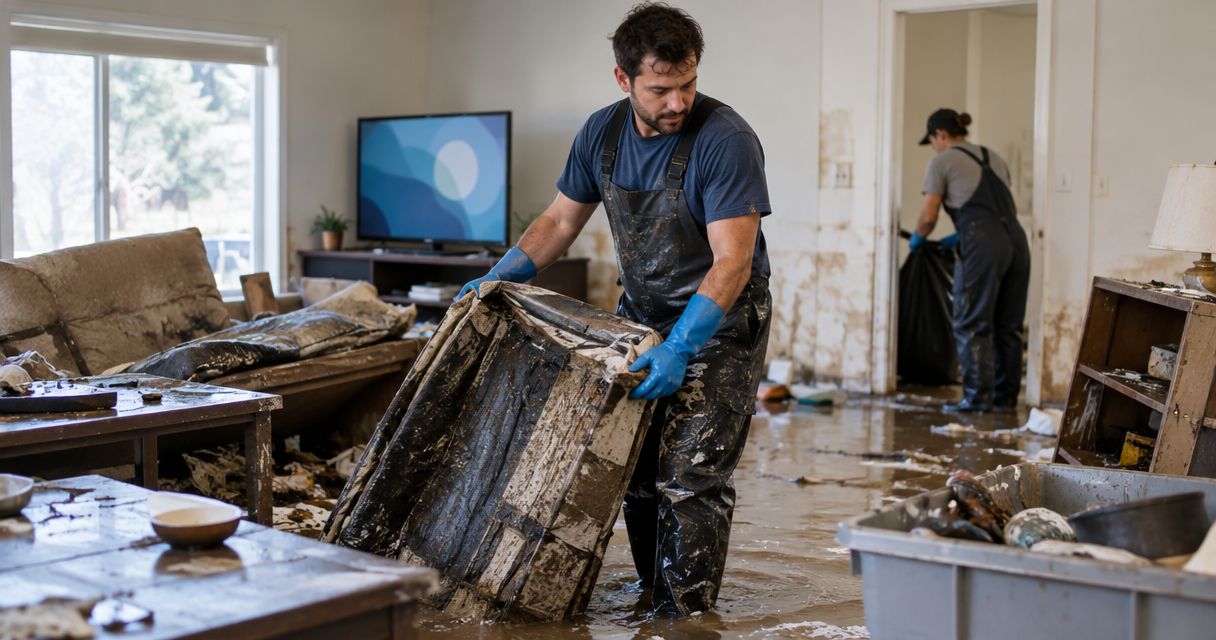
- Material condition. Wet material, exposed fasteners, and suspected contamination need disclosure before acceptance.
- Access and property protection. Stairs, narrow turns, occupied rooms, and finished surfaces affect the work plan, even when they are not separate charges.
Idaho Junk Solutions uses load pricing confirmed before work starts. Its 14-cubic-yard trailer provides a volume reference, not a promise that every flooring material can fill the trailer to the top; dense debris also needs weight planning.
For a 2026 quote, describe the material first and discuss the load second. The pricing information is a starting point, but the agreed job scope should identify what leaves and what stays.
Can carpet and flooring go in the same pickup?
Carpet and flooring can share a pickup when the hauler accepts all included materials and agrees to the loading plan. Ask before mixing everything together; separate piles make it easier to identify materials and explain the job.
For a rental turnover, list flooring debris separately from furniture, appliances, and tenant belongings. That keeps the carpet pile from becoming shorthand for a much larger property cleanout.
If the project is still producing debris, agree on the pickup stage. A collection after tear-out serves a different purpose from a final collection after installation. Do not assume one booking covers return trips or new piles created afterward.
Will a junk pickup leave the floor ready for installation?
A junk pickup does not automatically leave the subfloor ready for installation. Debris removal, staple removal, adhesive scraping, repairs, and installation preparation are separate tasks unless expressly included.
Before your 2026 installation date, ask the installer what condition the room must be in. Then assign each remaining task to a named person or contractor rather than leaving it between trades.
At handoff, check the agreed work—not an assumed standard. A room with the carpet rolls removed can still contain fasteners or adhesive that the flooring installer needs addressed.
How should you schedule a flooring pickup?
Schedule the pickup around the agreed tear-out stage, not an assumed same-day opening. Confirm when the flooring will be detached and whether the installer needs the debris gone before bringing in replacement material.
Idaho Junk Solutions provides 1-hour arrival windows with ETA updates. Share the site contact, entry instructions, and any parking restrictions beforehand; do not assume the owner attends every job.
For an occupied home, keep a usable route through the property and identify surfaces that need protection. For a vacant rental or commercial space, make sure the person meeting the crew has authority to approve the agreed work.
FAQ
Can a junk removal company take carpet and padding together?
A junk removal company can take carpet and padding together when it accepts both materials. Identify both in your request and confirm whether they must already be detached.
Do I have to pull up the carpet before junk removal arrives?
You need to pull up carpet beforehand only if your booking is for hauling detached material. If you need tear-out, have that work expressly included before the appointment.
Can junk haulers take broken floor tiles?
Broken floor tiles require confirmation of material acceptance and loading limits. Describe the tile and any attached backing or adhesive before scheduling, and leave suspect material undisturbed.
Can old vinyl flooring go with regular carpet debris?
Do not mix unknown old vinyl flooring or adhesive into regular carpet debris before assessment. Some older flooring materials contain asbestos, and appearance alone cannot establish whether the material is safe to disturb.
Will carpet removal include tack strips and staples?
Tack strips and staples are included only when the agreed scope says so. Ask separately about removing fasteners from the subfloor and hauling detached strips away.
Can old carpet be recycled or donated?
Old carpet needs an accepting outlet before recycling or donation can be promised. Ask about the specific material and its condition; do not assume a worn carpet roll qualifies for either route.
Can I add flooring debris to a whole-property cleanout?
You can request flooring debris as part of a whole-property cleanout, but the company must confirm acceptance and scope. List it separately from household items so the loading and work plan account for both.
Does flooring debris pickup include cleaning and preparing the subfloor?
Flooring debris pickup does not automatically include subfloor preparation. Specify any sweeping, fastener removal, adhesive work, or repairs separately and confirm who handles each task.
One last thing
Before approving your 2026 flooring job, ask one plain question: “Who removes the tack strips, staples, and leftover adhesive?” That catches the gap between getting old carpet out of the house and getting the floor ready for its replacement.
Send that answer with your pickup request. A clear boundary between hauling and floor preparation does more for the job than calling every task “carpet removal.”