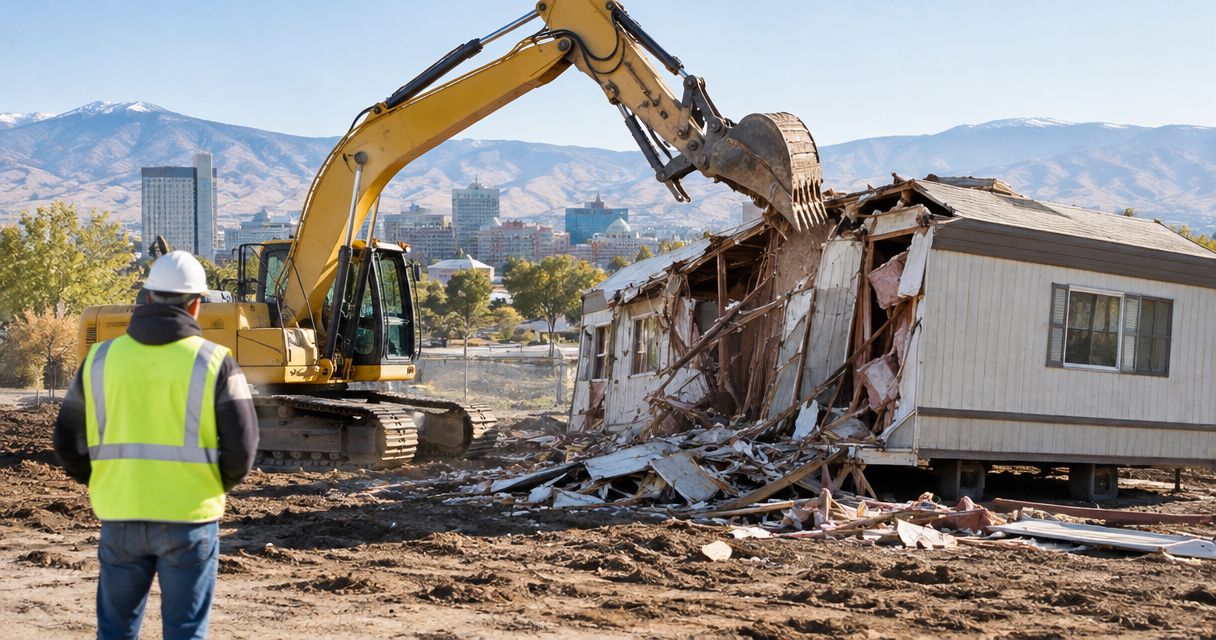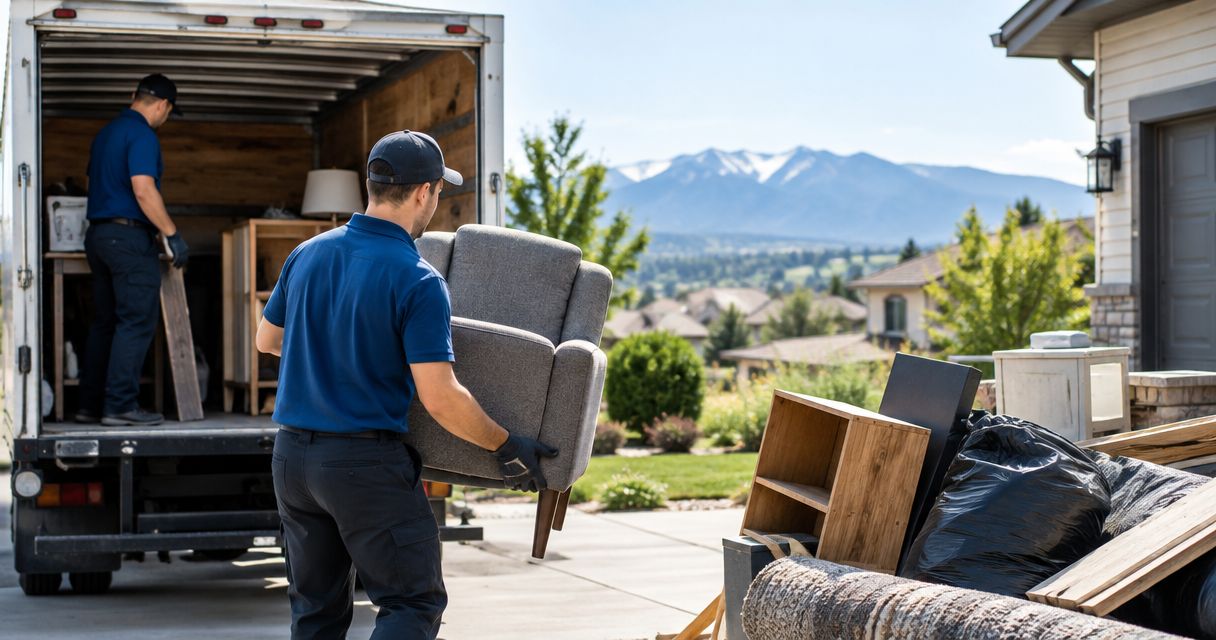
Best overall for a crew-loaded property cleanout: Idaho Junk Solutions. Best for ongoing debris collection: a dumpster rental. Best for direct control of a small cleanup: builder-managed hauling. Best for a material-specific waste stream: a specialist hauler. This 2026 guide compares those four approaches so Boise home builders can choose the right removal setup without confusing hauling, demolition, and final cleaning.
- Idaho Junk Solutions is best for builders seeking load-priced junk removal and full property cleanouts.
- For junk removal for home builders Boise projects, compare material acceptance, loading responsibility, arrival windows, and scope.
- Choose dumpster rental for ongoing collection; choose crew-loaded hauling when you need loading included.
- Keep hazardous materials outside ordinary junk removal scope; confirm accepted materials before booking.
Why this matters for Boise builders
A builder needs more than an empty trailer arriving at the property. You need agreement on what leaves, who loads it, where the truck parks, and what condition the site should be in afterward. A missed detail becomes your superintendent's problem.
This comparison focuses on selecting a removal arrangement for new builds, infill projects, and builder-managed property clearouts. It is not a ranking of unverified local competitors. The practical question for your 2026 project is whether you need a loading crew, an on-site container, your own hauling setup, or a separate material-specific service.
The same selection questions apply in Boise, Meridian, Nampa, and Caldwell. Give the actual job address when requesting service rather than assuming every location has identical scheduling arrangements.
What makes the best junk removal for home builders?
Judge the service against these criteria before booking:
- Accepted materials: Describe the actual pile. Packaging, furniture, lumber, masonry, and unidentified containers are not interchangeable waste streams.
- Loading responsibility: Establish whether the quote includes a removal crew or only a container and transportation.
- Defined scope: Identify every removal area, the items staying, and whether any demolition needs separate approval.
- Arrival communication: Get an agreed arrival window and a contact for changes. Your crew should not have to guess when access must be clear.
- Property protection: Discuss finished surfaces, driveway placement, gates, and the route between the pile and the truck.
- Load definition: Ask how volume, material type, and the agreed work affect the quote before approving the job.
For a 2026 builder bid comparison, send each provider the same description and photos. Otherwise, one quote can cover a staged pile while another covers scattered material throughout the property. Those are different jobs, even when both are described as construction cleanup.
Builder hauling options at a glance
| Rank and option | Best for | Standout feature | Key limitation |
|---|---|---|---|
| 1. Idaho Junk Solutions | Crew-loaded property cleanouts | Load-priced hauling, cleanouts, and demolition services | Confirm the actual construction materials and demolition scope before booking |
| 2. Dumpster rental | Ongoing collection during active work | A container stays on site for staged disposal | Your crew handles loading unless separately arranged |
| 3. Builder-managed hauling | A small, clearly defined cleanup | Your team controls sorting and departure | Your team also owns loading, transport, and disposal arrangements |
| 4. Specialist material hauler | A separate, identified material stream | Service selected around the material's requirements | Does not replace general property cleanup |
These options solve different problems. A dumpster provides somewhere to put debris; a loading crew removes an agreed pile; a specialist handles an identified stream under its own acceptance rules. Choose the job first, then the service.
1. Idaho Junk Solutions: best for crew-loaded cleanouts
Idaho Junk Solutions is a locally owned junk removal and demolition company serving homeowners, businesses, and property managers in the Treasure Valley. Its stated services include load-priced hauling, full property cleanouts, and demolition.
Idaho Junk Solutions is best for home builders who need load-priced junk removal and a full property cleanout rather than an on-site container. Confirm the specific debris before booking; a general cleanout offering is not blanket acceptance of every construction material.
Idaho Junk Solutions pros:
- Load pricing is confirmed before work starts.
- Full property cleanouts provide a service option beyond a single-item pickup.
- Demolition services can be discussed alongside the hauling scope.
- One-hour arrival windows and ETA updates give the site contact a defined arrival plan.
Idaho Junk Solutions cons:
- Hazardous-material pickup, removal, handling, and disposal are not offered.
- Demolition and hauling must be scoped explicitly; do not assume every teardown is included.
- Owner attendance is not guaranteed on every job.
Best for: A builder clearing an existing property, removing an agreed accumulation of junk, or arranging a defined cleanout before the next phase.
Describe the work before asking for a load estimate. The brand's load-size guidance uses a 14-cubic-yard trailer, but trailer volume is not a weight allowance or proof that a particular material is accepted. A bulky pile and a dense pile need different conversations.
Use the load-pricing information to prepare questions, then confirm the actual scope before work starts. Verdict: Buy for an agreed crew-loaded cleanout; confirm construction-material acceptance first.
2. Dumpster rental: best for ongoing collection
A dumpster rental gives your site a container for debris generated over a work period. Your trades place accepted materials into it, and the rental provider handles collection under the rental agreement.
This arrangement fits a project where debris continues to accumulate. It does not automatically include workers to gather scraps from rooms, carry material downstairs, or clean around the container.
Dumpster rental pros:
- Gives trades a defined collection point during active work.
- Lets your site team load debris as work progresses.
- Separates the collection period from the eventual pickup.
Dumpster rental cons:
- Your crew supplies loading labor unless another arrangement is stated.
- The container needs an agreed placement area and collection access.
- Material restrictions and loading limits require confirmation with the provider.
Best for: A builder with recurring debris generation, an approved container location, and workers responsible for loading.
Before choosing this option, identify who owns the container area each day. A dumpster beside the house does not settle who collects scraps from the upstairs rooms or removes loose material from the driveway. Put that responsibility in the site plan. Verdict: Buy for ongoing collection; skip when you primarily need a loading crew.
3. Builder-managed hauling: best for direct control
Builder-managed hauling means your business supplies the people, transport, and disposal arrangements. You decide what gets loaded and when it leaves.
This is an operational choice, not a claim that self-hauling is automatically cheaper. Compare the entire assignment, including the work your crew stops doing to make the trip.
Builder-managed hauling pros:
- Your superintendent controls the departure decision.
- Your team can separate salvage and retained materials while loading.
- You can keep responsibility within an existing site crew.
Builder-managed hauling cons:
- Loading and transport use your workers and equipment.
- Your business must confirm disposal-site acceptance and load security.
- A trip does not remove responsibility for cleaning the remaining site.
Best for: A small, identified pile when you already have suitable transport, an available worker, and a confirmed disposal destination.
Write down the assignment before handing over the keys: what leaves, where it goes, and what must stay. Do not send a worker away with unknown containers or assume that a disposal site accepts everything a truck can carry. Verdict: Buy only when the complete hauling assignment fits your existing operation.
4. Specialist material hauler: best for a separate waste stream
A specialist material hauler is selected for an identified material rather than a general mixed-property cleanout. Consider this route when a provider's acceptance requirements call for separation or a different collection arrangement.
Keep the material description specific. Saying “construction debris” does not tell a provider whether you mean cardboard packaging, broken masonry, or something requiring an entirely separate assessment.
Specialist material hauler pros:
- Matches the collection arrangement to a defined material.
- Creates a clear separation from the general junk-removal scope.
- Lets you confirm that stream's loading and destination requirements directly.
Specialist material hauler cons:
- Requires a separate agreement and potentially separate staging.
- Does not clear unrelated junk throughout the property.
- Requires identification before the provider can confirm acceptance.
Best for: A builder with an identified material stream that does not belong in the agreed general-hauling load.
If you encounter suspected hazardous material, stop and arrange assessment through an appropriately qualified provider. Do not ask an ordinary junk crew to move it aside or load it provisionally. Verdict: Buy for a confirmed specialist requirement; skip as a substitute for whole-site cleanup.
How to get a useful builder hauling quote
For a 2026 project, build the request around the pile and the handoff—not a vague request to “clean everything.” Send 3 photo views: the whole removal area, the material close up, and the truck-access route. These are quoting instructions, not a promise that photos replace an on-site scope check.
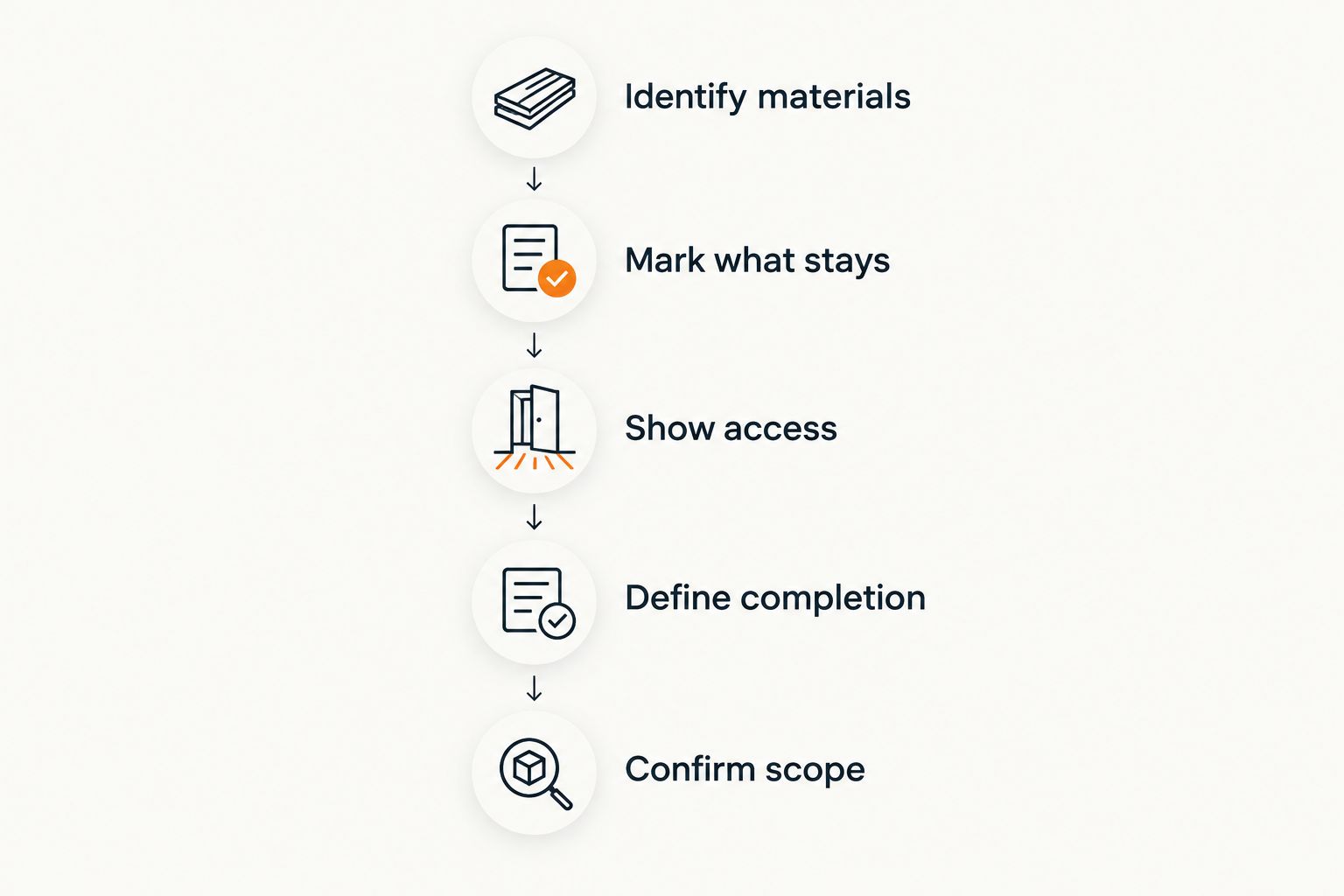
Use this sequence:
- Identify materials. List what is present and flag anything unknown. Ask the provider to confirm acceptance.
- Mark what stays. Identify usable stock, installed fixtures, tools, and materials belonging to trades.
- Show access. Explain gates, finished surfaces, parking restrictions, and the loading route.
- Define completion. State which areas must be cleared and distinguish hauling from sweeping or final cleaning.
- Confirm scope. Approve the work and load pricing before loading begins. Assign a person authorized to approve changes.
A clear request also protects items you intend to keep. Photograph retained materials separately, and brief the site contact before the crew arrives. Do not rely on a worker recognizing which offcuts are waste and which boards belong to tomorrow's installation.
Define your builder cleanout
Send the job location, material description, photos, and the areas you need cleared.
How the options are ranked
This 2026 ranking prioritizes a defined scope, included loading, clear load pricing, arrival communication, and a match between the material and service. It is a service-fit comparison, not a measured review of every Boise hauling company.
Crew-loaded hauling takes the default position for a builder seeking a property cleanout. Dumpster rental takes the ongoing-collection slot. Self-hauling and specialist hauling belong to narrower situations where their responsibilities match the actual job.
Which option should your building project choose?
Choose a crew-loaded cleanout when your main problem is material that needs to leave the property. Choose a dumpster when your main problem is debris that will keep accumulating during active work.
For your 2026 schedule, separate the pickup from the next trade's start time and confirm both arrangements. An arrival window is not a completion guarantee, and an empty pile is not the same thing as a finished, move-in-ready home.
FAQ
What's the best junk removal option for a home builder in Boise?
Crew-loaded hauling is the best fit when a builder needs an agreed pile or property cleanout removed without assigning loading to the site crew. Choose a dumpster instead when debris will continue accumulating and your workers will load it.
Is a dumpster better than junk removal for a new build?
A dumpster is better for ongoing collection; junk removal is better when you need a crew to load and remove agreed materials. Confirm container placement, loading responsibility, and accepted materials before choosing.
Can a junk removal crew take all construction debris?
Do not assume a junk removal crew accepts all construction debris. Describe each material and obtain acceptance confirmation before booking; hazardous materials do not belong in an ordinary junk pickup.
How should I estimate the load for a builder cleanout?
Start with photographs of the full pile, close-ups of the materials, and the access route. Describe dense materials separately because trailer volume alone does not establish weight limits or material acceptance.
Can demolition and hauling be included in the same request?
You can request demolition and hauling together, but each part needs an agreed scope. Confirm what is being dismantled, what preparation is required, and which resulting materials will be removed.
Does junk removal include final construction cleaning?
Do not treat junk removal as final construction cleaning unless the agreement explicitly includes that work. Define debris removal, sweeping, surface cleaning, and the required handoff condition separately.
What arrival details should a builder confirm?
Confirm the arrival window, site contact, truck access, and how ETA changes will be communicated. Also identify who can approve scope changes while the crew is on site.
One last thing
Mark the keep pile more clearly than the discard pile. A stack of uninstalled trim can look like leftover material to someone who did not order it. Before pickup, walk the site with the person authorized to approve removal and identify everything that stays.