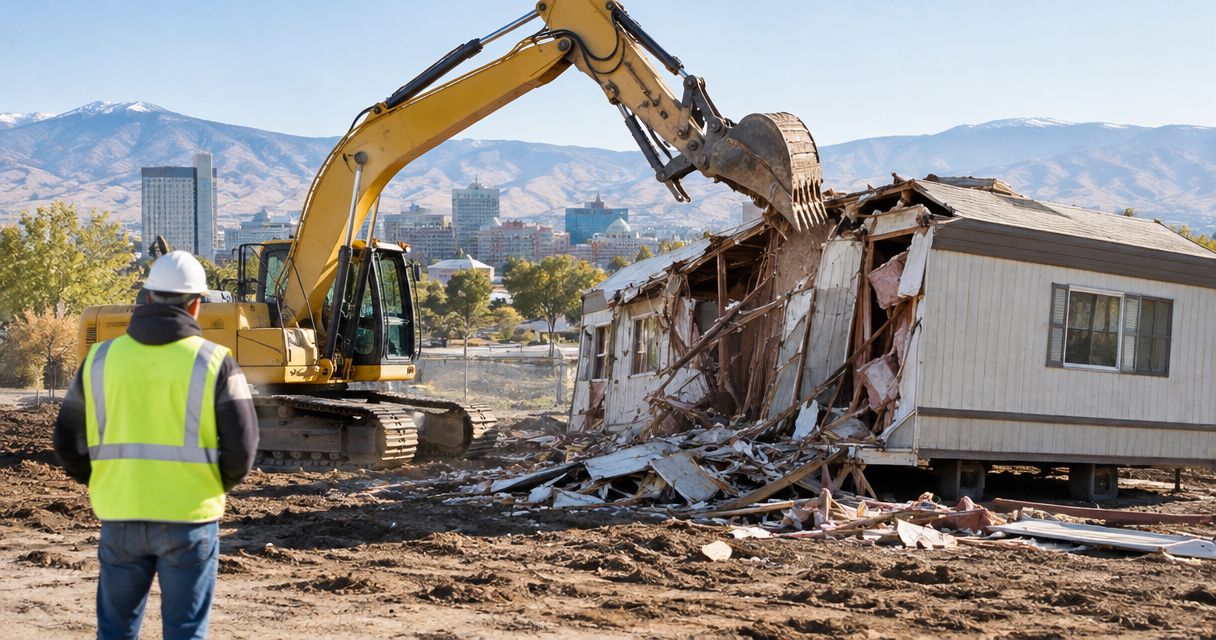
Best overall for dismantling a mobile home: a demolition contractor that accepts the complete structure in writing. Best for a separate property cleanout: Idaho Junk Solutions. Best for moving the home intact: a manufactured-home relocation specialist. This 2026 guide helps you choose the right contractor for Boise mobile home removal without confusing hauling, demolition, and relocation.
- For boise demolition mobile home removal, choose by written scope, not a general demolition label.
- Idaho Junk Solutions is a fit for property cleanouts; confirm mobile-home demolition acceptance before booking.
- Choose a manufactured-home relocation specialist when you want the structure moved intact.
- Separate utility disconnections, hazardous-material concerns, foundations, and final cleanup before comparing proposals.
Why this matters
A mobile home removal job does not end when the walls come down. You still need to account for belongings, utility connections, attached structures, the chassis, debris, and whatever remains underneath.
The wrong comparison puts a furniture-hauling proposal beside a structural-demolition proposal and treats them as interchangeable. They are different jobs. Choose the company that accepts your actual scope, not the company with the broadest service description.
For a Boise, Meridian, Nampa, or Caldwell property, start with the address and the intended outcome. An empty space for another home requires a different handoff from a property where you only want unwanted belongings removed.
What makes the best mobile home removal contractor?
Use these criteria before choosing a company in 2026:
- Exact scope: The proposal names the mobile home itself, not just junk removal or general demolition.
- Clear responsibility: Someone is assigned to permits, utility disconnections, site access, and disposal arrangements.
- Complete hauling: The agreement identifies what happens to debris, the chassis, attached steps, and other included structures.
- Property protection: The crew discusses equipment access, nearby buildings, fences, landscaping, and surfaces you want preserved.
- Defined finish: You agree on what stays, what goes, and what condition the site must be in at handoff.
- Written exclusions: Suspect materials, underground work, foundations, and other separate work are addressed before demolition starts.
A good proposal makes these points easy to find. Do not substitute a verbal assurance for an item that belongs in the written scope.
Mobile home removal options at a glance
These options are ranked by job fit, not by an unsupported claim that one company outperforms every Boise competitor. Start with structural demolition when the home must be dismantled; choose the other options when your actual goal differs.
| Option | Best for | Standout fit | Key limitation |
|---|---|---|---|
| Structural demolition contractor | Dismantling and removing the home | Written responsibility for the structure and included debris | General demolition advertising does not establish mobile-home acceptance |
| Idaho Junk Solutions | Separate contents and property cleanouts | Locally owned cleanout, hauling, and demolition business | Mobile-home demolition needs explicit scope confirmation |
| Manufactured-home relocation specialist | Moving the home intact | Evaluating a move rather than a teardown | Relocation suitability must be assessed before committing |
The deciding question is simple: Are you removing belongings, dismantling the structure, or moving the structure? Answer that before requesting proposals.
1. Structural demolition contractor: best for complete teardown
A structural demolition contractor is the right category to contact when the mobile home must be dismantled rather than transported intact. Ask the contractor to identify the entire structure and every included attachment in the proposal.
Do not assume “complete removal” includes the slab, piers, anchors, buried connections, or site grading. Those words need a written definition. A teardown that leaves the agreed foundation in place is different from a job that prepares the footprint for another use.
Structural demolition contractor pros:
- Direct match for a home that must come apart on site.
- Lets you assign structural demolition and included debris removal under a defined agreement.
- Supports a clear discussion of equipment access and demolition boundaries.
Structural demolition contractor cons:
- A general demolition listing does not prove the contractor accepts mobile homes.
- Foundation removal and final site work require separate confirmation.
- Utility and hazardous-material responsibilities still need to be assigned.
Best for: Owners who want the mobile home dismantled and the agreed materials removed.
Before hiring, ask: “Does your proposal include the roof, walls, floor, chassis, attached structures, loading, hauling, and disposal?” Have the contractor mark each item included or excluded. That turns a broad promise into a scope you can compare.
Verdict: Buy only after the contractor accepts the complete teardown scope in writing.
2. Idaho Junk Solutions: best for a separate property cleanout
Idaho Junk Solutions provides load-priced hauling, full property cleanouts, and demolition services for homeowners, businesses, and property managers in the Treasure Valley. The useful distinction for this search is between those stated services and acceptance of a particular mobile-home teardown.
Idaho Junk Solutions is a fit for property cleanouts around a mobile-home project. If your project includes the structure itself, describe that explicitly and get acceptance before treating the job as booked.
Idaho Junk Solutions pros:
- Offers property cleanouts as well as hauling and demolition services.
- Uses clear load pricing confirmed before work starts.
- Provides one-hour arrival windows with ETA updates.
- Is locally owned, with owner involvement where possible rather than a promise that the owner attends every job.
Idaho Junk Solutions cons:
- You must confirm whether the particular mobile-home structure falls within the accepted demolition scope.
- A contents cleanout does not establish responsibility for permits, utilities, foundations, or structural removal.
- Hazardous-material removal, handling, and disposal are not offered services.
Best for: Owners or property managers who need a defined contents or property cleanout before a separately scoped removal project.
For a 2026 inquiry, separate the work into belongings, loose outdoor debris, attached structures, and the mobile home itself. Explain which parts you want removed and which must remain. Ask for pricing you know before work starts, with exclusions written down.
Verdict: Buy for an accepted cleanout scope; hold on structural removal until it is explicitly confirmed.
3. Manufactured-home relocation specialist: best for an intact move
Choose a manufactured-home relocation specialist when your goal is to move the home rather than destroy it. That is a different service from tearing down a structure and hauling away debris.
Ask for an assessment of the home's condition, departure access, destination requirements, and proposed transport arrangements. Do not schedule demolition while you are still deciding whether to preserve the home.
Manufactured-home relocation specialist pros:
- Matches the goal of keeping the structure intact.
- Makes transport suitability part of the decision before removal work begins.
- Separates moving responsibilities from demolition responsibilities.
Manufactured-home relocation specialist cons:
- Not every home is suitable for an intact move.
- Departure and destination arrangements both need attention.
- A move does not automatically include removing foundations, abandoned attachments, or leftover property debris.
Best for: Owners who want the home relocated and need its suitability assessed first.
Ask who handles preparation, transport, and work at the destination. Then ask what remains on the original lot. A successful move and a cleared departure site are separate outcomes unless the agreement covers both.
Verdict: Hold demolition while relocation suitability is being assessed.
How these options are ranked
The ranking follows the physical job: dismantle the structure, clear the property, or move the home intact. Scope acceptance comes first, followed by assigned responsibilities, hauling boundaries, property protection, and the final handoff.
For 2026, do not treat a company's general service category as evidence of mobile-home experience. Ask for relevant completed-job examples, current insurance documentation, and a proposal that addresses your property. A useful answer explains the work rather than repeating “we do demolition.”
Build a scope that contractors can actually quote
Give every company the same project brief. Otherwise, differences between proposals can reflect different jobs rather than different value.
Define the structure
Describe whether the project involves the mobile home alone or also includes a porch, deck, skirting, shed, carport, or other attachment. Identify belongings still inside without entering an unsafe structure to inventory them.
Send 3 photo groups: the exterior, the access route, and visible attachments. These are a starting point for discussion, not a replacement for an assessment. Photograph from a safe location and identify anything the photos do not show.
Set access boundaries
Show the contractor gates, overhead obstructions, neighboring structures, driveways, and areas that must stay untouched. State whether the home sits on your own property or in a managed community.
If a property manager controls access, get that person's requirements before setting a work date. Do not assume permission to remove belongings also authorizes structural demolition.
Assign utility work
Ask who verifies the status of electricity, gas, water, sewer, or other connected services. Get the appropriate utility provider or qualified trade involved before demolition; do not attempt disconnections yourself.
Define the handoff
Write down whether the chassis, supports, slab, anchors, attached structures, and loose debris must leave. Identify surfaces or materials that must remain.
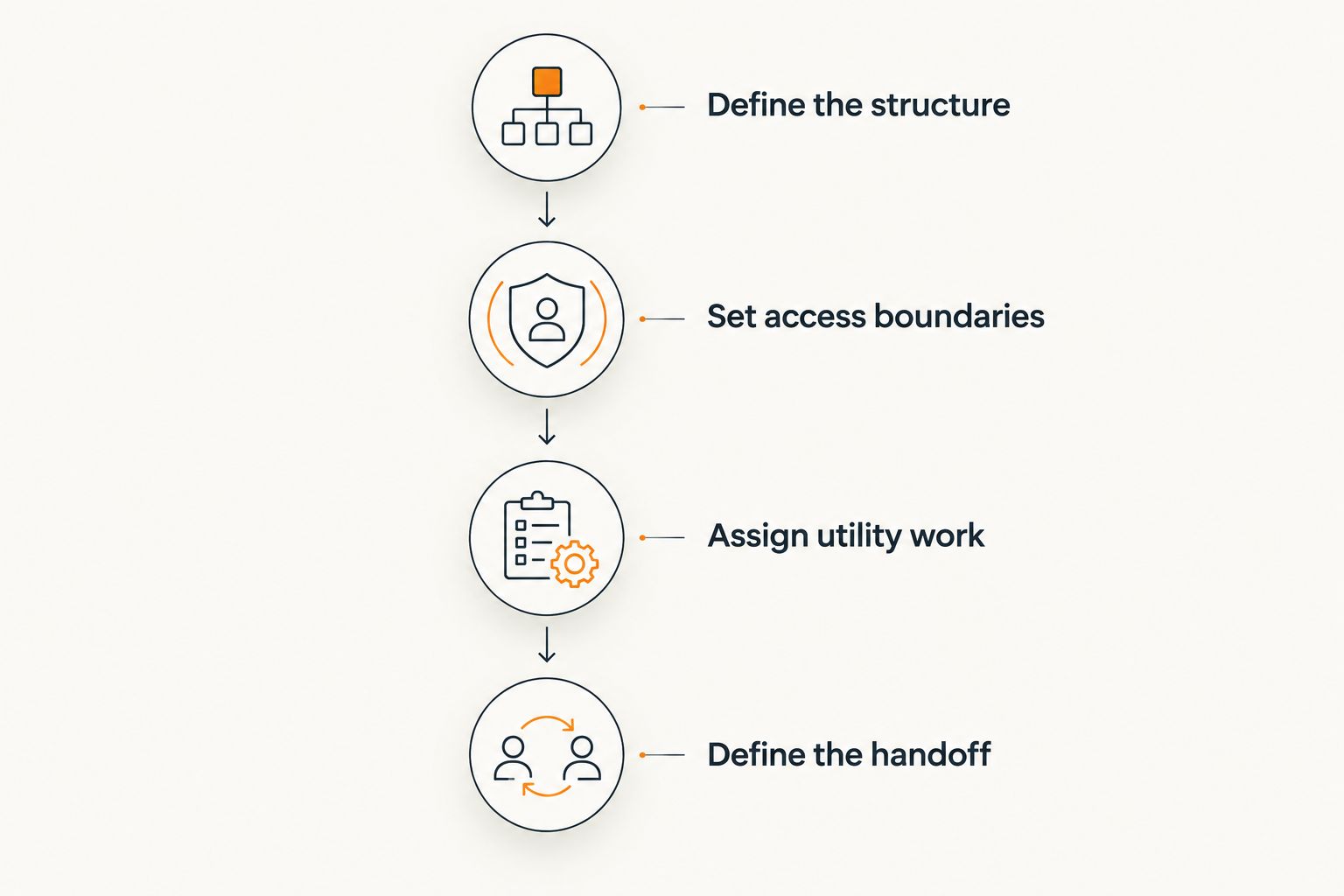
Keep that scope with the proposal. If the work changes after an assessment, update the agreement before the changed work begins.
Understand load pricing without confusing it with teardown scope
Load pricing describes the hauling portion of a job. It does not, by itself, tell you whether structural demolition, disconnections, foundation removal, or grading are included.
The brand's load-size guidance uses a 14-yard trailer as a reference. That is a volume reference, not a promise that a mobile home fits in one load or that every material is suitable for the same hauling arrangement.
Ask how the accepted materials will be loaded and how the proposal accounts for the complete scope. Never estimate a mobile-home teardown by treating the intact building as a pile of ordinary household junk.
For a 2026 project, the useful comparison is the written outcome: exactly what gets removed and what remains. A shorter proposal is not automatically a simpler job.
Keep permits and suspect materials separate from hauling
Confirm demolition requirements with the permitting authority responsible for the property's actual address. A Boise mailing address is not a substitute for checking jurisdiction, and a managed community can have its own approval requirements.
Do not start demolition until the assigned permit and utility responsibilities are resolved. Ask the contractor to identify any inspections, documentation, or specialist work needed before disturbance.
Suspect asbestos-containing materials and other hazardous conditions need qualified assessment and an appropriate separate provider. A demolition or junk removal booking is not permission to disturb unknown materials. Stop and resolve that question before work proceeds.
The same boundary applies to leftover chemicals or unidentified containers. Do not mix them into ordinary debris or ask a hauling crew to treat them as routine junk.
Which mobile home removal option should you choose?
Choose a structural demolition contractor for a full teardown, subject to written acceptance of the mobile home and its removal scope. Choose a relocation specialist if keeping the home intact is the goal.
For a separate property cleanout, contact Idaho Junk Solutions with photos and a clear list of what must go. State plainly whether you are requesting belongings removal, structural demolition, or both; do not leave that distinction for arrival day.
Describe your removal project
Send the address, photos, and a clear list of the structure, belongings, and debris you want removed.
FAQ
What's the best type of company for mobile home demolition in Boise?
Choose a demolition contractor that explicitly accepts the mobile home and the complete removal scope in writing. Confirm responsibility for utilities, permits, attachments, debris, and the condition of the finished site.
Does Idaho Junk Solutions remove mobile homes?
Confirm acceptance of your specific mobile-home project before booking. Idaho Junk Solutions offers demolition, load-priced hauling, and property cleanouts, but those service categories do not establish acceptance of every structure.
Should I move my mobile home or have it demolished?
Request a relocation assessment if you want to preserve the home; request a demolition assessment if you want it dismantled. Do not authorize teardown while you are still evaluating an intact move.
Does mobile home demolition include the foundation?
Foundation removal is included only when the agreement says so. List slabs, piers, anchors, the chassis, and other remaining components separately in the scope.
Can I use load pricing to estimate the whole mobile home teardown?
Load pricing alone does not define the full teardown scope. Structural work, hauling, utility preparation, foundations, and the final site condition need separate written clarification.
Who disconnects utilities before mobile home demolition?
Assign utility disconnections to the appropriate utility provider or qualified trade before demolition begins. Ask who verifies completion, and do not attempt the disconnections yourself.
What if the mobile home contains suspect asbestos or hazardous materials?
Stop disturbance and arrange qualified assessment and any required specialist work. Idaho Junk Solutions does not offer hazardous-material removal, handling, or disposal.
One last thing
Write the handoff before you approve the teardown. “Home removed” leaves too much open; a list naming the chassis, attachments, supports, debris, and anything staying on site gives both sides something concrete to check.
Walk the finished area against that list. The last inspection should answer what remains, not restart the argument about what removal meant.