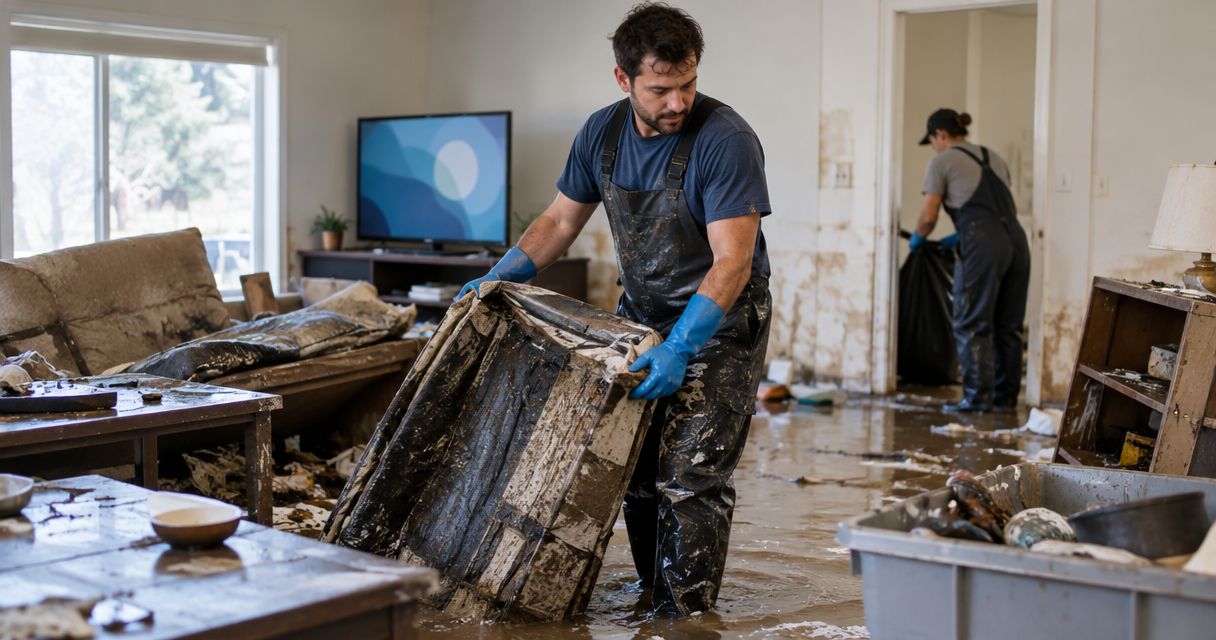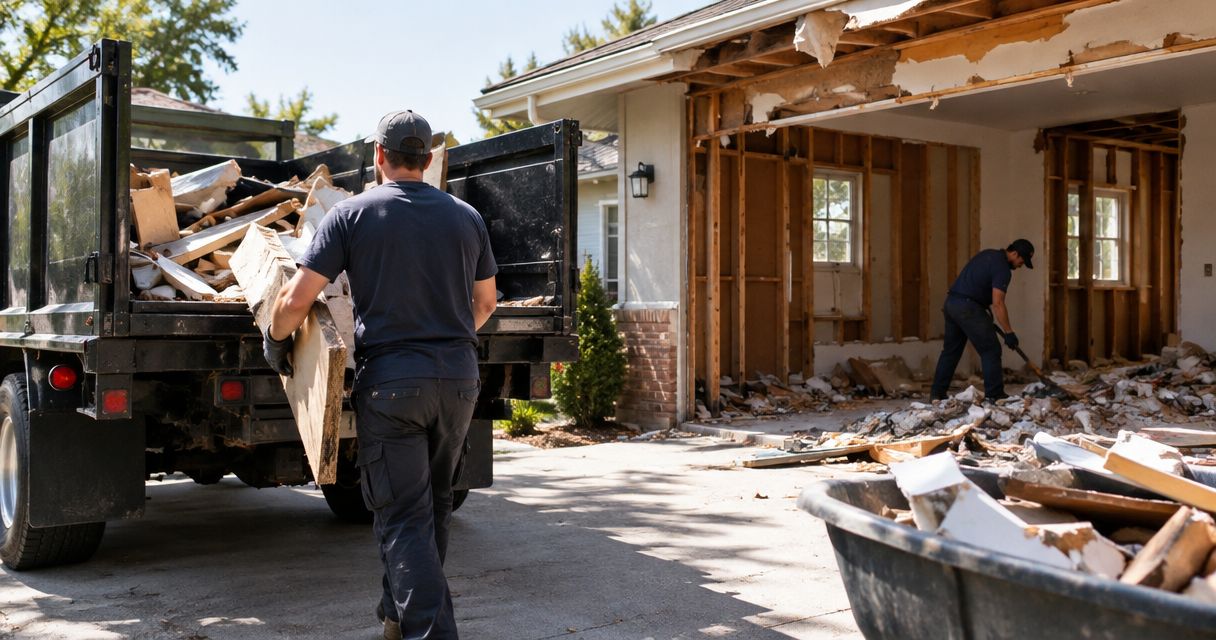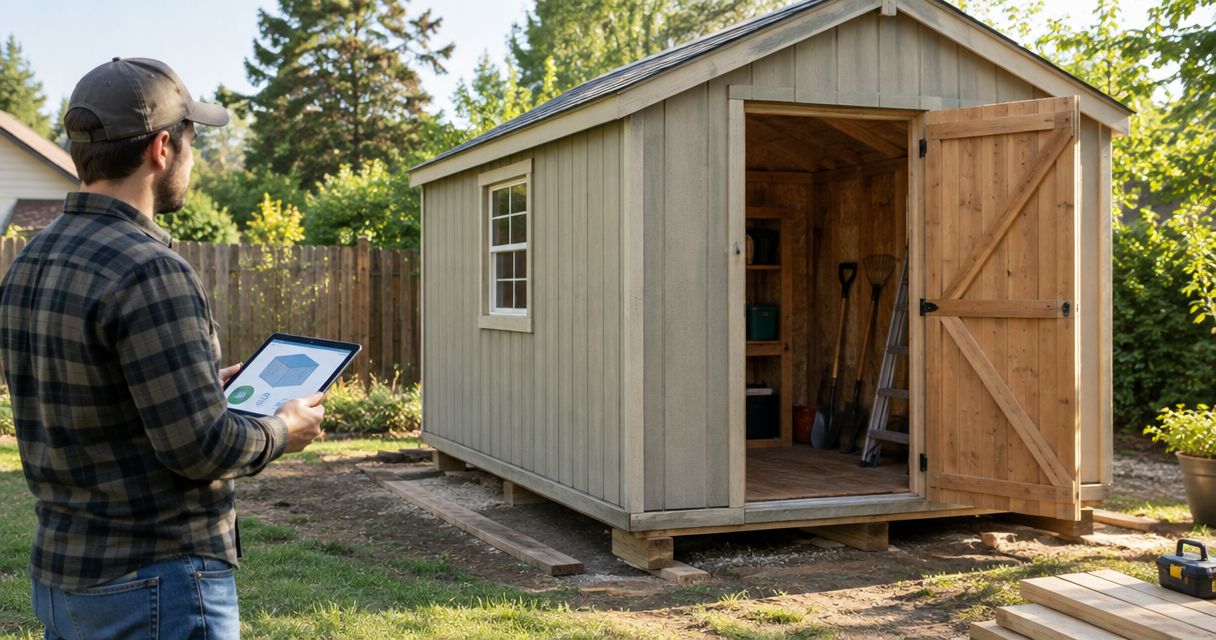
Shed removal cost without demolition requires a site-specific moving quote, not a demolition or junk-hauling estimate. The quote needs to separate moving the building from emptying it, disconnecting utilities, and dealing with its foundation. For a usable shed you want to keep, the first question is whether it can leave the property intact—not how much debris fits in a trailer.
- Shed removal cost without demolition depends on the building, access route, destination, and written moving scope.
- An intact shed move and load-priced junk removal are different jobs; do not compare them as equivalent quotes.
- Idaho Junk Solutions offers junk removal and demolition; request separate confirmation before assuming intact shed relocation is included.
- Keep utility disconnection, contents, foundation work, and destination preparation explicit in every estimate.
Why this matters
A shed can look ready to move while still being anchored, wired, full of belongings, or blocked by a fence. Getting the wrong kind of estimate leaves those questions unanswered.
For your 2026 project in Boise, Meridian, Nampa, or Caldwell, describe the outcome before asking for a number: keep the shed intact, move it elsewhere on the property, or transport it to another address. The pricing information for load-priced hauling addresses a different scope from transporting a reusable building.
Pay for the outcome you need, not a vaguely worded promise to remove the shed. A demolition quote does not become a moving quote simply because both jobs leave an empty space.
How much does it cost to remove a shed without demolishing it?
There is no supported flat amount for this job. You need an estimate from a contractor who has confirmed the shed's condition, the loading route, and the destination—and explicitly agreed to preserve the structure.
Use this comparison to make sure you are requesting the right work. These are different approaches, not interchangeable bids.
| Approach | Best for | Main advantage | Main limitation | What the quote must describe |
|---|---|---|---|---|
| Move the shed intact | Keeping a usable building | Preserves the assembled structure | Requires a workable moving route and suitable building condition | Pickup, loading, transport, placement, and exclusions |
| Disassemble for reuse | Keeping components when an intact move is unsuitable | Allows parts to leave separately | Reassembly and damage risk need separate attention | Careful dismantling, component handling, transport, and reassembly responsibility |
| Demolish and haul away | Removing a shed you do not intend to reuse | Ends with the unwanted structure removed | Does not preserve the shed | Demolition, debris hauling, cleanup, and foundation boundaries |
Ask whether the estimate covers the complete move or only a stage of it. A quote for loading is not a quote for delivery and placement. Likewise, transporting loose panels does not include rebuilding the shed unless the contractor writes that into the scope.
What belongs in the cost breakdown?
A useful 2026 estimate separates responsibilities even when the contractor gives you a single total. Request clear answers on:
- Building preparation: Who empties the shed and identifies attachments or connections?
- Moving work: Who handles loading, transportation, unloading, and placement?
- Access preparation: Who arranges any necessary fence or gate work?
- Destination preparation: Who confirms that the receiving area is ready?
- Site leftovers: Who handles the original foundation, loose contents, and debris?
These are scope questions, not a claim that every contractor adds a separate charge for each item. The point is to establish what the quoted work includes before you approve it.
Moving a shed intact: preserve the building
Best for: a shed you want to keep assembled and use again. Start with an assessment of the structure and route, not with clearing a space on your calendar.
Photograph the outside, inside, floor, and visible base. Include damage, leaning walls, sagging areas, and previous repairs rather than showing only the good side. The person planning the move needs to evaluate the shed as it stands.
Then show the entire route from the shed to the loading point. A wide driveway does not resolve a narrow backyard gate, and a clear gate does not resolve an obstructed turn immediately beyond it.
The advantage is straightforward: you are trying to retain the assembled building. The limitation is equally important: wanting an intact move does not establish that the shed or route is suitable. Do not authorize lifting, cutting, or pulling until the contractor has agreed on the method and preservation scope.
Disassembly for reuse: keep the parts, define the rebuilding work
Best for: a reuse project where the shed cannot reasonably leave assembled. Ask whether the contractor means careful disassembly or demolition. Those terms describe different results.
Careful disassembly aims to retain usable components. It still requires a plan for identifying, protecting, transporting, and storing those components, along with a separate decision about who rebuilds the shed.
The advantage is that you are not insisting on moving the whole building through a restricted route. The drawback is that keeping panels does not guarantee a complete, reusable shed at the destination. Confirm how damaged components, fasteners, roofing, and weather protection will be handled before work starts.
If your requirement is strictly “no demolition,” say whether reversible disassembly is acceptable. Otherwise, you and the contractor can use the same words while expecting different work.
Why shed removal cost without demolition varies
For a 2026 quote, supply information about these factors rather than asking a contractor to price an unseen building:
- Shed construction and condition. Describe the materials, visible damage, floor condition, and how the building meets its base. These details inform the proposed handling method.
- Building dimensions. Provide measured width, length, and height. Do not substitute a guessed shed model or a photograph without scale.
- Access route. Show gates, turns, overhead obstacles, landscaping, and the loading area. Access information helps establish feasibility; it is not permission to add an unexplained access surcharge.
- Moving destination. Identify whether the shed stays on the property or travels to another address, and show the receiving route and placement area.
- Connections and attachments. Disclose wiring, plumbing, anchors, attached fencing, and anything else connecting the shed to its surroundings.
- Work outside the move. Identify contents removal, foundation work, cleanup, and destination preparation so they do not disappear between estimates.
A smaller shed is not enough information to establish an easier move. The building, route, and agreed outcome all belong in the same conversation.
How do you get a quote that actually covers the job?
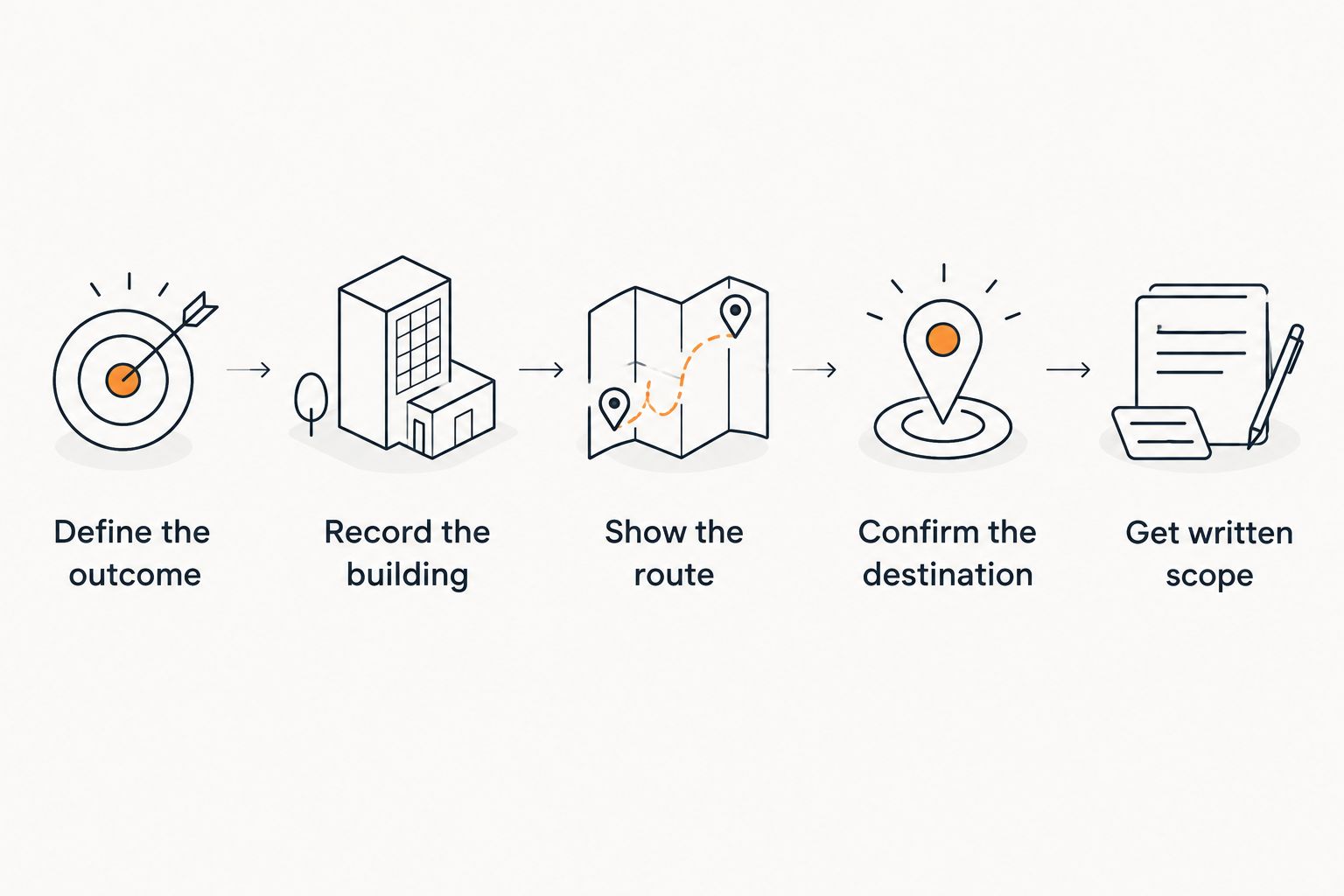
Prepare a short job packet before contacting a contractor. You do not need a polished document; clear photos and a written description are more useful than a long explanation over the phone.
- Define the outcome. Write whether the shed must remain assembled, whether disassembly is acceptable, and where it must end up.
- Record the building. Supply measured dimensions and photographs of the exterior, interior, visible base, and damage.
- Show the route. Photograph the path from the shed to the loading area, including gates and turns.
- Confirm the destination. Provide receiving-site photos and identify who prepares the placement area.
- Get written scope. Confirm included work, excluded work, preservation expectations, and approval requirements before starting.
For your 2026 booking, send the same packet to each contractor. That gives you a fair basis for comparing the work rather than comparing totals attached to different assumptions.
Ask what happens if the contractor discovers that the agreed intact move is unsuitable. Require your approval before switching to disassembly or demolition. Put that instruction in writing instead of relying on a conversation at the gate.
Where load-priced hauling fits—and where it does not
Idaho Junk Solutions is best for Treasure Valley customers seeking load-priced junk removal or demolition rather than an assumed intact shed move. Its stated services include hauling, full property cleanouts, and demolition; those services do not establish a shed-relocation offering.
The company's hauling references use a 14-cubic-yard trailer and quarter-, half-, and full-load examples. Those describe hauling volume, not a method for pricing or transporting an assembled shed. A building's empty interior is not equivalent to a load of demolition debris.
If the shed contains unwanted belongings, describe that cleanout separately from the building move. The junk removal and demolition services are relevant when you need contents hauled away or decide not to preserve the structure.
Idaho Junk Solutions emphasizes load pricing confirmed before work starts, one-hour arrival windows with ETA updates, and owner involvement where possible. Those are useful expectations for the company's stated work—not proof that intact relocation is included. The limitation is simple: confirm the requested service before treating a hauling appointment as a shed-moving booking.
Is removing a shed without demolition cheaper than tearing it down?
Neither approach is automatically cheaper. An intact move and a demolition job have different scopes, so the comparison needs written estimates for the outcome you actually want.
If you plan to keep using the building, compare a complete relocation scope with the alternative of losing that building—not just the removal portion. If you want only an empty yard, preserving an unwanted shed adds a requirement that does not serve your goal.
Choose preservation because you want the shed, not because you assume it avoids work. Before accepting an offer from someone who wants to take it, establish who handles preparation, transport, property damage, and anything left behind.
Does shed removal include the concrete slab or foundation?
Shed removal includes foundation work only when the written scope says so. Moving a building and removing what it stood on are separate outcomes.
Tell the contractor whether the slab, blocks, anchors, or other base materials should remain. Also identify anything you want protected, including nearby irrigation, fencing, paving, and landscaping. “Leave the area clean” is less useful than naming exactly what stays and what goes.
For a rental or property sale, use the same written boundary with everyone involved. A cleared shed footprint and a removed concrete slab are not the same handoff.
Can you arrange this around a property handoff?
Yes—start by establishing the required condition at handoff and asking the contractor to confirm the schedule. Do not promise a buyer, tenant, or incoming contractor an intact shed move before someone has assessed it.
For a 2026 sale or rental turnover, keep the access contact, decision-maker, and destination contact in the job notes. If a gate must be opened or a receiving area cleared, assign that responsibility before the appointment.
Hazardous materials are outside Idaho Junk Solutions' offered removal services. Disclose suspected hazards rather than placing them in a contents pile or treating them as ordinary shed debris. Do not disconnect utilities or disturb suspect materials just to make the building appear ready.
FAQ
How much does shed removal cost without demolition?
Shed removal cost without demolition requires a site-specific quote for preserving and moving the building. Ask the contractor to identify preparation, transport, placement, foundation work, and exclusions before you compare estimates.
Can Idaho Junk Solutions move my shed in one piece?
Idaho Junk Solutions' stated services do not confirm intact shed relocation. Describe the preservation requirement and request explicit service confirmation before booking.
Is moving a shed cheaper than demolishing it?
Moving a shed is not automatically cheaper than demolishing it. Compare written scopes, and decide whether keeping the building is part of the outcome you need.
Do I need to empty my shed before it is moved?
Confirm the contents requirements with the moving contractor before the appointment. Treat unwanted-item hauling as a separate scope rather than assuming the building move includes a cleanout.
Does a shed removal quote include removing the foundation?
A shed removal quote includes foundation removal only when that work is explicitly listed. Specify whether slabs, blocks, anchors, and other base materials stay or go.
Can I take a shed apart and rebuild it elsewhere?
Disassembly for reuse requires a separate plan for preserving components and rebuilding the shed. Confirm who handles dismantling, transport, storage, damaged parts, and reassembly before authorizing work.
What photos should I send for a shed-moving estimate?
Send photos of the shed exterior, interior, visible base, damage, access route, loading area, and destination. Include measured building dimensions and identify connections or attachments.
One last thing
Write this sentence into your request: “Do not demolish or disassemble the shed without my approval.” Then identify the person authorized to approve a change.
That instruction makes your priority unmistakable. If preserving the building is the whole reason for the job, it belongs in the agreement—not just in the first phone call.