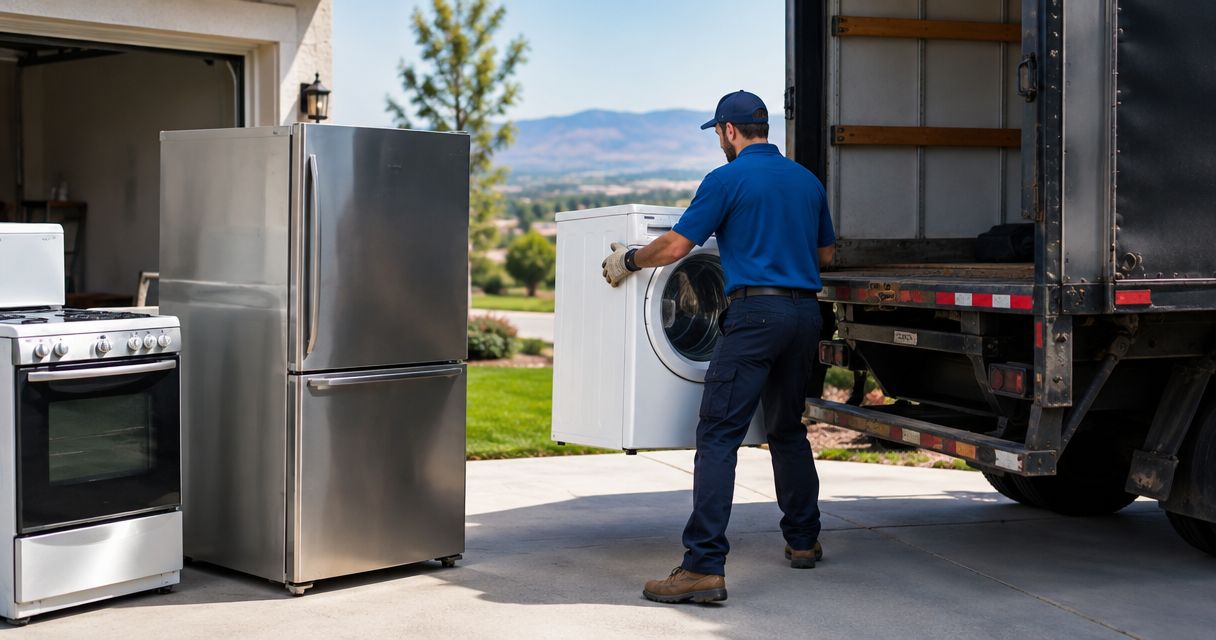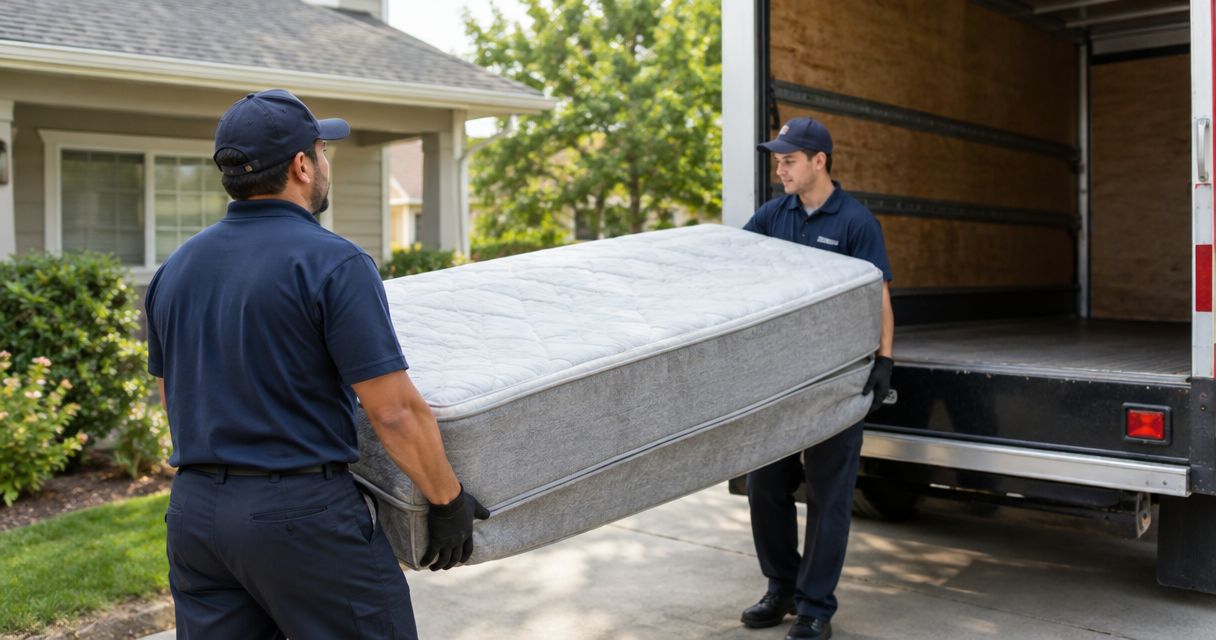
An estate cleanout takes the time needed to sort belongings, authorize removal, haul the approved contents, and complete the agreed property handoff—not just the time a truck is on-site. Get a property-specific schedule after a walkthrough rather than treating a hauling estimate as the duration of the entire estate project. Family decisions, donation arrangements, and work outside the hauling scope need their own place on the calendar.
- How long does an estate cleanout take? Separate family sorting, approved hauling, and the final property handoff.
- Idaho Junk Solutions estate cleanouts suit Treasure Valley families seeking load-priced hauling with pricing confirmed before work starts.
- A one-hour arrival window tells you when the crew arrives, not when the estate cleanout finishes.
- Keep disputed belongings out of the removal scope until the person authorized to decide releases them.
How long does an estate cleanout take on average?
Use a walkthrough-based schedule, not a generic average, to set your estate cleanout deadline. A furnished home with undecided belongings is a different assignment from a house where everything remaining is approved for removal.
For your 2026 plan, separate the work into the stages below. The house cleanouts guide for estate attorneys is a related resource when an estate representative is coordinating the property.
| Stage | What needs to happen | What establishes the finish point |
|---|---|---|
| Family sorting | Identify keepsakes, records, valuables, and belongings awaiting a decision | The authorized decision-maker releases the removal items |
| Donation or sale arrangements | Decide which usable belongings need a separate destination | Collection, delivery, or sale arrangements are settled |
| Approved hauling | Remove the agreed contents from the specified areas | The approved removal scope is complete |
| Property handoff | Check rooms, outbuildings, and anything intentionally left behind | The responsible person accepts the agreed result |
Do not ask only, “How long will the truck be there?” Ask when each stage can start, what must be finished first, and who approves changes. That gives you a schedule you can actually use.
Why this matters
An estate cleanout is both a property job and a decision-making job. A crew can remove an approved sofa; it cannot decide whether a family wants to keep it.
If you have a sale, rental turnover, or property handover ahead, work backward from that obligation. Keep the hauling appointment separate from legal instructions, family collection, cleaning, repairs, and any other work needed before the property changes hands.
“Empty” needs a written definition. It might mean furniture removed from the living areas, or it might include closets, the garage, a shed, and loose items around the property. Those are different scopes, even at the same address.
Build the cleanout schedule in the right order
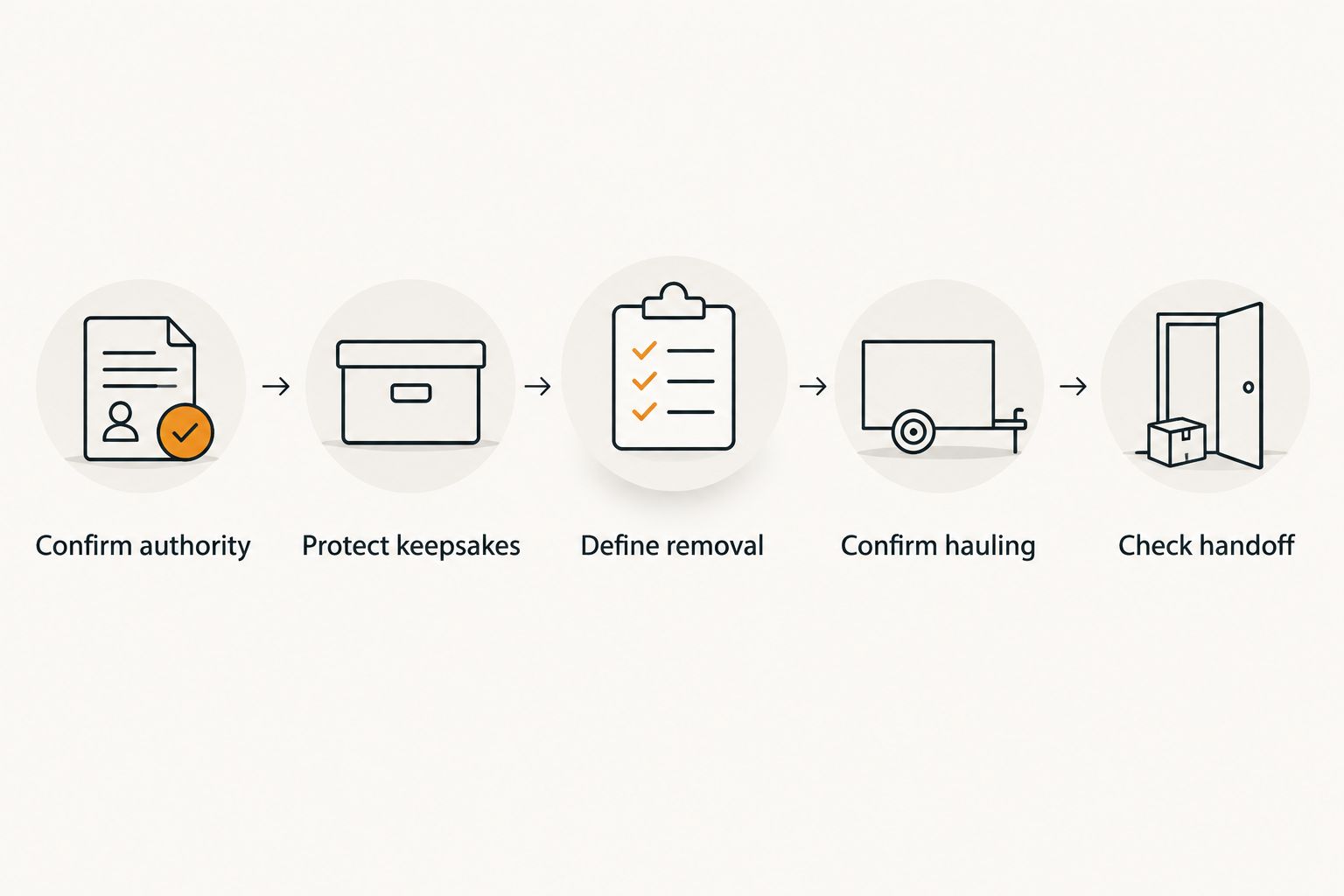
1. Confirm authority
Identify the person authorized to approve removal before anyone starts loading. When an attorney or estate representative is involved, follow that person's instructions about what can leave the property.
Name a contact who can answer scope questions during the job. Share the approved instructions with relatives, the property manager, and anyone else giving access so the crew does not receive conflicting directions.
2. Protect keepsakes
Remove important documents, personal photographs, jewelry, keys, and anything the family has already chosen to keep. Check drawers and containers before releasing the furniture around them.
Set up 3 clearly marked zones: keep, undecided, and remove. These are sorting instructions, not an estimate of how long the work takes. Keep the undecided zone outside the removal scope until someone with authority makes the call.
3. Define removal
Write down the spaces included in the job. Walk through bedrooms, closets, cabinets, the garage, and any outbuildings instead of assuming “whole house” covers everything.
List bulky contents separately, and explain whether a shed needs its contents removed or the structure itself demolished. Emptying a building and taking it down are different jobs; the scope needs to say which you want.
4. Confirm hauling
Send an overview of each included area, plus photos showing the contents and the route to the loading area. Show stairs, narrow doorways, gates, and anything that needs a closer look.
Ask for the expected hauling duration for that specific scope. Confirm what happens if the walkthrough reveals additional contents before approving the work.
5. Check handoff
Walk through the included spaces after removal. Check behind doors, inside closets, and in the outbuildings named in the scope.
Record anything deliberately left behind so it does not become a later disagreement. Keep the final hauling check separate from any cleaning, repair, or inspection work you have arranged with someone else.
Why estate cleanout time varies
The useful question is not whether a house looks full. It is whether the contents, decisions, and removal work are ready for a clear schedule.
- Unfinished family decisions. A room full of approved removal items is different from a room where every box still needs review. Finish decisions before releasing that area.
- Total removal volume. Include cabinets, storage rooms, garages, and sheds in the walkthrough. Furniture visible from the doorway is not the whole load.
- The carrying route. Show where items start and where loading will happen. Stairs, gates, and narrow openings belong in the job description, not as a surprise on arrival.
- Separate destinations. Belongings going to relatives, buyers, or donation organizations need their own arrangements. Do not assume those collections are part of the hauling appointment.
- Demolition or other separate work. Shed removal, demolition, cleaning, and repairs need explicit scope decisions. Do not fold them into a contents-removal estimate without discussing them.
- Safety concerns. Flag suspicious containers, unknown chemicals, or possible biohazards before work starts. Do not put them in the ordinary removal pile or assume the hauling crew handles them.
For a 2026 estate cleanout, turn those factors into a short scope sheet. Each line should say what leaves, where it is, who approves it, and whether another arrangement must happen first.
Choose the approach that matches the property
Not every estate needs the same setup. Choose the approach based on what remains undecided and what you need removed—not on an assumed completion time.
| Approach | Best for | Main benefit | Main limitation |
|---|---|---|---|
| Family-led sorting before hauling | Estates with keepsakes and unresolved belongings | Keeps personal decisions with the family | Hauling depends on sorting being finished |
| Approved-area removal | Properties where some rooms are ready and others are not | Creates a clear boundary around what can leave | Remaining areas still need separate decisions and scheduling |
| Full property cleanout hauling | Homes with approved contents across multiple spaces | Puts the agreed removal areas into a single defined scope | Requires a complete walkthrough and clear exclusions |
Best for approved full-property hauling: Idaho Junk Solutions estate cleanouts serve Treasure Valley families who want load pricing confirmed before work starts. The locally owned company offers junk removal, full property cleanout hauling, and demolition for homeowners, businesses, and property managers.
The boundary matters: hauling does not replace family decisions or legal authorization. Idaho Junk Solutions does not offer hazardous-material pickup, removal, handling, or disposal, so those materials must stay outside the ordinary cleanout scope.
What should you confirm before booking?
Your 2026 booking conversation should end with a defined job, not just a date. Give the company enough information to distinguish a few approved rooms from a full home, garage, and property cleanout.
Use this checklist:
- Included areas: Name every room, storage area, and outbuilding covered.
- Items staying: Identify belongings, fixtures, and appliances that must remain.
- Load pricing: Confirm the approved price before work starts and discuss how a changed scope will be handled.
- Arrival and duration: Ask separately when the crew arrives and how long the approved removal work is expected to take.
- Access and approval: Confirm entry arrangements and who can answer questions.
- Finish condition: Agree on what completed hauling looks like before discussing other property work.
Idaho Junk Solutions uses load pricing and a 14-cubic-yard trailer. Trailer volume helps describe the amount being hauled; it is not a promised job duration or a universal weight allowance. Show the actual contents instead of converting the size of the house into an assumed number of loads.
The company provides one-hour arrival windows with ETA updates. That is an arrival commitment, not a promise to finish a cleanout within one hour. Owner involvement is part of the service approach, but do not assume the owner attends every job.
Define your estate cleanout scope
Discuss the included areas, approved contents, and load pricing before work starts.
Can you start an estate cleanout before everything is sorted?
Start only in clearly approved areas. If a bedroom is ready but the office still contains records and undecided belongings, keep the office excluded from removal.
Mark those boundaries in writing and show them during the walkthrough. A separate approved area is workable; an unmarked mixture of keepsakes and removal items is not a clear instruction.
Does a full estate cleanout include the garage and shed?
A full estate cleanout includes the garage and shed only when those areas are in the agreed scope. Name them explicitly, including whether you want contents removed or separate demolition discussed.
For your 2026 handoff checklist, walk the outside of the property as well as the rooms. Check detached storage, side yards, and anything behind the garage before calling the scope complete.
FAQ
How long does an estate cleanout take from start to finish?
An estate cleanout includes sorting, removal approval, hauling, and the agreed property handoff. Get a schedule for the actual property and keep family decisions or separate collections outside the hauling estimate.
Can an estate cleanout be finished in one day?
Confirm any one-day completion requirement against the actual removal scope before booking. A date on the calendar does not establish whether sorting, hauling, and separate property work all fit that deadline.
Does a one-hour arrival window mean the cleanout takes one hour?
A one-hour arrival window tells you when the crew is scheduled to arrive, not how long the cleanout takes. Ask for the expected removal duration separately.
Do I need to empty drawers before an estate cleanout?
Check drawers before approving the furniture for removal so documents, keepsakes, and valuables do not leave unintentionally. Ask the hauling company how it wants the remaining approved contents prepared.
Can I arrange an estate cleanout if I live outside Idaho?
Discuss remote coordination before booking and establish who can authorize removal and provide property access. Confirm how questions, scope changes, and the finished-property check will be handled.
Will estate cleanout hauling include donation drop-offs?
Confirm donation arrangements separately rather than assuming they are included in estate cleanout hauling. Identify the intended recipient and settle the collection or delivery plan before releasing those items.
What if I find paint, chemicals, or possible biohazards?
Keep those materials outside the ordinary removal scope and flag them before the job starts. Idaho Junk Solutions does not offer hazardous-material pickup, removal, handling, or disposal.
One last thing
The most useful scheduling question is: “What must be decided before the crew arrives?” An agreed removal list gives everyone a clear job; a room full of unresolved decisions does not.
Before your 2026 cleanout, photograph each included area and write down what stays. Use that same record for the walkthrough and the final check so the family and hauling crew are working toward the same finish line.