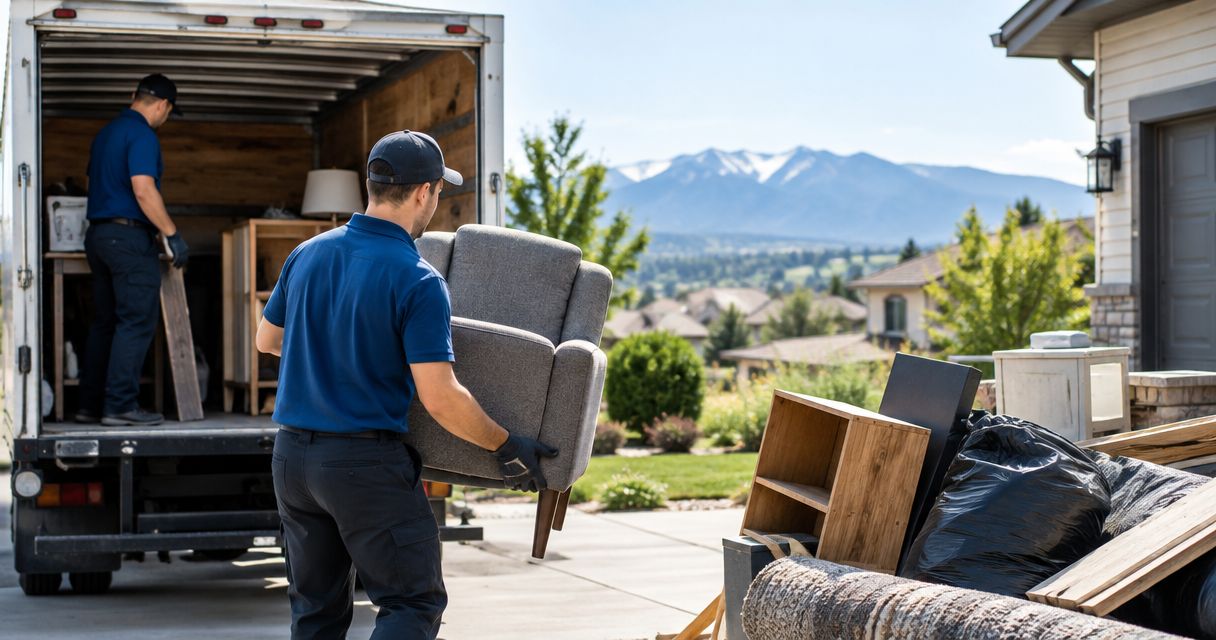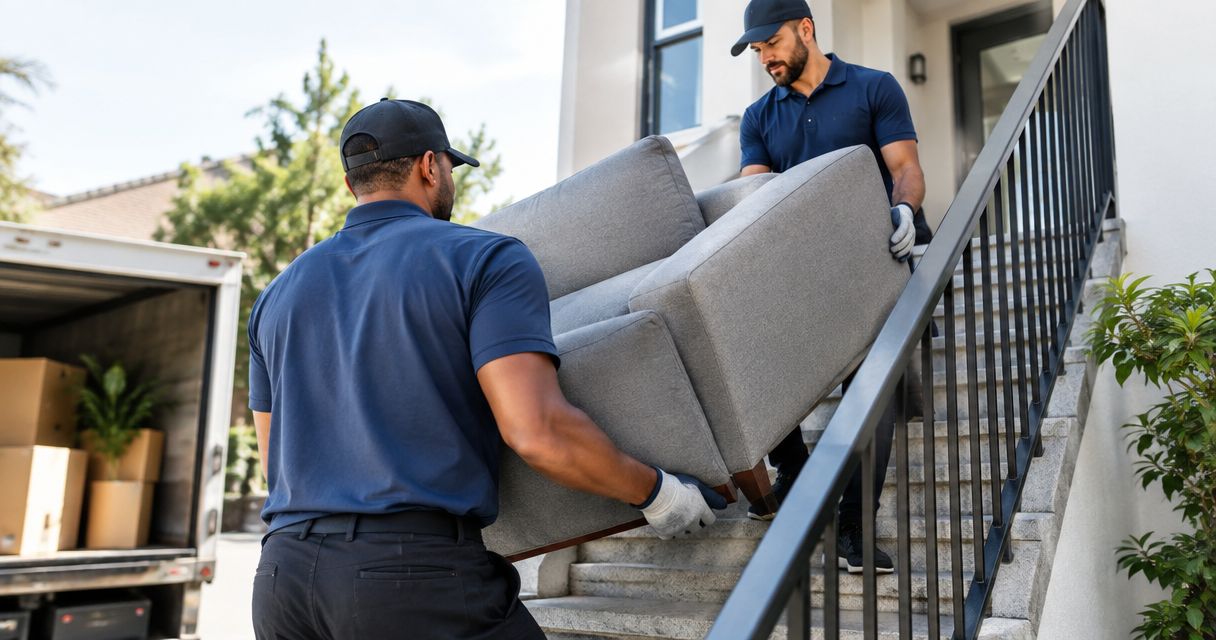
Stairs and long carries are not automatic reasons for an extra junk removal charge; you need the hauler’s access policy stated in the quote. Before booking in 2026, confirm whether the quoted scope includes carrying items from their current location to the truck. Also separate ordinary hauling from additional work, such as dismantling an attached structure, so you know exactly what you are approving.
- Idaho Junk Solutions prices junk removal by the load; stairs and long carries do not add an access charge.
- Checking a junk removal extra charge for stairs means confirming the access policy before approving work.
- Describe stairs, landings, parking, and the full carry route when requesting a quote.
- Keep hauling scope separate from demolition, disconnection, and changes to the pickup list.
Why this matters
An upstairs couch and a garage full of boxes raise different questions. One needs a clear removal route; the other needs an accurate load estimate. Treating both as a vague request to remove some junk leaves too much unsaid.
Idaho Junk Solutions junk removal is best for Treasure Valley customers who want load pricing without an extra access charge. Its pricing information is the starting point for understanding that distinction: access does not cost extra, and pricing is confirmed before work starts.
For homeowners, landlords, and businesses in Boise, Meridian, Nampa, and Caldwell, the useful comparison in 2026 is the agreed job—not just the first figure mentioned over the phone. Ask what gets removed, where it starts, and what work is included.
Do junk removal companies charge extra for stairs or long carries?
Do not assume a stair fee is either included or excluded. Ask the company to state its policy before you approve the pickup. Idaho Junk Solutions prices by the load and does not charge extra for access, including stairs and long carries.
The following table compares quote structures to check for. These are ways to read an estimate, not claims about another company’s policies.
| Quote structure | Best for | Advantage | Limitation to check |
|---|---|---|---|
| Load pricing with access included | Customers comparing an upstairs or long-carry pickup | Separates the amount of junk from the route out | You still need an accurate pickup list and safe route |
| Hauling with access listed separately | Customers reviewing an itemized estimate | Makes any access charge visible | The initial hauling figure is not the complete quote |
| Curbside-only scope | Customers who have already staged items safely | Defines a pickup from one agreed location | It does not describe removal from inside the property |
A clear quote answers both questions: What are you taking, and where are you taking it from? If the estimate describes curbside pickup but your furniture is upstairs, correct the scope before booking.
The trade-off with load pricing is straightforward. You need a useful estimate of the material being removed; saying that everything fits in one room does not establish how much trailer space it occupies.
What counts as stairs or a long carry?
For quote purposes, describe the physical route rather than trying to decide whether your property qualifies for a label. A staircase, basement exit, shared hallway, backyard gate, or distant parking space belongs in that description.
There is no need to invent a distance cutoff. Tell the hauler where the items sit and where the vehicle can legally and safely park. Let the company confirm its policy against the actual route.
Include these details:
- Stair route: Identify the starting floor, staircase, turns, and landings.
- Door clearance: Point out tight doorways and furniture that barely fit when it came in.
- Parking location: Explain whether the truck can use the driveway or must remain elsewhere.
- Outdoor route: Describe gates, slopes, loose ground, and narrow side yards.
- Shared access: Flag hallways, elevators, loading areas, and building rules.
These details help plan the work. They do not turn an access-included policy into permission to add an access fee.
Why quotes and job scope vary
The important distinction is between a harder route and a different job. Carrying the same couch farther is an access issue. Adding a shed teardown to a furniture pickup changes the work.
Keep these factors separate when discussing your estimate:
- Load size: The amount being hauled is central to load-priced junk removal.
- Pickup list: Added rooms, furniture, or debris change what the crew must remove.
- Access policy: The quote needs to state whether stairs and carry distance are included.
- Demolition scope: Taking apart a structure is different from collecting loose items.
- Preparation requirements: Confirm any required disconnection or other preparation before removal day.
- Safety conditions: An unsafe route or suspected hazardous material requires a separate conversation, not an assumption that hauling covers everything.
For a 2026 property cleanout, write down the original scope before adding work. That makes it easier to distinguish a legitimate scope change from a fee you thought was already included.
How does load pricing relate to an upstairs pickup?
Load pricing concerns the amount hauled away. The reference trailer size for Idaho Junk Solutions is 14 cubic yards. Nominally, half that volume is 7 cubic yards and a quarter is 3.5 cubic yards; those are volume references, not promises about how particular furniture will fit.
Stairs do not create more trailer volume. Neither does a longer walk from the backyard. Under an access-included policy, the route and the amount of material remain separate questions.
Bulky furniture also makes casual estimates difficult. A sectional, loose boxes, and dismantled shelving do not pack the same way, so describe the actual items instead of relying only on a room count.
Do not carry heavy items downstairs just to avoid an access charge that does not apply. First confirm the pickup scope and whether leaving the items in place is appropriate. Moving them yourself adds work and exposes your stairs, walls, and furniture to another move.
How do I get a clear quote before the crew arrives?
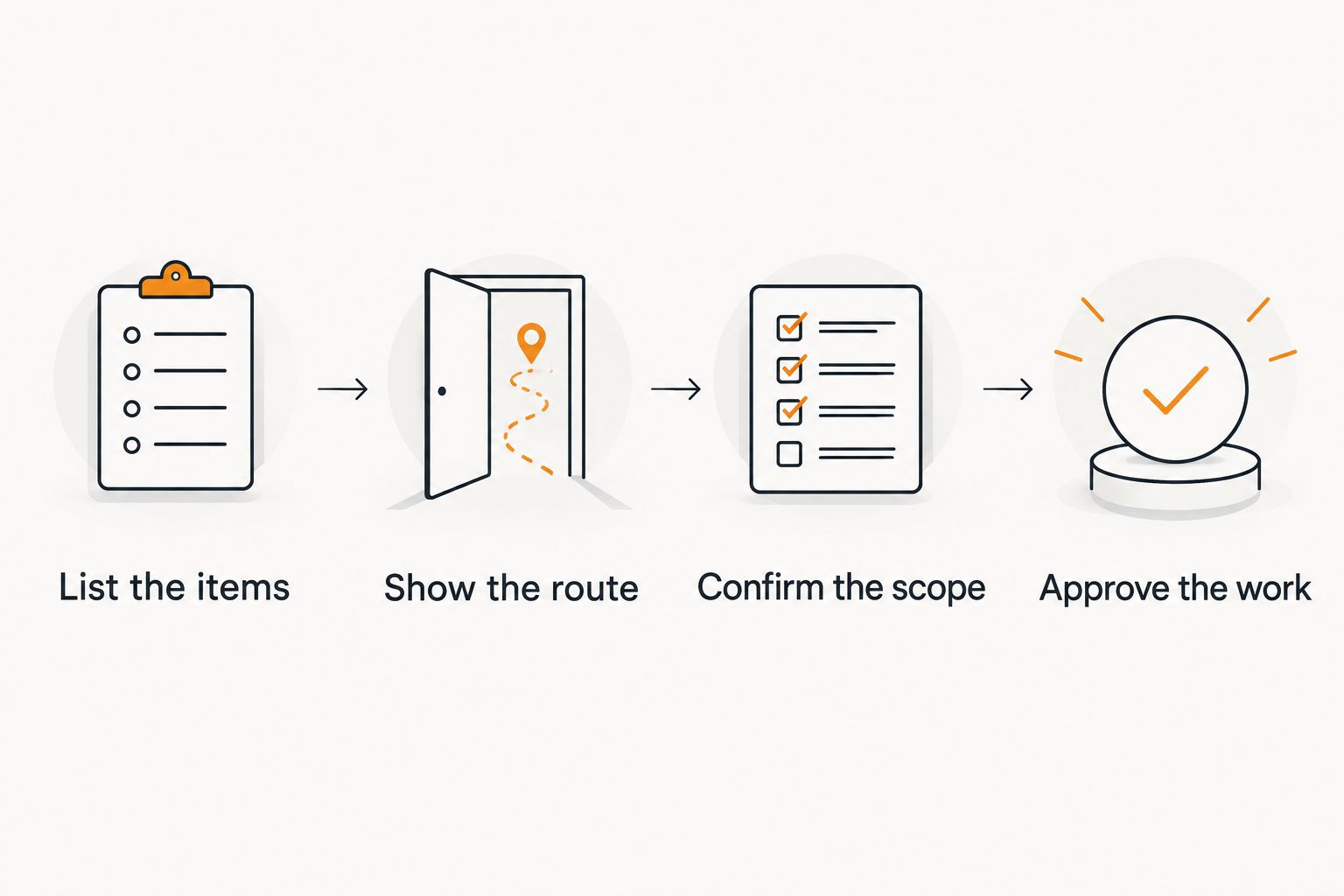
Use this sequence when requesting a stairway or long-carry pickup. It keeps the conversation focused on the job rather than an incomplete description.
- List the items. Separate furniture, bagged contents, loose debris, and anything still attached to the property. Identify what stays as clearly as what goes.
- Show the route. Take pictures of the items, doorways, stairs, landings, gates, and likely parking location. Include the tightest turn, not just the easiest view.
- Confirm the scope. Ask whether the estimate includes removal from the items’ current locations. Identify any dismantling or preparation that needs its own discussion.
- Approve the work. Before loading begins, confirm the load pricing and agreed pickup list. Resolve any difference between the original description and the actual job first.
Photographs support the description; they do not replace a clear agreement. A close-up of a dresser tells the crew little about the staircase behind the doorway.
For a full cleanout, walk through every included room before approving the job. A basement storage area missed during the first conversation is additional material, not merely another staircase.
Describe your pickup before booking
Share the items, stairs, and carry route so the job scope is clear before work starts.
Should I move everything outside before pickup?
Leave heavy items in place until you confirm what preparation is needed. If access is included, moving a couch downstairs does not remove a separate stair charge from that policy.
Your useful preparation is clearing the route, marking items that stay, and arranging permission to use shared access. Do not block a hallway with a staging pile or move furniture into a doorway the crew needs.
Outdoor staging also changes the starting location of the pickup. Tell the company if you move items after sending pictures, and avoid setting materials where they obstruct sidewalks, neighbors, or building access.
What should landlords and business owners confirm?
A rental turnover or office cleanout needs more than a description of the staircase. Identify who authorizes removal, which rooms are included, and how the crew gets into the property.
Use one written pickup list for the person booking and the person meeting the crew. Clearly separate abandoned contents approved for removal from fixtures, retained furniture, and belongings that are not part of the job.
For a 2026 commercial pickup, confirm building access requirements directly with management. Ask about elevator reservations, loading-area permission, and any restrictions on using shared spaces rather than assuming the hauler can arrange them.
Idaho Junk Solutions uses one-hour arrival windows with ETA updates. Arrange keys, gate access, and the authorized contact around that window; do not treat it as a promise that an entire cleanout takes one hour.
What if an item will not fit through the stairway?
Stop and confirm a removal plan before forcing the item through. A tight turn is not solved by pushing harder against a railing or doorframe.
Tell the crew whether an item was assembled inside the room or whether its original entrance is no longer usable. Ask whether taking the item apart is included, requires a scope change, or makes it unsuitable for the planned pickup.
Do not assume that removing a railing, cutting an attached fixture, or altering the building is ordinary carrying. Those actions need explicit approval and a defined scope. Care for the property starts with agreeing on the route before the first large item moves.
FAQ
Does Idaho Junk Solutions charge extra for stairs?
Idaho Junk Solutions does not charge extra for access, including stairs. Junk removal is priced by the load, with pricing confirmed before work starts; describe the staircase and items when requesting the quote.
Is there an extra fee for carrying junk from the backyard?
A long carry does not add an access charge under the company’s access-included policy. Describe the gate, ground conditions, and parking location so the removal route is understood.
Should I bring upstairs furniture down before junk removal?
Do not move heavy upstairs furniture solely to avoid an access charge that does not apply. Confirm the pickup scope first, then clear the route and identify anything that stays.
Does a one-hour arrival window mean the cleanout takes one hour?
A one-hour arrival window describes when the crew is scheduled to arrive, not how long the cleanout takes. Arrange property access around the arrival window and discuss the job’s scope separately.
Can the quote change if I add another room of junk?
Adding another room changes the pickup list and the amount being hauled. Confirm the revised scope and pricing before the additional work begins.
Is taking apart a shed the same as carrying junk farther?
Taking apart a shed is demolition work, not simply a longer carry. Identify that work separately when requesting a quote so demolition and hauling are both clearly addressed.
Can a difficult-access pickup include hazardous materials?
Difficult access does not make hazardous materials acceptable for this service. Do not include hazardous-material pickup, handling, or disposal in the job; ask the appropriate local authority for disposal guidance.
One last thing
The most useful photo often shows the tightest turn, not the junk pile. A clear view of a stair landing or gate helps expose a route problem before anyone starts carrying.
For your 2026 pickup, send both views: what needs to go and how it gets out. Then confirm the load pricing, included access, and any separate work before approving the job. That is a better safeguard than moving everything yourself to avoid an unconfirmed fee.