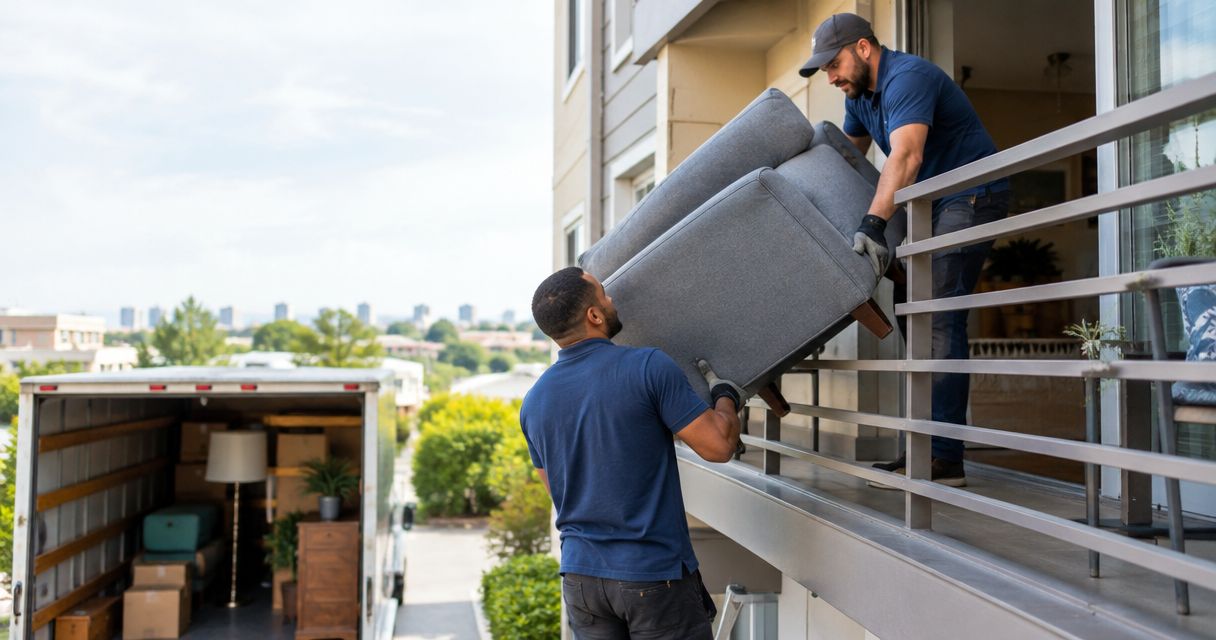
Yes, junk haulers can remove items from a second-story apartment when the items can pass safely through the doors, landings, and stairs. An upstairs pickup needs an access check before work starts; the floor number alone does not establish whether a heavy appliance or bulky couch can come out safely.
- Junk removal second story apartment jobs need a clear stair route, an item list, and building access permission.
- Idaho Junk Solutions offers load-priced junk removal; confirm the upstairs scope before work starts.
- Send photos of furniture, doorways, stairs, landings, and the parking area before scheduling an apartment cleanout.
- Do not carry heavy items downstairs just to prepare for an upstairs pickup.
Why this matters
An upstairs cleanout involves more than getting a trailer to the building. The real question is whether each item can travel from the apartment to the loading area without putting people or the property at risk.
For a 2026 move-out in Boise, Meridian, Nampa, or Caldwell, settle the access details before the appointment. Review the available junk removal and cleanout services, then describe the apartment, the items, and the route—not just the street address.
Idaho Junk Solutions is best for Treasure Valley customers who want load-priced junk removal with the scope confirmed before work starts. An upstairs job still needs a clear description of what is leaving and how it will get out.
Can junk haulers remove items from a second-story apartment?
Yes. A second-story location does not automatically rule out junk removal, but the crew needs to assess the carry route and the items before committing to the work. Ask specifically for removal from inside the apartment rather than assuming the booking includes an upstairs carry.
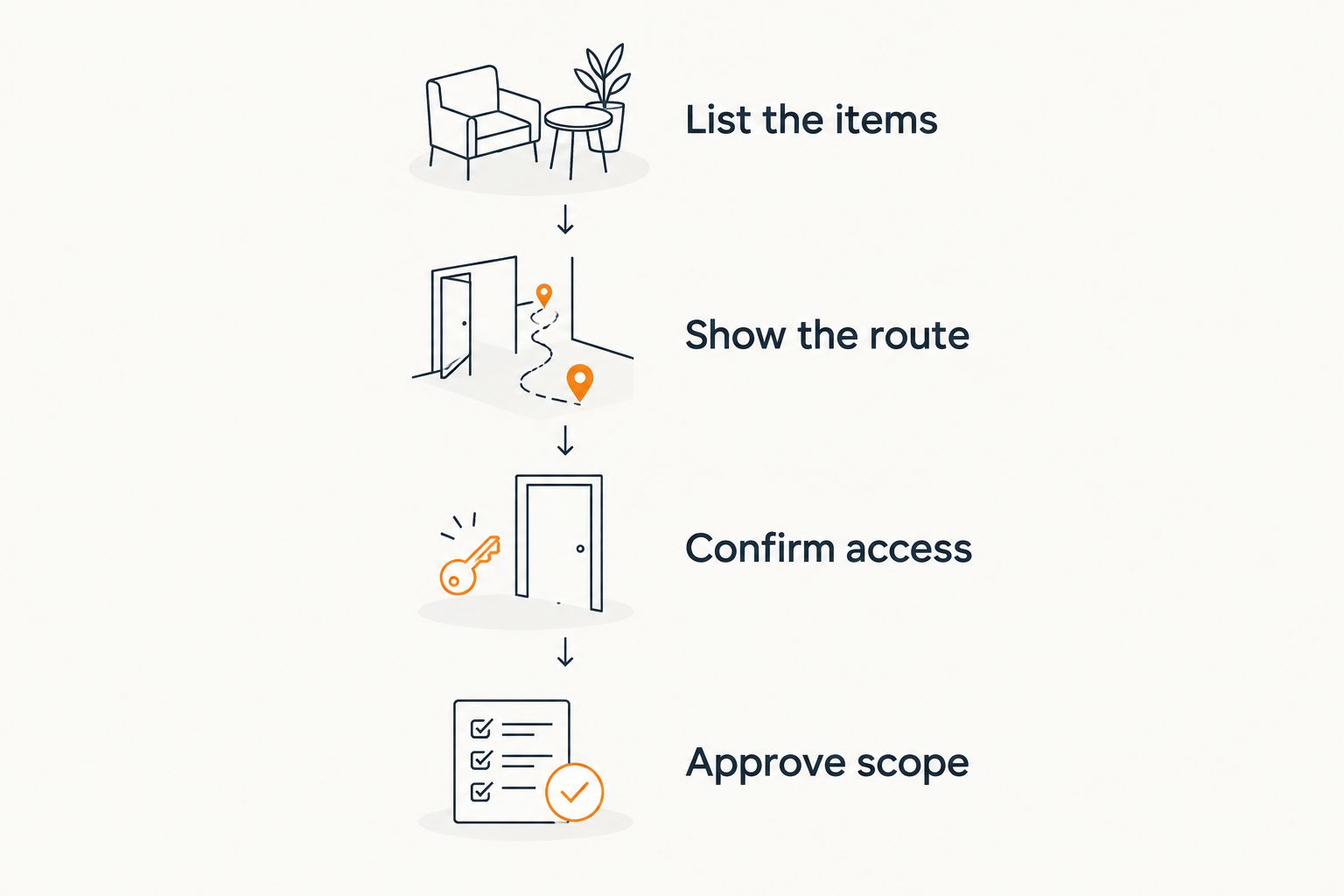
Use this sequence to prepare the job:
- List the items. Name the furniture, mattresses, appliances, bags, and loose contents you want removed. Separate a single bulky item from a full apartment cleanout.
- Show the route. Photograph the apartment doorway, hall, stairs, landings, and building exit. Include tight turns and anything that narrows the passage.
- Confirm access. Ask the property manager about loading locations, entry instructions, elevator use if applicable, and permitted work hours.
- Approve scope. Confirm which items are included, who handles any needed disassembly, and the load pricing before removal begins.
A picture of the couch alone is not enough. Show the turn it must make at the bottom of the stairs, too.
Upstairs pickup, curbside pickup, or self-hauling?
Choose upstairs pickup when you need the carrying handled, not just the hauling. Curbside collection only solves the transport problem after someone has moved everything out of the apartment.
| Option | Best for | Main advantage | Main limitation |
|---|---|---|---|
| Upstairs pickup | Customers who need items carried out | Keeps the heavy carrying within the agreed removal scope | Requires a safe route and building access coordination |
| Curbside pickup | Customers whose items are already outside with permission | Avoids an interior carry during collection | You must arrange safe placement and follow building rules |
| Self-hauling | Customers equipped to handle the entire job | Gives you control over the schedule and sorting | Leaves lifting, loading, transport, and disposal arrangements to you |
Do not move a heavy dresser down the stairs merely to make a quote easier. Describe its location and ask for an upstairs assessment instead.
For a 2026 apartment move-out, choose the option around the work you actually need done. A pickup that excludes the upstairs carry does not solve an upstairs carrying problem.
Why second-story removal requirements vary
Two apartments on the same floor can require very different removal plans. These are the details to report—not reasons to assume that every upstairs job needs an extra charge.
- Item size and shape. A long couch, tall cabinet, or rigid bed frame needs enough turning room, not just a wide front door.
- Stair and landing layout. Straight stairs and stairs with a tight turn present different carrying conditions.
- Weight and condition. Describe heavy items and furniture with loose, broken, or unstable parts before anyone lifts them.
- Distance to loading. Show the route beyond the building exit, including gates, courtyards, and the permitted parking area.
- Building restrictions. Entry arrangements, loading rules, and permitted work hours affect how you organize the pickup.
- Amount being removed. A couch pickup and a full apartment cleanout need different item lists and load assessments.
Do not assume stairs mean a surcharge. Idaho Junk Solutions describes access as carrying no extra charge and uses load pricing confirmed before work starts. Check the load-pricing information and confirm the complete job scope rather than applying a guessed stair fee.
What photos should you send before an upstairs pickup?
Send photos that connect the item to the loading area. A close-up identifies the furniture; wider views explain the job.
Start with each large item in its current position. Include anything attached to it, such as a headboard, mirror, shelving section, or appliance connection. Do not disconnect or dismantle something just for a photograph.
Next, show the apartment doorway from both sides, the hall, and each stair landing. Photograph the narrowest areas clearly. If a door swings into the carrying path, show that position rather than hiding it behind the camera.
Finish with the building exit and parking area. Explain where the crew can legally load and whether anyone needs to provide a key, gate code, or escorted entry.
For your 2026 booking message, this wording keeps the request clear:
Please assess removal from inside a second-story apartment. The attached photos show the items, stairs, landings, exit, and loading area. Please confirm the upstairs carry and any disassembly before scheduling.
That is a request template, not a promise that every pictured item can be removed. The access assessment still matters.
How should you prepare the apartment without doing the heavy lifting?
Clear the route; leave the heavy carrying to the agreed removal crew. Preparation should make the work safer without turning you into the moving team.
Remove shoes, loose rugs, boxes, and other trip hazards from the route. Keep pets and children away from the work area. Do not prop open a secured building entrance without permission or block a shared exit with staged furniture.
Empty drawers and cabinets of anything you are keeping. Check furniture for identification, keys, paperwork, jewelry, and small electronics before marking it for removal. Put keep-items in a separate room or clearly identified area.
For a mixed cleanout, use clear keep-and-remove labels. Walk through those labels with the crew before loading starts; a bag beside the door is not automatically junk.
Do not take doors off hinges, remove railings, or cut furniture apart to force a route. Ask who is responsible for disassembly and what the building permits. If the removal plan depends on altering the property, stop and clarify the scope first.
What changes for appliances and oversized furniture?
Appliances need more information than a general request to remove household junk. Identify the appliance and explain whether it remains connected to electricity, water, gas, or a drain. Do not treat hauling as permission to perform utility work.
Ask what must be disconnected before arrival and arrange qualified help where needed. Do not loosen a gas connection or cut wiring yourself to speed up pickup.
For oversized furniture, report whether legs, shelves, or other sections are removable. A sectional couch and a rigid cabinet do not take the same route through a landing. Confirm any disassembly rather than promising that everything will fit once the crew arrives.
An unsafe carry is a reason to reassess the plan, not force the item through. Do not plan balcony drops, improvised window lifts, or removal of shared stair components as part of ordinary junk hauling.
How should landlords and property managers arrange an upstairs cleanout?
For property managers coordinating a 2026 turnover, separate permission to enter from instructions about what to remove. Provide the unit number, the authorized contact, the entry method, and a clear removal list.
Resolve ownership and authorization questions before loading starts. Do not ask a hauling crew to decide whether disputed belongings can be discarded. Identify anything that must remain, including appliances, fixtures, keys, and maintenance supplies.
Arrange access through the whole appointment, not just the initial arrival. A locked common door or unavailable keyholder interrupts the route even when the apartment itself is open.
Idaho Junk Solutions uses one-hour arrival windows with ETA updates. Coordinate those updates with whoever controls building access; an arrival window is not a promise that a full cleanout will be completed within one hour.
Before handoff, walk the agreed rooms and check the keep-items. Confirm completion against the removal list rather than assuming that an empty-looking room means every part of the job is finished.
Plan your upstairs pickup
Describe the items, stairs, and building access so the removal scope is clear before work starts.
Do I need to carry everything downstairs first?
No. If you book removal from inside a second-story apartment, confirm that the upstairs carry is included and leave heavy items in place until the crew assesses them. Clearing the walking route is different from carrying furniture down it.
If you choose curbside collection instead, you are responsible for arranging the move outside and getting permission to stage the items there. Do not leave furniture in a shared stairwell while waiting for pickup.
Does being upstairs change the load size?
No. The floor does not change the amount of material being hauled; it changes the access planning. The referenced 14-cubic-yard trailer describes hauling volume, not a guarantee that every apartment cleanout fits in one load.
Furniture shape and the total contents still matter. Send the full item list rather than estimating a load from the couch alone.
Can I leave unwanted paint or chemicals with the furniture?
No. Keep paint, chemicals, and other hazardous materials out of the ordinary junk pile and ask the appropriate local waste authority about approved disposal instructions. Do not hide containers in drawers, bags, or boxes.
Hazardous-material pickup, handling, and disposal are not services offered by the company. If you discover suspicious containers or unsafe contamination, stop sorting that area and disclose the condition before arranging work.
FAQ
Can junk haulers remove a couch from my second-story apartment?
Yes, when the couch can pass safely through the apartment doorway, landings, and stairs. Send photos of the couch and the complete route, then confirm that removal from inside the apartment is included.
Can I book upstairs junk removal if my building has no elevator?
Yes, an apartment without an elevator can still be assessed for junk removal. Describe the stairs, turns, and items before scheduling; the safe carrying route determines whether the job can proceed.
Will I automatically pay extra because my apartment is upstairs?
No, do not assume an upstairs location automatically adds a charge. Confirm the company's load-pricing terms and complete removal scope before work starts rather than relying on a guessed stair fee.
Do I need my landlord's permission for an apartment junk pickup?
Check your building's access, loading, and common-area rules before scheduling. Obtain authorization for anything involving property you do not own or changes to the building.
Can junk haulers disconnect my upstairs washing machine?
Do not assume appliance disconnection is included in junk hauling. Explain the connections before scheduling, ask what preparation is required, and arrange qualified help where needed.
How long does a second-story apartment cleanout take?
The job needs an item and access assessment before anyone gives a useful completion estimate. A one-hour arrival window describes when the crew is expected to arrive, not how long the cleanout will take.
Can I leave my apartment junk beside the building dumpster?
Get property-management permission before placing furniture or other junk beside a shared dumpster. A scheduled hauling appointment does not authorize you to block access or use an unapproved staging area.
One last thing
For a 2026 upstairs pickup, photograph the route in both directions. A landing that looks open from above can reveal a tight doorway or projecting handrail when viewed from below.
The most useful preparation is showing the difficult turn before pickup day. Leave the heavy item where it is, explain the obstacle, and get the removal plan settled before anyone starts carrying.