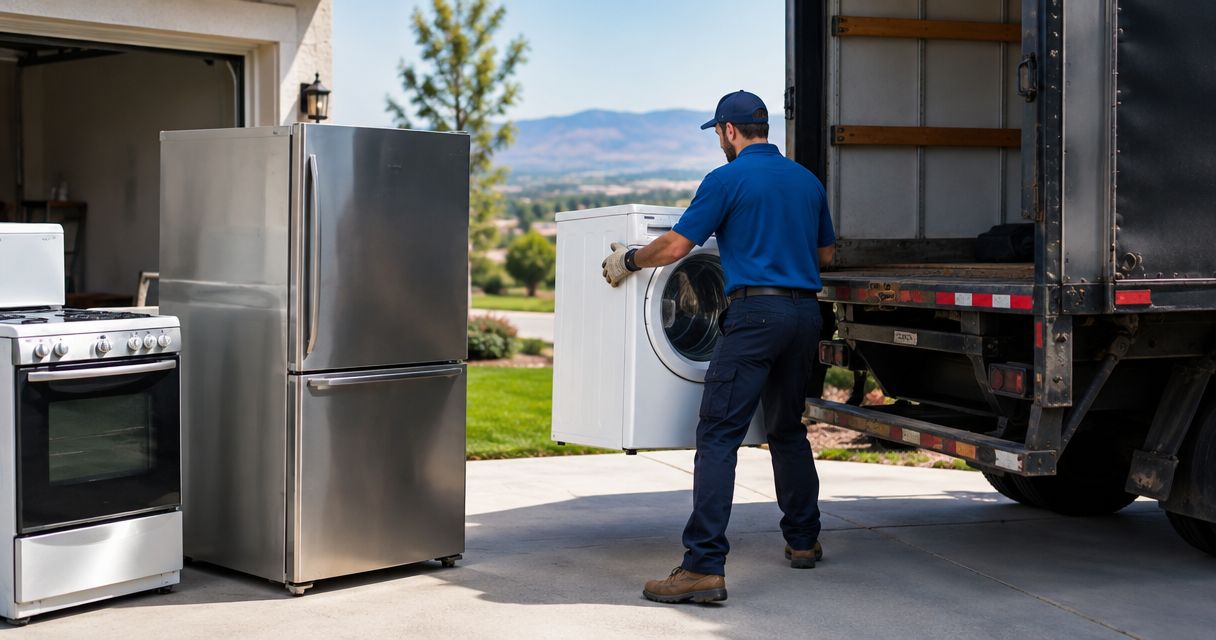
An eviction cleanout in Idaho in 2026 is priced by the load and the work you authorize, not by the eviction label or the number of bedrooms. Get the removal price confirmed before loading starts, and keep demolition, cleaning, repairs, and any specialist safety work clearly separated from the hauling scope.
- For eviction cleanout cost Idaho searches, compare the authorized load and scope—not bedroom counts.
- Idaho Junk Solutions offers load-priced hauling for Treasure Valley landlords and property managers.
- A 14-cubic-yard trailer gives you a volume reference, not a weight allowance.
- Confirm what stays, what leaves, and what requires separate work before loading starts.
Why this matters
An eviction cleanout quote only helps if it covers the property you actually need emptied. A furniture pickup, a house full of belongings, and a cleanout that also includes a shed are different jobs. Calling each one an eviction cleanout hides those differences.
For a 2026 rental turnover in Boise, Meridian, Nampa, or Caldwell, start with the hauling scope. Idaho Junk Solutions is best for Treasure Valley property managers seeking load-priced junk removal and property cleanouts. That service does not replace your responsibility to confirm which belongings can legally leave or arrange cleaning and repairs afterward.
How much does an eviction cleanout cost in Idaho in 2026?
The useful price is the confirmed amount for the authorized load—not an assumed statewide average. Show the entire job before approving the work: every room, closet, garage, outbuilding, and outdoor pile included in the cleanout.
The table below separates common scopes. Use it to describe your property, not to treat every eviction as the same package.
| Cleanout scope | Best for | What to include in the quote | Limit to keep clear |
|---|---|---|---|
| Selected-item pickup | A rental with only designated items left behind | The exact furniture, bags, and loose items authorized for removal | Unlisted belongings remain outside the approved scope |
| Full-property cleanout | A house or unit with belongings throughout | Rooms, closets, storage areas, and outdoor piles included in the job | Empty does not mean cleaned, repaired, or ready to rent |
| Cleanout with demolition | A property with a separate structure-removal task | Hauling scope and demolition scope identified separately | Removing loose contents is not the same as taking down a structure |
Ask for pricing you know before work starts. If you add another room or an overlooked pile, confirm the revised scope before that material gets loaded. A clear boundary protects both the property manager and the crew.
Selected-item eviction cleanouts
A selected-item pickup works when the removal list is short and unmistakable. Photograph each item and identify its location so nobody has to decide ownership or disposal permission at the truck.
The advantage is a narrow scope you can check quickly. The limitation is equally clear: a selected-item quote does not authorize emptying the rest of the unit. Keep anything that must stay physically separate or plainly marked.
Full-home and property cleanouts
A full-property cleanout needs a room-by-room description, including spaces outside the main living area. A rental can look nearly empty from the front door while closets, a garage, or a backyard still hold a substantial part of the load.
The advantage is handling the authorized removal as a coordinated job. The limitation is that hauling alone does not complete the turnover. Confirm the handoff condition rather than assuming an empty property includes detailed cleaning or repairs.
Cleanouts that include demolition
Treat demolition as its own work description, even when you want the debris hauled away during the same project. Name the structure or component involved and explain what must remain untouched.
Idaho Junk Solutions offers both junk removal and demolition services. That makes a combined discussion relevant, but it does not make demolition an automatic part of a cleanout quote. Get both scopes agreed before either job starts.
How load size helps you judge the job
A 14-cubic-yard trailer is the volume reference used in the company's load-size guidance. Half of that capacity is 7 cubic yards; a quarter is 3.5 cubic yards. Those figures describe space, not a promise that every material can fill the trailer to the same level.
Use fractions of the trailer to describe the pile, not to calculate an unsupported dollar figure. A room count cannot tell you how much space the contents occupy once loaded. An empty bedroom and a bedroom packed with furniture should not receive the same description.
Before requesting your 2026 estimate, take wide photos that show the full pile and close photos that identify its contents. Include items behind doors and inside storage areas. Do not photograph only the easiest corner to reach.
A practical photo set shows:
- Interior contents: Furniture, loose belongings, and bags included in the removal.
- Storage areas: Closets, garages, and other spaces that belong in the quote.
- Outdoor contents: Authorized piles around the property.
- Separate work: Any demolition task discussed alongside hauling.
Keep volume and weight separate. A trailer's cubic-yard capacity is not its permitted payload, and a volume estimate alone does not establish which materials a hauler accepts.
Why eviction cleanout costs vary
The word eviction describes the situation, not the amount of junk. Build the quote around these scope differences:
- Load volume: The amount of trailer space occupied by authorized contents is central to load-priced hauling.
- Included areas: A pickup from a single room is a different scope from a house, garage, and yard cleanout.
- Contents to retain: Items that stay need a clear boundary so the removal list remains accurate.
- Demolition scope: Taking down an agreed structure is separate from loading loose belongings.
- Safety exclusions: Hazardous materials are not part of ordinary junk removal and require a separate plan.
Access also belongs in the job description, but do not assume stairs or a longer carry automatically mean an added charge. The brand's pricing guidance states that access does not cost extra. Describe gates, parking, stairs, and the route through the property so the crew can plan the work.
For your 2026 comparison, ask each company to quote the same removal list. Otherwise, a lower total can simply describe less work.
What should you send before getting a quote?
Send a complete scope before asking for a firm commitment. A short, organized description beats a long message that never says which items are leaving.
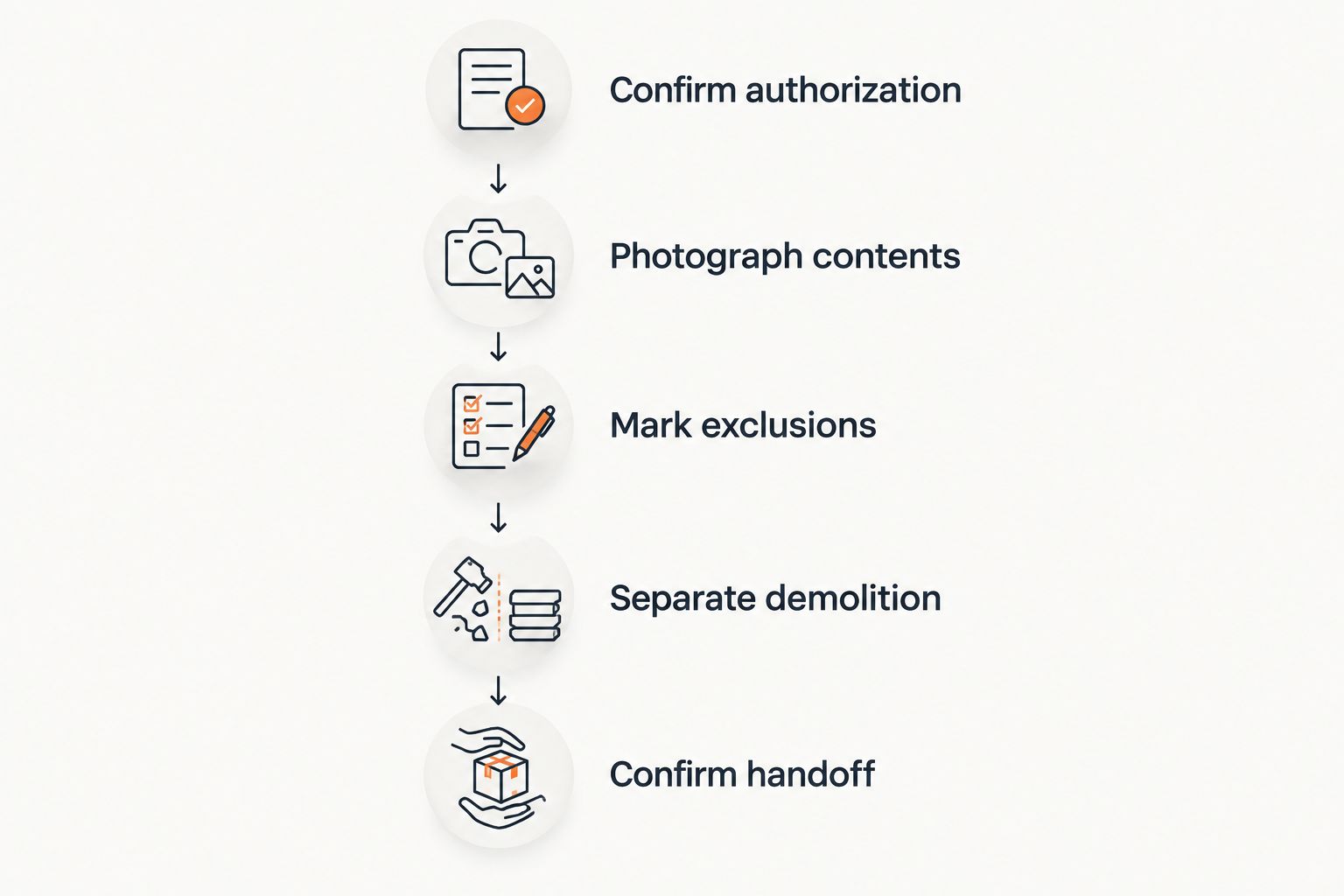
- Confirm authorization. Establish that you have authority to remove the listed belongings. Resolve tenant-property questions with appropriate legal guidance before scheduling disposal.
- Photograph contents. Show each included room and outdoor area, including items hidden behind larger furniture.
- Mark exclusions. Identify belongings, fixtures, and equipment that must stay. Do not leave those decisions to the loading crew.
- Separate demolition. Describe any structure-removal work independently from the contents being hauled.
- Confirm handoff. Agree on the removal list, price, arrival arrangements, and condition expected when hauling ends.
This sequence gives the crew a workable job description. It also gives you a record to compare against the finished property without relying on memory.
Before the appointment, make sure the person approving changes can be reached. If a previously unseen storage area gets added, the crew needs a decision—not a guess about whether it belongs in the original job.
Plan the cleanout around the rental turnover
An empty rental is a handoff point, not the whole turnover. Keep hauling, cleaning, maintenance, and inspection responsibilities distinct so the next contractor knows what condition to expect.
The rental-turnover junk removal workflow addresses that transition. Use a removal checklist alongside your turnover checklist rather than treating them as interchangeable documents.
For scheduling in 2026, Idaho Junk Solutions uses one-hour arrival windows with ETA updates. Plan access around that window, but do not treat arrival time as a promise of completion time. The amount and scope of work still need to be established.
Owner involvement is part of the company's hands-on approach, not a guarantee that the owner attends every job. Give whoever is handling the appointment the same written removal instructions, photos, and approval contact.
Define your cleanout scope
Discuss load-priced hauling, included areas, and any separate demolition work before loading starts.
Compare the same job, not just the final total
A meaningful comparison starts with an identical removal list. Ask whether each quote covers the garage, backyard, closets, and designated furniture rather than assuming that “whole property” means the same thing to everyone.
Comparing end-of-lease cleanout options raises the same scope question: removing leftover belongings and preparing a rental for its next occupant are separate tasks. For an Idaho eviction, add the authorization step before any belongings leave.
Use these questions when reviewing a quote:
- Which exact areas and items are included?
- Is the price confirmed before work starts?
- Is demolition listed separately from loose-content removal?
- What happens if another authorized pile is added?
- What condition will the property be left in after hauling?
A short written scope is easier to enforce than a broad promise to “take care of everything.” Keep the language concrete: remove these contents, leave these items, and stop for approval if the work changes.
Keep hazardous materials outside the hauling scope
Do not put unknown liquids, chemicals, or suspected hazardous materials into ordinary cleanout bags. Leave questionable materials undisturbed and arrange appropriate specialist guidance before the hauling job proceeds around them.
Idaho Junk Solutions does not offer hazardous-material removal, handling, or disposal. Tough cleanouts and demolition work do not change that boundary. A large or difficult job still needs a clear distinction between accepted junk and excluded materials.
A biohazard safety charge is not payment to remove or dispose of biohazards. Keep that distinction clear when discussing job conditions; a safety-related charge does not turn an excluded material into an accepted hauling item.
Tell the company about known safety concerns before the appointment. Do not conceal them inside furniture, containers, or mixed piles to make the property appear ready for loading.
Does an eviction cleanout include cleaning and repairs?
An eviction cleanout removes the authorized contents; it does not automatically include cleaning and repairs. Define any additional work separately and assign responsibility before scheduling the handoff.
For a 2026 turnover, inspect the emptied areas before telling the next contractor the property is ready. Removal can expose work that was previously hidden behind belongings, so “empty” should remain a specific description—not a promise about the property's condition.
Can you get a reliable quote from photos?
Photos help establish the load and scope when they show all included areas. They do not resolve ownership questions, identify every concealed item, or authorize extra work by themselves.
Send wide views and item details together. Then confirm the agreed removal list and pricing before work starts, especially if the property looks different from the original photos.
FAQ
How is eviction cleanout cost in Idaho calculated?
Eviction cleanout cost depends on the authorized load and work scope. For load-priced hauling, show every included area and confirm the price before loading starts.
Does a larger rental always cost more to clean out?
A larger rental does not establish the load size by itself. Describe the belongings being removed, including contents in closets, garages, and outdoor areas.
What size trailer is used as the load reference?
A 14-cubic-yard trailer is the volume reference in Idaho Junk Solutions' load-size guidance. That measurement describes space, not a weight allowance or an automatic price.
Can I authorize disposal as soon as a tenant leaves?
Confirm your authority to dispose of the belongings before scheduling removal. Get appropriate legal guidance for the property's circumstances rather than asking the hauling crew to decide.
Does eviction junk removal include hazardous materials?
Hazardous-material removal is excluded from the company's hauling services. A biohazard safety charge does not pay for removing or disposing of biohazards.
Will the owner attend my cleanout?
Owner attendance is not guaranteed on every job. Provide clear instructions and an approval contact regardless of who handles the appointment.
Is the arrival window the same as the completion time?
A one-hour arrival window identifies when the crew is expected to arrive, not when the cleanout will finish. Confirm the work scope separately and use ETA updates to coordinate access.
One last thing
Photograph the areas that must stay untouched, not just the junk that must leave. A clear image of retained belongings or fixtures gives the crew a boundary to follow and gives you a better final walk-through.
The best cost control is a complete, authorized removal list before loading—not a vague request to empty everything.