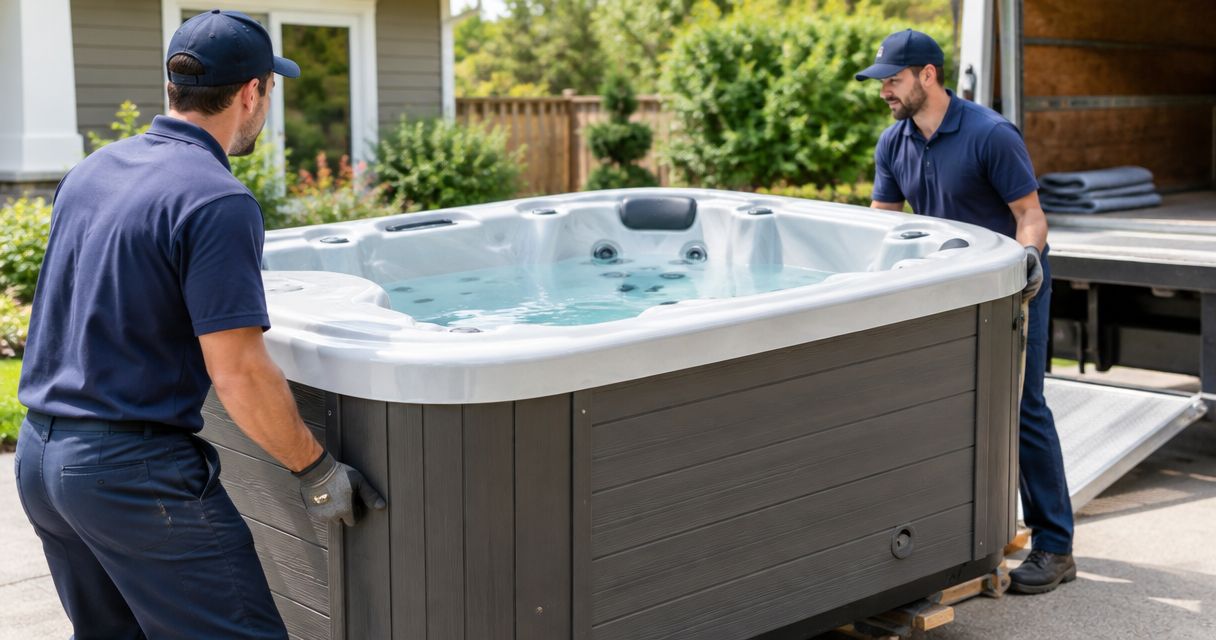
No—do not plan on hot tub removal without draining it first; the tub needs to be emptied and safely disconnected before it is moved or dismantled. If you cannot drain it yourself, arrange that work before pickup and confirm who handles the remaining water, electrical disconnection, and plumbing rather than assuming hauling includes those tasks.
- Hot tub removal without draining is not a ready-to-haul job; arrange drainage and safe disconnection before pickup.
- Idaho Junk Solutions asks customers to disconnect hot tub wiring and plumbing before removal.
- Water adds weight: each US gallon weighs about 8.34 pounds.
- Confirm drainage responsibility, access, dismantling, and the haul-away scope before work starts.
Can junk removal haul away a hot tub without draining it first?
Treat a filled hot tub as an unfinished preparation job, not a pickup-ready item. A hauling appointment does not automatically include draining water, disconnecting electrical service, or separating connected plumbing.
For a 2026 removal with Idaho Junk Solutions, plan to have the wiring and plumbing disconnected first. Tell the crew whether the tub still holds water before you settle the job scope.
Use this preparation sequence:
- Confirm the scope. Explain whether the tub is full, partly drained, disconnected, or still operating.
- Isolate power. Follow the manufacturer's shutdown instructions and arrange qualified electrical help for hardwired connections.
- Drain safely. Use an approved discharge location and the tub manufacturer's drainage procedure.
- Disconnect plumbing. Have connected lines separated safely; do not leave the crew to discover attached services.
- Clear access. Remove loose obstacles and show the crew the full route from the tub to the loading area.
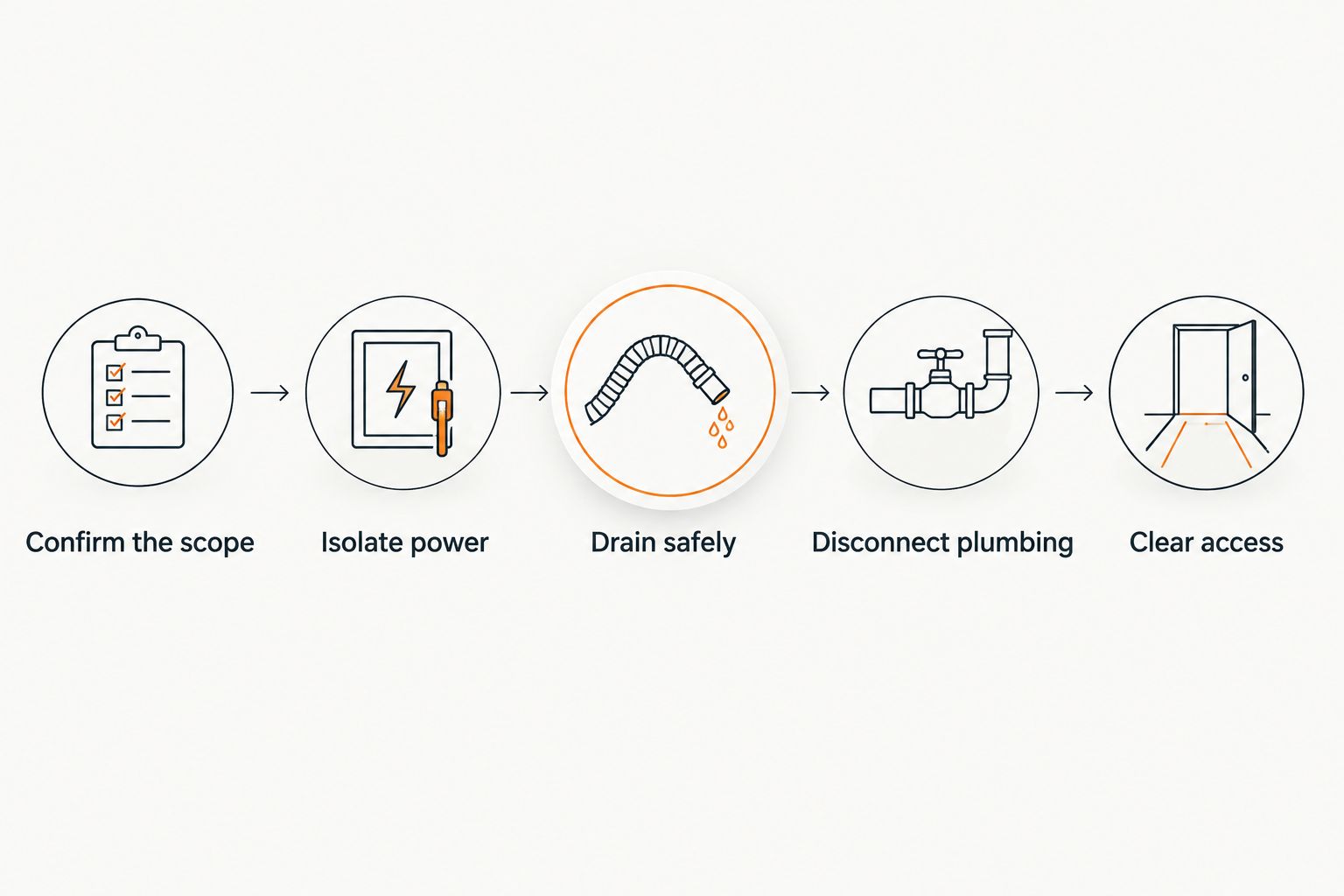
A tub that looks empty from above still needs a check for water in low spots and attached lines. Tell the crew what remains instead of tipping the shell to force it out.
Why this matters
Water changes the job before anyone lifts a tool. At ordinary temperatures, 1 US gallon of water weighs about 8.34 pounds; that weight is separate from the shell, frame, pumps, and cabinet.
Draining also needs a destination. An open drain valve is not a complete plan if the hose sends water across a walkway, toward a foundation, or onto a neighboring property.
For a 2026 backyard cleanout, keep the tasks separate: making the tub safe, emptying it, disconnecting it, and hauling it away. You need a named person responsible for each task, even when the same contractor agrees to handle more than one.
Do not use demolition as a shortcut around drainage or electrical safety. Cutting a filled or connected tub does not solve either problem.
Who should drain the hot tub before removal?
Choose the drainage arrangement based on the tub's condition and your ability to carry out the manufacturer's instructions safely. Do not choose it based only on who is arriving with a trailer.
| Preparation option | Best for | Advantage | Limitation |
|---|---|---|---|
| Owner-managed drainage | An owner who can safely follow the manufacturer's draining procedure | You can finish preparation before the hauling appointment | You remain responsible for safe shutdown, discharge permission, and remaining water |
| Separately arranged drainage help | A tub that will not drain normally or an owner unable to perform the work | You can assign the drainage task explicitly | You must coordinate the work and confirm what electrical or plumbing tasks are included |
| Hauler-coordinated preparation, if explicitly agreed | A removal requiring coordinated preparation and hauling | Responsibilities can be settled in one job discussion | A hauling booking alone does not establish that drainage or disconnection is included |
None of these arrangements makes a full tub ready to move. The difference is who completes the preparation, not whether preparation matters.
For your 2026 booking, describe the current condition plainly: full of water, breaker off, hardwired, hose attached, or unable to drain. Those details are more useful than saying the tub just needs to go.
If you plan to drain it yourself
Find the owner's manual before opening valves or removing plugs. Follow its shutdown and drainage instructions, and check with the relevant local wastewater authority before choosing where the water goes.
Do not assume a street gutter, storm drain, yard, or sewer connection is an approved discharge point. Ask about your actual water condition, including treatment chemicals, rather than guessing from how clear the water looks.
Keep the discharge route away from the removal path. A wet, muddy route creates another problem when the crew needs to move equipment and debris through the yard.
If the tub will not drain
Tell the removal company before arrival. Describe whether the drain is blocked, inaccessible, damaged, or simply not emptying the lowest part of the shell.
Do not tip a heavy tub, cut a drain opening, or enter standing water to troubleshoot electrical equipment. Arrange appropriate help and keep the hauling appointment tied to a realistic preparation plan.
Why hot tub removal preparation varies
The word hot tub does not describe the whole job. These details determine what needs to happen before loading:
- Water remaining: A full shell needs a drainage plan; leftover water needs to be identified rather than ignored.
- Electrical connection: A cord-connected unit and a hardwired installation require different disconnection steps.
- Plumbing connections: Attached lines must be addressed before the shell is separated or moved.
- Removal route: Gates, steps, decking, and tight passages affect the crew's removal plan.
- Job scope: A standalone tub pickup differs from a property cleanout that also includes surrounding junk or demolition.
Send photos that show those details. Include the whole tub, its surrounding space, the access route, and visible connections without opening electrical equipment.
A close-up of the shell alone leaves out the job's hardest questions. A wide view helps explain whether the crew is dealing with an open patio, a raised deck, or an enclosed space.
What should you disconnect before the crew arrives?
Have electrical and plumbing connections safely separated before removal begins. Switching a control panel off is not the same as making an installation safe for dismantling.
For a hardwired hot tub, arrange a qualified electrician to disconnect the supply and leave the remaining wiring safely terminated. Do not cut cables, open energized equipment, or assume the hauling crew performs electrical work.
For plumbing, identify any fixed connections and arrange the appropriate help to separate them. A drain hose lying beside the tub does not establish that every connection underneath it is free.
The 2026 pickup plan should state what is finished and what is still outstanding. Keep that information available for whoever meets the crew, especially when an owner, tenant, property manager, and contractor are coordinating the same job.
Does an empty hot tub have to come out in one piece?
No—emptying the tub does not determine whether it leaves intact or in sections. The crew needs to assess the shell, access route, and agreed demolition scope before deciding how to remove it.
Leave that decision to the people performing the removal. Do not start cutting the cabinet or shell just to make the appointment seem easier.
An intact removal avoids cutting the tub apart, but it still needs a workable route. Sectioning changes the work and cleanup involved; it is not permission to cut through unidentified wiring, plumbing, or nearby structural materials.
If the tub is built into a deck or enclosure, identify what stays. Marking the boundary between the unwanted tub and the property you want preserved is part of the scope discussion, not an afterthought.
How does load pricing apply to hot tub removal?
Idaho Junk Solutions prices hauling by the load and confirms pricing before work starts. A load-priced quote still needs a clear description of what is being removed and what preparation is complete.
For a hot tub job, distinguish the tub from surrounding work. Deck removal, an unwanted enclosure, loose backyard debris, and a full property cleanout are separate scope details that need to be discussed—not silently added to a tub pickup.
Use the Boise hot tub removal cost guide to frame that discussion, then confirm the actual work before it begins. Do not treat a general guide as a quote for your particular yard.
Idaho Junk Solutions junk removal is best for Treasure Valley owners who want load-priced hauling with pricing confirmed before work starts. The limit is just as important: do not assume that hauling includes drainage, electrical work, or plumbing disconnection.
For a 2026 booking in Boise, Meridian, Nampa, or Caldwell, confirm these points:
- The tub's water and connection status.
- Whether the job includes dismantling or only haul-away.
- Which surrounding materials are included and which stay.
- Who approves the scope before work starts.
- Who receives the one-hour arrival window and ETA updates.
Plan your hot tub removal
Describe the water, connections, access, and full removal scope before booking.
What should property managers confirm before hot tub pickup?
A property manager needs more than permission to enter the backyard. Confirm who authorizes removal, who arranges disconnection, and who can approve the agreed work when the crew arrives.
Put the keep-and-remove boundaries in writing. That matters when a hot tub sits beside tenant belongings, patio furniture, fencing, or a deck that must remain.
If the removal is part of a larger turnover or property cleanout, identify the other haul-away items at the same time. Keep unrelated work visible in the scope rather than expecting the crew to discover it room by room or pile by pile.
Leave chemical containers out of the junk pile and arrange appropriate guidance separately. Idaho Junk Solutions junk removal does not include hazardous-material pickup, handling, or disposal.
FAQ
Can I leave water in my hot tub for the junk removal crew?
Do not assume the junk removal crew will drain your hot tub. Tell the company it still contains water and arrange drainage before pickup unless a specific preparation agreement says otherwise.
Can a hot tub be cut up while it is still full?
Do not plan to cut up a filled or connected hot tub. Arrange drainage and safe electrical and plumbing disconnection before dismantling begins.
Who disconnects a hardwired hot tub before removal?
Arrange a qualified electrician to disconnect a hardwired hot tub and safely terminate the remaining supply. A hauling appointment does not establish that electrical work is included.
Where should I drain hot tub water before pickup?
Use a discharge location approved for your circumstances by the relevant local authority. Follow the manufacturer's draining instructions and do not assume a storm drain, gutter, yard, or sewer connection is permitted.
Does Idaho Junk Solutions include draining with hot tub removal?
Do not assume drainage is included with Idaho Junk Solutions hot tub removal. Confirm that task before booking, and plan to have wiring and plumbing disconnected before the crew arrives.
Can I include other backyard junk with the hot tub?
Describe the other backyard junk when you request the removal so it can be included in the agreed scope. Separate the items that go from furniture, fencing, decking, and other property that stays.
Do I need to remove every last drop of water?
Report any remaining water before pickup rather than assuming it is acceptable. Follow the manufacturer's draining procedure and ask the crew what preparation it requires for the planned removal method.
One last thing
Photograph the exit route, not just the hot tub. Start at the tub and show the turns, gate opening, steps, and loading area without moving anything heavy yourself.
Then send a short status note: water remaining, electrical disconnected, plumbing disconnected, and materials staying. That gives the crew a usable picture of the job and keeps the hauling discussion focused on the work you actually need.