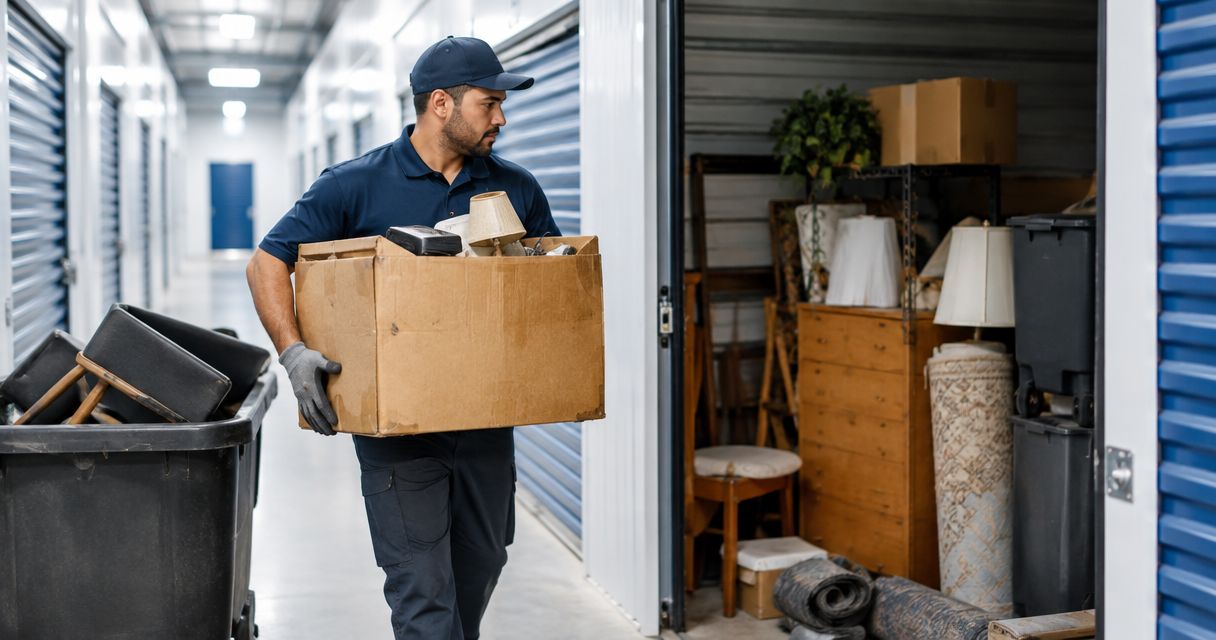
Storage facility operators’ junk removal is the planned clearing of authorized unit contents and common-area debris so you can return usable space to service. Unlike a household pickup, a facility cleanout needs clear disposal authority, controlled gate access, protection for occupied units, and a documented handoff.
- Junk removal for storage facility operators starts with disposal authority, not an empty trailer.
- Idaho Junk Solutions is best for Treasure Valley operators seeking load-priced junk removal and property cleanouts.
- Separate unit cleanouts, common-area debris, and demolition before approving the work.
- Confirm load scope before loading, then document each cleared unit before releasing the crew.
Why junk removal matters for storage facility operators
An uncleared unit is not ready for its next tenant. But hauling everything away is not the first move: your facility must establish what can leave, who can authorize removal, and what needs to stay untouched.
For operators in Boise, Meridian, Nampa, and Caldwell, Idaho Junk Solutions provides locally owned, load-priced junk removal and property cleanout hauling. Idaho Junk Solutions is best for Treasure Valley storage operators who need load-priced junk removal and property cleanouts. Hazardous-material removal is outside that service scope.
Your 2026 cleanout process should distinguish a small trash pickup from a full unit turnover. The first needs a tightly defined collection area; the second needs item decisions, access planning, a load estimate, and a final inspection. Treating both as the same job leaves too much room for mistakes.
The goal is a controlled turnover, not simply a full truck. A successful job leaves the right material removed, neighboring property untouched, and your manager able to explain what happened.
How to plan a storage facility cleanout
Establish disposal authority before scheduling removal
Start with your facility records and a written approval process. Identify the unit, the account involved, the reason for removal, and the person responsible for confirming that disposal is authorized. A late payment, an open door, or a tenant’s verbal comment is not a substitute for checking your obligations.
Do not ask a hauling crew to decide ownership or interpret a tenant dispute. Have your manager, qualified counsel, or other responsible adviser resolve uncertainty before anything moves. Keep account information inside your facility’s records rather than circulating it with ordinary hauling instructions.
For your 2026 procedure, create a simple release record that connects the removal approval to the physical unit. The crew needs a clear work boundary, not the tenant’s entire file.
- Record the unit identifier and exact removal area.
- Name the person authorized to approve the cleanout.
- Verify applicable agreements, notices, and legal requirements.
- Identify anything that must remain in place.
- Stop scheduling if ownership or disposal authority remains disputed.
Map the contents and separate the work
Walk the unit before requesting a pickup. Use your phone to record the doorway, visible contents, bulky pieces, and the route to the loading area. Photograph from safe positions; do not climb unstable piles or move suspicious containers to improve an estimate.
Separate loose junk from attached fixtures. Removing a freestanding shelf is a different scope from taking apart a built-in structure. Likewise, an empty-looking cabinet can contain material that changes whether the job can proceed.
A 14-yard trailer is the load-size reference used in the company’s estimating guidance. That is a volume reference, not a promise that every unit fits in a single load. For a 2026 estimate, show the contents rather than relying on the unit’s floor dimensions alone.
- Photograph the entrance, back wall, and visible bulky items.
- Mark retained property clearly and separately.
- List furniture, appliances, shelving, and loose debris.
- Flag attached structures as a separate demolition question.
- Stop inspection around unknown chemicals, sharps, or suspicious residue.
Match the removal method to the actual job
You can start with your own staff and existing equipment for a small, authorized cleanup that fits your team’s capabilities. That keeps direct control with the facility, but loading, transport, and disposal still become staff responsibilities.
For larger clearances, Idaho Junk Solutions offers junk removal and property cleanouts priced by the load, with pricing confirmed before work starts. Owner involvement is part of the company’s approach where possible, not a promise that the owner attends every visit. Confirm any special dismantling or demolition scope separately.
Use the commercial junk removal guide for Boise to frame questions about business-site work. Choose based on the actual contents and loading arrangement, not a label such as commercial or heavy-duty.
- Use staff-led removal only within your team’s capabilities.
- Consider full-service hauling for bulky contents or full clearances.
- Consider a container when your staff will handle loading.
- Keep donation-dependent items separate until acceptance is confirmed.
- Request separate approval for demolition or attached fixtures.
Confirm load scope and approval limits
A useful estimate describes what leaves and what stays. Send the unit identifiers, photographs, bulky-item list, loading route, and any known restrictions. For several units, identify whether you want a combined clearance or separate records for each unit.
Approve the scope before loading starts. Load pricing works best when both sides can point to the same pile, room, or unit contents. If more material appears after the front items move, pause and confirm the added work rather than treating it as automatically approved.
Keep your 2026 authorization process practical. The facility contact should be reachable while the crew is working, and the backup approver should understand the same boundaries. A manager who cannot be contacted cannot resolve an unexpected item or scope change.
- Define the approved contents in writing.
- Identify exclusions and retained items.
- Ask how the estimated load will be assessed on arrival.
- Confirm pricing before work starts.
- Require approval before expanding the removal area.
- Name a primary contact and backup decision-maker.
Prepare access without disrupting occupied units
Start with a manual site walk from the entrance to the unit. Check the gate, turning area, pedestrian route, loading position, and any shared corridor. Keep emergency access and tenant movement clear rather than using the nearest open space by default.
Idaho Junk Solutions uses one-hour arrival windows with ETA updates. Have a facility contact ready for that window, with a plan for opening gates and identifying the correct unit. Do not promise tenants an exact completion time based only on the arrival window.
Care for the property starts with a defined route. Discuss door frames, roll-up doors, neighboring contents, and any flooring concerns before loading. Never assume a crew can use an occupied unit, tenant cart, or restricted entrance without permission.
- Confirm gate entry and the on-site contact.
- Designate a loading position that preserves access.
- Clear only the approved travel route.
- Identify doors and surfaces needing extra care.
- Keep tenants outside the active loading area.
- Arrange a backup contact if the manager steps away.
Inspect the unit and close the job
Walk the cleared area with the crew before releasing the job. Compare the result with your approved scope, including corners, shelves, and the space behind the doorway. Removal, sweeping, repairs, and sanitation are different tasks; do not assume one includes the others.
Your 2026 closeout record should connect the original approval to the finished condition. A folder of unlabeled photos is less useful than a short record tied to the correct unit and job date. Keep tenant documents and personal information out of broadly shared work photos.
Use the same closeout sequence for a single unit and a multi-unit clearance: before photos, removal approval, and after photos. That sequence gives your team a consistent record without turning every job into a paperwork project.
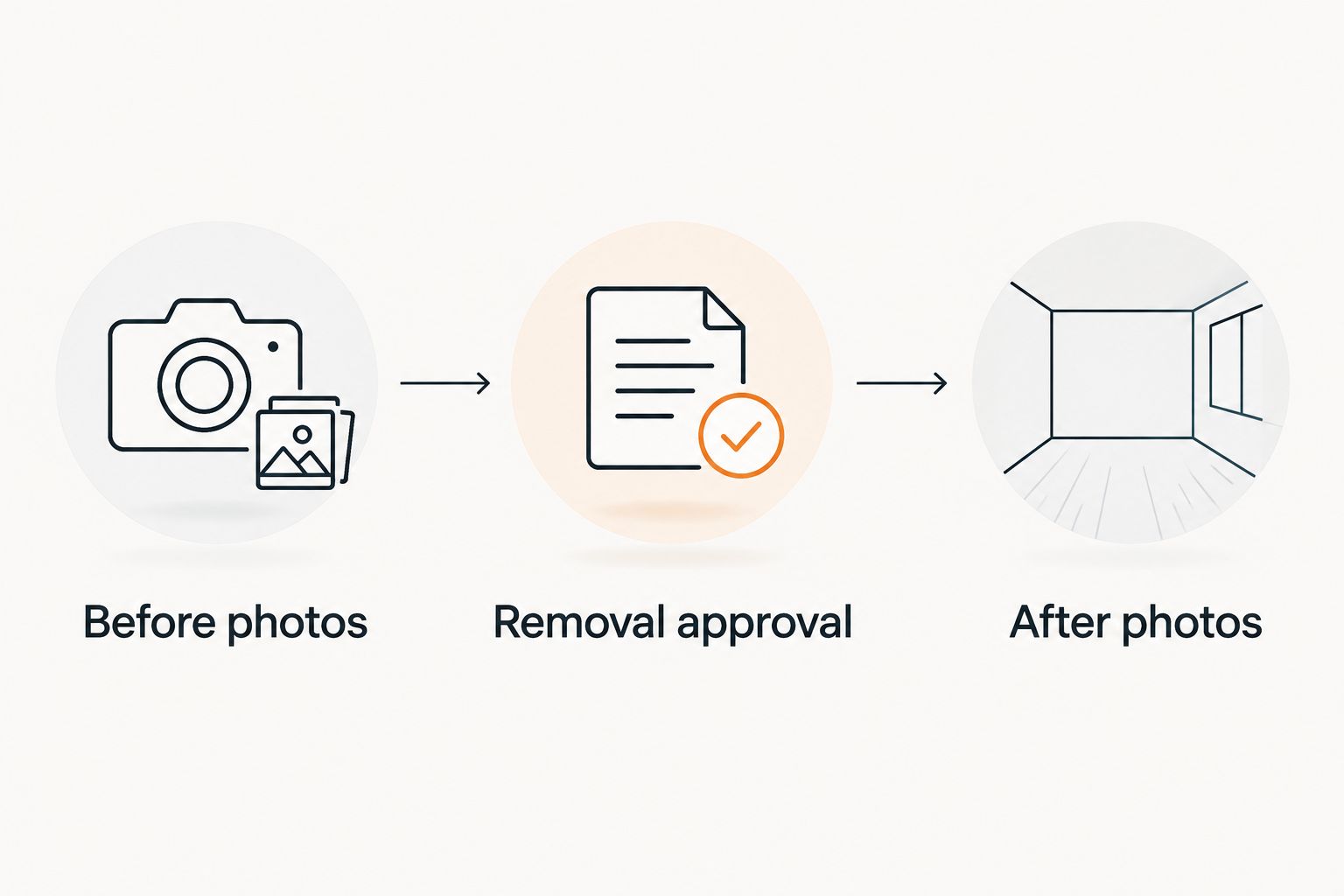
- Before photos: retain the original condition record.
- Removal approval: save the authorized scope and changes.
- After photos: document the cleared area.
- Record any remaining items and why they stayed.
- Check doors, locks, walls, and the loading route.
- Assign repairs or further cleaning before releasing the unit.
A cleanout is finished when the agreed removal is complete. A unit is ready to rent only after your facility completes its own turnover checks.
Plan your storage unit cleanout
Discuss the contents, access, and load-priced scope before work starts.
Compare storage facility cleanup options
Choose the method around who will do the loading and who will manage the site. A container does not provide a loading crew, and a donation pickup does not resolve items the recipient declines. Keep a fallback plan for anything that remains.
| Option | Best for | Main advantage | Key limitation |
|---|---|---|---|
| Facility staff and existing equipment | Small, manageable authorized pickups | Direct control over sorting and timing | Staff must handle loading, transport, and disposal arrangements |
| Load-priced full-service hauling | Bulky contents and full unit clearances | Removes the need for facility staff to perform the hauling | Contents, access, exclusions, and scope need confirmation |
| Dumpster or container rental | A controlled cleanup where staff will load | Provides a designated collection point | Requires placement space and does not supply loading labor |
| Donation pickup | Items a recipient has agreed to accept | Keeps accepted usable goods separate from disposal | Acceptance and collection arrangements must be confirmed |
| Separately scoped demolition | Attached fixtures or structures approved for removal | Distinguishes dismantling from loose-item hauling | Requires its own scope and any applicable authorization |
Do not choose a method before assigning the labor. If your maintenance staff cannot safely clear the unit, a container alone does not solve the job. If most contents are already sorted and manageable, full-service hauling is not the only option.
Common mistakes storage facility operators make
Treating abandoned-looking contents as authorized junk
An apparently empty account file or an unlocked unit does not settle what your facility can discard. Verify authority first and keep that decision separate from the hauling estimate. Stop the removal if a tenant dispute or ownership question surfaces.
Estimating the load from the unit size alone
A partly filled unit and a tightly packed unit with the same footprint create different removal jobs. Use content photos and a bulky-item list. Ask the hauler to confirm the actual scope before loading rather than approving an unseen pile.
Mixing retained property with approved removal
A spoken instruction to leave something behind is easy to lose during a busy clearance. Mark retained items and keep them outside the removal area when safe and authorized. Give the crew a clear boundary between the assigned unit and neighboring property.
Scheduling every trade as though hauling finishes turnover
Junk removal does not establish that a unit is repaired, sanitized, secure, or ready to rent. Inspect after clearance, then schedule any remaining work. Keep attached shelving and structural changes out of the ordinary hauling scope unless specifically approved.
Treating a safety fee as hazardous-material service
Idaho Junk Solutions does not offer hazardous-material pickup, removal, handling, or disposal. Its biohazard safety charge is not payment to remove or dispose of biohazards. If suspicious material appears, stop work in that area and seek appropriate specialist guidance rather than adding it to the junk load.
FAQ
What’s the best junk removal option for a storage facility?
Full-service hauling is best when your facility needs bulky contents or an entire authorized unit cleared without assigning the hauling to staff. Staff-led removal suits manageable pickups; a container suits work where your team will do the loading.
Can a junk removal crew clear a unit after a tenant stops paying?
Only schedule removal after your facility verifies its authority to dispose of the contents. The hauling crew does not resolve tenant rights, contractual requirements, or ownership disputes.
How does load pricing work for storage unit cleanouts?
Load pricing bases the hauling scope on the material being removed rather than the unit’s floor dimensions alone. Provide photos and an item list, then confirm pricing and exclusions before work starts.
Do I need to move everything outside before the crew arrives?
Do not move everything outside unless that arrangement has been agreed in advance. Confirm the loading route and removal scope, and keep tenant access and emergency routes clear.
Can several storage units be cleared during one job?
Ask the hauler to assess the units together and confirm the proposed scope. Identify each unit separately so disposal authority, retained items, and completion records remain clear.
Does junk removal include hazardous materials found in a unit?
Idaho Junk Solutions does not offer hazardous-material pickup, removal, handling, or disposal. Stop work around suspicious material and arrange appropriate specialist guidance; a biohazard safety charge does not authorize its removal.
What should I check before renting the cleared unit again?
Inspect the cleared unit against your facility’s turnover requirements before renting it again. Check remaining debris, doors, locks, walls, and any need for repairs or further cleaning; hauling alone does not complete those checks.
One last thing
Write down what must stay as clearly as what must go. A cleanout instruction that only says empty the unit leaves no protection for an attached fixture, a retained item, or property outside the assigned boundary.
For your next clearance, give the crew a unit identifier, an approved removal scope, and a named decision-maker. Those details make the handoff clearer than a long message about getting the job done fast.