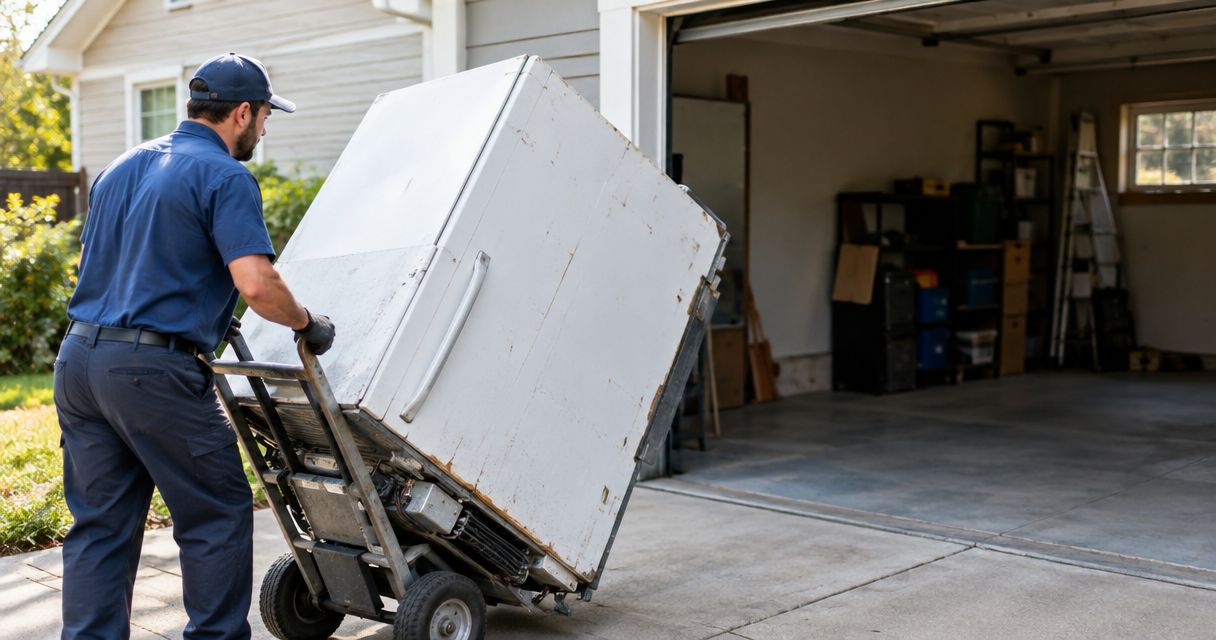
A full property cleanout before listing a house is worth it when unwanted contents block rooms, hide usable space, or prevent cleaning and listing photos. If you still live in the home or only have a few bulky items to remove, a targeted pickup is the better fit; neither option guarantees a higher sale price or a faster sale.
- A property cleanout before listing house photos makes sense when unwanted contents prevent cleaning, repairs, or clear room views.
- Choose targeted removal when you still need furniture and household essentials during the sale.
- Idaho Junk Solutions offers load-priced property cleanouts; confirm the removal scope and pricing before work starts.
- Separate belongings that stay, confirm included fixtures, and schedule hauling before final cleaning and photography.
Why this matters
Your 2026 listing needs a clear plan for what leaves, what stays, and when the house becomes ready for photos. Moving unwanted belongings from the bedrooms into the garage does not finish the job. It moves the same decision to another part of the property.
For homeowners in Boise, Meridian, Nampa, and Caldwell, Idaho Junk Solutions offers junk removal and full property cleanout hauling. The useful question is not whether every seller needs that service. It is whether your remaining contents require a whole-property job or a smaller, clearly defined pickup.
Spend on the scope you need, not on making an occupied house unnecessarily empty. Start with the rooms and outdoor areas your listing agent plans to show.
Is a full property cleanout worth it before listing a house for sale?
A full cleanout makes sense when unwanted belongings are spread throughout the house and property. A partial cleanout makes sense when most contents are staying and the problem is limited to specific furniture, boxes, or debris.
Use the condition of the property—not the size of the house—to choose the job.
| Option | Best for | Main benefit | Main drawback |
|---|---|---|---|
| Full property cleanout | Vacant homes with unwanted contents across several areas | Addresses the house, garage, and agreed outdoor areas as one scope | Requires complete sorting and clear removal authority |
| Targeted junk pickup | Occupied homes or isolated piles | Removes unwanted items while leaving daily essentials in place | Anything omitted remains your responsibility |
| Self-managed removal | Sellers able to sort, lift, transport, and arrange disposal | Gives you direct control over each item | Leaves loading, transport, and disposal arrangements with you |
| Keep selected furniture | Homes where the listing plan includes furnished rooms | Preserves furniture intended for photos and showings | Requires a later plan for moving those belongings |
A full cleanout is not automatically the right choice because a house is going on the market. Walk through the property with your agent and identify what actually interferes with presenting it.
If a bedroom is already usable and furnished as intended, emptying it adds another task without solving a listing problem. If the garage cannot be entered because of discarded furniture and boxes, that is a defined removal job.
Full property cleanout: best for widespread unwanted contents
Choose a full cleanout when the removal list extends beyond a single room or pile. Examples include a vacant home with furniture throughout, a garage full of discarded belongings, and outdoor areas holding items you do not intend to move.
The benefit is a single agreed scope. You can identify every included area before loading begins rather than discovering another untouched space after the crew leaves.
The drawback is preparation. Someone must decide what happens to documents, valuables, family belongings, and anything included in the sale. A hauling crew should not have to guess which box matters.
Best for: sellers with removal decisions already made across the property. Do not authorize a whole-property cleanout while ownership or keep-versus-remove decisions remain unresolved.
Targeted pickup: best for occupied homes
Choose a targeted pickup when you still need the house to function during the listing period. Remove the broken furniture, unused exercise equipment, garage leftovers, or other agreed items without stripping out what you use.
The benefit is control over the remaining living space. Beds, workstations, cooking equipment, and selected furniture can stay while unwanted material leaves.
The limitation is scope. A pickup list that says only “garage junk” leaves room for confusion if tools, storage cabinets, and moving boxes share that space.
Best for: sellers who need selective removal rather than an empty house. Mark the exact items and show the crew what must remain before loading starts.
Why the right cleanout scope varies
These factors determine whether a full cleanout solves your listing problem or creates unnecessary work:
- Occupancy. An occupied house needs daily essentials left in place. A vacant house does not have the same constraint.
- Spread of unwanted contents. A pile by the garage door is different from belongings throughout bedrooms, closets, outbuildings, and the yard.
- Photo plan. Your agent's intended room setup determines which furniture stays for listing images.
- Condition after removal. Hauling clears contents; it does not replace cleaning or repair work.
- Decision authority. Shared ownership, estate belongings, and items belonging to others require clear instructions before removal.
- Separate demolition work. An unwanted structure is not the same scope as loose household contents.
For a 2026 sale, write these decisions down before setting the hauling date. A short, accurate removal list is more useful than telling everyone to “clear everything out” and correcting that instruction during loading.
How do you prepare a house for a pre-listing cleanout?
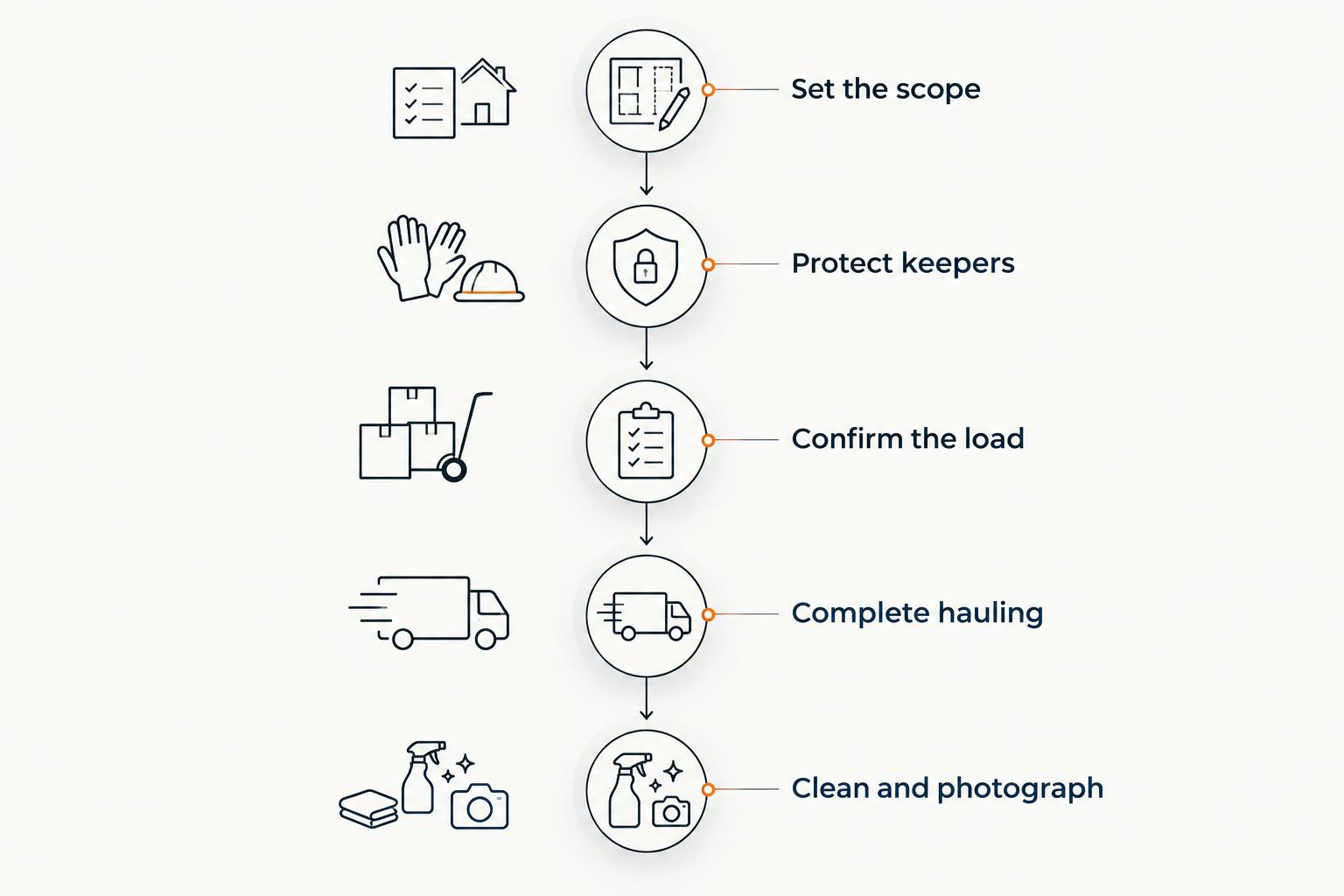
Follow this sequence so removal supports the listing instead of disrupting it.
- Set the scope. Walk through rooms, closets, garage spaces, and agreed outdoor areas. Record what leaves and what remains.
- Protect keepers. Remove important documents, keys, medications, valuables, and personal devices from the removal areas. Label belongings that stay.
- Confirm the load. Show the hauling company the full removal list, including anything outside the main house. Confirm pricing before work starts.
- Complete hauling. Keep access routes clear and identify the person authorized to answer questions about uncertain items.
- Clean and photograph. Inspect the cleared areas, finish cleaning and planned repairs, then prepare the rooms for listing photos.
Do not use boxes marked for removal as temporary storage for things you want. Put keepers in a separate location whenever practical, especially when several family members are sorting at once.
Take reference photos of the agreed removal areas. They give the seller, agent, and hauling crew the same starting point without requiring anyone to remember a verbal walkthrough.
How should you schedule hauling around listing photos?
Work backward from the photography appointment, not from the day you hope to publish the listing. Hauling belongs before final cleaning, room setup, and photos.
Leave room in your 2026 listing schedule for what becomes visible after contents are removed. A floor hidden beneath boxes still needs inspection. Empty shelves and cleared corners still need cleaning.
Idaho Junk Solutions uses one-hour arrival windows with ETA updates. Treat that as the arrival window, not a promise that a full property cleanout takes one hour; the job duration depends on the agreed work.
If the seller is moving after listing rather than before it, separate the photo-preparation pickup from the final move-out plan. The article on scheduling junk removal around a home closing date addresses that later handoff.
Keep the photography appointment and closing deadline distinct. They serve different purposes, and a house prepared for pictures can still contain belongings that must leave before possession changes.
What happens to usable furniture and bulky leftovers?
Decide where usable belongings are going before treating them as part of the hauling load. Family pickup, donation, and disposal each need a clear destination; an intention to donate is not a completed arrangement.
Acceptance depends on the receiving organization and the item's condition. Confirm that an item is accepted before setting it aside for donation, and do not describe every reusable-looking object as a guaranteed donation.
The same distinction applies to bulky household waste disposal: household furniture needs an appropriate removal route, while paint, chemicals, and other hazardous materials require separate local instructions. Disposal arrangements in Melbourne are not instructions for a Treasure Valley property.
Do not put unidentified containers into the ordinary junk pile. Idaho Junk Solutions does not offer hazardous-material pickup, handling, or disposal; keep those materials outside the hauling scope and obtain instructions from the appropriate local program.
For your 2026 listing preparation, finish these destination decisions before the crew arrives. Otherwise, the same couch or cabinet can become an unresolved question in the middle of loading.
What should the cleanout quote cover?
Ask for a scope that describes the actual work, not just a general promise to clear the house. Load pricing works best when the company sees everything you want removed before work begins.
Idaho Junk Solutions property cleanout hauling is best for Treasure Valley sellers who want unwanted contents removed with load pricing confirmed before work starts.
The limitation is equally important: hauling is not a substitute for sorting belongings, professional cleaning, repair work, or separate demolition planning. Confirm those boundaries rather than assuming “full cleanout” includes every task required to list.
Make sure the job instructions cover:
- The rooms, storage spaces, and outdoor areas included.
- The specific furniture and loose contents to remove.
- Clearly marked belongings that stay.
- Parking, entry, gates, and routes through the property.
- The person who can approve changes to the scope.
- The final walkthrough before the job is considered complete.
Ask about owner involvement if that matters to you, without assuming the owner attends every job. Also explain any surfaces or features that need particular care along the removal route.
Plan your pre-listing cleanout
Define what leaves, what stays, and the load pricing before work starts.
Should you remove a shed or other structure before listing?
Treat demolition as a separate decision from clearing loose contents. Removing boxes from a shed and tearing down the shed are different jobs.
Ask your listing agent whether the structure should remain, be repaired, or be evaluated for removal. Do not assume demolition improves the sale outcome simply because the structure is old or unattractive.
Before authorizing removal, identify utilities, ownership questions, permit requirements, and anything the structure supports or connects to. Have the appropriate professionals resolve those issues before demolition begins.
The same boundary applies inside the house. Cabinets, built-ins, attached fixtures, and structural components do not belong on an ordinary junk list without a separate decision about the work and sale terms.
What if you are selling the house as-is?
Selling as-is does not answer what happens to the contents. Confirm with your agent which belongings must leave and which, if any, are part of the agreed sale.
A full cleanout is unnecessary if the transaction expressly calls for contents to remain. Conversely, do not leave unwanted furniture behind simply because the property needs repairs.
For a 2026 as-is listing, describe the intended handoff clearly before scheduling hauling. Your listing presentation, removal instructions, and sale agreement should not give conflicting directions about the same items.
FAQ
Is a full property cleanout worth it before selling my house?
A full property cleanout is worth it when unwanted contents across the property prevent cleaning, photos, or the intended handoff. Choose targeted removal when only specific items need to leave.
Should I empty every room before listing photos?
No, emptying every room is not necessary when selected furniture is part of your listing plan. Agree with your agent on what stays before authorizing removal.
Will a cleanout increase my home's sale price?
A cleanout does not guarantee a higher sale price. Its practical purpose is to remove unwanted contents so you can clean, inspect, and present the property as planned.
How does load pricing work for a pre-listing cleanout?
Load pricing ties the hauling quote to the agreed removal load. Show the complete scope and confirm pricing before work starts, including any change to the original removal list.
Does a full property cleanout include deep cleaning?
Do not assume hauling includes deep cleaning. Confirm the service scope and arrange cleaning after unwanted contents are removed.
Can hazardous materials go with the household junk?
Hazardous materials must stay outside the ordinary household junk load. Obtain local disposal instructions; Idaho Junk Solutions does not offer hazardous-material pickup, handling, or disposal.
Should I schedule the cleanout before or after photography?
Schedule the pre-listing cleanout before final cleaning and photography. Keep a separate plan for belongings that remain during showings but must leave before the agreed handoff.
One last thing
Check what stays before deciding what goes. Walk through with your agent and identify appliances, attached shelving, window treatments, and other items whose status needs confirmation under the sale terms.
A cleanout is finished when the agreed unwanted contents are gone—not when everything movable has disappeared. Keep the removal list beside the keep list during the final walkthrough.